Table of Contents >> Show >> Hide
- 1) Is there really a measles outbreak in the U.S. right now?
- 2) Why is measles so contagious? Like… unfairly contagious?
- 3) What are measles symptomsand how fast do they show up?
- 4) When is someone contagiousand why do clinics say “call before you come”?
- 5) What should I do if I think I’ve been exposed?
- 6) If the MMR vaccine is so good, why are vaccinated people still mentioned sometimes?
- 7) Do adults need an MMR booster? What if I was vaccinated “a million years ago”?
- 8) Why do schools and daycares send those intense letters?
- 9) Is there a treatment for measlesor is it “just ride it out”?
- 10) “But isn’t measles kind of… normal?” (A quick myth check)
- 11) Why public health keeps talking about “95% coverage”
- 12) How do I talk to family members who are nervous about the MMR vaccine?
- Conclusion
- Experience: What an outbreak week can feel like (the part no one puts on the fridge)
Let’s talk about measlesthe virus that refuses to stay in the “retro childhood diseases” museum.
If you’ve been side-eyeing headlines, school letters, airport exposure alerts, or that one uncle’s group chat
(“my cousin’s neighbor’s barber said…”)this is your judgment-free guide.
We’ll cover what’s actually happening in the U.S., why measles spreads like it has frequent-flyer status,
what to do if you’ve been exposed, and how to spot misinformation wearing a lab coat it didn’t earn.
(Spoiler: the best “life hack” is still vaccination and smart public health routines.)
1) Is there really a measles outbreak in the U.S. right now?
Yes. And it’s not just “a few scattered cases.” As of December 23, 2025, the CDC reported
2,012 confirmed measles cases in the United States and 50 outbreaks, with
87% of cases linked to outbreaks. The CDC also reported 3 confirmed measles deaths.
(An “outbreak,” by CDC definition, is 3 or more related cases.)
If those numbers feel surprisingly high, you’re not imagining things. Measles was declared eliminated in the U.S.
in 2000meaning it wasn’t spreading continuously here as an “endemic” disease. But “eliminated” doesn’t mean
“gone forever.” It means we can stop sustained transmission when measles gets imported and shows up in a community.
So what changed?
Measles takes advantage of one thing: gaps in immunity. When vaccination coverage slips in pockets of a community
(or exemptions rise), measles doesn’t politely wait its turnit spreads.
2) Why is measles so contagious? Like… unfairly contagious?
Measles is the overachiever of viruses. It’s so contagious that if one person has it, up to 9 out of 10
nearby people who aren’t protected can become infected. It spreads through the air when an infected person breathes,
coughs, or sneezesand the virus can remain in an airspace for up to 2 hours after the person leaves.
Translation: you don’t have to shake hands, hug, or share snacks. You can walk into the room after the fact
and still be at risk if you’re not immune. Measles is basically a party crasher with a two-hour RSVP window.
3) What are measles symptomsand how fast do they show up?
Measles doesn’t start with a dramatic rash entrance. It usually begins like an annoying cold that’s suddenly
very committed to the bit.
Typical timeline (simplified)
- 7–14 days after exposure: symptoms often start (fever, cough, runny nose, red/watery eyes).
- 2–3 days after symptoms begin: tiny white mouth spots (“Koplik spots”) may appear.
- 3–5 days after symptoms begin: a rash typically shows up and spreads.
The CDC notes incubation can range up to 21 days. That long window is why public health officials
take exposure notifications seriouslyand why you might be asked to monitor symptoms for a few weeks.
“Is it just a rash and fever?”
No. Measles can cause serious complications, especially in kids under 5, adults over 20, pregnant people,
and those with weakened immune systems. Complications can include pneumonia and brain inflammation (encephalitis),
among others. That’s why measles is treated as a big deal even though it’s vaccine-preventable.
4) When is someone contagiousand why do clinics say “call before you come”?
People with measles are considered contagious from 4 days before the rash appears through
4 days after rash onset (with rash day counted as “day 0”). That “before the rash” part matters:
someone may be spreading measles before they realize what’s happening.
Healthcare offices ask you to call ahead for a reason: measles can spread in waiting rooms and hallways,
including after the infected person has left. Calling first helps clinics protect newborns, pregnant patients,
cancer patients, and others who may be especially vulnerable.
5) What should I do if I think I’ve been exposed?
First: don’t panic-scroll. Second: don’t “just pop into urgent care” without calling. Here’s the calm,
practical approach.
Step 1: Check your immunity
- If you’ve had 2 documented MMR doses, your risk is much lower.
- If you’re unsure, look for immunization records (childhood records, school records, state registries, or your clinician’s chart).
Step 2: Call your healthcare provider or local health department
They can help assess exposure risk, symptoms, and whether testing is appropriate. If you need in-person care,
they can arrange it safely.
Step 3: Ask about post-exposure protection (timing matters)
- MMR vaccine may help if given within 72 hours of initial exposure.
- Immune globulin (IG) may help if given within 6 days of exposure (often used for certain high-risk people).
Important note: MMR and immune globulin generally aren’t given at the same time because it can interfere with vaccine response.
Your clinician/public health team will guide you.
Step 4: Follow quarantine/monitoring guidance if needed
A common recommendation is home quarantine for 21 days after the last exposure for people without evidence of immunity.
Some guidance extends monitoring longer (for example, if immune globulin is used, because it can lengthen incubation).
Schools and workplaces may have specific rules, especially during active outbreaks.
6) If the MMR vaccine is so good, why are vaccinated people still mentioned sometimes?
Two realities can be true at once:
- The MMR vaccine works extremely well.
- No vaccine is 100% perfect, so rare “breakthrough” cases can happen.
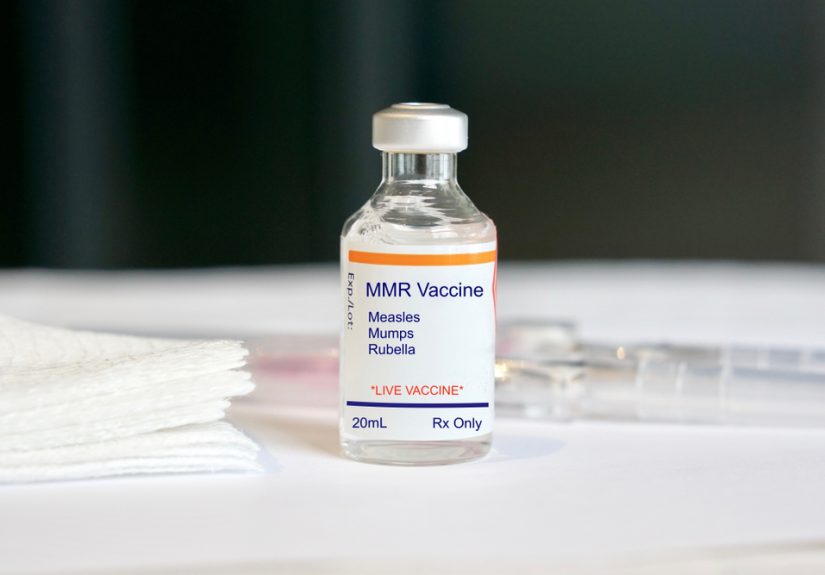
CDC estimates: 1 dose of MMR is about 93% effective against measles, and
2 doses are about 97% effective. That’s excellent protectionespecially compared
to the risk of infection and complications in unvaccinated people.
Also, vaccinated people who do get measles may have milder illness and are less likely to experience severe outcomes.
The biggest outbreaks typically concentrate where many people are unvaccinated or undervaccinated.
7) Do adults need an MMR booster? What if I was vaccinated “a million years ago”?
Many adults are protected, but it depends on your history and risk. In general, adults should have evidence of immunity,
which may include documented vaccination, lab evidence of immunity, lab-confirmed disease, or (in some cases) birth before 1957.
Adults who should be extra sure they’re protected
- International travelers (including people going “anywhere,” not just “outbreak countries”).
- Healthcare personnel and certain other high-exposure settings.
- College students or people in close living/working environments.
If you’re missing documentation, a clinician can advise whether vaccination is appropriate. The MMR schedule for those
who need it often involves one or two doses depending on risk, separated by at least 28 days if a second dose is needed.
What about infants and travel?
For international travel, infants 6–11 months may be recommended an early MMR dose (then still need
the routine doses after the first birthday). That timing is a classic “talk to your pediatrician” moment, especially during outbreaks.
8) Why do schools and daycares send those intense letters?
Because measles spreads fast, and schools are basically “close contact” in building form.
Public health actions can feel strictexclusions, quarantine, monitoringbut they’re designed to stop a small number
of cases from turning into dozens.
Why 21 days?
The incubation period can be up to 21 days. That’s why unvaccinated exposed students may be excluded from school
for up to 21 days after the last exposure, depending on the situation and local health department guidance.
This is also why outbreaks disrupt life far beyond the people who get sick: childcare schedules implode,
parents miss work, and classrooms feel like a ghost town. Measles isn’t just a medical issueit becomes
a community logistics problem.
9) Is there a treatment for measlesor is it “just ride it out”?
There isn’t a specific antiviral cure that makes measles disappear on command. Medical care focuses on
supportive treatment (hydration, fever management, monitoring complications).
What about vitamin A?
Vitamin A may be recommended by clinicians in certain cases (often for children, and typically under medical supervision).
It’s not a DIY “measles hack,” and dosing matters. If a clinician recommends it, it’s usually given promptly and repeated the next day.
Bottom line: don’t self-prescribe high-dose vitamin Atalk to a healthcare professional.
10) “But isn’t measles kind of… normal?” (A quick myth check)
Myth: “Measles is harmlesseveryone used to get it.”
Reality: measles can be severe and sometimes deadly, especially in high-risk groups. The reason measles seems
“rare” in many families is because vaccination made it rare. That’s success, not proof it was never serious.
Myth: “Natural immunity is better, so infection is fine.”
Reality: yes, infection can create immunitybut it also comes with the risk of pneumonia, hospitalization,
and rare long-term complications. Vaccination gives strong protection without rolling the dice on complications.
Myth: “Vaccines don’t work because outbreaks exist.”
Reality: outbreaks happen when measles finds clusters of susceptible people. Vaccines are precisely why outbreaks
don’t spread everywhere and why risk is lower in highly vaccinated communities.
11) Why public health keeps talking about “95% coverage”
For measles, communities typically need very high immunity to prevent outbreaksoften described as around 95%
coverage with two doses. When coverage drops, measles can spread more easily, especially in schools and tight-knit communities.
Recent CDC reports have shown kindergarten vaccination coverage hovering below that ideal in some years and locations,
alongside increases in exemptions. Those changes don’t guarantee an outbreak, but they create the conditions measles loves.
12) How do I talk to family members who are nervous about the MMR vaccine?
Think “calm, specific, respectful.” People shut down when they feel mocked. Try a script like:
- Start with values: “I know you want the kids safe.”
- Share a concrete fact: “Two doses are about 97% effective at preventing measles.”
- Connect to real life: “Outbreaks can mean 21-day school exclusions. That’s brutal for families.”
- Offer a next step: “Let’s ask your pediatrician together.”
You’re not trying to win a debate. You’re trying to reduce risk. That’s a different sport.
Conclusion
Measles is back in the headlines because it’s incredibly contagious, it can spread before the rash appears,
and it takes advantage of immunity gaps. The good news: we know exactly how to prevent most measles cases
strong vaccination coverage, smart exposure protocols, and fast public health response.
If you remember only three things, make it these: (1) check vaccination status before you need it,
(2) call ahead if you suspect exposure or symptoms, and (3) don’t let misinformation be the loudest voice in the room.
Measles is loud enough.
Experience: What an outbreak week can feel like (the part no one puts on the fridge)
Even if you never get sick, an outbreak can still barge into your life like an uninvited guest who also rearranges your calendar.
Here are a few “you might recognize this” moments people commonly describe during outbreak seasons.
The school message that ruins your afternoon. It starts as a cheerful notificationthen you see the subject line:
“Possible Measles Exposure.” Suddenly you’re in detective mode, trying to remember if your child’s records are in a drawer,
a portal, or a black hole. The letter says “monitor for symptoms,” and your brain immediately decides every sniffle is a plot twist.
You learn that “21 days after last exposure” is not a suggestion; it’s a lifestyle.
The parent-group-chat spiral. One person asks a normal question, five people respond with normal answers,
and then someone drops a screenshot from a questionable account with seventeen exclamation points.
The group chat becomes less “support system” and more “choose your own adventure,” except the choices are
“call your pediatrician” or “argue with a stranger on the internet.” The winning move is almost always:
call the pediatrician.
The clinic logistics ballet. If you’ve ever wondered why your doctor’s office sounds unusually serious on the phone,
it’s because they’re trying to keep everyone safe. Staff may ask you to use a different entrance, come at a specific time,
or wait in a particular area. It can feel inconvenientuntil you remember the waiting room might include a newborn, a pregnant patient,
or someone getting cancer treatment. Suddenly, “please call first” sounds less like bureaucracy and more like community care.
The travel anxiety you didn’t pack for. Airports, holiday gatherings, conventionscrowded spaces can become stressful when
measles is circulating. People describe checking vaccine records like they’re scanning boarding passes, and texting family members:
“Are you sure you got both MMR doses?” It’s not paranoia; it’s risk management. The strange part is realizing how quickly
a virus can turn “fun weekend trip” into “I’m counting days on the calendar.”
The quiet relief of being prepared. There’s a real, specific calm that comes from knowing your vaccination status
and having a plan. People who feel most grounded during outbreaks aren’t necessarily fearlessthey’re informed.
They know who to call, what symptoms to watch for, and what steps to take without improvising at 2 a.m.
Outbreaks can be disruptive, but preparation makes them less scary and more manageable.
And if you’re reading this because you’re worried: that’s understandable. The goal isn’t to be fearless.
The goal is to be readyand to make choices based on real medical guidance, not the loudest headline.