Table of Contents >> Show >> Hide
- Company snapshot: who Pierre Landscape is (and who they aren’t)
- Services review: what Pierre Landscape appears to offer
- Reputation review: what public platforms suggest
- Pros and cons: an honest, practical scorecard
- Pricing: what you can realistically expect
- How to hire Pierre Landscape (or any landscape contractor) intelligently
- So, is Pierre Landscape “good”?
- Extra: real-world experiences (composite scenarios) to make this review more useful
- Final thoughts
Hiring a landscape company can feel a little like ordering takeout for a group chat: everyone wants something different,
nobody wants to pay extra, and someone always asks if the avocado is “worth it.” If your property is in Southern California
and you’re looking for a contractor that can handle bigger, more complex outdoor environmentsthink campuses, retail centers,
multi-family communities, parks, or high-traffic commercial sitesPierre Landscape is a name you’ll run into.
This review breaks down what Pierre Landscape does, who they’re best for, what public review platforms and business profiles
suggest about their reputation, and how to evaluate them (or any landscape contractor) like a prowithout turning your search
history into “why is my sprinkler crying.”
Company snapshot: who Pierre Landscape is (and who they aren’t)
Pierre Landscape is a Southern California-based landscape construction and maintenance company founded in 1988. They position
themselves primarily as a construction-forward landscaping partner for organizationseducational, corporate, retail,
entertainment, hospitality, and similar sectorsrather than a “weekly mow-and-blow” residential lawn service.
Where they operate
Public profiles and company materials describe service coverage across multiple Southern California counties, with a headquarters
presence in the Los Angeles area (Irwindale is commonly listed as the primary location). If you’re outside Southern California,
Pierre Landscape probably won’t be a fitthis is not a national chain.
What kind of projects they emphasize
Pierre’s marketing and third-party profiles consistently highlight:
- Landscape construction (site work, installations, large-scale builds)
- Irrigation & drainage (including drip and drainage applications)
- Water conservation and water-smart upgrades
- Sustainable landscape strategies (drought-tolerant concepts, reduced-water materials)
- Maintenance programs designed to protect the finished work long-term
Translation: Pierre Landscape reads more like a “build it right and keep it right” contractor than a small residential
gardener who stops by with a hedge trimmer and a motivational podcast.
Services review: what Pierre Landscape appears to offer
1) Construction and installation
Pierre’s core identity is landscape constructioninstallation work that supports major properties and long-term landscape plans.
Their project language often points to complex environments such as theme parks, museums, stadium-adjacent properties, and
multi-structure sites where logistics matter as much as plant selection.
If your project requires scheduling around tenants, visitors, school hours, or safety rulesand you need crews who can execute
consistentlythis is the lane Pierre seems built for.
2) Irrigation and drainage
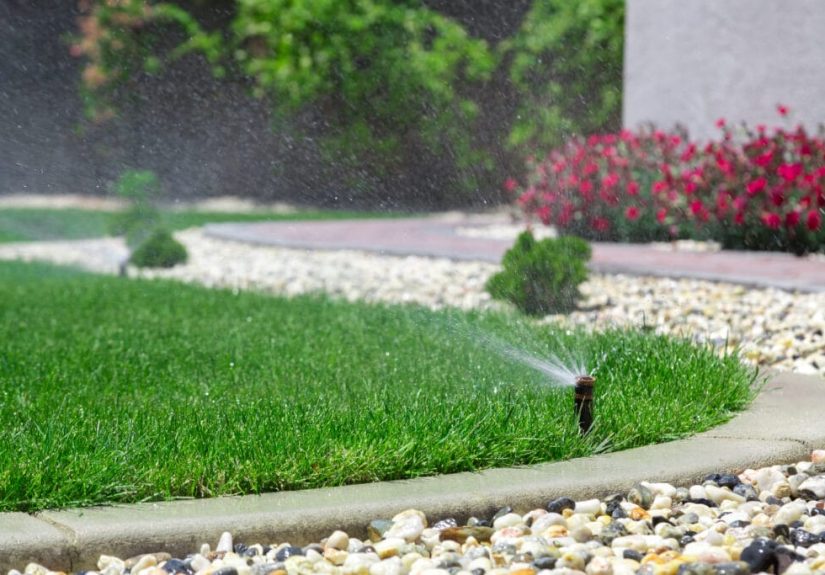
Irrigation is where many landscapes quietly win or lose. Beautiful planting on day one is greatuntil the irrigation coverage is uneven,
the schedule ignores the weather, and your turf becomes a patchwork quilt of regret.
Pierre’s own service descriptions emphasize irrigation and drainage as a strength, including drip irrigation and drainage applications.
That focus aligns with what best-practice organizations recommend: design and management should prioritize distribution uniformity,
proper scheduling, leak detection, and ongoing maintenance rather than “set it and forget it” controllers.
3) Water conservation and sustainable landscape options
In California, water-smart landscaping isn’t a trendy add-on; it’s often the difference between a landscape that thrives and one that
becomes an expensive science experiment. Pierre publicly emphasizes water conservation and sustainable landscape approaches like drought-tolerant
strategies and lower-water ground treatments.
This matters because water efficiency best practiceslike microirrigation where appropriate, irrigation scheduling that matches plant needs,
and ongoing system tune-upscan significantly reduce waste and improve plant health. On commercial sites, these improvements can show up as
lower water bills, fewer plant replacements, and fewer “why is the sidewalk being watered?” moments.
4) Maintenance programs after completion
One of the most practical signals in Pierre’s third-party descriptions is the emphasis on maintenance teams that preserve the landscape after
installation. For commercial and institutional properties, maintenance is where budgets can quietly explode (or stay under control).
The best programs don’t just “make it look neat”they keep irrigation tuned, address drainage issues early, and manage plant health seasonally.
Reputation review: what public platforms suggest
No single website tells the full story. The smartest way to interpret a contractor’s reputation is to triangulate:
customer reviews + business profiles + employee feedback.
Here’s what the public landscape looks like for Pierre Landscape based on major platforms.
Customer-facing reviews: Angi and Houzz
On Angi, Pierre Landscape Inc. shows an overall rating in the “strong” range (mid-4s out of 5 on the listing we reviewed), along with platform
notes about policies like estimates and warranties. Houzz describes Pierre as serving both residential and commercial properties and emphasizes
partnership, water- and cost-saving techniques, and safety training.
What this usually means in real life:
- Strength signal: The company is visible on major home and pro marketplaces, which often indicates a consistent pipeline of projects.
- Reality check: Ratings can reflect a specific segment (often homeowners) and may not fully capture big institutional work.
- Watch item: Policy notes (free estimates, warranties) matter a lot depending on project size and how formal your procurement process is.
Business credibility: licensing and directory profiles
Pierre’s company site and other business profiles reference a California contractor license number (commonly shown as #638989).
For a landscape construction contractor, licensing and insurance are not optional checkboxesthey’re the foundation of risk management.
Always verify license status directly through California’s Contractors State License Board (CSLB) before signing anything.
The Better Business Bureau (BBB) profile for Pierre Landscape, Inc. indicates the business is not accredited and may be listed as “Not Rated”
due to insufficient information. That’s not automatically a red flagBBB ratings can be affected by data availabilitybut it’s not a “gold star”
either. Consider it one data point, not the verdict.
Employee reviews: Indeed and Glassdoor
Employee feedback can be surprisingly useful for clients. Why? Because it often reflects:
staffing stability, management consistency, safety culture, and whether teams feel supportedthings that show up on your jobsite as
communication quality, schedule reliability, and attention to detail.
Pierre Landscape’s employee review profiles show a mixed-to-positive overall picture: some reviewers describe growth opportunities and supportive
culture, while others mention pay or management challenges. That blend is common in construction-adjacent industrieswhat matters is whether the
themes suggest chronic turnover or a stable operation.
Pros and cons: an honest, practical scorecard
Potential strengths
- Long-running SoCal operator: Decades in operation can indicate experience navigating local conditions, permitting realities, and regional plant performance.
- Construction-first capability: Better suited for larger, more complex sites than a typical “yard crew” provider.
- Irrigation + water conservation emphasis: A meaningful advantage in California’s water-conscious environment.
- Maintenance continuity: Ability to install and then maintain can reduce the “handoff gap” where landscapes fall apart after completion.
- Commercial/institutional fit: Often a strong match for HOAs, campuses, retail properties, and public-facing environments.
Potential drawbacks (or “questions to ask before you sign”)
- May not match small residential expectations: If you want basic lawn care services only, a specialized local lawn provider might be simpler and cheaper.
- Policies vary by platform: Public listings may note limitations such as free estimates or warrantiesclarify what applies to your project type.
- BBB “Not Rated” reality: Not necessarily negative, but it doesn’t give you extra assurance either.
- SoCal-only footprint: Great if you’re in-region, irrelevant if you’re not.
Pricing: what you can realistically expect
Pierre Landscape doesn’t publish standardized pricing publicly (which is normal for construction-heavy work), so the best approach is to ground your
expectations in national landscaping cost benchmarks and then adjust for scope and Southern California labor costs.
Broadly, national sources commonly cite landscaping projects ranging from low hundreds for small tasks to several thousand (or much more) for larger
redesigns. Many estimates fall into ranges like:
- Typical landscaping project: roughly low-thousands on average, with wide variation
- Per-square-foot landscaping: a mid-single-digit to low-double-digit range for many standard projects, with major remodels significantly higher
- Design services: often several thousand if you hire a dedicated landscape designer/architect separately
For Pierre’s typical commercial/institutional work, expect pricing to depend heavily on:
- Site access and logistics (phasing, traffic control, school schedules)
- Irrigation complexity (controllers, hydrozones, backflow, drainage integration)
- Material selection (turf vs. drought-tolerant planting vs. hardscape-heavy)
- Stormwater considerations (bioswales, erosion control, runoff management)
- Maintenance contract scope (frequency, plant replacement, irrigation audits)
Bottom line: you’re not just buying plantsyou’re buying coordination, craftsmanship, risk management, and long-term performance.
How to hire Pierre Landscape (or any landscape contractor) intelligently
If you want the best results and the least drama, treat landscaping like a real projectnot a weekend errand.
Here’s a simple process that works especially well for commercial or HOA properties.
Step 1: Verify the basics (license, insurance, scope)
- Confirm license status through CSLB, and confirm it matches the work being performed.
- Request proof of insurance (general liability and workers’ comp) appropriate for your site.
- Ask who is responsible for irrigation testing, scheduling, and post-installation adjustments.
Step 2: Ask questions that reveal competence
- “How do you prevent overspray/runoff and catch leaks early?”
- “How do you set hydrozones and adjust schedules seasonally?”
- “What does your punch-list process look like at the end of construction?”
- “What does your first 90 days of maintenance look like after install?”
Step 3: Get the proposal details that actually matter
- Plant and material specifications (what exactly gets installed)
- Irrigation plan scope (controllers, heads, drip zones, pressure regulation)
- Schedule assumptions (lead time, phasing, site constraints)
- Warranty/repair terms (especially for irrigation components and plant establishment)
- Maintenance handoff plan (who owns performance after completion)
A strong contractor won’t dodge these questionsthey’ll appreciate that you’re trying to run a smoother project.
So, is Pierre Landscape “good”?
Based on publicly available information across major platforms, Pierre Landscape appears best described as a
Southern California landscape construction and maintenance contractor with a long operating history and a notable emphasis on
irrigation, water conservation, and multi-site project capability. Their public review presence suggests generally favorable experiences in many cases,
with some mixed signals typical of the construction and maintenance industry.
The strongest fit is usually:
- Commercial properties that need dependable execution
- Educational campuses and institutional sites
- HOAs and multi-family communities that want consistency
- Projects where irrigation performance and water efficiency are high priorities
The weaker fit is usually:
- Very small residential jobs where you mainly want weekly lawn care
- Clients who need a national provider with multi-state coverage
- Projects where you require a published, fixed-price menu (landscaping rarely works like that)
Extra: real-world experiences (composite scenarios) to make this review more useful
The most frustrating part of hiring a landscape contractor is not knowing what the process will actually feel like. So here are three
composite experiencesbased on common project flows for SoCal landscape construction and maintenance companies and on the types of
services Pierre Landscape publicly describes. These are not claims about any single job; they’re practical “what it’s like” examples you can use to
set expectations.
Experience #1: The campus refresh that doesn’t ruin your Monday morning
Picture a school or small college campus: walkways, courtyards, signage areas, and landscaping that gets trampled by daily life. The goal is to improve
curb appeal and reduce irrigation wastewithout turning student drop-off into a demolition derby.
In a smooth project, the contractor starts by splitting the job into phases: high-traffic areas first, then courtyards, then perimeter planting. Crews
arrive early, establish clear boundaries, and keep pathways safe. The irrigation scope gets real attentioncontrollers are programmed for seasonal reality,
not last year’s weather, and spray patterns are adjusted so sidewalks aren’t getting a free shower.
The best part is the “quiet competence”: you notice progress, but you don’t feel chaos. You also get fewer follow-up headaches because the irrigation
settings and maintenance plan are discussed before the last crew leaves. If a company talks about being a preferred subcontractor for school districts,
this kind of schedule-aware behavior is what you want to see in practice.
Experience #2: The HOA makeover where everyone has an opinion (and the plants don’t care)
HOAs are a special ecosystem: the board wants durability, residents want beauty, and the landscape wants neitherjust proper water, soil, and time.
A typical HOA upgrade might include drought-tolerant planting, refreshed mulch/granite areas, repairs to irrigation zones, and maybe a few focal trees.
In the best-case scenario, the contractor helps the HOA avoid “pretty but fragile” selections. Instead of high-maintenance plants that melt in heat waves,
the plan leans toward appropriate drought-tolerant palettes and smarter irrigation zoning. The contractor also sets expectations early: establishment periods
are real, plant replacement terms are defined, and maintenance isn’t treated like an afterthought.
The moment of truth is usually week three: someone complains that the landscape looks “sparse.” A competent team reminds everyone that plants grow,
spacing matters, and over-planting creates long-term crowding and disease. Six months later, the same residents are posting photos like they personally
invented curb appeal.
Experience #3: The retail center clean-up that stays clean
Retail landscapes fail in predictable ways: broken heads spray storefront glass, trees get stressed because irrigation schedules never change, and planters
become trash magnets. A contractor who can both rebuild and maintain has an advantage because they can correct systemic issues (like poor zoning or drainage)
rather than just trimming symptoms.
A solid experience looks like this: irrigation gets audited, damaged components are replaced with an eye toward durability, and schedules are adjusted.
Planting beds get refreshed with materials that can take heat and foot traffic. Lighting (if included) is designed to enhance safety and visibility without
blinding drivers like a low-budget UFO encounter.
Then maintenance keeps it from sliding backward. The contractor checks irrigation regularly, trims strategically, and responds quickly to small failures so
they don’t become big replacements. Over time, you notice fewer emergency calls and fewer “why is that section always dead?” meetings.
Final thoughts
Pierre Landscape appears to be a well-established Southern California landscape construction and maintenance contractor with a clear emphasis on
irrigation, water conservation, and larger-scale property needs. If your project involves complex scheduling, multiple stakeholders, or a serious need
to optimize water performance, Pierre Landscape is the type of company that belongs on your shortlistalong with any other properly licensed, well-reviewed,
site-experienced competitors in your area.
The smartest next step isn’t to hunt for a “perfect” contractor (that unicorn is busy). It’s to request a detailed proposal, verify licensing and
insurance, and ask water-efficiency and maintenance questions that reveal whether the team will protect your landscape for the long haul.
Your future selfand your water billwill thank you.