Table of Contents >> Show >> Hide
- What Is NASA’s Innovative Advanced Concepts Program?
- How NIAC Develops Future Space Technology
- Why NASA Needs a Program for “Far-Out” Ideas
- Examples of NIAC Concepts That Show Its Range
- The Real Value of NIAC: Better Questions, Not Just Better Gadgets
- How NIAC Supports the Future Space Economy
- Challenges: Why Future Tech Is Hard to Develop
- Experience Notes: What It Feels Like to Follow NIAC’s Future-Tech Pipeline
- Conclusion: NIAC Is NASA’s Bet on the Possible
- SEO Tags
Somewhere between “that sounds impossible” and “NASA just funded it,” there is a fascinating place called the NASA Innovative Advanced Concepts program, better known as NIAC. It is not a typical research program. It is NASA’s official playground for brave aerospace ideas, the kind that make engineers lean forward, scientists raise an eyebrow, and the rest of us wonder whether the future accidentally arrived early.
The NASA Innovative Advanced Concepts Program supports early-stage space technology research that could transform future missions. Instead of funding finished hardware, NIAC funds visionary concepts: advanced propulsion, inflatable starshades, lunar construction, Venus exploration, space habitats, robotic explorers, and even ideas that sound like they were scribbled on a napkin by a genius after too much coffee. The key requirement is not that a concept already exists. It must be innovative, technically credible, relevant to NASA’s goals, and potentially game-changing.
What Is NASA’s Innovative Advanced Concepts Program?
NIAC is a NASA program designed to identify and develop bold aerospace ideas before they become mainstream. The program sits within NASA’s broader space technology ecosystem and helps explore concepts that may one day support missions to the Moon, Mars, Venus, Titan, icy worlds, deep space, or even regions of the universe we can barely observe today.
The phrase “advanced concepts” matters. NIAC is not looking for a slightly better bolt, a shinier antenna, or a rover cup holder, although astronauts would probably appreciate that last one. It focuses on technologies that could create entirely new mission possibilities. These studies are often years away from flight, but they help answer a powerful question: what should NASA be able to do in the future that it cannot do today?
NIAC Is Not a Mission Factory
A common misunderstanding is that every NIAC study becomes a NASA mission. That is not how the program works. NIAC studies are early concepts, not official NASA missions. They are closer to carefully tested “what if” questions than approved launch plans. A study might explore whether a lunar crater can become a radio telescope, whether a spacecraft can use advanced propulsion to reach distant targets faster, or whether habitats could be grown from biological materials.
In other words, NIAC is where the future gets a first interview. Some ideas may eventually move into other NASA, government, academic, or commercial programs. Others may reveal that the concept is not ready, not practical, or needs a miracle and three more equations. Even then, the result has value because it teaches researchers what is possible, what is difficult, and where the next breakthrough may hide.
How NIAC Develops Future Space Technology
The program uses a phased approach. This structure lets NASA support imagination without throwing the entire budget at every shiny idea with a rocket attached. Each phase asks deeper questions and requires stronger evidence.
Phase I: Is the Big Idea Even Plausible?
Phase I studies examine the basic viability of a visionary concept. Researchers investigate the physics, mission relevance, possible architecture, technical barriers, and expected benefits. This phase is about exploring whether the idea has enough merit to continue. It is the “prove you are not just science fiction in a lab coat” stage.
Phase II: Can the Concept Become a Real Development Path?
Phase II supports more mature work on promising Phase I concepts. Researchers refine the technical approach, study major risks, and build a roadmap for future development. At this level, the conversation shifts from “is this imaginable?” to “what would it take to build, test, and use this?”
Phase III: Can the Idea Transition Toward Use?
Phase III is designed for high-potential concepts that may need continued NIAC support before they can transition into other NASA, government, or commercial programs. This stage still does not guarantee a mission, but it helps promising ideas cross the awkward valley between visionary study and practical development.
Why NASA Needs a Program for “Far-Out” Ideas
Space exploration rewards patience, but it also punishes a lack of imagination. The technologies used in future missions must often be imagined decades before they are needed. If NASA wants astronauts to live safely on Mars, explore oceans under the ice of distant moons, return samples from harsh worlds, or detect Earth-like planets around nearby stars, it must begin testing unusual ideas long before launch schedules appear.
NIAC gives NASA a structured way to take intelligent risks. This is important because many revolutionary technologies look strange at first. Solar sails once sounded exotic. Reusable rockets once sounded overly ambitious. Autonomous robotic exploration once seemed limited. In aerospace, today’s weird idea can become tomorrow’s engineering requirement.
The program also invites participation from universities, companies, NASA centers, research institutions, and entrepreneurs. That diversity matters. Transformational space technology does not always come from the most obvious place. Sometimes it comes from a university lab, a startup team, a national research center, or a specialist who has spent years asking a question nobody else thought was practical.
Examples of NIAC Concepts That Show Its Range
One reason the NASA Innovative Advanced Concepts Program is so interesting is the incredible variety of ideas it supports. NIAC concepts can involve propulsion, astronomy, robotics, energy systems, habitats, materials, planetary science, human health, and more. If the future has a toolbox, NIAC is the drawer full of strange attachments you do not understand until they save the mission.
Lunar Crater Radio Telescope
The Lunar Crater Radio Telescope concept proposes using a crater on the far side of the Moon as the foundation for a giant radio telescope. The far side of the Moon is naturally shielded from much of Earth’s radio noise, making it an attractive location for studying low-frequency signals that cannot be observed well from the ground. The concept imagines deploying a wire mesh reflector using robotic systems inside a lunar crater.
This is a perfect NIAC-style idea: huge, difficult, scientifically exciting, and not something you casually assemble over a weekend. It explores how lunar geography, robotics, and astronomy could combine to open a new window into the early universe.
Inflatable Starshades and Exoplanet Discovery
Another area where NIAC shines is exoplanet research. Concepts such as inflatable or lightweight starshades aim to help telescopes block the bright light of distant stars so scientists can better observe planets orbiting them. Finding Earth-like exoplanets is not easy. Stars are bright, planets are faint, and the universe refuses to dim the lights just because astronomers asked politely.
Starshade concepts could help future observatories detect and characterize worlds beyond our solar system. Such ideas are still technically challenging, but NIAC gives researchers room to explore whether new designs can make ambitious astronomy more achievable.
Fusion, Advanced Propulsion, and Faster Deep-Space Travel
NIAC has supported concepts involving advanced propulsion, including fusion-enabled exploration and other high-energy approaches. Faster propulsion could change the economics and safety of deep-space missions. Shorter travel times may reduce radiation exposure for crews, improve mission flexibility, and allow robotic spacecraft to reach distant destinations before everyone involved retires.
These concepts are not simple. Propulsion is where physics, materials, power systems, thermal control, and budget reality all gather in one room and argue. But the reward could be enormous: faster trips to Mars, better access to the outer solar system, and new mission profiles that are currently out of reach.
Space Habitats, Lunar Glass, and Mycotecture
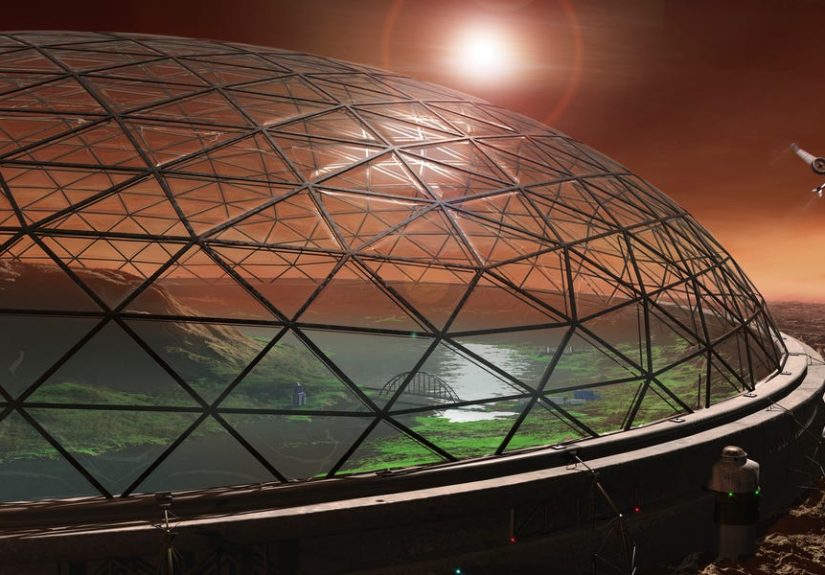
NIAC also investigates how humans might build and live beyond Earth. Concepts have explored lunar glass structures, in-space assembly, and even mycotecture, which studies the possibility of using fungal materials to grow or support off-world habitats. That may sound like NASA hired a mushroom to join the architecture team, but the underlying idea is serious: future explorers cannot carry every building material from Earth.
Sustainable construction on the Moon and Mars will likely require local resources, lightweight systems, and materials that can be produced or assembled with minimal supply chains. NIAC allows researchers to explore these unconventional habitat strategies before they are needed in mission-critical situations.
Robots for Extreme Worlds
From hopping probes to micro-swimmers, NIAC concepts often rethink what a robot can be. Traditional rovers are excellent, but they cannot solve every exploration problem. A rover may struggle in caves, cliffs, oceans, plumes, or low-gravity rubble fields. Future missions may need robots that hop, crawl, swim, cling, fold, split apart, or cooperate as swarms.
Robotic innovation is especially important for destinations such as icy moons, asteroids, Venus, Titan, and the lunar poles. These places are not friendly. They do not have convenient sidewalks. They do not care about your wheel traction. NIAC helps NASA imagine machines tough and clever enough to go where ordinary designs cannot.
The Real Value of NIAC: Better Questions, Not Just Better Gadgets
The best way to understand NIAC is not as a catalog of futuristic gadgets. It is a system for asking better questions. Could a telescope be built inside a lunar crater? Could spacecraft use new propulsion methods to explore the heliosphere? Could space habitats be grown instead of launched? Could tiny robotic swimmers explore alien oceans? Could advanced materials make giant structures unfold in space?
These questions matter because NASA missions are constrained by mass, power, distance, communication delays, radiation, cost, and the general inconvenience of operating in places where duct tape is helpful but not always enough. Breakthrough concepts can change those constraints. A lighter structure, a smarter robot, a new power system, or a faster propulsion method can reshape mission design from the ground up.
NIAC also helps normalize long-term thinking. In a world obsessed with quarterly results, the program invests in ideas that may not mature for ten, twenty, or thirty years. That is not slow thinking. That is strategic thinking. Space exploration is a relay race across generations, and someone has to start carrying the baton before the finish line is visible.
How NIAC Supports the Future Space Economy
NASA’s Space Technology Mission Directorate supports technologies that benefit NASA, commercial space companies, other government agencies, and the broader aerospace economy. NIAC fits into that mission by helping identify concepts with long-term potential. Even when an idea does not become a NASA mission, it can influence future research, inspire new partnerships, or guide private-sector innovation.
This is especially important as space becomes more commercial and collaborative. Lunar infrastructure, in-space manufacturing, advanced communications, autonomous systems, and deep-space logistics will require contributions from many organizations. NIAC helps seed the early ideas that may later become useful across that ecosystem.
The program’s impact is not limited to outer space. Technologies developed for extreme environments often have lessons for Earth. Materials science, robotics, power systems, autonomous navigation, environmental sensing, and advanced manufacturing can all produce benefits beyond NASA missions. Space technology has a habit of sneaking back home wearing practical shoes.
Challenges: Why Future Tech Is Hard to Develop
Developing future space technology is not as simple as having a brilliant idea and adding a dramatic artist’s rendering. NIAC concepts must face brutal technical questions. Can the physics work? Can the system survive launch? Can it operate in vacuum, radiation, dust, heat, cold, or corrosive atmospheres? Can it be powered? Can it communicate? Can it be tested on Earth? Can it fit inside a realistic mission architecture?
This is where the program’s phased structure becomes useful. Early funding lets researchers identify major obstacles before too much time and money are committed. In some cases, the study may reveal that the idea needs more basic research. In other cases, it may show a realistic path forward. Either outcome is better than guessing.
There is also a cultural challenge. Organizations naturally prefer proven technologies because proven technologies are safer. But if NASA only uses what already exists, it limits what future missions can accomplish. NIAC gives high-risk, high-reward ideas a legitimate place in the pipeline without pretending that every concept is ready for launch.
Experience Notes: What It Feels Like to Follow NIAC’s Future-Tech Pipeline
Reading through NIAC concepts feels a little like walking through a museum where every exhibit is from a future that has not been built yet. One room contains lunar telescopes. Another has fusion propulsion. Around the corner, someone is proposing robotic explorers for alien oceans, while another team is calmly discussing habitats made with biological materials. It is wonderfully strange, but not random. The best NIAC ideas have a clear mission need hiding beneath the futuristic surface.
The experience also changes how you think about innovation. Many people imagine invention as a lightning strike: one genius, one idea, one dramatic breakthrough. NIAC shows a more realistic version. Innovation is often a disciplined conversation between imagination and evidence. A researcher proposes a concept. Then the concept is tested against physics, mission design, engineering limits, and practical constraints. The idea either gets stronger, changes shape, or politely exits the room.
Following NIAC also reminds you that space technology development requires emotional stamina. The most exciting concepts are not guaranteed to fly. A brilliant design may need materials that are not mature. A propulsion idea may require power systems that remain difficult. A robotic explorer may work beautifully in simulation but face deployment problems in the real world. This can sound discouraging, but it is actually the point. NIAC creates a safe and serious space to discover those problems early.
For students, entrepreneurs, engineers, and space fans, NIAC offers a valuable lesson: big ideas need both courage and homework. The courage is obvious. It takes nerve to propose technology that sounds impossible at first. The homework is equally important. A NIAC-worthy concept must be tied to a reference mission, supported by credible reasoning, and clear about the challenges ahead. “Because it would be cool” is not enough, even though many NIAC concepts are, objectively, extremely cool.
There is also something refreshingly human about the program. Space exploration can sometimes feel dominated by massive rockets, enormous budgets, and intimidating acronyms. NIAC reveals another side: curiosity. It encourages people to ask daring questions before all the answers are available. That attitude is essential for exploration. No one reaches a new world by only repeating old instructions.
If you are building content, studying aerospace, or simply trying to understand where future space technology begins, NIAC is one of the best windows into NASA’s long-range imagination. It shows that tomorrow’s missions are not born fully assembled. They begin as sketches, models, calculations, debates, failures, revisions, and stubbornly optimistic proposals. Somewhere in that messy process, the future quietly starts taking notes.
Conclusion: NIAC Is NASA’s Bet on the Possible
NASA’s Innovative Advanced Concepts Program is where future space technology gets its first serious chance. It does not promise that every idea will fly, and it does not pretend that visionary concepts are easy. Instead, it gives researchers a disciplined way to explore bold possibilities before the world knows it needs them.
From lunar radio telescopes and inflatable starshades to advanced propulsion, space habitats, and unusual robots, NIAC helps NASA look beyond the next mission and ask what exploration could become. That is why the program is so important. It protects imagination from being dismissed too early, while still demanding technical credibility.
The future of space exploration will not be built by cautious thinking alone. It will require brave ideas, patient research, and programs willing to fund the first steps into the unknown. NIAC is one of those programs. It is NASA’s reminder that before a giant leap becomes history, it often begins as a wonderfully unreasonable question.