Table of Contents >> Show >> Hide
- Why Gateway Still Matters
- The Problem Gateway Solves
- What Gateway Actually Is
- Why NASA Still Sees Gateway as the Best Bet
- The Criticism Is Real, and It Should Be
- What Recent Changes Mean for Gateway
- Could NASA Put Boots on the Moon Without Gateway?
- Conclusion
- The Experience of Waiting for Gatewayand Why It Still Feels Worth It
- SEO Tags
If Apollo was a moonshot made of guts, slide rules, and enough caffeine to power a small nation, Artemis is something different: a long game. And in that long game, NASA’s Lunar Gateway still looks like the smartest piece on the board.
That may sound surprising. Gateway is not the flashy part of the lunar campaign. It is not the rocket that steals the launch-day headlines, the spacesuit that ends up on magazine covers, or the moon dust selfie everybody wants framed in the hallway. It is, essentially, a small space station headed for lunar orbit. In other words, it is infrastructure. And infrastructure rarely gets fan mail.
But if the real goal is not just touching the Moon once, planting a flag, and heading home with a dramatic soundtrack, but building a repeatable, flexible system for getting astronauts to the lunar surface again and again, Gateway starts to make a lot of sense. A lot.
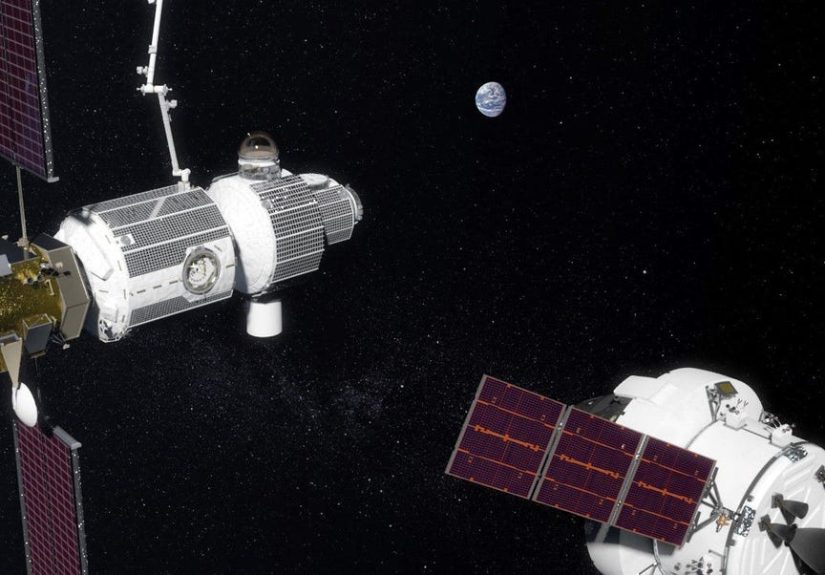
NASA’s case for Gateway has always been bigger than one landing. The agency wants a reusable lunar architecture that supports science, cargo, international partnerships, and eventually Mars-class operations. That makes Gateway less like a side quest and more like a cosmic truck stop, command post, science lab, and proving ground rolled into one tidy package. Not glamorous? Maybe. Necessary? Increasingly, yes.
Why Gateway Still Matters
The simplest way to understand Gateway is this: NASA does not want the Moon to be another one-and-done adventure. It wants a system that can keep working after the first crew touches down. Gateway is designed to help make lunar missions more sustainable by creating a staging point in lunar orbit instead of forcing every mission to reinvent the wheel from Earth.
That matters because Artemis is aiming at the Moon’s south polar region, not the easier equatorial zones favored during Apollo. The south pole is scientifically juicy because of suspected water ice in permanently shadowed craters, tricky terrain, and harsh lighting conditions. It is the kind of destination that rewards careful logistics, dependable communications, and an architecture built for more than a single heroic leap.
Gateway gives NASA a place where crews can arrive aboard Orion, prepare for surface operations, dock with landers, receive cargo, conduct research, and return safely before heading home. Think of it as the orbital hinge between Earth and the lunar surface. Remove that hinge, and the whole door still might open, but it becomes a lot harder to swing smoothly.
The Problem Gateway Solves
1. It makes the lunar south pole easier to reach
Gateway is planned for a near-rectilinear halo orbit around the Moon, which sounds like something a physics professor mutters while ruining a dinner party. In practice, it is a highly useful polar orbit that gives spacecraft reliable access to the entire lunar surface, especially the south pole. That is a big deal because the south pole is where Artemis wants to do long-term work, not just a quick cameo appearance.
This orbit also supports long visibility windows with Earth, which helps with communications. In deep space, “Can you hear me now?” is not a joke. It is mission architecture.
2. It turns lunar missions into a campaign, not a stunt
Without Gateway, NASA can still imagine direct missions in which astronauts fly to lunar orbit, transfer to a lander, head down, come back up, and go home. That can work for individual sorties. But for a broader campaign with repeated missions, cargo deliveries, international hardware, and science operations, Gateway adds structure.
It is the difference between taking one camping trip and building a basecamp system that supports many trips over time. One asks, “Can we get there?” The other asks, “Can we keep going back without acting surprised every single time?” NASA is clearly trying to answer the second question.
3. It adds flexibility for cargo, science, and operations
Gateway is not only about people. It is also about stuff. Important stuff. Supplies, experiments, tools, replacement hardware, and the kind of equipment astronauts suddenly care very deeply about once they are a quarter million miles from the nearest hardware store. NASA’s logistics plans for Gateway are part of a larger effort to treat lunar exploration like an enduring transportation system rather than a collection of disconnected missions.
That makes Gateway attractive because it becomes more than a stopover. It becomes a node. And nodes are what make networks work.
What Gateway Actually Is
One reason Gateway gets misunderstood is that people hear “space station” and picture a giant orbital city. That is not this. Gateway is much smaller than the International Space Station. It is leaner, more specialized, and designed for deep space operations. Its early form is meant to be human-tended rather than permanently occupied, which keeps the system practical for the mission set NASA currently wants.
The Power and Propulsion Element
The Power and Propulsion Element, or PPE, is the muscle and utility bill of the operation. It supplies power, communications, attitude control, and solar electric propulsion. That last part matters because solar electric propulsion is efficient and useful for maneuvering in cislunar space. NASA is not just building a module here; it is testing the kind of capabilities that future deep-space missions will depend on.
In plain English, PPE is the part that keeps Gateway alive, pointed the right way, and able to move where it needs to go. That is not glamorous either, but neither are plumbing and electricity, and nobody wants to live without those.
The HALO Module
HALO, short for Habitation and Logistics Outpost, is where Gateway starts feeling like a place instead of a concept. It will provide pressurized volume for astronauts to live and work, store cargo, support command and control, and host docking operations. If PPE is the engine room, HALO is the first real front porch.
The recent progress on HALO matters because hardware changes the conversation. Debates are cheap; metal is expensive. Once a major module has been built, shipped, and moved into final outfitting, Gateway stops looking like a PowerPoint with delusions of grandeur and starts looking like a real outpost in the making.
International Contributions
Gateway is also one of the most visibly international parts of Artemis. NASA is not doing this alone, and that is exactly the point. Canada is contributing Canadarm3, an advanced robotic system. Japan is supplying key support for the I-HAB habitation module, including life support-related functions. Europe is contributing major habitation and communications capabilities. The result is an architecture that spreads cost, expertise, and political durability across multiple partners.
That is not a footnote. It is a strategic advantage. Programs that create real roles for international partners tend to become stickier, more resilient, and harder to casually toss overboard when budgets get noisy.
Why NASA Still Sees Gateway as the Best Bet
Critics of Gateway usually make one understandable argument: why add another complex thing to an already complicated lunar program? Fair question. Artemis already includes the Space Launch System, Orion, lunar landers, spacesuits, ground systems, cargo systems, and surface infrastructure. Adding a mini space station can sound like deciding your road trip needs a yacht.
But NASA’s answer has remained remarkably consistent. Gateway is not random extra hardware. It is the framework that ties those systems together over time. If the agency only wanted one symbolic return to the Moon, Gateway would be easier to question. But NASA says it wants sustained exploration, science at the south pole, repeated expeditions, commercial cargo, and a path to Mars. In that scenario, Gateway looks less like excess and more like preparation.
Put differently, Gateway is not the fastest way to grab a headline. It may be the best way to build a program that still makes sense after the headline fades.
It gives Artemis room to grow
Programs fail when every mission has to do everything at once. Gateway lets NASA distribute responsibilities across a wider architecture. Orion brings crew. Landers go up and down. Logistics vehicles deliver cargo. Gateway hosts, supports, and connects them. That modularity can be frustrating because it means more moving parts, but it also creates a system that can evolve instead of collapsing if one element changes.
It supports long-term lunar science
Science is another reason Gateway keeps surviving the budget knife fight. Artemis is not only about proving the U.S. can still reach the Moon. It is about learning how to operate there for real. Lunar geology, volatile resources, radiation exposure, life support, navigation, communications, and deep-space habitability all benefit from an outpost that can support repeated missions.
There is also a bigger scientific horizon here. The Moon, and especially its far side and polar environments, opens doors for astronomy, planetary science, and surface operations that are difficult to replicate elsewhere. Gateway is not the only way to support that future, but it is one of the clearest ways to organize it.
It doubles as Mars practice
NASA has said for years that the Moon is not the final destination. The Moon is the training ground. Gateway fits that logic almost perfectly. Operating a crew-tended outpost far beyond low-Earth orbit, managing logistics without rapid rescue options, testing communications, refining autonomy, and learning how to live productively in deep space are all directly relevant to Mars.
Apollo taught NASA how to reach the Moon. Gateway may help teach NASA how to stay capable between worlds.
The Criticism Is Real, and It Should Be
None of this means Gateway is above criticism. It is not. The program has faced schedule pressure, design complexity, mass-management concerns, and the broader budget gravity that pulls on nearly every ambitious space project. Oversight bodies have repeatedly highlighted the challenges of keeping Artemis on time and affordable, and Gateway lives inside that reality, not outside it.
There is also a legitimate philosophical argument against Gateway: maybe a simpler direct-to-surface approach, supported heavily by commercial systems, would be faster and cheaper. That idea has fans, especially among people who look at every added docking event and see another chance for delay. They are not crazy. Complexity is expensive, and deep-space complexity is the deluxe version.
Still, cutting Gateway does not magically erase complexity. It mostly moves complexity somewhere else. You still need reliable orbital rendezvous, surface access, communications, logistics, and a way to support repeated missions. Gateway concentrates those needs into an asset NASA can reuse instead of rebuilding every time from scratch.
What Recent Changes Mean for Gateway
The Artemis timeline has shifted more than once, and that has fueled obvious skepticism. Fair enough. Nobody wins points for pretending lunar schedules have been carved into stone tablets. But the more interesting point is that Gateway has remained embedded in NASA’s long-range architecture even as the agency adjusts mission sequencing and risk posture.
That persistence matters. Programs survive not because they are perfect but because they keep solving a real problem. Gateway keeps surviving because NASA still needs a place in lunar orbit that can support landers, crews, cargo, and partner contributions in one integrated framework. The hardware progress on HALO and PPE makes that case stronger because the project is no longer just a strategy memo. It is turning into something you can point at and say, “Yes, that is actually being built.”
Could NASA Put Boots on the Moon Without Gateway?
Yes, in theory. If the only objective were to put boots on the lunar surface once, NASA could pursue architectures that minimize or bypass Gateway. But that is the wrong question. The better question is this: what is the best bet for putting boots on the Moon repeatedly, safely, scientifically, and in a way that builds toward a lasting presence?
That is where Gateway earns its keep. It is not the shortest path to a photo opportunity. It is the stronger path to a campaign.
And that is why NASA keeps coming back to it. Because the Moon is no longer just a destination. It is becoming a place where the agency wants to operate. Gateway is how you start acting like you mean that.
Conclusion
Gateway may never be the coolest kid in the Artemis yearbook. It is too practical for that. It is an orbital support structure, a logistics hub, a science platform, a docking node, a partner magnet, and a rehearsal space for Mars. In the world of space exploration, that is the equivalent of being the person who brings oxygen, snacks, and a backup plan. Everyone wants flash until the mission gets hard.
And lunar exploration is hard. Hard enough that the best architecture is rarely the one that looks simplest in a slogan. Gateway is not about making the Moon feel easy. It is about making a return to the Moon sustainable. That distinction matters.
So yes, Lunar Gateway is still NASA’s best bet for putting boots on the Moonnot because it is the fastest shortcut, but because it is the infrastructure most likely to turn one return into many. And if Artemis is serious about living, working, and learning beyond Earth, that is the kind of bet worth making.
The Experience of Waiting for Gatewayand Why It Still Feels Worth It
Following Gateway as a space enthusiast is a funny emotional experience, because it asks you to get excited about the parts of exploration that are usually hidden behind the curtain. You are not waiting for one giant “go” moment. You are waiting for solar electric propulsion milestones, module delivery photos, docking plans, logistics contracts, orbital validation, and international hardware integration. It is the least Hollywood version of lunar ambition imaginable. And somehow, that makes it more convincing.
There is a certain thrill in realizing that real exploration does not only live in the moonwalk. It lives in the checklist before the moonwalk. It lives in the pressurized volume calculations, the communication link margins, the cargo flow charts, and the debate over where astronauts will sleep, eat, repair hardware, and stage for the next descent. Gateway brings all of that into focus. It makes the Moon feel less like a distant symbol and more like a place human beings are trying to reach responsibly.
That changes the experience of watching the program unfold from Earth. Instead of looking for one giant leap, you begin to appreciate the smaller steps that make a giant leap survivable. A module arrives from Europe. A power system comes online. A robotic arm gets refined. A pathfinder mission proves an orbit. None of these moments has the instant drama of a bootprint in lunar dust, but together they create something more durable: confidence. You start to feel that the architecture is becoming real.
There is also something quietly moving about the international nature of Gateway. The Moon can easily become a stage for national bragging rights, and yes, prestige is part of the story. But Gateway also feels like a reminder that modern exploration is often collaborative by necessity. Watching the U.S., Canada, Japan, and European partners contribute different pieces to one outpost gives the project a broader emotional range. It stops feeling like a single-country stunt and starts feeling like a shared human effort to build a working foothold beyond Earth.
And then there is the patience. Oh, the patience. Space fans talk a big game about boldness, but deep down we all know the truth: space exploration is also an exercise in paperwork, postponements, engineering caution, and learning to celebrate progress that comes wrapped in foam packaging inside a cargo aircraft. Gateway forces you to appreciate that reality. It asks you to trade the instant gratification of a dramatic launch montage for the slower satisfaction of watching a system mature. Oddly enough, that can make the eventual payoff feel bigger, not smaller.
Because when astronauts finally use Gateway as intendedarriving in lunar orbit, docking, preparing for descent, heading to the south pole, and returning through an outpost built piece by piece over yearsit will mean more than one successful mission. It will mean the infrastructure worked. The partnerships worked. The patience worked. The idea of creating a true lunar campaign worked.
That is why Gateway still resonates even in the face of delays and criticism. It represents a version of exploration that is less about proving we can do something once and more about proving we can do it well, repeatedly, and with purpose. It invites us to imagine the Moon not as a trophy shelf, but as a destination with routines, systems, and return trips. For anyone who has spent years watching humanity flirt with deep-space ambitions and then back away, that is an unusually hopeful feeling.
So the experience of following Gateway is not pure adrenaline. It is steadier than that. It is the slow burn of seeing humanity try to grow up a little in spaceto build, not just visit; to prepare, not just perform; to create an architecture that can outlast one moment of applause. And honestly, that kind of experience may be exactly what a real return to the Moon should feel like.