Table of Contents >> Show >> Hide
- What Exactly Did NASA Open?
- Why Two Stuck Fasteners Became a Big Deal
- How Much Asteroid Material Did OSIRIS-REx Bring Back?
- Why Bennu Is Such a Special Asteroid
- What Scientists Found First: Carbon and Water
- The Building Blocks of Life: Exciting, But Not Alien Life
- What Ancient Salt and Water Chemistry May Reveal
- Why Pristine Samples Beat Meteorites
- How Bennu Helps Us Understand Earth
- Planetary Defense: Bennu Is Also a Warning Label
- OSIRIS-REx Became OSIRIS-APEX
- Why This Story Captured Public Imagination
- What Happens Next for Bennu Samples?
- Experiences and Reflections: What Bennu Teaches Us About Curiosity
- Conclusion
Some treasure chests come with rusty locks, pirate curses, and dramatic music. NASA’s version came with two stubborn fasteners, a contamination-controlled glovebox, and a few grams of black asteroid dust that may be older than every beach, mountain, dinosaur, and awkward middle-school photo on Earth.
In January 2024, NASA’s OSIRIS-REx curation team finally removed the last two fasteners blocking full access to the sample head that held material collected from asteroid Bennu. The prize inside was not gold, diamonds, or a glowing sci-fi cube. It was something far more valuable to scientists: pristine dust and rock from a carbon-rich asteroid formed near the dawn of the solar system.
The story sounds small at first. A canister was stuck. NASA opened it. End credits. But the real meaning is enormous. Bennu’s dust is a preserved chemical record from about 4.5 to 4.6 billion years ago, when the sun and planets were still getting their cosmic act together. Studying it may help answer some of humanity’s biggest questions: How did Earth get water? Where did the building blocks of life come from? And what can ancient asteroids teach us about protecting our planet?
What Exactly Did NASA Open?
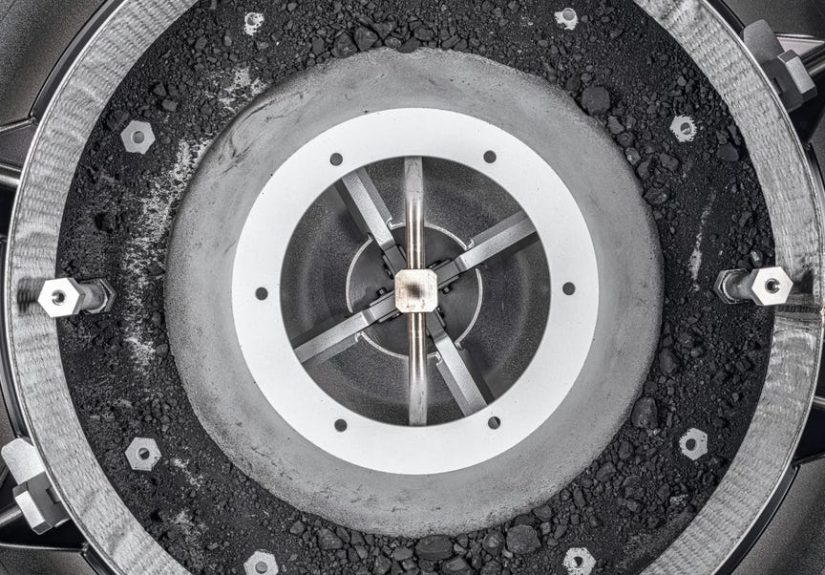
The container in question was part of the Touch-and-Go Sample Acquisition Mechanism, better known as TAGSAM. This was the clever sampling head used by NASA’s OSIRIS-REx spacecraft to briefly touch asteroid Bennu in October 2020, puff nitrogen gas at the surface, and scoop up loose material. Think of it as the world’s most expensive, most precise space vacuumexcept it worked in microgravity and had to survive a round trip across the solar system.
OSIRIS-REx returned its sample capsule to Earth on September 24, 2023, landing safely in the Utah desert. The capsule was rushed to NASA’s Johnson Space Center in Houston, where specialists began opening it inside specially designed clean-room facilities. The goal was simple but incredibly delicate: protect the asteroid material from earthly contamination while also protecting the sample’s scientific value for decades of research.
Early on, NASA had already collected loose material from outside and around the TAGSAM head. In fact, the sample was so abundant that some of it was visible before the device was fully opened. That is the kind of “problem” scientists dream about. It is like ordering fries and discovering the bag is half full of bonus friesexcept the fries are ancient asteroid fragments and every crumb matters.
Why Two Stuck Fasteners Became a Big Deal
The challenge was not that NASA forgot how screws work. The problem was that the tools used inside the OSIRIS-REx glovebox had to meet strict cleanliness and material standards. Ordinary hardware-store tools were not allowed because they could contaminate the sample with oils, metals, dust, or other modern Earthly materials.
Two of the fasteners on the TAGSAM head resisted removal with the approved tools available at the time. That meant the curation team had to design, build, and test new tools that could work inside the sample-handling environment without compromising the ancient material. This took patience, engineering discipline, and probably a few deep breaths.
On January 10, 2024, NASA technicians successfully removed the fasteners. With that, the team could continue disassembling TAGSAM and access the remaining Bennu material sealed inside. The careful delay was not a failure; it was exactly what responsible sample science looks like. When your sample may hold clues to the origin of life’s ingredients, you do not solve a stuck lid with brute force and a dramatic elbow slam.
How Much Asteroid Material Did OSIRIS-REx Bring Back?
NASA later announced that OSIRIS-REx delivered 121.6 grams, or 4.29 ounces, of material from Bennu. That may sound tiny if you are measuring snacks, but in planetary science it is a feast. The mission’s minimum requirement was 60 grams, so OSIRIS-REx brought back more than twice what scientists needed to meet the mission’s core goals.
This made the Bennu collection the largest asteroid sample ever gathered in space and returned to Earth. NASA also committed to preserving at least 70 percent of the sample at Johnson Space Center for future research. That decision matters because scientific instruments keep improving. A question researchers cannot answer today may become answerable 20, 30, or 50 years from now.
The Apollo lunar samples proved this beautifully. Rocks collected during the moon missions are still producing new discoveries because modern tools can analyze them in ways scientists in the 1960s and 1970s could only imagine. Bennu’s dust may follow the same path, becoming a long-term scientific savings account with excellent cosmic interest.
Why Bennu Is Such a Special Asteroid
Bennu is a near-Earth asteroid, but it is not just a random flying rock with good public relations. It is a carbon-rich asteroid, meaning it contains materials that are chemically interesting for understanding the early solar system. Scientists chose Bennu because its surface composition, orbit, and ancient character made it an outstanding target for sample return.
Asteroids like Bennu are often described as time capsules. Planets are geologically busy. Earth melts, folds, subducts, erodes, and recycles its rocks. Bennu, by contrast, preserves primitive material that has been less altered by the chaos of planetary geology. It is not perfectly unchanged, but it offers a much clearer window into the raw ingredients that helped build planets.
Research from the University of Arizona and NASA has described Bennu as material from a larger parent body that likely formed early in solar system history, was altered by water, broke apart through collisions, and eventually became the rubble-pile asteroid visited by OSIRIS-REx. In other words, Bennu is not one simple rock. It is a messy family album of early solar system chemistry, impacts, water activity, and cosmic recycling.
What Scientists Found First: Carbon and Water
NASA’s first public look at the Bennu sample revealed evidence of carbon and water-bearing minerals. That combination immediately caught attention because carbon chemistry and water are central to the story of life as we know it.
This does not mean NASA found alien microbes, fossil space shrimp, or tiny astronauts waving from a pebble. It means Bennu contains ingredients that are relevant to prebiotic chemistrythe chemistry that may precede life. Carbon is the backbone of organic molecules, and water helps drive chemical reactions. When both appear in ancient extraterrestrial material, scientists pay very close attention.
Bennu’s sample is especially powerful because it was collected directly from the asteroid and protected from Earth’s environment. Meteorites that fall naturally to Earth are useful, but they can be altered by atmosphere, weather, soil, and human handling. A returned sample gives researchers much more confidence that what they are seeing truly came from space.
The Building Blocks of Life: Exciting, But Not Alien Life
Later analyses of Bennu material became even more intriguing. NASA reported that scientists found organic molecules, including amino acids, and all five nucleobases used in DNA and RNA. Amino acids are used by life on Earth to build proteins. Nucleobases are part of the information-carrying chemistry of genetic material.
That sounds like a headline designed to make the internet sprint in circles. But the careful interpretation is this: Bennu contains chemical ingredients associated with life, not life itself. Finding amino acids and nucleobases in asteroid material suggests that important prebiotic compounds can form naturally in space or in asteroid parent bodies. It supports the idea that asteroids may have delivered some life-related ingredients to the early Earth.
One fascinating detail is chirality, or molecular “handedness.” Many amino acids can exist in left-handed and right-handed forms. Life on Earth mostly uses left-handed amino acids, but Bennu samples showed a mixture. That raises a deliciously difficult scientific question: if early chemistry had both hands available, why did biology on Earth mostly choose one? The answer remains one of the great mysteries, and Bennu has made it even more interesting.
What Ancient Salt and Water Chemistry May Reveal
Some Bennu findings point toward a parent body that once had water-rich chemistry. Scientists have studied minerals that suggest interactions with briny fluids, meaning salty water may have played a role in altering Bennu’s original material before the asteroid became the object we know today.
This is important because water does not merely sit politely in the corner. It changes minerals, moves elements around, and helps complex chemistry happen. If Bennu’s parent body contained ice that melted and reacted with rock, then that environment could have supported chemical pathways that produced or concentrated organic compounds.
Again, this is not the same as saying Bennu was alive. It is better understood as evidence that early solar system bodies could host surprisingly rich chemistry. Tiny worlds, far from being boring leftovers, may have been active chemical laboratories.
Why Pristine Samples Beat Meteorites
Meteorites have taught scientists a tremendous amount, but they arrive with baggage. They heat up while falling through the atmosphere. They land in deserts, snowfields, mud, or someone’s driveway. Then they may sit for years before collection. By the time a meteorite reaches a laboratory, researchers must carefully separate original space chemistry from Earth-based contamination.
OSIRIS-REx changed the game by collecting material directly from Bennu and returning it in a controlled capsule. NASA’s curation team then handled the sample in clean rooms and nitrogen-filled environments designed to keep terrestrial contamination as low as possible.
That level of protection allows scientists to ask sharper questions. Are certain organic molecules truly from the asteroid? What minerals formed before the sample reached Earth? What isotopic signatures can reveal where Bennu’s materials formed? The cleaner the sample, the stronger the answers.
How Bennu Helps Us Understand Earth
Studying Bennu is not only about Bennu. It is also about Earth. Our planet formed from the same broad solar system construction zone as asteroids, comets, and other rocky bodies. But Earth has changed dramatically over billions of years. Plate tectonics, oceans, atmosphere, life, and weather have rewritten much of its earliest record.
Bennu’s material can preserve clues that Earth has erased. Its chemistry may help scientists understand what kinds of compounds were available when young Earth was being bombarded by leftover planetary debris. If asteroids delivered water and organic molecules to Earth, they may have contributed to the environmental recipe that eventually allowed life to emerge.
This does not reduce life to a simple “asteroids did it” story. The origin of life is far more complex. But Bennu adds evidence that important ingredients were present beyond Earth and could have been delivered throughout the early solar system.
Planetary Defense: Bennu Is Also a Warning Label
Bennu is scientifically precious, but it is also part of another serious topic: planetary defense. Bennu is classified as a near-Earth asteroid, and although the risk of impact is very small, its orbit has been studied carefully because it has a remote chance of striking Earth in the distant future.
OSIRIS-REx helped refine knowledge of Bennu’s orbit, surface, mass, and structure. That information matters because protecting Earth from asteroid impacts requires understanding how asteroids move and what they are made of. A solid metallic asteroid would respond differently to a deflection attempt than a loosely packed rubble-pile asteroid.
So yes, Bennu is a science treasure chest. It is also a reminder that the solar system is not a museum where everything stays politely behind velvet ropes. Objects move. Orbits shift. Gravity nudges. Sunlight subtly alters paths over time. The more we learn, the better prepared we are.
OSIRIS-REx Became OSIRIS-APEX
After releasing the Bennu capsule, the spacecraft did not retire to a quiet orbit with a tiny gold watch. NASA redirected it for an extended mission called OSIRIS-APEX, sending it toward asteroid Apophis. Apophis will make a very close approach to Earth in 2029, giving scientists a rare opportunity to study how Earth’s gravity affects an asteroid during a close flyby.
OSIRIS-APEX will not collect another sample, but it can observe Apophis up close. That follow-up mission extends the value of the original spacecraft and shows how sample-return missions can evolve into broader planetary science campaigns.
Why This Story Captured Public Imagination
The stuck canister story worked because it felt wonderfully human. NASA can fly a spacecraft to an asteroid, collect dust, bring it home from millions of miles away, and still run into the universal problem of a stuck lid. It is the same emotional category as fighting with a pickle jaronly the pickle jar contains ancient cosmic chemistry and is handled by people wearing clean-room suits.
That contrast is charming, but it also reveals something deeper about science. Breakthroughs are not only dramatic launches and perfect animations. They are also slow, careful, repetitive, precise acts of patience. The glamorous part was the spacecraft touching Bennu. The equally important part was making sure no one contaminated the sample while opening the hardware back on Earth.
The image of scientists carefully prying open the TAGSAM head is a reminder that discovery often depends on restraint. Sometimes the smartest move is not to rush. Sometimes “do not mess up the dust” is the mission.
What Happens Next for Bennu Samples?
NASA released a sample catalog so scientists around the world can request Bennu material for research. Each request must justify what the researcher wants to study, how the analysis will be performed, and how much material may be consumed or altered.
This allocation process protects the sample from being used too quickly or carelessly. Some experiments are destructive, meaning a tiny portion of the sample may be dissolved, heated, crushed, or otherwise changed forever. Those studies can be valuable, but they must be balanced against the need to preserve material for future generations.
Over the coming years, researchers will continue studying Bennu’s minerals, isotopes, organic compounds, magnetic properties, grain textures, and exposure history. Each tiny particle may tell a different part of the story. One grain may preserve ancient water alteration. Another may contain presolar stardust. Another may reveal what happened when Bennu’s parent body broke apart and reassembled.
Experiences and Reflections: What Bennu Teaches Us About Curiosity
There is a practical lesson in the Bennu canister story that goes beyond astronomy. Big discoveries often arrive disguised as small, frustrating tasks. A stuck fastener does not look poetic. It looks annoying. But the way NASA handled that obstacle shows the difference between urgency and care. The team did not force the container open simply because the world was eager for results. They slowed down, designed the right tools, and protected the integrity of the sample.
That is a useful mindset for anyone working on a difficult project. Whether you are writing research, restoring an old house, building a business, or trying to assemble furniture with instructions that appear to have been translated by a sleepy raccoon, patience matters. The first solution is not always the best solution. Sometimes the smartest progress comes from stepping back and asking, “What could go wrong if we rush?”
Bennu also changes how we think about dust. Most of us treat dust as the villain of shelves, ceiling fans, and laptop keyboards. NASA treated dust as a scientific treasure. That shift in perspective is powerful. It reminds us that value depends on context. A speck on your desk is a cleaning chore. A speck from Bennu is a message from the early solar system.
There is also something humbling about holding, studying, or even imagining material that predates Earth’s familiar landscapes. Bennu’s grains come from a time before forests, oceans, cities, languages, and calendars. They existed before there was a “here” in the human sense. Looking at that material is like reading the first rough draft of our cosmic neighborhood.
For students and science lovers, this mission is a reminder that space exploration is not only about going far away. It is also about bringing something back and learning from it slowly. Telescopes show us distant worlds. Spacecraft visit them. Sample-return missions let us put pieces of those worlds under microscopes, beamlines, spectrometers, and instruments so sensitive they can detect chemical whispers.
The Bennu sample also encourages a healthier kind of wonder. It does not need exaggeration to be amazing. We do not have to pretend NASA found aliens or secret space DNA. The real story is already thrilling: a spacecraft traveled to an asteroid, collected ancient material, returned it safely to Earth, and gave scientists a cleaner look at the chemistry that may have helped prepare planets for life.
That is enough. In fact, it is more than enough. The universe does not need clickbait. It has asteroids older than mountains and dust that can make a room full of researchers cheer.
Finally, Bennu teaches us that the past is not gone. Some of it is still floating nearby, locked in rocks, waiting for the right mission and the right tools. NASA’s canister was not just a container of asteroid dust. It was a time machine small enough to fit in a lab and old enough to make human history look like a weekend errand.
Conclusion
NASA’s successful opening of the Bennu sample canister was more than a technical victory. It was the unlocking of a rare archive from the beginning of the solar system. Inside that carefully protected material are clues about carbon chemistry, water-bearing minerals, ancient parent bodies, planetary formation, and the possible delivery of life’s ingredients to early Earth.
The story is also a celebration of careful science. OSIRIS-REx did the spectacular work of reaching Bennu and bringing material home, but the curation team’s patient handling ensured that the sample remains useful for researchers today and for scientists who have not even been born yet.
In a world that often rewards speed, Bennu rewards precision. Two stuck fasteners slowed the reveal, but they did not stop it. When the canister finally opened, it gave humanity a better look at where we came fromnot in myth, not in metaphor, but in dust, rock, carbon, water, and chemistry older than Earth’s oldest memories.