Table of Contents >> Show >> Hide
- 1. The show began life as a different series entirely
- 2. Carl Reiner based the premise on his own life
- 3. The series was nearly canceled after just one season
- 4. Mary Tyler Moore almost skipped her audition
- 5. Laura Petrie’s pants were a mini television revolution
- 6. Rob and Laura’s marriage had to obey network rules
- 7. That famous ottoman stumble became one of TV’s great openings
- 8. Buddy and Sally were inspired by real comedy-world types
- 9. Rose Marie helped Morey Amsterdam join the cast
- 10. The show used innovative production methods
- 11. Staying in black and white was a deliberate choice
- 12. “That’s My Boy?” caused sponsor and network headaches
- 13. A classic episode was inspired by Garry Marshall’s “stuckinna” idea
- 14. The JFK assassination affected production in real time
- 15. It became an Emmy juggernaut
- Why These Trivia Tidbits Still Matter
- A Longer Look at the Experience of Watching and Revisiting the Show
- Conclusion
If television had a trophy case labeled “Shows That Aged Like Fine Sparkling Cider”, The Dick Van Dyke Show would have its own shelf, polished weekly and probably color-coded by Sally Rogers. More than six decades after it first aired, this classic sitcom still feels fast, smart, and weirdly modern. The jokes crackle, the cast clicks, and the writing glides between office comedy, domestic comedy, and physical comedy like it invented the lane markings.
That is why Dick Van Dyke Show trivia is so much fun: the more you learn, the more you realize this was not just another black-and-white sitcom with a nice sofa and a laugh track. It was a groundbreaking TV comedy built on sharp writing, fearless performances, behind-the-scenes risks, and just enough network anxiety to keep things interesting. In other words, it was a masterpiece with a side of sponsor panic.
Here are 15 fascinating tidbits about The Dick Van Dyke Show that make this beloved classic even better.
1. The show began life as a different series entirely
Before America met Rob and Laura Petrie as we know them, Carl Reiner had already created a version of the concept called Head of the Family. In that original pilot, Reiner himself played the lead. The idea was solid, but the chemistry was not quite magic yet. Once producer Sheldon Leonard reworked the concept and Dick Van Dyke stepped into the starring role, the series finally found the spark it needed.
It is one of the great “almost” stories in television history. The blueprint was there, but the renovation changed everything. Think of it as TV’s version of a home makeover where the original wallpaper had to go.
2. Carl Reiner based the premise on his own life
One reason the show still feels honest is that Reiner was writing from experience. The comedy writer balancing work in Manhattan and home life in the suburbs was not some random fiction machine. Reiner drew heavily from his own world, which gave the series a grounded quality that many sitcoms of the era lacked.
That autobiographical backbone helped the show avoid cartoonish family dynamics. Rob Petrie was funny, sure, but he was also frazzled, proud, insecure, affectionate, and sometimes ridiculous. In other words, he was a person, not just a punchline delivery device in a tie.
3. The series was nearly canceled after just one season
Yes, this now-revered classic was once wobbling on the edge of cancellation. The first season did not set the world on fire in the ratings, and CBS was ready to move on. Fortunately, the show survived, and reruns helped it build a larger audience. Once viewers caught up, the series took off and became one of the defining sitcoms of the 1960s.
This is a useful reminder that even legendary shows can start slowly. So if your first attempt at greatness feels a little shaky, congratulations: you are apparently following the Dick Van Dyke Show method.
4. Mary Tyler Moore almost skipped her audition
It is hard to imagine anyone other than Mary Tyler Moore as Laura Petrie, but she nearly did not go to the audition at all. According to her own recollections, she was tired of rejection and wanted to pass. Her agent pushed her to go, and thank goodness for that little nudge from destiny.
Danny Thomas also remembered her from an earlier audition and helped bring her back into the picture. The result was one of the most charming performances in sitcom history. Laura Petrie was warm, witty, stylish, and funny without ever feeling forced. That role did not just make Moore famous. It helped redefine what a TV wife could be.
5. Laura Petrie’s pants were a mini television revolution
Today, a woman wearing slim capri pants at home sounds about as controversial as owning a toaster. In the early 1960s, though, Laura Petrie’s wardrobe stirred up real objections. Mary Tyler Moore pushed for realism because she did not think young wives and mothers actually vacuumed in fancy dresses and heels like television kept pretending they did.
That choice seems small now, but it mattered. Laura looked contemporary, relaxed, and believable. She was glamorous without being trapped in sitcom doll packaging. Those capri pants became part of television history, proving that costume choices can quietly punch holes in outdated expectations.
6. Rob and Laura’s marriage had to obey network rules
The Dick Van Dyke Show is often remembered as a warm, sexy, affectionate portrait of marriage. Ironically, it had to work around plenty of censorship rules to get there. Rob and Laura slept in twin beds because that was still the accepted television standard. And when the show dealt with pregnancy, the word “pregnant” itself was off-limits; the script had to use gentler phrases like “expecting a baby.”
That tension makes the series even more impressive. The show found ways to feel adult, romantic, and real while staying inside a rulebook that would make modern writers laugh into a coffee mug.
7. That famous ottoman stumble became one of TV’s great openings
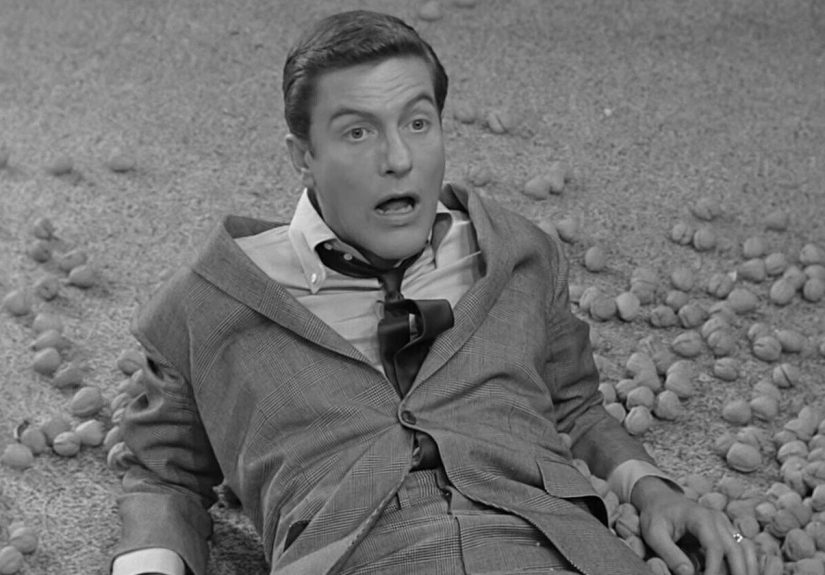
If you know one visual from the series, it is probably Rob Petrie entering the living room and tripping over the ottoman. That bit became one of the most iconic opening-credit gags in television. It perfectly captured Dick Van Dyke’s elastic physical comedy and set the tone before a single line of dialogue landed.
Best of all, the stumble was not just a random gag tossed in for chaos points. It became a symbol of Rob himself: charming, capable, and always one decorative footstool away from disaster.
8. Buddy and Sally were inspired by real comedy-world types
The writers’ room on the fictional Alan Brady Show did not appear out of thin air. The characters of Buddy Sorrell and Sally Rogers were shaped by the kind of comic talent Carl Reiner had known in real life, including echoes of comedy legends such as Mel Brooks and Selma Diamond. That mix gave the office scenes a lived-in feel.
Buddy’s fast-talking showmanship and Sally’s dry intelligence created a rhythm that made the workplace half of the show every bit as strong as the home half. Few sitcoms of the era balanced those two worlds so gracefully.
9. Rose Marie helped Morey Amsterdam join the cast
Speaking of Buddy and Sally, their chemistry was not accidental. Carl Reiner later noted that Rose Marie played a role in bringing Morey Amsterdam into the series. That was a major win for the show. Amsterdam’s vaudeville timing and Rose Marie’s razor-sharp delivery gave the writers’ room scenes their zing.
Put simply, if Rob Petrie was the nervous center of the room, Buddy and Sally were the fireworks. The trio worked because each performer brought a completely different comic flavor, and somehow the result tasted perfect.
10. The show used innovative production methods
Reiner credited Desi Arnaz’s revolutionary three-camera production system as part of the show’s technical DNA. That method helped create a polished rhythm between performance and staging, allowing the sitcom to feel energetic without becoming visually chaotic. For a show built on dialogue and timing, that mattered a lot.
It also explains why the series still plays so smoothly today. The camera work does not feel stiff or museum-like. It moves with the comedy, which is exactly what a great sitcom should do.
11. Staying in black and white was a deliberate choice
Even as color television became the shiny new toy, The Dick Van Dyke Show remained in black and white during its original run. Part of that decision was practical economics, but the result also gave the series a sleek visual identity. The crisp look suits the writing-room banter, modern furniture, skinny ties, and Laura’s unforgettable fashion.
Honestly, the black-and-white image is part of the charm. It makes the show feel classy without becoming stuffy, like a tuxedo that still knows how to fall over an ottoman.
12. “That’s My Boy?” caused sponsor and network headaches
One of the show’s most celebrated episodes, That’s My Boy?, also stirred concern behind the scenes. The story, involving a hospital mix-up and fears that Rob and Laura brought home the wrong baby, brushed against the kind of subject matter that networks and sponsors treated very carefully at the time.
That discomfort is part of what makes the episode so memorable. The show was willing to push into emotionally complicated territory while still making room for big laughs. It never forgot that comedy works best when the stakes actually matter.
13. A classic episode was inspired by Garry Marshall’s “stuckinna” idea
The wonderfully absurd Never Bathe on Saturday, in which Laura gets her toe stuck in a faucet, has one of the best origin stories in sitcom lore. Garry Marshall once mentioned his love of “stuckinna” situations, like getting stuck in an elevator or stuck in a bowling ball. Carl Reiner took that funny little concept and turned it into one of the show’s most famous episodes.
Mary Tyler Moore initially did not love the script, which somehow makes the finished episode even more delicious. The whole thing is a reminder that sitcom brilliance sometimes begins with somebody saying something gloriously silly and another writer refusing to let it go.
14. The JFK assassination affected production in real time
The show did not exist in a vacuum. During the week of President John F. Kennedy’s assassination, the production of Turtles, Ties, and Toreadors went forward without a studio audience. That detail gives the series an added historical weight. Behind all the laughter were real people living through the same national grief as everyone else.
It is easy to think of classic sitcoms as sealed little time capsules of comfort, but they were also made inside history, not outside it.
15. It became an Emmy juggernaut
For a show that started as a near-cancellation case, The Dick Van Dyke Show ended up collecting serious awards hardware. It earned 25 nominations and 15 Emmy wins, including honors for acting, writing, directing, and Outstanding Comedy Series. Dick Van Dyke, Mary Tyler Moore, Carl Reiner, Rose Marie, Jerry Paris, Sam Denoff, and Bill Persky all benefited from the show’s exceptional standard.
That sweep matters because it confirms what viewers still feel today: this was not just popular television. It was elite television. A sitcom can be cozy and brilliant at the same time, and this one proved it with trophies to spare.
Why These Trivia Tidbits Still Matter
What makes The Dick Van Dyke Show trivia so satisfying is that every behind-the-scenes fact points back to the same truth: this was a series built with care. The cast was excellent, the writing staff was stacked, the visual style was elegant, and the show kept sneaking modernity into a medium that was often timid. It gave viewers a marriage that felt affectionate, a workplace that felt alive, and comedy that did not talk down to the audience.
That is why the show still feels fresh. It is not just “good for its time.” It is good, period. Rob and Laura still flirt better than half of television. Sally Rogers still steals scenes like rent is due. Buddy still talks like his mouth is trying to beat his brain to the finish line. And Dick Van Dyke still moves like gravity is merely a suggestion.
A Longer Look at the Experience of Watching and Revisiting the Show
Part of the pleasure of revisiting The Dick Van Dyke Show is the strange, wonderful feeling that you are watching television history and a living comedy at the same time. Some classics demand homework. This one invites you in, loosens its tie, and says, “Sit down, we are going to have a very good half hour.” That is a rare gift.
For first-time viewers, the experience is often surprise. You expect something quaint. What you get is sharp rhythm, real chemistry, and jokes that still hit. The writing does not crawl. It pops. Even the pauses feel intentional, like the actors know exactly how long to let a laugh breathe before throwing the next line. That sense of precision makes the show feel younger than many sitcoms that came decades later.
For longtime fans, the experience is different but just as rewarding. Rewatching becomes less about plot and more about texture. You start noticing how Rob and Laura glance at each other before a joke lands, or how Sally’s deadpan comments cut through the room like a paper slicer. You notice the set design, the staging, the easy movement between home and office, and the confidence of a series that knows exactly what kind of world it has built.
There is also the comfort factor. The Petrie household feels warm without becoming syrupy. The writing room feels chaotic without becoming cruel. Even when characters bicker, the show rarely turns mean. That makes it an easy series to return to when modern television feels a little too loud, too cynical, or too interested in making every conversation sound like a hostage negotiation with punchlines.
The experience of watching the show today also comes with a fascinating double vision. You see the cultural limits of the era: the twin beds, the sponsor nerves, the words that could not be said. But you also see the rebellion inside those limits. Laura’s wardrobe, the intimacy between Rob and Laura, the intelligence of Sally Rogers, the willingness to let marriage and work both be funny and messy: all of that feels quietly bold. The show was playing by the rules while also wiggling them loose.
And then there is pure joy, the thing no scholarly essay can overcomplicate away. Dick Van Dyke’s physical comedy still feels like a direct hit to the funny bone. Mary Tyler Moore makes grace look effortless. Carl Reiner’s influence is everywhere, even when he is not onscreen. The whole cast creates the kind of ensemble energy that makes a viewer want to linger for one more episode and then accidentally watch four.
That may be the most lasting experience of all: gratitude. Gratitude that the show survived its shaky beginning. Gratitude that Mary Tyler Moore went to that audition. Gratitude that a series so rooted in its own time can still feel so alive in ours. Some television gets remembered because it was popular. The Dick Van Dyke Show gets remembered because it still works. And that, in TV terms, is the equivalent of sticking the landing after tripping over the ottoman.
Conclusion
15 trivia tidbits about The Dick Van Dyke Show reveal more than cute backstage anecdotes. They show how a near-miss pilot became a sitcom classic, how a gifted cast turned sharp scripts into gold, and how small creative risks helped push television forward. From Laura Petrie’s capri pants to the show’s Emmy dominance, every detail adds to the legend.
If you already love this classic TV comedy, these facts make it richer. If you have never seen it, congratulations: you still have the joy of discovering one of the smartest and most lovable sitcoms ever made. Rob Petrie may fall over the ottoman, but the show itself never really stumbles.