Table of Contents >> Show >> Hide
- What Are Lacy Oat Cookies?
- The Science Behind the Snap
- Ingredients and What Each One Does
- Foolproof Lacy Oat Cookies Recipe
- Troubleshooting Lacy Oat Cookies Like a Pro
- Flavor Variations That Actually Work
- Serving Ideas for Maximum “Wow”
- Storage and Make-Ahead Tips
- FAQ: Lacy Oat Cookies
- Conclusion
- Experience Section (Approx. ): What Baking Lacy Oat Cookies Actually Feels Like
Some cookies are built for lunchboxes. Some are built for dunking. And then there are lacy oat cookiesthe glam squad of the cookie world.
They’re thin, crisp, buttery, caramelized, and just dramatic enough to make you feel like you should plate them on a vintage dessert stand, even if you’re
eating them in pajamas while watching reruns. This guide is a practical, in-depth playbook for baking lacy oat cookies that snap cleanly, look beautiful,
and taste like toasted caramel met brown butter and decided to become best friends.
To build this article, I synthesized methods and patterns used across major U.S. baking authorities and test-kitchen style publishersfocusing on what
repeatedly works in real kitchens. You’ll get a foolproof base recipe, technique explanations (so you can fix problems fast), variation ideas, storage guidance,
and a long-form baker’s experience section at the end. If your last lace cookies merged into one giant cookie continent, don’t worry. We are turning that
edible geography lesson into a crisp, golden success story.
What Are Lacy Oat Cookies?
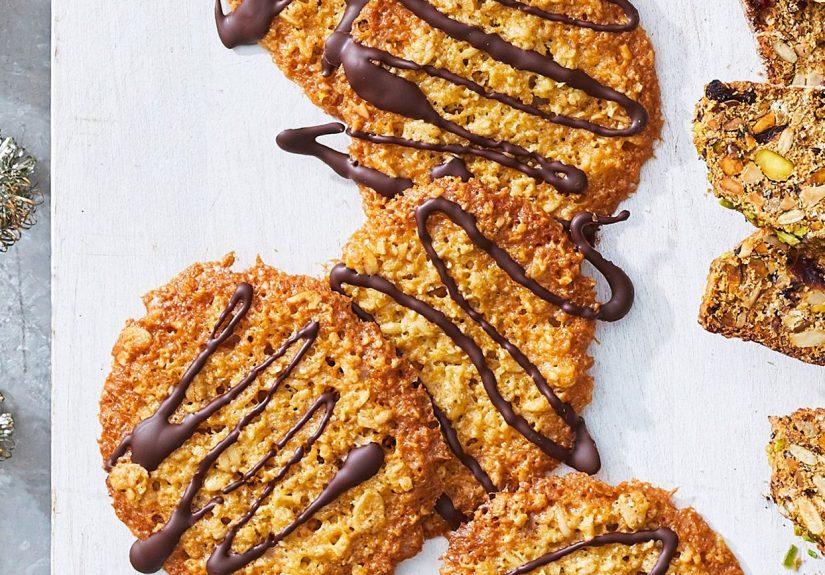
Lacy oat cookies (also called oatmeal lace cookies) are ultra-thin, crisp cookies made with a high ratio of sugar and fat, plus a small amount of flour and oats.
As they bake, the batter spreads into delicate rounds with tiny holeshence the “lace” look. The flavor lands somewhere between buttery toffee, caramel, and toasted oats.
Lace Cookies vs. Florentines
You’ll often see overlap between lace cookies and Florentines. In U.S. home baking, “lace cookies” can be oat-based, almond-based, or both. “Florentine” usually points
to nut-forward, candy-like versions, often finished with chocolate. The practical takeaway: both rely on spread, caramelization, and careful spacing, but texture and flavor
shift based on whether oats, nuts, honey, corn syrup, or flour are emphasized.
The Science Behind the Snap
1) Sugar Is the Engine
For thin and crisp cookies, sugar does heavy lifting. When heated with butter, it melts, bubbles, and caramelizes, creating that signature brittle crunch after cooling.
Brown sugar adds deeper toffee notes and moisture, while granulated sugar can sharpen crispness. If you reduce sugar too much, you usually lose the lace effect and end up
with something thicker and less shattery.
2) Fat Controls Spread and Flavor
Melted butter helps lace cookie dough relax and spread fast in the oven. That spread is goodup to a point. Too much heat, too little flour, or crowded pans can turn
“beautifully lacy” into “one mega-cookie.” Keep dough portions small and give each mound serious personal space.
3) Oat Type Changes Texture
Old-fashioned rolled oats tend to give slightly more texture, while quick oats can produce a more uniform, finer bite. Both can work depending on formula, but many classic
lace-cookie recipes specify rolled oats (not instant) for better structure and flavor balance.
4) Pan Lining Matters More Than You Think
Parchment paper is your best friend for consistent spread and clean release. Silicone mats can also work, but because every dough behaves differently, test one tray before
committing your whole batch. Lace cookies are delicate when hot; they firm up as they cool.
Ingredients and What Each One Does
- Butter: richness, flavor, and spread.
- Brown sugar (plus optional white sugar): caramel depth, color, and crisp-chewy balance.
- Rolled oats: light texture and nutty flavor.
- Flour (small amount): a little structure so the cookie doesn’t dissolve into chaos.
- Egg or egg white: helps bind and set the cookie.
- Vanilla + salt: makes everything taste more like itself.
- Optional milk or corn syrup: subtle texture control and smoother caramel-style consistency.
Foolproof Lacy Oat Cookies Recipe
Yield and Timing
Makes about 28 to 34 small cookies (or 14 to 17 sandwich cookies)
Prep: 20 minutes | Bake: 6–9 minutes per tray | Cool: 20 minutes
Ingredients
- 8 tablespoons (113 g) unsalted butter
- 3/4 cup (150 g) packed light brown sugar
- 2 tablespoons (30 g) granulated sugar
- 1 tablespoon light corn syrup or milk
- 1 teaspoon pure vanilla extract
- 1/2 teaspoon fine salt
- 3/4 cup (60 g) old-fashioned rolled oats
- 3 tablespoons (24 g) all-purpose flour
- 1 large egg white, lightly beaten
- Optional: 80–100 g melted dark chocolate for sandwiching or drizzling
Method
-
Prep your setup. Heat oven to 350°F (177°C). Line two baking sheets with parchment. Keep a thin spatula nearby. These cookies move from “too soft”
to “perfectly crisp” quickly while cooling. -
Melt and dissolve. In a medium saucepan over low heat, melt butter with brown sugar, granulated sugar, and corn syrup (or milk). Stir until smooth
and glossy. Don’t rush this step on high heat; gentle dissolving gives cleaner texture. - Flavor and dry mix. Remove from heat. Stir in vanilla and salt. Fold in oats and flour until no dry streaks remain.
- Add egg white. Let mixture cool for 3–4 minutes, then stir in beaten egg white until fully incorporated.
- Portion tiny mounds. Drop rounded teaspoons of batter at least 3 to 4 inches apart. For best control, bake only 6 to 8 cookies per tray.
-
Bake to deep golden edges. Bake 6–9 minutes, rotating once if needed. Look for bubbling centers and amber edges. Underdone cookies stay soft; overdone
cookies taste burnt quickly, so watch the first tray closely. - Cool before moving. Rest on pan 2–3 minutes, then lift gently with a thin spatula to a rack. They crisp as they cool.
- Optional chocolate finish. Once fully cool, spread a thin layer of melted chocolate on half the cookies and top with the rest for sandwiches.
Troubleshooting Lacy Oat Cookies Like a Pro
Problem: Cookies Spread Into One Giant Sheet
- Portions were too large; use teaspoon-size scoops.
- Cookies were too close together; leave 3–4 inches.
- Sugar/butter ratio may be too high; add 1 extra tablespoon flour next batch.
- Pan may be too hot from previous round; cool pans between batches.
Problem: Cookies Are Thick, Not Lacy
- Oven too cool; verify with an oven thermometer.
- Not enough sugar/fat, or too much flour.
- Batter too cold and stiff; let it sit at room temp a few minutes.
Problem: Cookies Stick
- Use parchment, not bare pans.
- Let cookies set briefly before lifting.
- Use a thin metal spatula and gentle, quick motions.
Problem: Cookies Taste Good but Lose Crunch Fast
- They may be slightly underbaked; aim for deeper golden edges.
- Humidity softens crisp cookies quickly; store airtight with a desiccant-safe method (or brief re-crisp in oven).
- Keep soft cookies and crisp cookies in separate containers.
Flavor Variations That Actually Work
1) Citrus Toffee Lace Cookies
Add 1 teaspoon orange zest and a tiny pinch of cinnamon. Great with dark chocolate drizzle.
2) Almond-Oat Lace Sandwiches
Swap 1 tablespoon flour with almond flour for nuttier flavor. Fill with bittersweet chocolate.
3) Salted Caramel Lace Cookies
Use flaky salt on top right after baking. Tiny amount, big effect.
4) Espresso Lace Cookies
Dissolve 1/2 teaspoon instant espresso powder into the warm butter-sugar mixture.
5) Gluten-Free Style
Use a reliable gluten-free flour blend or almond flour variation and certified gluten-free oats. Texture may shift slightly, but the lace effect can still shine with
proper ratios and spacing.
Serving Ideas for Maximum “Wow”
- Ice cream companions: serve like edible spoons next to vanilla, coffee, or hazelnut gelato.
- Dessert board: pair with berries, dark chocolate shards, and whipped mascarpone.
- Holiday cookie boxes: wrap stacks in parchment sleeves so they stay crisp.
- Coffee pairing: ideal with espresso, cappuccino, or strong black tea.
Storage and Make-Ahead Tips
- Store fully cooled cookies airtight at room temperature for best texture in the first 2–3 days.
- For longer storage, keep airtight in a cool, dry place; crisp cookies generally hold longer than soft ones.
- Freeze baked cookies in layered containers with parchment between stacks.
- If cookies soften, re-crisp at 300°F (149°C) for 3–4 minutes, then cool completely.
- If making chocolate sandwiches, let chocolate set fully before stacking.
FAQ: Lacy Oat Cookies
Can I use instant oats?
You can, but expect a different texture. Instant oats are more processed and can change spread and mouthfeel. Rolled oats usually give better classic lace-cookie character.
Why are my cookies chewy instead of crisp?
Most likely underbaking or high humidity. Bake until edges are deeply golden and cool completely before storing.
Do I need corn syrup?
Not always. Many recipes work with milk or no syrup at all. Corn syrup can help with texture consistency and shine in some formulas.
Can I make them nut-free?
Absolutely. This oat-based version is naturally nut-optional. If using almond flour versions, swap thoughtfully and test one batch.
Can I shape them?
Yesif you work fast. Right after baking, while still pliable, you can drape them over a spoon handle, small mold, or rolling pin for curved shapes.
Conclusion
Lacy oat cookies look fancy but are secretly weeknight-friendly once you understand their rules: small scoops, wide spacing, proper caramelization, and parchment-lined pans.
Nail those fundamentals and you’ll get cookies that are crisp, light, and deeply buttery with that iconic lace pattern. Whether you sandwich them with chocolate, serve them with ice cream,
or eat them plain over the sink like a cookie gremlin (no judgment), they deliver big flavor from simple pantry ingredients. Start with one test tray, take notes, and by batch two you’ll
bake them like you have your own dessert column.
Experience Section (Approx. ): What Baking Lacy Oat Cookies Actually Feels Like
The first time I made lacy oat cookies, I was overconfident in the way only a person holding butter and ambition can be. I placed twelve scoops on one tray like a normal cookie recipe and
watched them melt into a single golden continent. Technically delicious. Geographically incorrect.
Batch two was my redemption arc. I switched to teaspoon scoops, gave each dough mound enough space to file taxes independently, and lined the pan with parchment. That one changespacefelt like
discovering a hidden level in a video game. Suddenly the cookies spread into beautiful, frilly rounds with tiny windows of caramelized sugar. I held one up to the light and said, out loud, to no one,
“Oh wow, this is why they call them lace cookies.” My dog, who was nearby for quality-control reasons, remained unimpressed but attentive.
The sensory part is the best: the warm smell of brown sugar and butter turning to toffee, the little bubbles rising at the cookie’s edge, the quiet crackle as they cool. If you bake often, you know
there’s a specific moment when panic turns into prideusually around the time the first cookie lifts cleanly off the sheet and stays intact. That moment is elite.
I also learned that lacy oat cookies are tiny teachers of patience. Pull them too early and they bend instead of snap. Pull them too late and they go from amber to “well-done” in about thirty seconds.
The sweet spot is visual: deep golden rims, lighter centers, and a bubbling surface that looks set but still glossy. On my third test, I took one tray out at six minutes and another at eight. The difference
was huge. Six-minute cookies were tasty but a little bendy by day two. Eight-minute cookies stayed crisp and dramaticthe kind that shatter pleasantly between your teeth and make espresso feel like a luxury vacation.
Then came the chocolate experiment. I spread a whisper-thin layer of melted bittersweet chocolate between two fully cooled cookies and made sandwiches. They were absurdly goodrich, crisp, and somehow both nostalgic
and fancy. I brought a box to a small gathering, and people kept asking where I bought them. I did the modest baker shrug while internally giving myself a five-star review.
My favorite part of the whole process is how customizable these cookies are without losing their personality. Orange zest makes them brighter. Espresso powder makes them moodier. Flaky salt makes them feel grown-up.
And if your kitchen is humid or your cookies soften overnight, a quick oven refresh puts them back in business. They’re resilient little overachievers.
So if your first tray looks weird, welcome to the club. Lace cookies reward iteration. Keep notes. Adjust spacing. Watch color, not just time. And remember: even the “ugly” ones are usually still buttery,
caramelized, and excellent with coffee. In this corner of baking, progress is crunchy, golden, and very snackable.