Table of Contents >> Show >> Hide
- Why This Case Still Refuses to Stay in the Past
- The DNA Claim That Put Aaron Kosminski Back in the Spotlight
- Why So Many Experts Still Say: Not So Fast
- So Why Is the Internet So Split?
- What We Can Reasonably Say About Aaron Kosminski
- The Bigger Question: Why Are We Still So Obsessed?
- What Experiences Around This Story Reveal About Us
- Final Verdict: Breakthrough, Theory, or Just Another Viral Spiral?
- Conclusion
Every few years, Jack the Ripper storms back onto the internet like a Victorian ghost with excellent timing. This time, the spark is a resurfaced DNA claim, a dramatic quote “My search is over” and a familiar name: Aaron Kosminski. For some people online, that sounds like the end of one of history’s biggest true-crime mysteries. For others, it sounds like the beginning of yet another comment section fistfight with better grammar and worse hats.
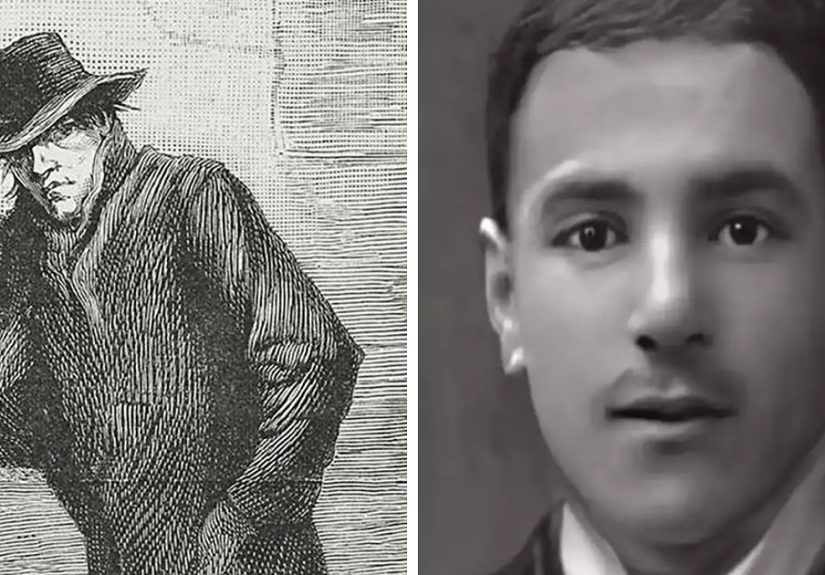
The latest wave of attention comes from renewed publicity around researcher Russell Edwards’ long-running theory that Kosminski, a Polish immigrant barber and longtime historical suspect, was the man behind the Whitechapel murders of 1888. Edwards has argued for years that DNA recovered from a shawl linked to victim Catherine Eddowes points to Kosminski. He has presented the evidence as a breakthrough. Critics, meanwhile, have presented the brakes, the caution tape, and the full emergency stop button.
And that is exactly why the story has exploded again. It contains everything the internet loves: mystery, DNA, confidence, doubt, old newspaper drama, and the irresistible promise that a case everyone thought would stay unsolved forever has suddenly been cracked. The only problem? History is not a courtroom, mitochondria are not magic, and Victorian evidence does not exactly arrive in a tamper-proof plastic bag with a barcode.
Why This Case Still Refuses to Stay in the Past
Jack the Ripper remains one of the most famous unidentified killers in modern history. The name is attached to at least five widely accepted “canonical” murders committed in London’s Whitechapel district between August and November 1888. Over time, the case became much more than a criminal investigation. It turned into a myth, a cottage industry, a tourism engine, a publishing lane, and a permanent argument machine.
That staying power is not hard to understand. The crimes happened in a city already obsessed with newspapers, scandal, class anxiety, and public spectacle. Add an unknown killer, taunting letters, endless suspects, and more than a century of books and documentaries, and you have a mystery that practically markets itself. If unsolved crimes had brand managers, this one would be the gold standard.
But there is also a serious human dimension that often gets buried under the legend. More recent historians have pushed readers to focus less on the shadowy figure called “Jack” and more on the women whose lives were cut short. That shift matters. It reminds us that the case was not born as entertainment. It became entertainment later.
The DNA Claim That Put Aaron Kosminski Back in the Spotlight
The modern Kosminski theory centers on a shawl said to have been found at the scene of Catherine Eddowes’ murder. Edwards bought the shawl in 2007 and later worked with scientists who said they recovered mitochondrial DNA, or mtDNA, from the fabric. According to the claim, the genetic material was compared with descendants connected to Eddowes and to Kosminski’s family line. That comparison, Edwards argued, linked the shawl to both the victim and the suspect.
In 2014, Edwards used those findings to publicly name Kosminski. Later, a paper connected to the analysis appeared in the Journal of Forensic Sciences, giving the story fresh credibility in the eyes of many readers. Once “DNA” and “peer-reviewed journal” entered the same sentence, the internet did what the internet does best: it sprinted straight to certainty.
By 2025, the theory had resurfaced in a major way again, boosted by interviews, new headlines, family calls for an inquest, and more emphatic language about closure. That is where the quote that inspired so many headlines came back into circulation: “My search is over.” It is dramatic, definitive, and tailor-made for social media. It is also exactly the kind of statement that makes skeptics reach for a magnifying glass and maybe a stress ball.
Why So Many Experts Still Say: Not So Fast
The controversy is not really about whether Kosminski was ever a suspect. He was. The real fight is about whether the shawl and the DNA analysis can identify him with confidence more than a century later. That is where things get messy and not in the fun “mystery board with red string” kind of way.
Problem No. 1: Mitochondrial DNA Is Useful, but Limited
MtDNA can be helpful when samples are old, degraded, or tiny. That makes it attractive in historical cases. But it is generally far less specific than nuclear DNA. In plain English, mtDNA can tell you whether someone fits within a maternal line, but it usually cannot single out one unique person with the kind of confidence most people imagine when they hear the phrase “DNA match.”
That distinction matters because viral headlines often flatten forensic nuance into something like: “Science solved it, everybody go home.” Real forensic work is less dramatic. It is more like: “This result may be interesting, but please bring five more layers of evidence and maybe a cleaner chain of custody.” Not as catchy, but much safer.
Problem No. 2: The Shawl’s Provenance Has Been Questioned for Years
Even if the DNA techniques were perfect, critics argue that the shawl itself is the weak link. Was it really at the crime scene? Was it definitely connected to Eddowes? Was it preserved in a way that would keep contamination from turning the item into a historical sponge full of random human contact? Those questions have never gone away.
And they are not trivial. An object that has passed through multiple hands across generations can carry layers of modern contamination. That does not automatically make testing worthless, but it absolutely makes clean conclusions harder. Historical evidence is already enough of a headache. Historical evidence that has lived a long social life is basically the forensic version of trying to hear one whispered sentence in a crowded stadium.
Problem No. 3: The Paper Itself Drew More Scrutiny Later
If the story ended with “a paper was published,” believers would be thrilled. But it did not end there. In 2024, the journal record took another turn when an expression of concern was issued over the study. According to the notice, concerns had been raised about the conclusions, and the original raw mtDNA data could not be produced because the authors said it was no longer available. That does not automatically prove the theory wrong. It does, however, make any declaration of final certainty look a lot shakier.
In other words, the debate got a twist ending of its own. Just when internet headlines tried to frame the mystery as solved, the scientific paper behind the buzz picked up an official cloud of doubt. That is the sort of detail that tends to disappear on social media, mostly because “expression of concern” is less clickable than “case closed.”
So Why Is the Internet So Split?
Because the two sides are operating with completely different emotional goals.
One side wants resolution. They look at a historic suspect, a tested artifact, a descendant comparison, and a researcher who has spent years chasing the answer, and they think: good enough. Mystery solved. Curtain down. Finally.
The other side wants evidentiary discipline. They hear “mtDNA,” “questioned provenance,” and “raw data unavailable,” and they think: absolutely not. To them, this is not a solved case. It is a highly marketable theory wearing a lab coat.
Both reactions make sense. Humans crave closure, especially in notorious cases. But historians and forensic scientists are trained to be allergic to overstatement. The internet, by contrast, is often powered by overstatement. Put those two habits in the same room and you do not get consensus. You get a digital reenactment of a Victorian shouting match.
What We Can Reasonably Say About Aaron Kosminski
Kosminski was not a random name pulled from thin air. He has long appeared in discussions of the case as one of several serious suspects. That fact gives the resurfaced DNA story more weight than a wild theory involving secret royals, coded diaries, or the usual “what if it was actually fifteen different people in one coat?” style speculation.
But being a plausible suspect is not the same as being historically confirmed. The most careful position is this: Aaron Kosminski remains a notable suspect whose candidacy was revived by contested DNA claims, not a definitively proven killer in the eyes of history, law, or settled science.
That may sound less exciting than the viral version, but it is much more honest. And frankly, true crime could use a little more honesty and a little less cinematic chest-thumping.
The Bigger Question: Why Are We Still So Obsessed?
Part of the answer is obvious. The case checks every box for modern fascination. It is old enough to feel mythic, documented enough to feel researchable, and uncertain enough to let everybody play detective from the comfort of a phone screen. It is the perfect recipe for endless reinvention.
But there is also a cultural habit at work. We have a tendency to build huge legends around unidentified killers while flattening the lives of their victims into footnotes. That is one reason recent scholarship has been so important. It asks readers to reconsider what kind of story they are actually consuming. Is this a mystery about a monster, or is it a record of vulnerable women whose humanity got swallowed by sensationalism?
That shift does not make the suspect question unimportant. It just puts it in perspective. Identifying a suspect might answer one question. Restoring the women to the center of the story answers a better one.
What Experiences Around This Story Reveal About Us
One of the strangest things about the Jack the Ripper case is the experience of watching how people interact with it today. Spend ten minutes reading comments under a headline about the DNA claim and you will see three different centuries arguing at once. One group treats the story like a cold case finally solved by modern science. Another treats it like a cautionary tale about bad historical method. A third group is just there to announce that they watched one documentary in 2017 and therefore know the real answer. The internet remains undefeated.
For readers who have gone deep into the case, the experience is usually less triumphant and more unsettling. The more material you read, the more the story stops feeling like a puzzle box and starts feeling like a mirror. You notice how easily the loudest theory wins attention. You notice how quickly confidence outruns evidence. You notice how often the women at the center of the case disappear behind the branding of the man who killed them. That realization sticks.
There is also the experience of place, even if encountered through books, archives, documentaries, or walking tours of Whitechapel described by travelers and historians. Modern Whitechapel is busy, alive, and ordinary in the way real neighborhoods always are. That contrast can be jarring. The gap between the everyday city and the oversized legend shows how history gets layered over physical space until a neighborhood becomes shorthand for a story people think they already know.
Then there is the experience of doubt, which may be the most honest one of all. People often assume uncertainty is frustrating because it denies closure. But uncertainty can also be clarifying. It forces readers to ask better questions. Not just “Who did it?” but “What counts as evidence?” “Who benefits from certainty?” and “Why do we keep returning to this case?” Those are richer questions than the viral headline version ever allows.
For descendants, amateur researchers, historians, and true-crime readers, the emotional experience is not identical. Some want closure. Some want methodological rigor. Some want justice for the victims’ memory. Some just want the mythology stripped away. All of those responses are understandable, and the renewed attention around the DNA theory makes them collide in public all at once.
That may be why this resurfaced “breakthrough” feels so powerful even to people who do not buy it completely. It offers the thrill of a solved mystery, but it also exposes how badly we want mysteries to behave like television finales. Real history rarely cooperates. It leaves loose ends. It resists neat endings. It reminds us that evidence ages, stories mutate, and certainty is often the first thing sold and the last thing earned.
In that sense, the current Jack the Ripper debate is not only about a suspect. It is about our experience of living in a culture that wants answers instantly, even when the archive is incomplete and the science is contested. The case keeps resurfacing because it gives us a stage on which to perform our favorite modern roles: believer, skeptic, sleuth, historian, fact-checker, and occasionally dramatic person with Wi-Fi.
And maybe that is the truest ending available right now. Not “mystery solved,” not “case closed,” but “debate continues.” That may sound less glamorous, but it is still real. It respects the evidence we have, the gaps we still cannot close, and the people whose lives should never have been overshadowed in the first place.
Final Verdict: Breakthrough, Theory, or Just Another Viral Spiral?
The most responsible answer is somewhere in the middle. The resurfaced DNA claim is not meaningless. It revived legitimate discussion around a historically plausible suspect and pushed the case back into mainstream conversation. But it also did not erase the major scientific and historical objections that have followed the theory from the start.
So no, the internet is not crazy for paying attention. But it is a little too eager to stamp “solved” on a case that still carries serious unresolved problems. The Kosminski claim may be the most headline-friendly development in years, yet the safest conclusion remains the least flashy one: Jack the Ripper’s identity is still debated, the DNA evidence is still contested, and the story says as much about modern appetite for certainty as it does about Victorian crime.
And that, perhaps, is why the mystery keeps breathing. Not because everyone agrees on the answer, but because nobody can resist arguing about it.
Conclusion
The resurfaced DNA theory has given the Jack the Ripper case a fresh jolt of attention, but it has not delivered universal agreement. Aaron Kosminski remains a serious suspect in the public imagination, yet the evidence used to elevate him from suspect to certainty is still challenged on scientific and historical grounds. For readers, the smarter takeaway is not to treat the latest headline like a final verdict, but to understand why this old case still causes such modern chaos. The internet loves a mic drop. Archives prefer receipts. In the battle between those two instincts, this mystery remains gloriously, frustratingly unresolved.