Table of Contents >> Show >> Hide
- Why the Idea Made So Much Sense in the First Place
- What Lockheed Got Right About the Future
- Why a Single Stealthy Spy Plane Probably Is Not the Whole Future
- The Case for “Yes”
- The Case for “Not by Itself”
- So, Is Lockheed's Stealthy Spy Plane the Future of Reconnaissance?
- Experience-Based Perspective: What Modern Reconnaissance Actually Feels Like
- Final Thoughts
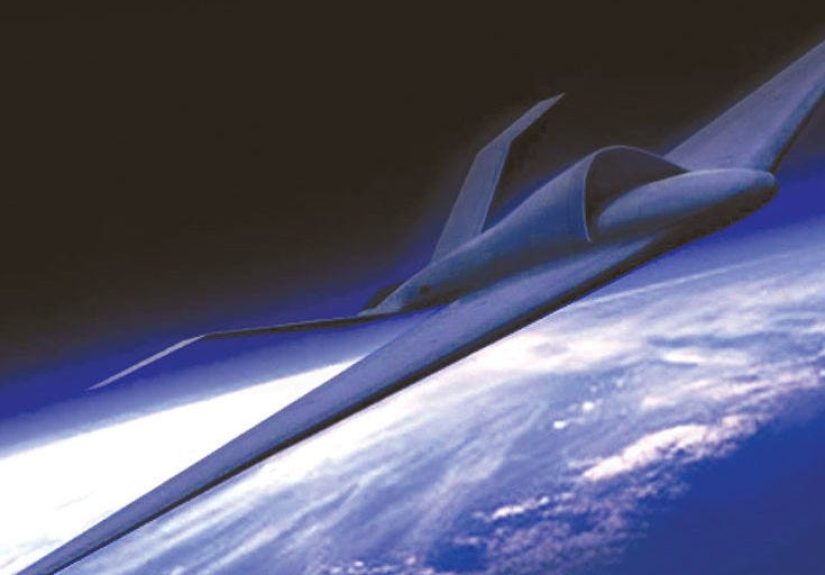
For years, the idea sounded irresistible: take the altitude and sensor flexibility of the U-2, blend in the unmanned endurance of the Global Hawk, wrap the whole thing in stealth, and send it gliding into the world’s nastiest air defense zones like it owns the sky. That was the basic appeal behind Lockheed Martin’s stealthy reconnaissance concept, often discussed as the TR-X. On paper, it looked like the natural next step in the long, glamorous, occasionally terrifying history of American spy planes.
And honestly, who could blame anyone for getting excited? The United States has a soft spot for legendary reconnaissance aircraft. The U-2 became an icon of Cold War intelligence. The SR-71 Blackbird turned strategic snooping into an art form performed at astonishing speed. Skunk Works built a reputation on aircraft that looked like they had been sketched on a napkin by someone who did not believe in normal rules. So when a stealthier, more survivable spy plane entered the conversation, defense-watchers did what defense-watchers always do: they leaned in.
But here is the twist. In 2026, the most honest answer to the title question is not a dramatic yes or a dismissive no. It is this: Lockheed’s stealthy spy plane points toward the future of reconnaissance, but it probably is not the whole future by itself. The future looks less like one heroic jet replacing another and more like a layered, slightly less cinematic, much more effective ecosystem of stealth drones, crewed aircraft, satellites, commercial sensing, AI-assisted analysis, and data networks that can survive a fight against a peer adversary.
Why the Idea Made So Much Sense in the First Place
The attraction of a stealthy reconnaissance aircraft starts with a simple problem: old assumptions about survivability no longer work as well as they used to. Flying high is still useful, but high altitude alone is no longer a magic invisibility cloak. Modern integrated air defense systems have grown more sophisticated, more layered, and less polite. A reconnaissance aircraft that was safe-ish in one era can become deeply uncomfortable in another.
That is why Lockheed’s proposal felt so timely. The U-2 is excellent at what it does, but it is also a child of the 1950s that has survived through upgrades, excellent engineering, and sheer stubbornness. The RQ-4 Global Hawk offers long endurance and wide-area surveillance, but it was never designed to swagger through the most heavily defended airspace on Earth and wink at advanced surface-to-air missile batteries on the way out. A stealthy platform promised something different: persistence with a lower chance of becoming tomorrow’s diplomatic incident.
In other words, the TR-X concept was not just an aircraft pitch. It was a strategic argument. It said that reconnaissance in the 21st century would need to be harder to find, harder to target, and smarter about how it collected and delivered intelligence. That logic has only become stronger.
Altitude Is Helpful. Stealth Is Insurance.
One reason the concept had legs is that altitude and stealth are not rivals; they are teammates. High altitude expands sensor reach and can improve persistence. Stealth reduces detection and tracking. Combine them, and you get an aircraft that could, at least in theory, watch more, stay longer, and worry less. That is a compelling recipe for intelligence, surveillance, and reconnaissance missions over contested regions.
The fantasy version of this story says the aircraft simply flies in, gathers exquisite intelligence, and flies out while enemy radars stare into the void. Reality is messier. Even stealth aircraft are not invisible. They are just much harder to detect, track, and target. Still, in reconnaissance, “harder to kill” is a very attractive feature. Military planners are rather fond of platforms that make it home with the data.
Reconnaissance Is No Longer Just About Taking Pictures
Another reason Lockheed’s idea resonated is that modern reconnaissance is not limited to crisp overhead imagery. Today’s ISR mission is about fusing radar, signals intelligence, electro-optical sensing, infrared collection, communications relay, and rapid data distribution. The plane is not just an airplane anymore. It is a node in a sensing and decision-making web.
That matters because a future reconnaissance aircraft cannot just collect information beautifully. It has to pass that information quickly, securely, and in formats that operators can use. A stealthy aircraft with excellent sensors but poor networking would be like a genius detective who refuses to answer the phone. Interesting, maybe. Helpful, less so.
What Lockheed Got Right About the Future
If you look past the sleek silhouette and the spy-plane mystique, Lockheed’s core insight was solid: reconnaissance against advanced adversaries would demand survivability and flexibility. That was true when the concept was discussed a decade ago, and it is even more true now.
The company’s broader Skunk Works legacy reinforces that point. American reconnaissance has repeatedly evolved when old platforms became too detectable, too slow to adapt, or too narrowly optimized. The U-2 was one leap. The SR-71 was another. A stealthy, high-endurance ISR aircraft would fit neatly into that tradition.
Lockheed also understood something defense planners now say more openly: the next serious war would punish anything that could not survive in contested airspace. That is why stealth has remained so central to high-end aerospace programs. Not because it is fashionable, but because radar, missiles, and sensor fusion have grown brutally good at finding conventional aircraft.
Even today, the logic still holds. If the mission is to gather intelligence near or inside heavily defended regions, low observability is not a luxury upgrade. It is close to the admission price.
Why a Single Stealthy Spy Plane Probably Is Not the Whole Future
Here is where the story gets more interesting. The future of reconnaissance appears to be moving beyond the idea of one signature aircraft replacing one older aircraft. Instead, the United States is leaning toward a family-of-systems approach. That phrase is not exactly poetry, but it captures the trend well.
Space Is Stealing Part of the Mission
The Air Force and Space Force have made it increasingly clear that space-based ISR is expected to shoulder more of the reconnaissance burden in the years ahead. That does not mean aircraft become irrelevant. It means they become one layer in a larger architecture.
Satellites bring persistence, broad coverage, and increasing resilience through proliferation. Instead of relying on a handful of exquisite assets, the United States is moving toward larger constellations and more distributed sensing. That complicates an adversary’s targeting problem and gives commanders more ways to maintain awareness even if one system is jammed, blinded, or destroyed.
There is also a practical reason for this shift: commanders want faster access to data. Reconnaissance is valuable only if the right people receive the right information at the right time. Space-based systems, intelligence-community assets, and military platforms are increasingly being designed to feed a shared network rather than operate like isolated stars in their own little movie franchises.
Stealth Drones Already Occupy the Lane
Even if the TR-X never matured into the headline-grabbing operational program some once imagined, the broader direction of travel is obvious. Secretive or semi-acknowledged stealth reconnaissance drones have not exactly vanished from the American toolkit. In fact, recent reporting has reinforced the idea that low-observable unmanned systems remain highly relevant to real operations.
That matters because unmanned aircraft solve several problems at once. They reduce risk to pilots, enable long-endurance missions, and allow designers to optimize airframes around sensors and survivability instead of human comfort. No offense to pilots, but ejection seats and snacks take up space.
Meanwhile, the rumored or partially glimpsed world of penetrating ISR platforms suggests that the United States has not stopped investing in stealthy airborne reconnaissance. It has simply become much less eager to hand out brochures.
Data Fusion Is More Important Than Platform Celebrity
The classic spy-plane narrative is platform-centric. We remember the aircraft. We remember the speed, the altitude, the silhouette, the myth. The future of reconnaissance is more data-centric. The winning system may be the one that best combines sensors, communications, autonomy, and survivability rather than the one that inspires the coolest poster.
That is why the answer to the title question becomes more nuanced the closer you look. A stealthy spy plane may be part of the future, but its value depends on how well it plugs into satellites, cyber tools, command networks, electronic warfare support, and real-time processing. The airplane is still important. It is just no longer the whole story.
The Case for “Yes”
Let’s be fair to the original idea. There is still a powerful argument that a stealthy reconnaissance aircraft is essential for the next era of ISR.
First, airborne sensors remain uniquely useful. Aircraft can be redirected faster than many satellites, tailored more flexibly than fixed space architectures, and positioned with a level of tactical intent that commanders love. They can dwell where needed, carry specialized payloads, and respond to changing mission requirements in near real time.
Second, stealth buys access. In a conflict against a peer adversary, access is everything. If you cannot survive in the area that matters most, your exquisite sensor suite becomes an expensive way to admire geography from a safe distance.
Third, a stealthy platform can complement space assets rather than compete with them. Satellites may provide persistence and broad-area awareness, while a penetrating aircraft provides closer, more tailored, or more responsive collection. Think of space as the always-on ceiling light and the aircraft as the flashlight you point exactly where things get weird.
From that perspective, Lockheed’s concept was not naïve. It was early.
The Case for “Not by Itself”
Now the counterargument. A single stealthy spy plane is unlikely to dominate future reconnaissance the way the U-2 or SR-71 dominated public imagination. The economics, technology, and operational demands have changed.
High-end manned or unmanned stealth aircraft are expensive to develop, expensive to sustain, and difficult to produce at scale. They are also vulnerable in different ways than their fans sometimes admit. Low observability helps, but it does not eliminate maintenance burdens, communications challenges, or the possibility that an adversary may simply find clever new ways to make life miserable.
Then there is the broader trend toward distributed sensing. Defense planners increasingly value architectures that are harder to cripple because they are spread across many systems. A network of satellites, drones, aircraft, and edge processors can be more resilient than a strategy built around a few exquisite airborne unicorns.
So yes, a stealthy reconnaissance aircraft likely belongs in the future. But no, it probably does not define the future all by itself. It is a premium tool in a larger toolkit.
So, Is Lockheed’s Stealthy Spy Plane the Future of Reconnaissance?
Partly. That is the best answer.
Lockheed’s stealthy spy-plane concept captured a real shift in military thinking: future reconnaissance must survive deeper into contested airspace, collect more kinds of data, and connect seamlessly to a broader warfighting network. On that level, the idea was absolutely a glimpse of the future.
But the deeper truth is that reconnaissance is becoming less platform-centric and more ecosystem-driven. The future is not one aircraft replacing another in a tidy line of succession. It is a blended architecture in which stealth aircraft, long-endurance drones, proliferated satellites, intelligence-community systems, and commercial sensing all feed a common picture.
If the U-2 was the lone detective in a trench coat and the SR-71 was the glamorous speed freak, the next generation of reconnaissance is a team of obsessive specialists sharing a group chat that never sleeps.
That may be less romantic. It is also probably more realistic.
Experience-Based Perspective: What Modern Reconnaissance Actually Feels Like
To understand why a stealthy spy plane matters but cannot stand alone, it helps to think about the human experience surrounding reconnaissance missions. Not just the aircraft in the air, but the chain of people depending on it. The pilot or remote crew needs survivability. The intelligence analysts need clean, timely data. The commander needs confidence that the information is current enough to act on. The network specialists need the data to move without falling apart under jamming, delay, or overload. Everyone wants the same thing: clarity before the other side creates chaos.
From the operator’s point of view, endurance is not just a technical specification. It changes the tempo of the mission. A platform that can stay aloft for a very long time gives commanders patience. Instead of rushing to catch a target during a narrow time window, they can watch patterns, confirm activity, and wait for the revealing moment. That is often the difference between “something happened over there” and “we know exactly what happened, who did it, and what may happen next.” A stealthy aircraft adds another layer of confidence because it can stay useful in places where conventional aircraft might have to back off.
From the analyst’s seat, the experience is less Top Gun and more controlled data panic. Modern ISR does not suffer from too little information nearly as often as it suffers from too much information arriving in too many formats at too many speeds. The dream platform is not just the one that collects beautifully. It is the one that tags, routes, prioritizes, and shares what matters before the moment passes. That is why the future keeps drifting toward networked systems and AI-assisted processing. The reconnaissance platform of tomorrow is judged not only by what it sees, but by how fast it helps humans understand what they are seeing.
From the commander’s perspective, survivability changes behavior. If a platform is vulnerable, missions become more cautious, routes get longer, collection opportunities shrink, and uncertainty creeps in. A stealthy reconnaissance aircraft restores some freedom of action. It allows planners to think less about how to protect the sensor and more about how to exploit the sensor. That shift is huge. It affects where you can go, how long you can stay, and how often you can return.
But even that is not enough anymore. The lived reality of modern reconnaissance is collaborative. A stealth aircraft might identify a target area. A satellite constellation might maintain broad-area tracking. Another system might collect signals. Yet another might relay the information to operators who are deciding what to do next. The “experience” of reconnaissance has become one of fusion, not isolation. No one platform gets to be the star all the time.
That is why Lockheed’s stealthy spy-plane concept still feels important. It speaks directly to the operational experience of trying to collect intelligence in dangerous airspace. It promises access, survivability, and flexibility. Those are not marketing buzzwords. They are things real operators care about when the threat environment gets ugly.
Still, the most realistic experience-based conclusion is this: the future reconnaissance platform is the one that makes everyone else better too. It survives well, collects well, shares well, adapts quickly, and plays nicely inside a much larger sensing architecture. If Lockheed’s stealthy spy plane can do that, then yes, it belongs in the future. If it tries to be the entire future by itself, then it is just another cool airplane with a very demanding résumé.
Final Thoughts
Lockheed’s stealthy spy plane was never a silly idea. It was a sharp answer to a real problem. The mistake would be assuming that one elegant aircraft can now carry an intelligence mission that is becoming more distributed, more digital, and more interconnected every year.
The future of reconnaissance will almost certainly include stealthy airborne platforms. It will also include satellites, drones, autonomy, faster data pipelines, and more integration across military and intelligence organizations. So the best verdict is not “yes” or “no.” It is this: Lockheed’s stealthy spy plane is not the future of reconnaissance. It is one very important piece of it.