Table of Contents >> Show >> Hide
- What exactly are insulin-producing mini-stomachs?
- How did this idea move from clever theory to serious diabetes research?
- Why researchers are excited about mini-stomachs
- Why this is not a cure tomorrow
- How mini-stomachs compare with current and emerging diabetes therapies
- Who could benefit if this technology works in humans?
- So, are insulin-producing mini-stomachs a game-changer?
- What this research means on a human level
- Final thoughts
If the phrase “insulin-producing mini-stomachs” sounds like something cooked up in a sci-fi writers’ room at 2 a.m., that is understandable. It is weird. It is also very real science. Researchers are developing tiny stomach-like organoidsoften nicknamed mini-stomachsthat can be reprogrammed to act a lot like insulin-making beta cells. In early studies, these lab-grown structures have helped control blood sugar in diabetic mice, which is the sort of result that makes scientists sit up straighter and patients whisper, “Okay, now you have my attention.”
Still, the key question is not whether this research is cool. It absolutely is. The real question is whether insulin-producing mini-stomachs could become a practical, durable, and safe treatment for diabetes. That is a much tougher bar to clear. Diabetes is not just a problem of missing insulin. In type 1 diabetes, the immune system destroys beta cells. In advanced cases of other forms of diabetes, the body may also struggle with insulin resistance, beta-cell exhaustion, or both. So any new therapy has to do more than look promising under a microscope. It has to survive the body, work consistently, and ideally spare people from a lifetime of juggling insulin, sensors, carbs, alarms, and low-blood-sugar panic.
This is why the idea of insulin-producing mini-stomachs has generated so much interest. It sits right at the intersection of stem-cell science, regenerative medicine, and one of the biggest unmet needs in diabetes care: restoring the body’s own ability to make insulin in a smart, glucose-responsive way. That does not mean a cure is around the corner. But it does mean the field is moving beyond wishful thinking and into a serious era of cell replacement research.
What exactly are insulin-producing mini-stomachs?
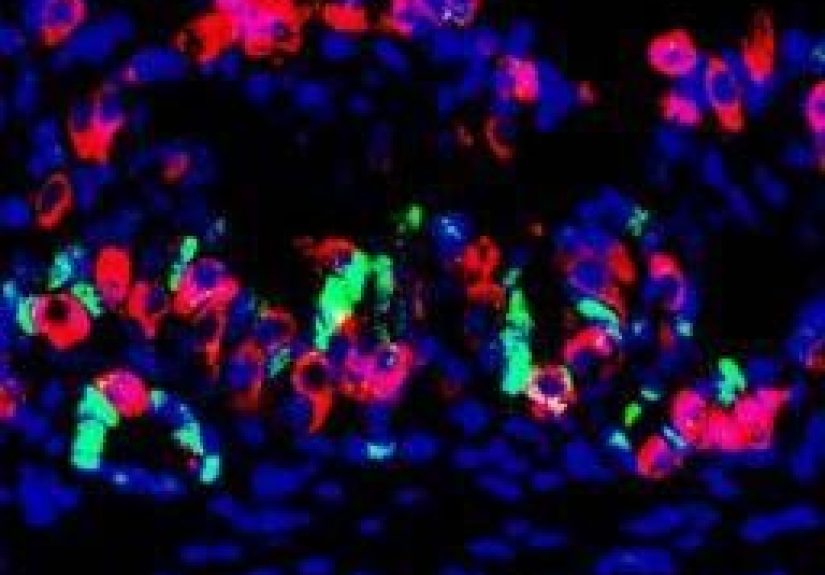
First, let’s clear up the nickname. These are not tiny replacement stomachs you would order off a biotech menu. They are gastric organoids, small three-dimensional clusters of cells grown from stomach tissue or stem cells. They mimic some features of the stomach, but on a microscopic scale. Scientists use organoids because they can model real tissues more faithfully than flat cells in a dish, while still being easier to manipulate than full organs.
The diabetes twist is this: researchers discovered that certain stomach cells, especially from the lower part of the stomach, are surprisingly flexible. With the right molecular instructions, they can be pushed toward a beta-cell-like identity. In plain English, scientists can nudge them to stop acting like stomach-derived cells and start behaving more like the pancreatic cells that sense glucose and release insulin.
Why the stomach?
At first glance, the stomach seems like an odd candidate. The pancreas makes insulin, not the stomach. But developmentally, parts of the digestive tract and pancreas are more closely related than most people realize. That shared biological ancestry matters. It means some stomach cells already speak a dialect of the same cellular language, making them more reprogrammable than totally unrelated tissues.
Researchers also like the stomach for practical reasons. Stomach tissue can be accessed by biopsy, its stem cells grow robustly in culture, and the gastrointestinal lining naturally renews itself. That last point is especially interesting. A renewable tissue source is gold in regenerative medicine. If a therapy needs replacement, repair, or repeated harvesting, a tissue with built-in regenerative habits is a better starting point than one that acts like it retired ten years ago.
How did this idea move from clever theory to serious diabetes research?
The concept did not appear overnight. Earlier work in mice showed that stomach endocrine cells could be reprogrammed into insulin-producing cells. That was the first big clue that gastric tissue might be more than a digestive bystander in diabetes therapy. Later, researchers created bioengineered stomach-derived structures that functioned like tiny insulin pumps in mice.
Then the work got more sophisticated. In a major preclinical advance, scientists reported that human stomach-derived insulin-secreting organoids could be generated with high efficiency. These organoids began responding to glucose and, after transplantation into diabetic mice, restored glucose homeostasis for extended periods. That result matters because “makes insulin” is not enough. Good beta-cell replacement has to sense rising blood sugar and respond appropriately, not just leak insulin like a broken ketchup bottle.
More recent follow-up research pushed the story forward again. Investigators modeled whether human stomach tissue could be transformed into insulin-secreting cells inside the body after transplantation and maturation. In mice, that approach showed that human stomach organoids could survive for months, connect with surrounding tissues, and then be induced to release insulin in a way that improved diabetes markers. That is still preclinical research, but it is an important sign that mini-stomachs may not be limited to one lab trick or one experimental setup.
Why researchers are excited about mini-stomachs
1. They could become a renewable source of insulin-producing cells
One of the biggest bottlenecks in diabetes cell therapy has always been supply. Donor islets are limited. Even approved islet cell therapies rely on deceased donor pancreases, which means there simply are not enough cells to treat everyone who might benefit. Mini-stomachs offer a tantalizing workaround: create insulin-producing tissue from a more accessible and potentially expandable source.
If scientists can reliably grow large numbers of functional gastric organoids, they may be able to generate insulin-producing cells at a scale that donor-based approaches cannot match. That alone would be a big deal. A therapy is not truly disruptive if it works only for a handful of people lucky enough to fit the supply chain.
2. They may support personalized treatment
Another reason this research gets attention is the possibility of autologous therapyusing a patient’s own cells. In theory, a sample of stomach tissue could be collected, expanded, reprogrammed, and turned into a personalized insulin-producing graft. That could reduce the problem of classic transplant rejection, because the starting tissue came from the same person receiving the treatment.
That does not erase every immune problem, especially in type 1 diabetes, where the immune system is already trained to attack insulin-producing cells. But personalized sourcing could still lower one major hurdle: allogeneic rejection from donor-derived tissue.
3. They may behave more naturally than injected insulin
Even the best modern diabetes technology still asks people to manage biology manually. Pumps, pens, continuous glucose monitors, and algorithms have improved life dramatically, but they do not fully replicate what healthy beta cells do minute by minute. Real beta cells sense glucose in real time and release insulin accordingly. That feedback loop is elegant, fast, and annoyingly hard to imitate with external tools.
Mini-stomachs are exciting because the goal is not simply “make insulin somewhere.” The goal is to restore glucose-responsive insulin secretion. If that can happen safely and durably in humans, it would move treatment closer to physiologic control rather than constant compensation.
Why this is not a cure tomorrow
This is the part where the hype gets a sensible chaperone. Insulin-producing mini-stomachs are promising, but several major obstacles stand between mouse success and human therapy.
Immune attack is still the elephant in the room
For people with type 1 diabetes, the original problem is autoimmunity. The body attacked beta cells once. It may do so again. Even if future mini-stomach therapies use a patient’s own tissue, the new insulin-producing cells could still become targets. In other words, “self-made” does not automatically mean “immune-safe.”
That is why many researchers believe cell replacement must eventually be paired with immune protection, whether through encapsulation devices, gene editing, immune-modulating drugs, or some combination of the three. A replacement strategy without an immune strategy may be impressive science but incomplete medicine.
Gene reprogramming raises safety questions
Much of this work depends on powerful genetic instructions that push stomach cells into a new identity. That is scientifically elegant and clinically complicated. Regulators will want convincing evidence that the cells remain stable, do not form tumors, do not drift into unwanted cell types, and keep producing insulin in a controlled way over the long term.
Safety is especially important in a disease like diabetes, where patients already have workable treatments, even if those treatments are burdensome. A future cell therapy does not just have to work. It has to beat the risk-benefit profile of current care for the right patients.
Organoids are impressive, but they are not full organs
Organoids are often described as mini-organs, and that shorthand is useful, but it can also oversell them. They do not perfectly recreate the complexity of living tissue. Many organoids still lack the full vascular, immune, and tissue-environment features that shape how cells behave in a real human body. That can affect survival, maturation, and long-term function.
Translation also requires manufacturing consistency. It is one thing to produce great organoids in a research lab with heroic grad-student energy. It is another to manufacture them at clinical scale with reproducible quality, strict safety controls, and costs that do not make insurers faint.
How mini-stomachs compare with current and emerging diabetes therapies
To understand whether mini-stomachs are truly a game-changer, it helps to compare them with what already exists.
Standard insulin therapy and diabetes tech
For most people with type 1 diabetes, insulin remains the foundation of treatment. Modern pumps and continuous glucose monitors have improved control, reduced some dangerous lows, and made daily life more manageable. Hybrid closed-loop systems are especially helpful. But they still require maintenance, attention, supplies, money, and a remarkable tolerance for alarms at inconvenient times.
Mini-stomachs would be trying to solve a different problem. Instead of optimizing insulin delivery from the outside, they aim to restore insulin production from the inside.
Donor islet transplantation
There is already proof that cell replacement can work. Donor-derived islet transplantation has helped some people with brittle type 1 diabetes, and the FDA-approved therapy Lantidra proved that insulin-producing cell therapy is not just a futuristic headline. But donor supply is limited, the treatment is not for everyone, and patients need immunosuppression. That makes it valuable, but not broadly scalable.
Mini-stomachs could someday offer a more abundant source of cells and possibly a more personalized one. That is the big strategic advantage.
Stem-cell-derived islets
Stem-cell-derived islet therapies are currently the most clinically advanced neighbors in this space. These programs have already produced striking early results, including insulin independence in some participants. That means mini-stomachs are not competing with a blank field. They are entering a fast-moving race that already includes serious contenders.
For mini-stomachs to matter clinically, they will likely need to show one or more of the following: easier sourcing, better durability, lower cost, fewer immune complications, simpler implantation, or a safer long-term profile. Otherwise, they may remain a brilliant idea that gets outpaced by other beta-cell replacement platforms.
Who could benefit if this technology works in humans?
The clearest target is type 1 diabetes, especially in people with severe disease burden, unstable glucose control, or recurrent dangerous hypoglycemia. These are the patients for whom beta-cell replacement could be transformative rather than merely convenient.
There may also be future relevance for selected people with severe insulin-dependent type 2 diabetes, especially where beta-cell failure is substantial. But the science is currently far more aligned with restoring lost insulin secretion than with solving the broader metabolic complexity of insulin resistance.
So, are insulin-producing mini-stomachs a game-changer?
The honest answer is: potentially, yesbut not yet.
They are a game-changer in the scientific sense because they expand the menu of viable tissues for beta-cell replacement. They challenge the old assumption that the pancreas is the only meaningful place to look for insulin-making solutions. They also offer a clever answer to a stubborn problem: where to find enough cells, from the right tissue, with the right flexibility, to rebuild insulin production.
But they are not yet a game-changer in the clinical sense. No one should read mouse data and cancel their insulin prescription. The path from fascinating organoid science to routine human treatment is long, expensive, and full of places where promising therapies go to disappoint everyone. That is not cynicism. That is biomedical realism.
Still, the field deserves attention. Mini-stomachs are not hype because they are flashy. They are exciting because they fit into a broader shift in diabetes research: moving from managing insulin deficiency to rebuilding insulin production itself. That is a profound change in ambition.
What this research means on a human level
For people who do not live with diabetes, it is easy to hear a phrase like “restored glucose homeostasis” and picture a neat graph in a journal. For people who do live with diabetes, the meaning is much more personal. It means fewer decisions every hour. Fewer calculations before a meal. Fewer nights waking up to treat a low. Fewer moments of wondering whether today’s number is an annoyance or the beginning of a dangerous spiral.
That is why research on insulin-producing mini-stomachs lands emotionally as well as scientifically. It speaks to a desire that has been remarkably consistent across generations of patients: not perfection, not magic, just relief. Relief from the relentless need to think like a pancreas when your pancreas has left the chat.
Consider the daily texture of life with insulin-dependent diabetes. A person may wake up already behind because dawn hormones pushed glucose higher before breakfast. They count carbs, estimate correction doses, think about activity, worry about stress, and wonder whether lunch will hit faster than expected. They may carry juice boxes, glucose tabs, backup insulin, extra infusion sets, chargers, sensors, and the mental equivalent of an emergency weather map. None of this appears dramatic from the outside. Inside, it is constant.
Parents of children with type 1 diabetes often describe a special kind of divided attention. They are physically present at work, at dinner, or in bed at night, but part of their brain is always listening for an alarm. Teenagers may want independence but still live under the rule of numbers, trends, and reminders. Adults can look perfectly fine while quietly doing the math of survival in grocery lines, meetings, road trips, and weddings. Diabetes is a medical condition, yes, but it is also a scheduling condition, a sleep condition, a budgeting condition, and sometimes a mood condition.
That is why the phrase “cell replacement” has so much emotional force. It suggests a future in which treatment is not only smarter, but quieter. A future in which the body regains some of its lost automation. If mini-stomachs, stem-cell islets, or another beta-cell therapy can one day provide that, the benefit will not be measured only in HbA1c or time-in-range. It will be measured in spontaneity. In confidence. In being able to go for a run, eat dinner late, sleep through the night, or travel without packing half a pharmacy.
Of course, hope in diabetes research has a complicated history. Many patients have learned to greet every “breakthrough” with one raised eyebrow. That skepticism is fair. People living with diabetes do not need inspirational headlines nearly as much as they need therapies that actually work outside a mouse study and outside a conference ballroom. Still, cautious hope is not the enemy of scientific rigor. It is often what keeps people paying attention long enough to see real progress happen.
In that sense, insulin-producing mini-stomachs matter even before they reach the clinic. They represent a larger truth: researchers are no longer only trying to improve the tools that manage diabetes. They are trying, piece by piece, to rebuild the biological function that diabetes took away. That is not a cure today. But it is a meaningful shift in direction, and for many people affected by diabetes, direction matters almost as much as speed.
Final thoughts
Insulin-producing mini-stomachs are one of the most imaginative developments in diabetes researchand one of the most intellectually credible. The science has moved from mouse reprogramming experiments to human stomach-derived organoids with real glucose-responsive behavior in preclinical models. That is no small leap.
Will they become a true game-changer? Possibly. They offer renewable sourcing, personalized therapy potential, and a shot at restoring natural insulin secretion rather than endlessly approximating it. But they also face serious barriers involving immune attack, safety, manufacturing, durability, and clinical translation.
So the smartest headline is not “cure found,” and it is not “just hype,” either. It is something more useful: mini-stomachs are emerging as a serious contender in the race to replace lost beta-cell function. In diabetes research, that alone is worth watching very closely.