Table of Contents >> Show >> Hide
- What DART Was (and What It Wasn’t)
- The Real Threat: Near-Earth Objects and Why “Killer” Is Complicated
- The Plan: Kinetic Impactor 101 (a.k.a. “The Space Shove”)
- Building a World-Saving Spacecraft (With No Joystick)
- The Night of the Impact: September 26, 2022
- Did It Work? The 32-Minute Answer
- What DART Accidentally Taught Us About Asteroids
- From One Epic Test to a Real Planetary Defense Playbook
- So… Could DART Save Us From a “Killer Asteroid”?
- Bonus: of Experiences From the DART Moment
- Conclusion
- SEO Tags
If you’ve ever watched an asteroid-movie and thought, “Sure, but where’s the spreadsheet?”congrats, you’re ready for
NASA’s real-life answer to space rock anxiety: DART. Not a laser. Not a nuke. Not a brooding cowboy astronaut making a
sacrifice speech. Just a spacecraft doing the simplest (and most satisfying) thing imaginable: slamming into an asteroid
on purpose to see if we can change its motion.
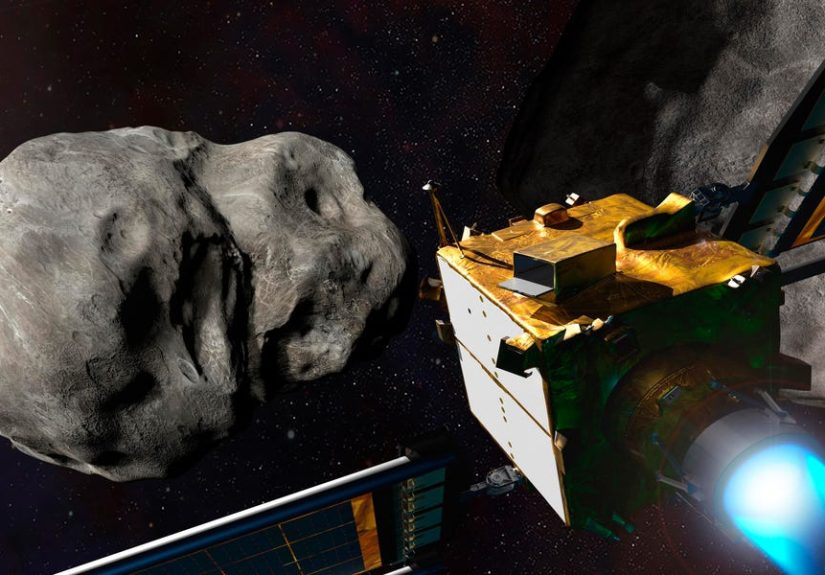
DART stands for Double Asteroid Redirection Test, and it was the world’s first full-scale demonstration
of a planetary defense technique called a kinetic impactor. Translation: “If a
potentially hazardous asteroid ever lines up with Earth, could we shove itjust enoughso it misses?” DART went to space
to find out, and it delivered results that were both scientifically serious and, frankly, delightfully chaotic.
What DART Was (and What It Wasn’t)
Not an emergency missionan experiment with high stakes
Let’s clear up the headline drama. DART was not launched because a “killer asteroid” was about to wipe out
Earth next Tuesday. The target asteroidsDidymos and its tiny moonlet Dimorphosdo
not pose a threat to our planet. That was the point. If you’re going to try cosmic bumper-car physics for the first
time, you pick a safe test site where mistakes become “valuable lessons” instead of “global disaster.”
Why a double asteroid system was the perfect target
Dimorphos orbits Didymos like a moon. That setup makes the experiment measurable: instead of trying to spot a tiny change
in an asteroid’s path around the Sun (hard), scientists can measure a change in Dimorphos’ orbit around Didymos (much
easier) using telescopes from Earth. It’s like choosing a lab with a giant ruler already taped to the wall.
The Real Threat: Near-Earth Objects and Why “Killer” Is Complicated
NASA tracks near-Earth objects (NEOs)asteroids and comets that come relatively close to Earth’s orbit.
Most are harmless, many are scientifically fascinating, and a very small number are the reason planetary defense exists
at all. The biggest “dino-killer” class asteroids are rare and mostly well cataloged, but smaller objects can still do
serious damage. The 2013 Chelyabinsk event (a meteor airburst over Russia) is a famous reminder that you don’t need a
planet-ending rock to have a very bad day.
Here’s the key idea: planetary defense is mostly about time. The earlier you detect a hazardous object,
the smaller the nudge you need. Change an asteroid’s speed by a tiny amount far in advance, and years later it can miss
Earth by thousands of miles. Wait until the last minute, and your options get… cinematic.
The Plan: Kinetic Impactor 101 (a.k.a. “The Space Shove”)
How smashing into an asteroid can change its motion
A kinetic impactor works by transferring momentum. Spacecraft hits asteroid, asteroid changes speed a little, orbit
changes over time. That’s the clean version. The messy (and wonderfully helpful) version is that the impact can kick up
a huge plume of debris. That escaping ejecta acts like a thruster: as material shoots one way, the asteroid gets an
extra push the other way. In other words, the asteroid doesn’t just get punchedsometimes it gets punched and then
accidentally rocket-jumped.
Why “minutes” matter in space
DART wasn’t trying to send Dimorphos flying off into the void. The mission goal was modest: change its orbital period
around Didymos by an amount detectable from Earth. Even a shift of a few minutes would prove the technique works and
give scientists real-world data to refine future models. DART ended up changing the orbit by far more than the minimum
success requirementan outcome that made scientists happy and writers everywhere extremely smug.
Building a World-Saving Spacecraft (With No Joystick)
DRACO and SMART Nav: DART’s “eye” and “brain”
One of the coolest parts of DART is that nobody “flew” it into Dimorphos in real time. The spacecraft had to guide
itself during the final approach. It used a camera called DRACO to spot the asteroids and an onboard
autonomous navigation system called SMART Nav to decide how to steer. Engineers have joked that DRACO’s
view is like looking through a narrow bundle of soda strawsbecause that’s what space navigation feels like when your
target is small, far away, and refuses to sit still for a portrait.
SMART Nav’s job was to identify Didymos and Dimorphos, then lock onto the correct target and adjust DART’s trajectory.
This matters for real planetary defense: if an asteroid is coming in hot, you don’t want to miss because your spacecraft
got confused by a “bigger, shinier” nearby object. DART proved autonomous terminal guidance can work at interplanetary
distances, on a target that was basically a moving dot until the very end.
LICIACube: the sidekick that brought receipts
DART also had help: a small companion spacecraft called LICIACube, provided by the Italian Space Agency.
It separated from DART before impact so it could fly past afterward and capture images of the collision’s aftermath and
the expanding ejecta cloud. In a mission where the main spacecraft’s final act was to become one with the asteroid,
having a buddy with a camera was not optionalit was brilliant.
The Night of the Impact: September 26, 2022
The impact wasn’t a secretive, behind-closed-doors test. NASA broadcast the final approach live, with images streaming
until the last seconds. People around the world watched a spacecraft’s view of an asteroid grow from “pixel” to “pebble”
to “oh wow that’s a real surface,” and thencut to black. Not because something went wrong, but because DART did exactly
what it was built to do: collide.
The hit happened roughly 7 million miles away, and the spacecraft was traveling at about 14,000 mph.
On Earth, that would be “please do not attempt” speeds. In space, it’s Tuesday. The real story isn’t that DART hit
something; it’s that it hit something on purpose, from millions of miles away, using autonomous navigation, and it hit
the correct something.
Did It Work? The 32-Minute Answer
Yes. DART workedloudly.
Before impact, Dimorphos orbited Didymos once every 11 hours and 55 minutes. After impact, NASA confirmed
that orbital period shortened by about 32 minutes, bringing it down to roughly 11 hours and 23 minutes.
The measurement exceeded the mission’s success threshold by a mile-wide margin.
Telescopes did the “after” photo
The way scientists measured the change is elegantly nerdy: as Dimorphos orbits Didymos, the two bodies eclipse and
occult one another from our perspective. That produces repeating patterns in the light curve (brightness over time),
like a cosmic heartbeat. Change the orbit, change the timing of the heartbeat. Ground-based telescopes tracked those
changes until the numbers settled into a clear conclusion: DART altered the system’s motion.
Hubble and Webb watched the plume bloom
Meanwhile, NASA’s big observatories captured the impact’s aftermath. Hubble and the James Webb Space Telescope
observed a brightening of the Didymos–Dimorphos system and a dramatic ejecta plume expanding over hours. Their
simultaneous observations marked the first time those two telescopes watched the same target at the same timebecause
nothing says “teamwork” like photographing an intentional space crash from two different wavelengths.
What DART Accidentally Taught Us About Asteroids
DART was built to test deflection, but it also turned into a crash course on asteroid behavior. One major theme:
asteroids are not all sturdy bowling balls. Many are “rubble piles”collections of rocks held together
by gravity and a little bit of mutual agreement.
Observations after the impact suggested Dimorphos behaved like a loosely bound body. Hubble later spotted
multiple boulders drifting away from the asteroid, reinforcing the idea that the collision excavated
material in a way that mattered for momentum transfer. For planetary defense, that’s both good and complicated:
good because ejecta can amplify the push, complicated because different structures respond differently, and “every
asteroid is a special snowflake” is not what you want to learn during an actual emergency.
The lesson for future deflection planning is straightforward: we need better knowledge of asteroid propertiesmass,
internal structure, porosity, surface composition, spin stateso we can predict outcomes. DART didn’t just prove we can
nudge an asteroid; it proved we should stop guessing and start measuring.
From One Epic Test to a Real Planetary Defense Playbook
Hera will do the forensic investigation
DART was the punch. Now comes the autopsy (the scientific kind). The European Space Agency’s Hera mission is
on its way to the Didymos system to perform a detailed survey: mapping the impact site, measuring the crater and the
asteroid’s mass, and helping scientists translate “DART worked!” into “DART worked, and here’s how to do it reliably.”
Turning a single demo into a repeatable strategy is what makes planetary defense real.
Better early warning: finding threats sooner
A deflection mission is only as good as the warning time you get. That’s why detection matters as much as deflection.
NASA’s planned NEO Surveyor mission is designed to find and characterize many of the near-Earth objects
that could pose hazards, including darker asteroids that are tricky to spot in visible light. Its infrared approach is
especially valuable for seeing objects that might otherwise blend into the cosmic background. The mission is scheduled
for launch no earlier than September 2027 and is designed to make major progress toward the Congressional
goal of finding most NEOs larger than about 140 metersobjects large enough to cause major regional damage.
Put these pieces together and you get the emerging blueprint: detect earlier, characterize better, and if needed,
nudge decisivelywith the calm energy of someone who has practiced before.
So… Could DART Save Us From a “Killer Asteroid”?
DART proved a kinetic impactor can change an asteroid’s motion. That’s a huge milestone. But planetary defense is not a
single magic trickit’s a toolbox.
Whether a DART-style mission could “save us” depends on several real-world factors:
- Size: Bigger objects generally require bigger pushes (or multiple missions).
- Warning time: Years of lead time make small changes effective; months of lead time make everything harder.
- Composition and structure: Rubble piles, solid rock, metal-rich bodieseach responds differently.
- Trajectory certainty: You want precise orbit predictions before you go around pushing things in space.
- Risk management: Sometimes the right move is a nudge; sometimes it’s evacuation planning; sometimes it’s both.
The best takeaway is reassuring: we’re not powerless. DART turned asteroid deflection from theory into
demonstrated capability. If a real threat is discovered early enough, humanity can respond with engineering instead of
panic and movie tropes.
Bonus: of Experiences From the DART Moment
Space missions are often described in numbersmiles, minutes, mass, velocitybut DART had a human texture that’s hard to
forget, even if you only experienced it through a screen. The final hour felt like watching a high-stakes sports game,
except the “ball” was a spacecraft the size of a vending machine and the “goal” was a moonlet asteroid 7 million miles
away. NASA streamed the last images as they arrived, and the internet collectively leaned forward in their chairs like
posture could improve guidance and navigation.
At mission operations, teams had spent years preparing for a few minutes of autonomous decision-making. That’s one of
the odd truths of planetary defense: you work for ages so the spacecraft can be wonderfully boring at the exact moment
it matters. When the image stream showed Dimorphos growing larger and more detailed, it also showed something emotional:
proof that the “eye and brain” combinationDRACO and SMART Navwas actually doing its job. The spacecraft was recognizing
targets, choosing the right one, and steering without anyone holding a cosmic steering wheel.
The experience wasn’t limited to engineers. Scientists with telescopes were gearing up for the after-effects, ready to
measure brightness changes and timing shifts, because the mission’s victory condition was never “a cool crash” (though
yes, that too). It was “a measurable change.” That meant careful observation, nights of data, and the kind of patience
that makes planetary science both heroic and underappreciated. The impact itself was instantaneous, but the confirmation
took timean orchestra of observatories and analysts turning raw photons into a verdict.
The public experience had its own energy. More than a million people watched the live broadcast concurrently, a rare
moment when a deeply technical experiment became a global event. Social media lit up with jokes, awe, and that sweet
collective feeling of “Waitthis is real?” People posted the last images like souvenirs: proof they were there when
humanity tried a new trick. Teachers replayed clips for students; science communicators turned orbital mechanics into
understandable storytelling; and for a night, the phrase “kinetic impactor” sounded less like a jargon term and more
like a promise.
And then there was the strange quiet after the screen cut out. No explosion. No dramatic debris field visible to the
naked eye. Just the understanding that something subtle had changed: a moonlet’s orbit was now shorter, and a whole
species had graduated from “we hope we could” to “we have evidence we can.” That’s the real DART experiencepart
celebration, part relief, part motivation. Because if we ever need to do this again, we won’t be improvising. We’ll be
iterating.
Conclusion
NASA’s DART mission didn’t just hit an asteroidit hit a milestone. By deliberately colliding with Dimorphos and
measurably shortening its orbit, DART proved that asteroid deflection via kinetic impact is not science fiction. It’s
engineering, observation, and preparation working together. The mission also revealed how complex asteroid responses
can be, underscoring why follow-up reconnaissance and improved detection are essential. With missions like Hera on the
way and NEO Surveyor planned, planetary defense is evolving into something practical: a system where we find threats
sooner, understand them better, andif necessarynudge them away with confidence.