Table of Contents >> Show >> Hide
- Before You Start: Ginger Juice Basics (So You Don’t End Up With Spicy Pulp Soup)
- Method 1: The Blender Method (Fast, High Yield, Slightly Messybut Worth It)
- Method 2: The Grate-and-Squeeze Method (Small Batch, Super Concentrated, No Electricity Required)
- Method 3: The Juicer Method (Cleanest Juice, Best Texture, Requires the Gadget)
- How Strong Should Ginger Juice Be?
- Storage, Freezing, and Batch Hacks (Because Fresh Ginger Isn’t Always Patient)
- Quick FAQ
- Conclusion
- Real-Kitchen Experiences People Have When Extracting Ginger Juice (So You Can Skip the Learning Curve)
Ginger is basically the overachiever of the produce drawer. It shows up in stir-fries, marinades, smoothies, tea, and those little “wellness shots” that taste like they’re trying to fight you.
The good news: you don’t need a fancy juice bar membership (or the jaw strength of a crocodile) to get fresh ginger juice at home.
You just need one of three simple setups: a blender, a grater, or a juicer.
In this guide, you’ll learn three reliable ways to extract ginger juice, how to keep it smooth (aka less “ginger hairball”), and how to store it safely.
You’ll also get real-life, kitchen-tested-style tips people tend to discover only after cleaning ginger fibers out of a mesh strainer for the third time.
Before You Start: Ginger Juice Basics (So You Don’t End Up With Spicy Pulp Soup)
What “ginger juice” really means
Ginger juice is the concentrated liquid pressed from fresh ginger root. It’s not the same as ginger tea (infused water) and not the same as ginger syrup (sweetened and cooked).
Juice is stronger, sharper, and a little “zingier,” which is why you typically use it in small amountsthink teaspoons, not tumblers.
Picking the best ginger at the store
- Look for firm knobs: If it’s bendy or wrinkly, it’s losing moisture (and your future juice yield).
- Skin should look tight and smooth: Some bumps are normal; fuzzy mold is not.
- Sniff test: Fresh ginger smells bright and spicy. If it smells musty, pass.
Quick prep: wash smart, peel only if it helps
Wash ginger under running water and scrub off visible dirt. Skip soap or produce wash (it can linger on porous produce).
Peeling is optional for many juicing methods: if you’re blending and straining, the peel often gets filtered out anyway.
If you do peel, the spoon method is the MVPfast, safe, and it gets into ginger’s weird little corners.
Food-safety mini-checklist
- Clean hands and tools: Ginger juice is “fresh,” which means hygiene matters.
- Use a clean cutting board: Especially if you just prepped raw meat (please don’t).
- Keep it cold: Refrigerate juice promptly and keep your fridge at safe temps.
Method 1: The Blender Method (Fast, High Yield, Slightly Messybut Worth It)
If you want a lot of ginger juice with minimal elbow grease, this is the method.
It’s also the best “no juicer” option for ginger shots, marinades, and batch prep.
What you’ll need
- Fresh ginger (about 4–8 ounces for a good batch)
- Blender (standard or high-speed)
- Water (to help the blender move things along)
- Fine-mesh strainer, nut milk bag, or cheesecloth
- Spoon or spatula for pressing
Step-by-step
- Chop the ginger: Slice into thin coins or small chunks. Smaller pieces blend smoother and strain easier.
- Add water: Start with about 1/2 to 1 cup of water per 4 ounces of ginger. Less water = stronger juice, but harder blending.
- Blend: Blend until the mixture looks evenly shredded and slushy, like a spicy ginger smoothie you definitely shouldn’t sip.
- Strain: Pour through a fine-mesh strainer (or nut milk bag/cheesecloth) into a bowl or measuring cup.
- Press: Use a spoon to press the pulp firmly to squeeze out more liquid. This is where most of your yield comes from.
- Optional double-strain: If you want ultra-smooth ginger juice for shots or cocktails, strain a second time.
Best uses for blender ginger juice
- Ginger shots: Mix a small amount with lemon juice and a touch of honey (or keep it bold and brave).
- Dressings: Add 1–2 teaspoons to a simple vinaigrette for an instant flavor lift.
- Marinades: Stir into soy sauce, garlic, and a little brown sugar for quick teriyaki vibes.
- Mocktails: A teaspoon in sparkling water + lime is shockingly refreshing.
Pro tips (so you don’t hate your strainer)
- Slice first, then blend: Long fibers are real. Cutting ginger down prevents “ginger rope” tangling around your blender blade.
- Don’t over-water: You can always dilute later. Concentrated juice is more flexible.
- Save the pulp: (More on that belowbecause throwing it away feels like a crime.)
Method 2: The Grate-and-Squeeze Method (Small Batch, Super Concentrated, No Electricity Required)
This is the method for when you only need a tablespoon or twolike for a stir-fry sauce, a cup of tea, or a salad dressing that needs a little attitude.
It’s also the most concentrated, because you’re not adding water.
What you’ll need
- Fresh ginger (a 2–3 inch knob is plenty)
- Microplane, fine grater, or ceramic ginger grater
- Cheesecloth, a nut milk bag, or a clean thin kitchen towel
- Small bowl
Step-by-step
- Peel (optional but helpful): If you want cleaner juice, peel with a spoon. If you’re in a rush, you can grate skin-on and let the cloth/strainer do the work.
- Grate finely: Use a microplane or the smallest holes of a box grater. The goal is a fluffy, wet ginger “snow” that releases juice easily.
- Wrap: Scoop grated ginger into cheesecloth (2–3 layers) or a nut milk bag.
- Squeeze: Twist and squeeze firmly over a bowl until the pulp feels noticeably drier.
- Strain again (if needed): If you see lots of grit, pass it through a fine-mesh strainer one more time.
When this method shines
- Quick sauces: Add ginger juice to soy sauce + rice vinegar for a fast dumpling dip.
- Tea shortcut: Instead of simmering ginger slices, stir a little ginger juice into hot water with lemon.
- Baking and desserts: Ginger juice can add punch to glazes, fruit salads, or even whipped cream (yes, ginger whipped cream exists and it’s surprisingly good).
Common mistakes (and how to avoid them)
- Using a coarse grater: Bigger shreds trap juice. Fine grating is the difference between “wow” and “why is this so dry?”
- Squeezing too gently: Ginger isn’t delicate. Treat it like it owes you money.
- Finger safety: Microplanes are efficient and also extremely enthusiastic about your knuckles. Grate carefully and stop before you hit danger zones.
Method 3: The Juicer Method (Cleanest Juice, Best Texture, Requires the Gadget)
If you already own a juicer, ginger juice becomes almost suspiciously easy.
This method creates the smoothest result with the least pulpgreat for cocktails, shots, and recipes where you don’t want fiber floating around like confetti.
What you’ll need
- Juicer (masticating or centrifugal)
- Fresh ginger
- Optional “helper” produce: apple, cucumber, or celery (helps push ginger through and boosts yield)
Step-by-step
- Wash ginger: You can peel, but many people don’tespecially if the juicer pulp gets discarded.
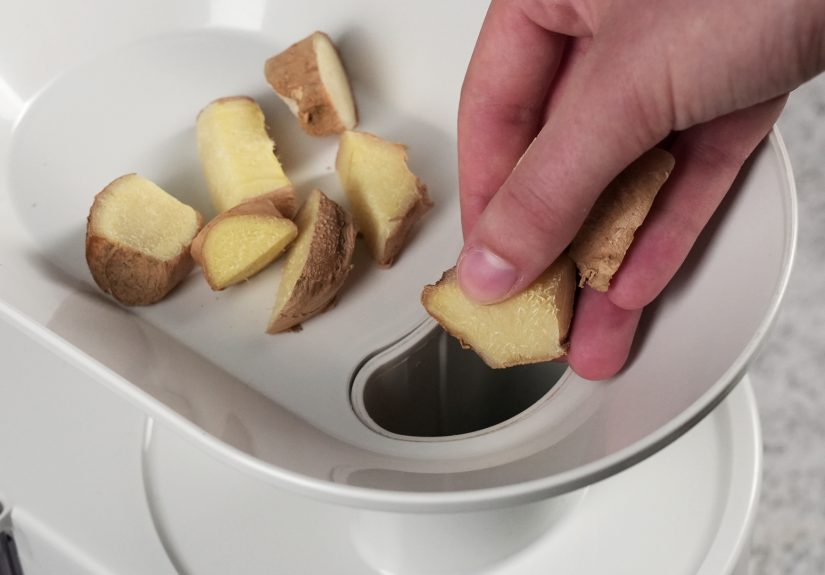
- Cut into manageable pieces: Long knobs can bounce around. Short chunks are calmer.
- Juice slowly: Feed pieces one at a time. Ginger is fibrous; rushing can jam some machines.
- Use a helper ingredient: Alternate ginger with apple or cucumber to keep things moving and capture more juice.
- Stir before using: Ginger juice can separate a bit. A quick swirl fixes it.
Juicer method pros and cons
- Pros: Smoothest juice, least straining, great for frequent use.
- Cons: Cleaning the juicer is the price of admission (and ginger fibers like to cling to everything).
How Strong Should Ginger Juice Be?
The “right” strength depends on how you’re using it. Ginger juice is powerful, so starting small is usually the move.
Here are easy starting points:
- For tea: 1/2 to 1 teaspoon ginger juice per mug of hot water, plus lemon and honey if you want.
- For salad dressing: 1 teaspoon in a standard vinaigrette (about 1/4 cup total dressing).
- For marinades: 1–2 teaspoons per pound of protein or tofu.
- For ginger shots: Start with 1–2 teaspoons of ginger juice mixed into citrus juice (not straight, unless you enjoy dramatic facial expressions).
Storage, Freezing, and Batch Hacks (Because Fresh Ginger Isn’t Always Patient)
Storing fresh ginger root
If you use ginger occasionally, freezing ginger root is a game-changer. Frozen ginger grates easily and keeps its punch for longer.
For the fridge, keep ginger sealed to prevent drying out and to reduce the chance of mold.
Storing ginger juice
Refrigerate ginger juice in a clean, airtight container and use it while it still smells bright and tastes clean.
If it develops an off odor, visible mold, or a strange fizz (and you didn’t mean to invent ginger kombucha), toss it.
Freeze it in “flavor cubes”
One of the most convenient tricks: pour ginger juice into an ice cube tray and freeze.
Pop cubes into tea, soups, stir-fries, or smoothies. It’s portion control that actually workseven when your future self is tired and hungry.
Don’t waste the leftover pulp
- Steep it: Simmer pulp in water to make a milder ginger tea base.
- Cook with it: Add to soups, broths, and stir-fries (especially if you don’t mind a little texture).
- Make syrup: Simmer pulp with sugar and water for a quick ginger simple syrup for drinks.
Quick FAQ
Do I have to peel ginger before making ginger juice?
Not always. If you’re blending and straining, you can often skip peeling and let the strainer catch the peel.
For the grating method, peeling helps keep the juice cleaner and smoother.
Why is my ginger juice cloudy?
Cloudiness usually comes from tiny fibers and starches. Strain through a finer mesh, double-strain, or let it sit briefly and pour off the clearer top.
Can ginger juice be “too strong”?
Absolutely. Ginger can be intense and may irritate the mouth or stomach for some people.
Start small, dilute as needed, and if you take medications or have health concerns, check with a healthcare professional before using large amounts of ginger regularly.
Conclusion
Extracting ginger juice doesn’t have to be complicatedor expensive. If you want the easiest big batch, grab a blender and strain.
If you only need a little, grate and squeeze for a small-but-mighty amount.
If you’ve got a juicer, enjoy the smoothest texture with minimal effort (and accept the cleaning as your character-building moment).
Pick the method that fits your kitchen, your patience level, and your plans for the juicethen freeze a few cubes for your future self.
They’ll thank you. Probably out loud.
Real-Kitchen Experiences People Have When Extracting Ginger Juice (So You Can Skip the Learning Curve)
1) The “Why Is My Blender Angry?” moment.
A lot of home cooks discover that ginger fibers are basically nature’s dental floss. If you toss a big, woody knob of ginger into a blender whole, those fibers can wrap around blades and create a loud, dramatic rattling noise that feels personal.
The fix is simple: slice the ginger thinly or chop it into small chunks first. Smaller pieces blend more evenly and strain more easily, and your blender stops acting like it’s filing a complaint.
2) The strainer clog that makes you question your life choices.
Ginger pulp is sneaky. It looks innocent, then it packs itself into the mesh like wet sand.
People often find that pressing too hard too fast turns the strainer into a ginger cork. The smoother approach is to pour in batches and press gradually, scraping the underside of the strainer if it’s dripping slowly.
A nut milk bag can feel like cheating in the best wayless clogging, more squeezing, and easier cleanup.
3) The surprise intensity of “pure” ginger juice.
First-time ginger juicers frequently expect something like ginger tea, and then they taste a teaspoon of straight juice and immediately understand why it’s used in small amounts.
A common experience is realizing that ginger juice is a “seasoning,” not a beverage. Many people end up diluting it into citrus juice, stirring it into honey-lemon water, or using it in recipes where it spreads outdressings, marinades, soups, or sparkling water.
Starting with small quantities prevents the classic “ginger shot face,” which is memorable but not always enjoyable.
4) The ginger smell that lingers (and lingers… and lingers).
Ginger has a bold aroma that loves to hang out in cutting boards, reusable bottles, and especially silicone parts of blenders and juicers.
People often learn to rinse equipment immediately, then wash with hot soapy water. A good habit is keeping one “strong flavor” container for things like ginger, garlic, and onion-based marinades.
It’s not mandatory, but it saves you from the awkward day your water bottle tastes faintly like stir-fry.
5) The “I made way too much, now what?” win.
Once someone realizes how easy ginger juice is to make, it’s common to overproduceespecially with the blender method.
The best real-world fix is freezing. Ice cube trays turn ginger juice into portioned flavor boosters: drop a cube into tea, soup, a smoothie, or a pan sauce.
People also like mixing ginger juice with lemon juice and a little sweetener before freezing, so the cubes are “ready to go” for quick drinks.
This is the moment ginger juice stops being a weekend project and becomes an everyday shortcut.