Table of Contents >> Show >> Hide
Some art whispers. Some art walks into the room wearing a leaf cape and says, “Hey, maybe stop wrecking the planet.” This idea of combining endangered animals with leaves does exactly that. It is simple, clever, and emotionally sharp in the best possible way. At first glance, it looks playful: an animal blended with foliage, a creature shaped by the same leaves that feed it, hide it, or build its home. But the longer you look, the less it feels like decoration and the more it feels like a truth bomb wrapped in good design.
That truth is hard to ignore: endangered animals do not belong in cages of our indifference, in blurry childhood memories, or in those depressing “remember when they used to exist?” conversations. They belong in nature. In forests. In mangroves. In bamboo thickets. In canopies dense enough to hide a blink-and-you-miss-it primate. In ecosystems where a leaf is not an accessory but a lifeline.
That is why this kind of wildlife art lands so well. It turns habitat loss, biodiversity decline, and conservation urgency into something visual and immediate. You do not need a PhD, a 42-slide presentation, or a guilt-powered documentary marathon to understand the message. You see an endangered animal fused with a leaf, and your brain gets it: take away the plant world, and you take away the animal world too.
Why the Leaf Is the Whole Point
Leaves are doing heavy symbolic lifting here, and honestly, they deserve the promotion. In endangered species art, a leaf can stand for food, shelter, camouflage, nesting space, climate stability, and the larger web of life that keeps a species alive. A single leaf can suggest a forest canopy. A cluster of leaves can imply a disappearing corridor. A torn or fading leaf can hint at fragmentation, logging, development, pollution, or the slow grind of human expansion.
That matters because endangered animals rarely decline in isolation. They are not just “unlucky creatures having a bad century.” Their survival is tied to habitats that are being cleared, broken apart, warmed, drained, fenced off, paved over, or otherwise treated like optional décor. Conservation groups have made this point for years: protect the habitat, and you protect the species. Lose the habitat, and the countdown gets uncomfortably real.
So when an artist merges an animal with leaves, the image says something science has been saying all along: wildlife is not separate from nature. It is made by nature, shaped by nature, and dependent on nature. Remove that foundation, and even the most iconic species start to slip.
Why This Concept Works So Well in Conservation Art
There is a reason conservation artists, wildlife photographers, museums, zoos, and environmental storytellers keep returning to strong visual symbols. People remember what they feel. A chart can inform you. A picture can haunt you a little. And that can be useful. Good conservation art does not replace science; it opens the door so people are willing to hear the science in the first place.
That is what makes this endangered animal and leaf concept so effective. It is beautiful enough to invite attention, but not so polished that it loses its edge. It uses contrast brilliantly: fragile leaf, vulnerable species, powerful visual message. It also avoids a common trap in environmental communication, which is sounding like a stern email from the planet’s HR department. Instead, it gives people a striking image first, then lets the meaning bloom a second later.
And yes, that delayed realization matters. The best images give viewers a tiny “oh” moment. First: “That looks cool.” Then: “Wait, this animal literally belongs in that habitat.” Then: “Oh no, we’re losing both.” That emotional progression is exactly what awareness campaigns want.
Endangered Animals That Make This Message Hit Harder
Pygmy Three-Toed Sloth
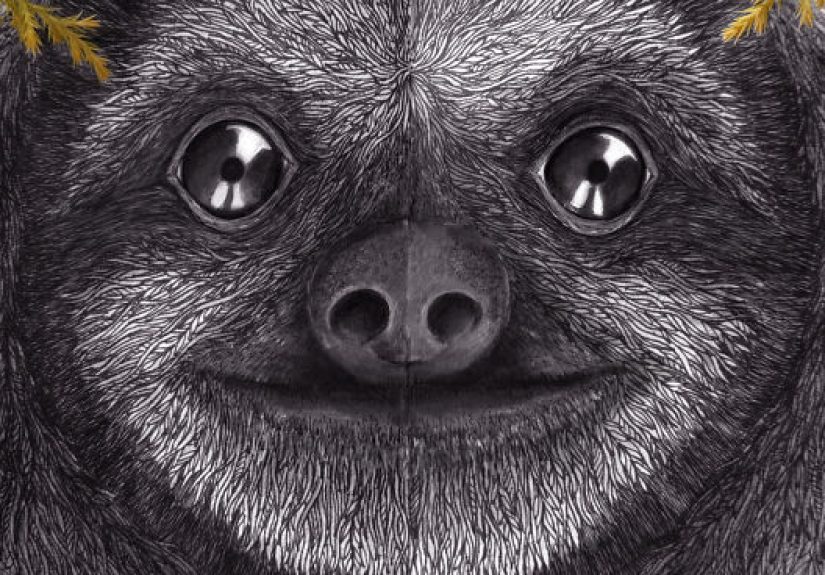
If there were ever an animal built for a leaf-centered visual metaphor, it is the pygmy three-toed sloth. This tiny sloth is closely associated with mangrove habitat, and its whole vibe is basically “I trust this tree with my life.” Which, unfortunately, is not a joke. Species with small ranges and specialized habitats are especially vulnerable. Blend a pygmy sloth with leaves, and the symbolism is immediate: if the mangroves go, so does the sloth’s world.
The visual also captures something emotionally important. Sloths often get treated like internet mascots with permanent bedhead, but conservation is not cute when habitat degradation enters the chat. A leaf around a sloth is not a design flourish. It is the story.
Slender Loris
The slender loris is another unforgettable example because it embodies the delicate balance of forest life. With its oversized eyes and nocturnal habits, it already looks like a creature designed by someone who wanted to make humans feel protective. Add leaves to the composition, and the message deepens: this animal depends on intact forest structure, not just abstract “nature” in a vague, poster-friendly sense.
Habitat loss, fragmentation, and human pressure hit species like lorises especially hard. That makes the leaf motif powerful. It reminds viewers that a forest is not just scenery behind the animal. The forest is the operating system.
Giant Panda
The giant panda may be one of the most recognizable conservation symbols on Earth, but even iconic animals need real habitat, not just good branding. Pandas are tightly linked to bamboo forests, and forest loss can reduce access to the bamboo they rely on. A panda merged with leaves or bamboo imagery works because it strips away the false idea that charisma alone can save a species.
People love pandas, and that is useful. But love has to lead somewhere practical, like protecting forests, supporting biodiversity, and recognizing that a cute face without a functioning habitat is not a conservation success story. It is a marketing campaign with a cliff at the end.
Red Panda
Red pandas are proof that evolution occasionally shows off. They are bright, fluffy, nimble, and somehow look both majestic and mildly suspicious at the same time. But the forests they depend on are under pressure, and the loss of nesting trees and bamboo continues to threaten their habitat. That is what makes a leaf-based portrait so smart. It visually reconnects the animal to the forest structure that keeps it alive.
Audience reactions to red panda art are often immediate because the species is visually magnetic. The trick is converting that affection into understanding. Leaves help do that. They make the point that this is not just an adorable animal floating in aesthetic space. It is a forest-dwelling species with specific ecological needs.
Tarsier
Tarsiers look like they know things. Ancient things. Possibly tax season. These tiny primates are unforgettable because their giant eyes and tiny bodies feel almost unreal. But their strangeness is exactly why they benefit from habitat-centered storytelling. Many tarsier populations are tied to threatened island forests, where habitat destruction can move fast and hit hard.
When a tarsier is framed with leaves, the artwork does more than look dramatic. It restores context. It says: this animal is not weird in a vacuum. It is exquisitely adapted to a place. And once that place is damaged, the adaptation becomes a trap instead of a strength.
Tiger
Tigers bring a different kind of energy to this concept. They are powerful, famous, and culturally loaded, but they are still vulnerable to habitat loss, fragmentation, and poaching pressures across their range. A tiger woven into leaves or forest forms creates a sharp contrast between strength and fragility. The animal looks dominant, but the composition quietly says otherwise: even apex predators fall when forests shrink.
This is one of the most useful things art can do. It can puncture the myth that the biggest, strongest, most awe-inspiring animals are somehow safe by default. They are not. A tiger still needs cover, prey, movement corridors, and intact ecosystems. Without those, stripes are just beautiful warnings.
More Than Pretty: What the Image Really Says
At its core, this concept says that conservation is not about isolating one photogenic species at a time and hoping for the best. It is about belonging. Endangered animals belong in functioning ecosystems, not fragmented leftovers. Leaves become a visual shorthand for that larger ecological truth.
That is also why the idea feels emotionally honest. It does not pretend the problem is only about animals. It points to biodiversity. It suggests relationships: plant to herbivore, tree to canopy-dweller, forest to predator, wetland to migratory life, habitat to future. In other words, the art is not only about what we are losing. It is about what still fits together, if we choose to protect it.
There is also a subtle moral argument tucked inside the image. Humans are great at categorizing. We put things in boxes, labels, lists, exhibits, feeds, and headlines. But wildlife was never designed for our organizational preferences. Endangered animals are not museum pieces with a countdown clock. They are living parts of living systems. Leaves remind us of that. They return animals to the places where they make sense.
Why People Share Work Like This
Part of the answer is obvious: it is visually striking. But part of it is deeper. People share this kind of art because it makes them feel like conservation can still be communicated with imagination, not just dread. The message is serious, but the format is accessible. It can reach people who might never click on a policy brief or read a species recovery plan.
That matters in a digital culture where attention spans are short and everything is competing for eyeballs. An image that combines endangered animals with leaves can stop the scroll, spark curiosity, and create a softer entry point into hard information about habitat destruction and wildlife decline. That does not make the issue smaller. It makes the audience bigger.
And honestly, that is no small thing. Conservation needs scientists, lawmakers, land managers, Indigenous leadership, educators, and communities on the ground. It also needs visual storytellers. Sometimes a single image can do what a stack of statistics cannot: make someone care enough to keep learning.
Experiences This Topic Brings to the Surface
One of the most interesting experiences tied to this idea is the shift from seeing leaves as background to seeing them as evidence. Most people move through daily life treating plants as scenery. Trees are shade. Leaves are texture. Vines are decorative if you are in the mood and annoying if they are in the gutter. But when endangered animals are combined with leaves in art, those plant forms suddenly feel loaded with meaning. You start noticing that a leaf is food for one species, cover for another, a nursery for insects, a cooling system for an entire patch of forest, and the first chapter in a much bigger ecological story. That shift in perception is powerful because once people see habitat as essential, they stop treating conservation like a fan club for cute animals and start understanding it as ecosystem protection.
There is also the experience of emotional contradiction. The artwork is beautiful, but the subject is loss. That tension is part of why the image stays with people. You can admire the linework, the composition, and the creative use of foliage while still feeling the uneasy truth underneath it. A red panda wrapped in leaves looks enchanting, but the thought that its habitat is shrinking takes some of the sweetness and turns it into urgency. A tiger emerging from foliage looks majestic, but the forest around it suddenly feels fragile instead of permanent. Good conservation art lets both emotions exist at once. It gives viewers beauty without letting them stay comfortably numb inside it.
Another common experience is recognition. People who have visited zoos, botanical gardens, forests, mangroves, or wildlife reserves often describe a strange click when they see art like this. They remember the smell of wet leaves, the sound of movement in the canopy, the way a branch can hide an entire animal until it shifts. The artwork brings back that physical memory. It reminds them that animals are not separate from the textures around them. A leaf is not “next to” a sloth or a loris or a panda. It is part of the animal’s lived reality. That sense of recognition makes the message stronger because it feels observed, not invented.
Then there is the creative experience itself. Artists working around endangered wildlife often end up researching far more than anatomy. They learn about habitat ranges, feeding patterns, forest structure, migration routes, threats, and recovery efforts. In that process, the drawing stops being a clever visual trick and becomes a quiet form of witness. Every line can start to feel like a record of what is still here and what is under pressure. That changes the relationship between art and audience. The image is no longer just something to consume. It becomes something to consider.
Finally, this topic creates a deeply human experience: humility. Combining endangered animals with leaves reminds us that nature is not a stage set built for our convenience. It is a living system that predates us, supports us, and will keep sending warning signs whether we are emotionally ready or not. The leaf in the artwork is small, but the message is huge. Protect the habitat. Respect belonging. Understand that the fate of wildlife is tied to the health of the natural world around it. Once that realization lands, the image does not feel decorative anymore. It feels like a responsibility.
Conclusion
I Combine Endangered Animals With Leaves To Show That They Belong In Nature is more than a memorable title. It is an elegant conservation argument. By blending wildlife with leaves, the image makes a truth visible: animals do not exist apart from their habitats, and conservation fails when we forget that. Whether the subject is a pygmy three-toed sloth in mangroves, a red panda in bamboo forests, a tarsier in island canopy, or a tiger in a fragmented woodland, the message stays the same. Protect the place, and you protect the life inside it.
That is what makes the concept so effective. It is artistic without being vague, emotional without being manipulative, and beautiful without losing its bite. In a world overloaded with noise, a well-made image can still cut through. And when that image says endangered animals belong in nature, not in the margins of our attention, it is not just making art. It is making the case.