Table of Contents >> Show >> Hide
- Why Replacing Weather Stripping Matters
- Signs Your Weather Stripping Needs to Go
- Tools and Materials You May Need
- Choose the Right Type of Weather Stripping
- Prep Before You Start
- How to Remove Old Weather Stripping
- How to Install New Weather Stripping on a Door
- How to Install Weather Stripping on Windows
- Common Mistakes to Avoid
- When a Simple Replacement Is Not Enough
- Maintenance Tips After Installation
- Final Thoughts
- Real-World Experiences: What Replacing Weather Stripping Actually Feels Like
If your house has that “cozy cabin” feeling when you did not actually order the breeze package, worn-out weather stripping may be the culprit. Those thin seals around doors and windows do a lot of heavy lifting. They help keep conditioned air inside, outdoor air outside, bugs where they belong, and your HVAC system from working like it is training for a marathon.
The good news is that replacing weather stripping is one of those rare home projects that is affordable, beginner-friendly, and immediately satisfying. You do not need a contractor, a giant tool collection, or nerves of steel. You mostly need the right material, a little patience, and the willingness to admit that the old strip hanging off your front door has officially retired.
In this guide, you will learn how to replace weather stripping the smart way: how to prep the area, remove old material without making a mess, choose the right replacement, and install it so your door or window seals snugly without sticking shut like a jar of pickles.
Why Replacing Weather Stripping Matters
Weather stripping is designed for movable parts of your home, such as exterior doors and operable windows. Its job is to compress when the unit closes and spring back when it opens. When it is in good shape, it blocks drafts, improves comfort, reduces outside noise a bit, and helps cut energy waste. When it is crushed flat, torn, brittle, or missing, it turns your home into a part-time wind tunnel.
Replacing weather stripping can also be more effective than many homeowners expect. Small gaps around a door jamb or sash may not look dramatic, but they let air slip in and out all day long. That means rooms feel less comfortable, temperatures swing faster, and heating or cooling costs creep upward. It is not glamorous, but it is one of the simplest comfort upgrades you can make.
Signs Your Weather Stripping Needs to Go
Before you grab the scissors, make sure weather stripping is actually the problem. Here are the most common signs it needs replacement:
- You feel a draft around a closed door or window.
- You can see daylight under the door or near the frame.
- The material looks torn, cracked, brittle, compressed, loose, or gummy.
- The seal does not “bounce back” when pressed.
- You hear more outdoor noise than usual near the opening.
- Your door or window rattles slightly in windy weather.
A quick test helps confirm the issue. Close the door or window on a piece of paper. If the paper slides out easily, the seal may be too loose. You can also use a smoke source or incense near the edges on a breezy day to spot air movement. Just be smart and safe with open flame.
Tools and Materials You May Need
The exact supplies depend on the type of door or window, but most projects use a short and friendly list:
- Tape measure
- Scissors or utility knife
- Putty knife or flat screwdriver
- Pliers
- Drill or screwdriver for screws
- Hammer and finish nails if required
- Soap and water or household cleaner
- Clean rags
- Replacement weather stripping
- Door sweep, if the bottom edge is leaking
In some cases, you may also need adhesive remover, a hair dryer to soften old sticky backing, or silicone sealant if a kerf-in strip keeps slipping out of its channel.
Choose the Right Type of Weather Stripping
This is where many DIY projects either become a triumph or a long afternoon full of muttering. Not every weather stripping product belongs everywhere. Pick the wrong type and the door may not latch, the window may bind, or the seal may fail early.
Common Options for Doors
- Foam tape: Easy to install and inexpensive. Good for minor gaps and quick fixes, though not always the longest-lasting option.
- V-strip or tension seal: Great for the sides and tops of doors or windows. It springs against the surface and works well in narrow gaps.
- Tubular vinyl or rubber: Durable and effective for higher-use openings.
- Kerf-in weather stripping: Presses into a groove in many modern door frames. Clean look, reliable seal, and often the best choice if your door already uses it.
- Door sweep: Seals the bottom of the door where regular weather stripping cannot help much.
Common Options for Windows
- V-seal: Popular for double-hung and sliding windows.
- Foam tape: Useful for accessible sash edges and quick seasonal upgrades.
- Tubular gasket or silicone/vinyl strips: Helpful where flexibility and durability matter.
- Manufacturer-specific replacement strips: Often best for branded windows and patio doors.
Measure the gap and buy the size that will compress enough to seal without making the unit hard to close. When buying material by length, measure the full perimeter you plan to seal and add a little extra so you are not one foot short and one trip crankier.
Prep Before You Start
Good prep makes installation smoother and the finished seal more reliable. Do not skip it just because you are feeling bold.
1. Inspect the opening
Look at the top, sides, bottom, hinges, latch side, and corners. Sometimes the problem is not only the weather stripping. A sagging door, loose hinges, misaligned strike plate, or dirty window track can create a gap that fresh material alone will not fix.
2. Decide whether weather stripping or caulk is needed
If the gap is around a moving part, weather stripping is the answer. If the gap is between fixed trim and the wall, use caulk instead. Weather stripping is not magic putty, and caulk is not a backup dancer for moving joints.
3. Clean the surface
Wash the area with mild soapy water or cleaner and let it dry completely. Adhesive-backed products stick far better to a clean, dry surface than to dust, old residue, or mystery grime from three winters ago.
4. Check the temperature
If you are using adhesive foam or similar products, install when the temperature is suitable for the material. Many products adhere better when it is above about 40 degrees Fahrenheit.
How to Remove Old Weather Stripping
Removal is simple, but the method depends on how the old material was attached.
Adhesive-backed weather stripping
- Peel up one end by hand or with a putty knife.
- Pull slowly to avoid leaving half the backing behind like a bad breakup.
- Remove leftover adhesive with cleaner or adhesive remover.
- Wipe the area clean and dry.
Nailed or screwed weather stripping
- Use a screwdriver, drill, or claw hammer to remove fasteners.
- Lift the strip carefully with a flat tool.
- Pull out any stubborn nails or staples.
- Clean the mounting surface thoroughly.
Kerf-in weather stripping
- Grip the end and pull it out of the groove.
- If it resists, use pliers gently.
- Vacuum or wipe the kerf channel clean.
- Inspect the groove for damage before inserting the new strip.
If the old material was painted over, you may need a utility knife to score the paint line first. Go slowly. You are replacing a seal, not auditioning for demolition duty.
How to Install New Weather Stripping on a Door
Exterior doors usually need sealing at the top, both sides, and the bottom. Tackle the frame first, then the sweep or threshold area.
Step 1: Measure each section
Measure the top jamb and both side jambs separately. Do not assume both sides are identical. Houses enjoy settling in creative ways.
Step 2: Cut the material
Cut each piece to size with scissors or a utility knife. For notched door-frame corners, dry-fit before final trimming so you do not end up with a gap at the top corner where the draft loves to party.
Step 3: Install the top and sides
For adhesive-backed foam or V-strip, peel the backing and press the material into place along the stop molding or channel. Start at one end and work evenly. Do not stretch the material as you go, because it may shrink back later and leave gaps.
For kerf-in weather stripping, press the fin into the groove and work your way down. Use your thumb or a blunt tool if needed, but avoid tearing the fin. If the strip feels loose in the groove, a thin bead of silicone in the kerf can help hold it in place on some doors.
Step 4: Test the fit
Close the door and check resistance. The seal should compress slightly but the latch should still work normally. If the door has to body-slam itself shut, the material is probably too thick or installed too far inward.
Step 5: Install or replace the door sweep
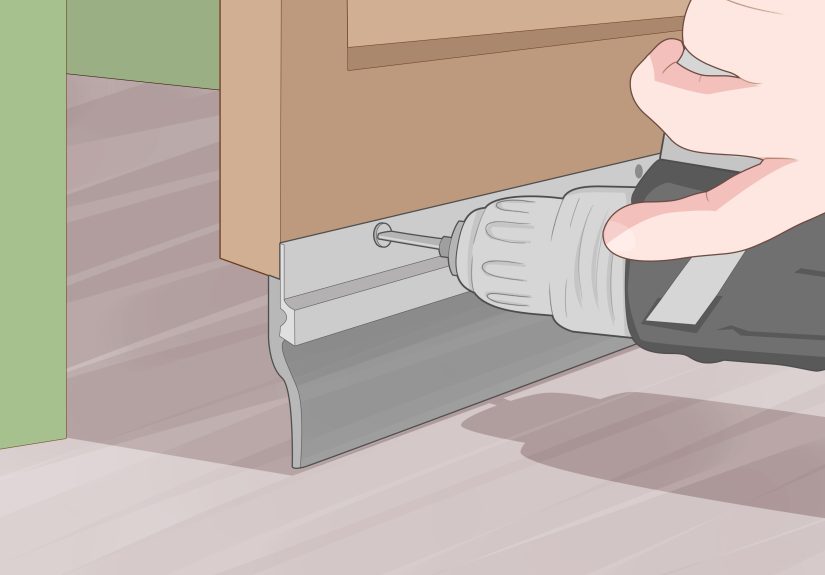
If light shows under the door, replace the sweep. Measure the width of the door, cut the sweep, and mount it according to the product style. Many screw-mount sweeps are easiest to position with the door closed so the bottom just touches the threshold or floor without dragging excessively.
After installation, open and close the door several times. You want a snug seal, not a workout.
How to Install Weather Stripping on Windows
Windows vary more than doors, so the right method depends on the style.
Double-hung windows
Clean the jamb thoroughly. Cut V-seal or other recommended material to match the sash height. Install it in the channel or along the jamb where the sash meets the frame. Make sure the sash can still move and lock without scraping or bunching the strip.
If you notice leaks where the top sash meets the frame, you may need to weatherstrip that contact area as well. Locking the window tightly after installation helps compress the seal and improve performance.
Casement windows
Inspect the perimeter where the sash closes against the frame. Replace worn gasket-style weather stripping with the appropriate type, especially if the window is manufacturer-specific. If your window brand offers replacement guides or parts, matching the original profile is usually the safest move.
Sliding windows
Check the jamb liner, track area, and meeting rails. Replace missing or flattened strips and clean tracks so debris does not interfere with the seal. Sliding windows often perform much better after a combination of cleaning, hardware adjustment, and fresh weather stripping.
Common Mistakes to Avoid
- Using weather stripping where caulk belongs: Moving joint versus fixed gap matters.
- Buying the wrong thickness: Too thin will leak. Too thick will jam.
- Skipping surface cleaning: Adhesive does not love dust.
- Stretching the material during installation: It may pull back and leave gaps later.
- Ignoring door alignment problems: A warped or sagging door can defeat a brand-new seal.
- Forgetting the bottom of the door: Many drafts come from underneath, not just the jamb.
- Leaving old adhesive behind: New material sits better on a clean surface.
When a Simple Replacement Is Not Enough
Sometimes replacing weather stripping improves things but does not solve everything. If you still have major drafts after installation, check for these issues:
- Loose hinges causing the door to sag
- A threshold that needs adjustment
- A strike plate pulling the door unevenly
- Warped door panels or damaged frames
- Large fixed gaps around trim that need caulk
- Window hardware that no longer pulls the sash tight
In other words, weather stripping is excellent, but it is not a magician. It works best when the door or window is fundamentally sound.
Maintenance Tips After Installation
Once the new material is in place, a little maintenance goes a long way. Inspect seals at least once a year, especially before winter and summer. Wipe dirt off the material, keep tracks clean, and avoid painting over flexible seals. If a section loosens, fix it early before it turns into a bigger draft problem.
Also, keep an eye on compression. Weather stripping should still have some life and spring in it. If it is permanently flattened, cracked, or coming apart, replacement time has rolled around again.
Final Thoughts
Replacing weather stripping is one of the most practical DIY home improvements because it rewards you almost immediately. Rooms feel less drafty, doors close with a more satisfying seal, and your heating and cooling system gets a little backup instead of doing all the heavy lifting alone.
The secret is not fancy technique. It is choosing the right product, prepping the surface well, removing the old material completely, and testing the fit before calling the job done. Do that, and you will turn a small repair into a noticeable comfort upgrade.
And perhaps most satisfying of all, the next time a cold draft creeps toward your ankles, it will have to find another address.
Real-World Experiences: What Replacing Weather Stripping Actually Feels Like
On paper, replacing weather stripping sounds like a tidy little afternoon project. In real life, it usually begins when someone in the house says, “Why is it colder near the front door than it is in the freezer aisle?” That is often the moment homeowners start investigating and realize the old seal has flattened into something that looks more decorative than useful.
A very common experience is discovering that the worst draft is not where you expected. Many people assume the problem is around the lock side of the door, then find that the real culprit is the bottom edge. A worn door sweep or a slightly uneven threshold can let in a surprising amount of air. Replace that one piece, and suddenly the hallway stops feeling like it has opinions about the weather.
Another familiar lesson is that cleaning matters more than people think. Homeowners love to skip prep because it is boring and does not come with the emotional thrill of “fixing the thing.” But when adhesive-backed foam peels off two days later, the mood changes quickly. The people who get the best results are usually the ones who slow down, wipe the surface thoroughly, let it dry, and only then apply the new strip. Glamorous? No. Effective? Absolutely.
There is also the classic overcorrection problem. Someone feels a draft, buys the thickest weather stripping in the store, installs it proudly, then realizes the door now closes like it is resisting arrest. This is a rite of passage in DIY. The better experience comes from measuring the gap first and choosing a product that compresses enough to seal without turning every exit into a shoulder-check event.
Window projects have their own personality. Many homeowners report that replacing weather stripping on older double-hung windows is less dramatic than expected but more finicky. The trick is getting a better seal without interfering with operation. When it works, though, the difference is obvious. The sash moves more cleanly, the lock pulls tighter, and that annoying little whisper of outside air disappears.
People also tend to remember the “before and after” effect in comfort more than in utility bills. Yes, sealing drafts can help with energy efficiency, but what stands out day to day is how a room feels. The couch near the window becomes a place people actually want to sit. The front entry stops feeling like a weather experiment. The baby’s room, office, or guest room becomes steadier and less fussy to heat or cool.
One of the most useful real-world takeaways is that weather stripping often reveals other hidden issues. A door that still leaks after replacement may be slightly out of alignment. A window that still feels drafty may need hardware adjustment, not just a new seal. In that sense, this project teaches homeowners how their doors and windows actually function, which pays off in future maintenance.
And finally, there is the tiny but deeply satisfying emotional reward. Replacing weather stripping is not flashy enough for a home makeover show, but it delivers a quiet kind of victory. You spot the problem, fix it with your own hands, and feel the difference the same day. That is hard to beat. No confetti cannon required.