Table of Contents >> Show >> Hide
- What Are Sparkling Candles, Exactly?
- Before You Start: A Few Safety Basics
- How to Light Sparkling Candles: 7 Steps
- Common Mistakes to Avoid
- Extra Tips for Better Results
- Can You Use Sparkling Candles Indoors?
- What If Something Goes Wrong?
- Real-Life Experiences With Sparkling Candles: What People Learn Fast
- Final Thoughts
There are birthday candles, and then there are sparkling candlesthe flashy cousins who arrive at the party wearing sequins and demanding a camera. Whether you call them sparkler candles, cake sparklers, or celebration candles, they can turn a regular cake entrance into a tiny Las Vegas residency. The catch? They are not ordinary wax candles. They throw sparks, burn hotter, and deserve a lot more respect than the average cupcake topper.
If you want the wow factor without the “why is the smoke alarm singing backup vocals?” moment, you need a smart routine. This guide breaks down how to light sparkling candles in 7 steps, plus the safety habits that make the whole thing smoother, safer, and less chaotic. You will also find practical tips for cakes, bottle-style sparkler candles, and indoor celebrations where common sense should absolutely be invited before the guests arrive.
What Are Sparkling Candles, Exactly?
Sparkling candles are celebration candles designed to create a brief fountain of sparks instead of a simple steady flame. They are often used on birthday cakes, anniversary desserts, graduation treats, and bottle presentations at parties. Some are made with pointed bases for cakes, while others are designed to attach to bottles with clips.
That bright, glittering effect is exactly why they are popularand exactly why they should be handled carefully. Unlike standard birthday candles, sparkler candles can’t be treated like tiny harmless decorations. They create heat, sparks, and excitement all at once, which is fun for the party and terrible for curtains, loose sleeves, or a low-hanging balloon arch.
Before You Start: A Few Safety Basics
Before we jump into the seven steps, let’s get one thing straight: sparkling candles are for celebrations, not improvisation. Read the packaging first. If the product says outdoor use only, believe it. If your venue has rules against open flames or pyrotechnic-style products, do not try to out-negotiate the fire code with your birthday playlist.
It is also wise to keep children at a safe distance, have water nearby, and avoid lighting these candles near anything flammable. That includes paper decorations, dry flowers, streamers, curtains, hairspray, and that one uncle’s sleeve that somehow always finds the dessert table. If you are using bottle sparkler candles, use the correct clip or holder recommended for the product. Tape, rubber bands, and party optimism are not safety tools.
How to Light Sparkling Candles: 7 Steps
Step 1: Choose a Safe Setup Area
The first step happens before the flame. Put the cake, dessert, or bottle on a flat, stable, uncluttered surface. Make sure there is enough open space above it and around it. No low cabinets, no hanging decorations, no tissue paper pom-poms hovering like little fire hazards in waiting.
If you are indoors, make sure the room is well ventilated and the ceiling clearance is generous. If the packaging recommends outdoor use, keep the celebration outside. For cakes, place the dessert near the edge of a sturdy table only if you have enough room to light the sparkling candle without leaning over it awkwardly. Your goal is simple: give the sparks room to shoot upward safely and give yourself room to step back.
Step 2: Check Local Rules and Product Instructions
This step is not glamorous, but neither is explaining to a venue manager why you brought pyrotechnic enthusiasm into a “no open flame” banquet room. Different products have different instructions, and some sparkling candles are meant for cake use while others are closer to miniature fountain-style devices.
Check whether the product is labeled for consumer use, whether it is appropriate for indoor or outdoor use, and whether your state, city, venue, or apartment building has restrictions. If you are working with bottle sparklers for a restaurant-style presentation, be extra careful. Some products sold for dramatic bottle service may fall into a category that requires more caution than typical cake sparklers.
Step 3: Insert or Attach the Candle Securely
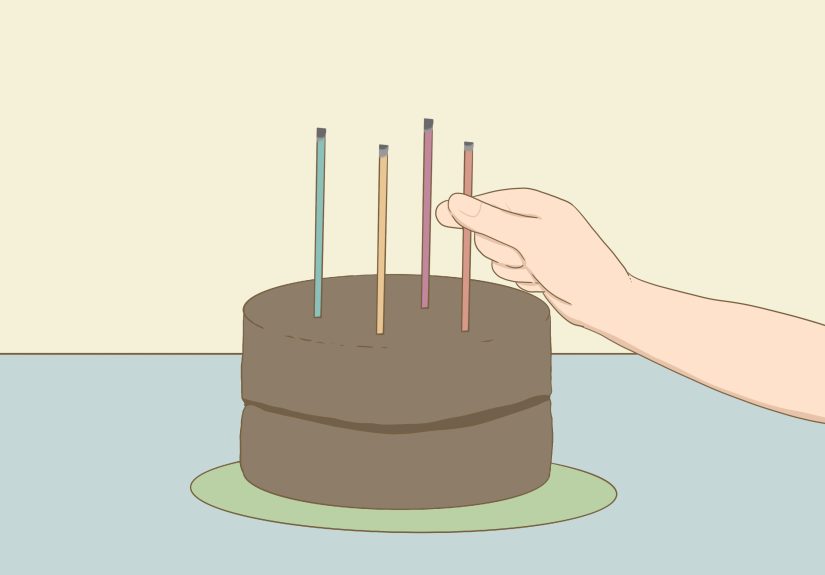
For cake sparkler candles, push the pointed base firmly into the cake so the candle stands upright on its own. It should be stable, vertical, and not wobbling like it just heard the first note of “Happy Birthday.” The sparks should shoot upward, not sideways toward frosting, faces, or nearby décor.
If you are using more than one sparkling candle, space them out enough that they do not interfere with each other. Crowding them together can make lighting awkward and can increase the chance of sparks crossing paths. If you are using a bottle version, attach it with the proper clip designed for that purpose. Do not hold a lit sparkler by hand, and do not invent your own attachment system with tape or twist ties.
Step 4: Use the Right Lighter
The best tool for lighting sparkling candles is usually a long-neck butane lighter, candle lighter, grill lighter, or another long-reach flame source. A short match can work in theory, but in practice it puts your fingers far too close to the action. That is a poor trade unless your life goal is to smell like singed confidence.
Some sparkling candles do not ignite instantly. You may need to hold the flame to the exposed paper or ignition point for a few extra seconds. Be patient. Do not jam your hand closer and closer while muttering threats at the candle. Stay calm, keep the flame steady, and let the ignition happen.
Step 5: Light One at a Time From the Side
Now for the main event. Stand to the side of the cake or bottle, not directly above it. Hold the flame to the ignition tip while keeping your face, hair, sleeves, and body away from the top. Never place any part of your body over a sparkling candle while lighting it.
Light one candle at a time unless the manufacturer specifically says otherwise and you have help from another responsible adult. Once it catches, move your hand away and step back. You should not need to hover. Sparkling candles are designed to do their thing without a pep talk.
Step 6: Let It Burn Out Naturally
Unlike regular birthday candles, sparkling candles usually burn out on their own. That means there is no need to lean in and blow on them. In fact, trying to blow them out can bring your face too close to the sparks and create a risk you do not need.
This is the moment for singing, photos, applause, and dramatic cake presentation. Keep guests from crowding too close, especially kids. It is fine to enjoy the sparkle show; it is not fine to treat it like a hand-held toy or a magic wand for chaotic party choreography.
Step 7: Remove, Cool, and Dispose of It Properly
Once the sparkling candle is fully spent, give it a moment. The wire or body may remain hot after the sparks stop. Carefully remove it only when it is safe to do so, then place it in a bucket of water, a sink, or a nonflammable container with water or sand. This helps make sure there are no lingering hot bits waiting to surprise you later.
Do not toss a used sparkler candle straight into a trash can the second it stops sparkling. “It looked done” is not a disposal strategy. After it is thoroughly cooled and soaked if needed, throw it away according to the product instructions.
Common Mistakes to Avoid
- Lighting it under decorations: Balloons, streamers, and paper fans are not part of the flame test.
- Using short matches: Your knuckles deserve a safer work environment.
- Letting kids handle them unsupervised: Sparkling candles are not toys.
- Relighting a dud: If it does not ignite properly, follow the product instructions and treat it cautiously.
- Holding one in your hand: Many products are meant to be inserted or clipped, not waved around like a tiny fiery baton.
- Using bottle sparklers indoors without checking rules: Some venues and products require extra restrictions or professional handling.
- Throwing hot leftovers in the trash: Always cool them first.
Extra Tips for Better Results
Do a Test Run Before a Big Event
If you are using sparkling candles for a wedding, milestone birthday, restaurant event, or anything with a photographer and a schedule, test one ahead of time. This helps you learn how long it takes to ignite, how high the sparks go, and how long the effect lasts. It is much better to practice on a random Tuesday than on the night you are trying to look effortlessly polished in front of thirty guests and one very judgmental aunt.
Keep the Number Reasonable
One or two sparkling candles can look dramatic and elegant. Ten of them can look like you are trying to launch a dessert into low orbit. More is not always better. A few well-placed sparkler candles usually create the best visual effect without turning the cake into a tiny fireworks festival.
Dress for the Job
If you are the official candle-lighter, avoid loose sleeves, dangling scarves, and big flowing hair near the flame. Closed-toe shoes are a smart move too, especially if you are using sparkling candles outdoors or near a busy party setup.
Can You Use Sparkling Candles Indoors?
Sometimes yes, sometimes no, and sometimes absolutely not. The answer depends on the specific product, local rules, venue policy, and available clearance. Small cake sparkler candles may be used indoors in some settings, but bottle-service sparklers and more intense fountain-style products can trigger stricter safety concerns.
If you are hosting at home, keep the setup controlled and simple. If you are in a restaurant, event hall, club, or hotel, ask the venue first. A good rule is this: if the staff looks nervous when you say “I brought my own sparkling candle effects,” that is your sign to pause and reassess.
What If Something Goes Wrong?
If a sparkling candle tips, fizzles strangely, or fails to ignite, do not grab it immediately and do not try to relight it right away. Back away, wait, and follow the product directions. Keep water nearby. If someone gets burned, cool the area with clean, cool water for several minutes and seek medical care when appropriate, especially for larger or deeper burns, burns to the face or eyes, or any injury involving children.
And yes, eye protection is not a ridiculous idea if you are handling multiple sparkler candles, especially outdoors. Nobody has ever ruined the party by being the most prepared person near a shower of sparks.
Real-Life Experiences With Sparkling Candles: What People Learn Fast
The most memorable thing about sparkling candles is that they tend to teach people a lesson almost immediately. Usually the lesson is harmless, like “Oh, these are brighter than I expected,” or “Wow, the cake looks fantastic in photos.” Occasionally the lesson is, “Why did we place the cake directly under a paper banner that says ‘Shine Bright’?” That second lesson is a little too on the nose.
At birthday parties, the most common experience is surprise at how much more dramatic sparkler candles feel compared with regular candles. A simple sheet cake can suddenly look like the headliner at its own residency. Guests pull out their phones, children gasp, adults smile, and for about thirty seconds everyone forgets to ask whether there is ice cream. That brief moment is exactly why these candles are popular: they create a shared memory fast.
People also learn that setup matters more than they expected. Hosts who have the smoothest experience usually do the boring things first: they clear the area, position the cake correctly, test the lighter, and keep water nearby. Meanwhile, the messier stories almost always begin with a sentence like, “We figured we’d just light it really quickly.” Famous last words of the dessert table.
Another common experience is discovering that children are fascinated by sparkling candles in a way that requires immediate adult leadership. Kids love the bright fountain effect, but they often assume anything party-related must be friendly and harmless. Adults quickly realize that the best party move is to let children enjoy the show from a safe distance instead of turning the moment into a hands-on science experiment.
Then there is the photo factor. Sparkling candles look amazing in pictures, but only when everyone is positioned properly. The best results usually come when the candle is already secured, the room lights are adjusted, and the person lighting it can step away quickly. People who try to light the candle and pose dramatically at the same time usually end up with awkward expressions, blurry hands, or one image that looks suspiciously like panic in formalwear.
For bottle presentations, the experience is a little different. The sparkle effect can feel luxurious and theatrical, but it also raises the stakes. Hosts and servers learn fast that bottle sparklers need correct clips, clear space, and calm handling. Nobody looks cool trying to manage a flaming accessory with one hand and a wobbling bottle with the other. The successful moments are the ones where everything has been thought through in advance.
In the end, most people who use sparkling candles say the same thing: they are worth it when they are handled with respect. The sparkle lasts less than a minute, but the memory lasts much longer. That is the sweet spota short burst of celebration, a few great photos, a little laughter, and a cake entrance that feels special without becoming an accidental hazard. In other words, let the candle be the drama. The rest of the party does not need to be.
Final Thoughts
If you want a celebration that looks festive, photographs beautifully, and gives the cake a little superstar energy, sparkling candles can absolutely deliver. The trick is remembering that they are not ordinary candles. They are mini spectacle-makers with real heat, real sparks, and real safety rules.
Follow the seven steps, use a long lighter, keep the candle secure, give it room, and cool it properly after use. Do that, and your party gets the sparkle without the stress. Which, honestly, is the dream. The cake should steal the shownot the fire extinguisher.