Table of Contents >> Show >> Hide
- 1. Pompeii, Italy: A Private Spa That Screams “Roman Luxury”
- 2. Herculaneum, Italy: Scrolls Burned by Vesuvius Are Finally Talking
- 3. The Great Pyramid of Giza, Egypt: A Hidden Corridor in the World’s Most Famous Monument
- 4. Karnak Temple, Egypt: Gold Jewelry and Divine Miniatures
- 5. South Asasif in Luxor, Egypt: An Ancient Tomb With 11 Sealed Burials
- 6. Tell el-Kharouba, Sinai: A Fortress With Ovens and Fossilized Dough
- 7. Ostia Antica, Italy: A Rare Jewish Ritual Bath at Rome’s Port
- 8. Angkor Thom, Cambodia: Stone Guardians Return to the Story
- 9. Papoura Hill, Crete: A Circular Minoan Mystery
- 10. Valeriana, Mexico: A Lost Maya City Hidden in Plain Sight
- Why These Ancient Discoveries Hit So Hard
- Conclusion
- SEO Metadata
Archaeology has a wonderful habit of humbling everyone. You can have satellites, artificial intelligence, cosmic-ray imaging, underwater recovery teams, and enough graduate students to fill a small stadium, and the ancient world will still pull a “by the way, here’s a hidden corridor” when nobody is looking. That is exactly why stories about ancient places and surprising new finds keep pulling readers in: they remind us that history is not finished. It is still buried, submerged, scanned, decoded, and occasionally discovered next to a modern highway or under a future airport.
These recent discoveries did more than produce shiny objects for museum cases. They changed how experts think about ancient daily life, religion, trade, politics, engineering, and urban planning. Some finds were dramatic, like a hidden passage inside the Great Pyramid of Giza. Others were quietly astonishing, like fossilized dough in a military fortress or a ritual bath tucked into Rome’s ancient port city. Together, they prove that ancient sites are not static ruins. They are active archives, and many of them are still giving up new secrets.
Here are 10 ancient places that dropped surprising new finds and reminded the modern world that the past still has excellent timing.
1. Pompeii, Italy: A Private Spa That Screams “Roman Luxury”
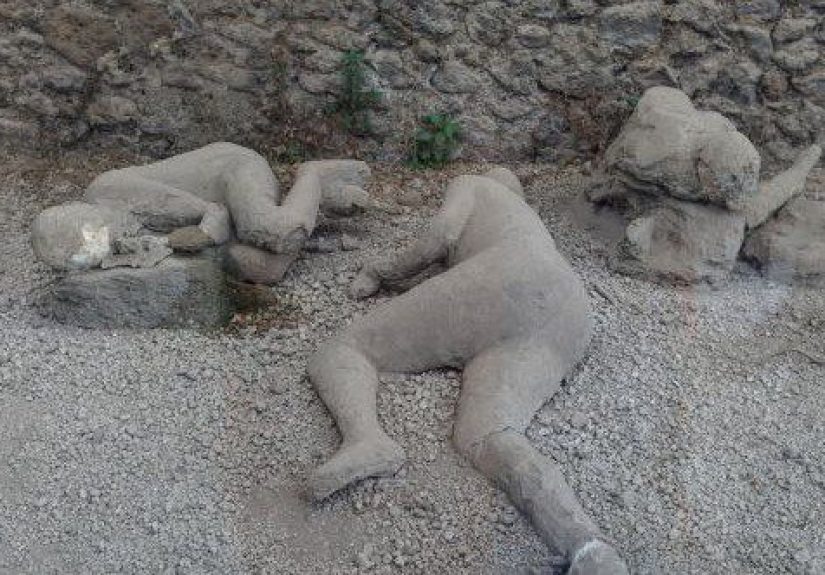
Pompeii has always been the overachiever of archaeology. Buried by the eruption of Mount Vesuvius in A.D. 79, the city preserves daily Roman life with a level of detail that feels almost unfair. But even by Pompeii standards, the recent discovery of a lavish private thermal bath complex in Regio IX was a showstopper.
This was not some modest little soak-and-go setup. Archaeologists uncovered a spacious suite of hot, warm, and cold rooms at an elite residence, likely designed for entertaining guests before a feast. In other words, Romans were hosting spa parties two millennia before luxury resorts started charging extra for cucumber water. The baths appear to be among the largest private examples found in Pompeii, and they deepen our picture of how wealth, status, and hospitality worked inside the city’s upper-class homes.
Why this find matters
Pompeii is often discussed in terms of tragedy, but discoveries like this shift attention toward lifestyle. The find shows how architecture itself could perform power. A wealthy host did not just own a nice house. He choreographed an experience. Guests moved from room to room, from steam to plunge pool to dining, surrounded by carefully designed luxury. That turns Pompeii from a static ruin into something far more vivid: a city of ambition, performance, and social theater.
2. Herculaneum, Italy: Scrolls Burned by Vesuvius Are Finally Talking
If Pompeii is the headline magnet, Herculaneum is the site that makes scholars grip the table and whisper, “Wait, this could change everything.” Also destroyed by Vesuvius, Herculaneum is home to the famous carbonized papyrus scrolls from the Villa of the Papyri. For generations, they were the archaeological equivalent of locked treasure chests: obviously valuable, but too fragile to open without destroying them.
That changed when researchers used advanced imaging and AI-assisted analysis to read portions of the Herculaneum scrolls without physically unrolling them. Teams working through the Vesuvius Challenge managed to identify thousands of characters and reveal multiple columns of ancient Greek text. Suddenly, a library that had been effectively mute for nearly 2,000 years started whispering back.
Why this find matters
This is one of those discoveries that feels bigger than one site. Herculaneum is not merely yielding an artifact. It is yielding language, thought, and intellectual history. Ancient ruins usually give us walls, bones, pottery, and inscriptions. Libraries are rarer. Recovering readable text from the only intact library known from the classical world could reshape what we know about philosophy, literature, and Roman-era scholarship. Not bad for something that once looked like burnt lumps of charcoal.
3. The Great Pyramid of Giza, Egypt: A Hidden Corridor in the World’s Most Famous Monument
You would think the Great Pyramid of Giza had been examined enough by now. It is one of the most studied monuments on Earth, the last surviving wonder of the ancient world, and the kind of structure that attracts both serious science and wildly unserious internet theories. Yet researchers still found a hidden corridor above the main entrance.
The passage, about 30 feet long, was confirmed using noninvasive technologies including cosmic-ray imaging and other scanning methods. That matters because the pyramid continues to resist the usual archaeologist fantasy of just knocking politely and finding a room full of answers. Instead, technology is letting researchers probe the structure without dismantling it.
Why this find matters
The corridor is important not only for what it is, but for what it suggests. It may have helped redistribute weight, protected the entrance, or connected to still-unknown spaces. More broadly, it proves that even monuments we think we know can still surprise us. Giza is not “solved.” It is a reminder that great ancient sites are often more like puzzles with missing edge pieces than completed pictures.
4. Karnak Temple, Egypt: Gold Jewelry and Divine Miniatures
Karnak is one of ancient Egypt’s grandest religious complexes, so any new discovery there arrives with built-in gravitas. Still, the recent unearthed cache of jewelry, amulets, and small precious objects was unusually dazzling even by Egyptian standards.
The trove included gold-plated beads, eye-shaped amulets, and a small gold statue or necklace element depicting a divine trio linked to worship at Karnak. Finds like this are thrilling because they connect monumental space with personal devotion. Massive temple columns tell you about state religion. Jewelry tells you what belief looked like at human scale, close to the skin.
Why this find matters
It is easy to imagine temples as places of ceremony and state spectacle alone. But objects like these pull us closer to individual worshippers, donors, priests, or officials who moved through Karnak carrying symbols of protection and identity. The discovery adds texture to the site’s religious life. It says that beyond the giant stone theater of empire, there were intimate objects of faith, beauty, and perhaps anxiety. Ancient people, it turns out, also liked meaningful accessories with excellent craftsmanship.
5. South Asasif in Luxor, Egypt: An Ancient Tomb With 11 Sealed Burials
Near Luxor, archaeologists from Egypt and the United States uncovered a Middle Kingdom tomb in the South Asasif necropolis with 11 sealed burials. Even before you get to the objects, the number alone is compelling. A tomb with multiple burials can reveal family patterns, burial customs, social status, and changes over time.
The site also yielded surviving artifacts despite ancient flooding damage, including amethyst beads, mirrors, and small amulets. Those details matter because they help reconstruct how the dead were equipped for burial and what kinds of objects held symbolic or practical value.
Why this find matters
This discovery is a good example of archaeology’s quieter power. It is not a giant statue or a golden mask built for movie posters. It is a tomb that helps historians understand kinship, funerary behavior, and the lived realities of a period that still has gaps in the record. Sometimes the most valuable surprise is not spectacle. It is context.
6. Tell el-Kharouba, Sinai: A Fortress With Ovens and Fossilized Dough
If anyone ever claims archaeology is only about kings and treasure, please hand them the story of Tell el-Kharouba. In Egypt’s north Sinai Desert, archaeologists uncovered a 3,500-year-old military fortress with defensive towers, ovens, and even a piece of fossilized dough. That tiny scrap of almost-bread may be one of the most unexpectedly human discoveries on this list.
The fortress stood on the ancient military road known as the Way of Horus, a strategic route connecting Egypt with the eastern Mediterranean. Researchers also found evidence linking the structure to the reign of Thutmose I, which places it within Egypt’s larger imperial expansion during the New Kingdom.
Why this find matters
Great empires are often narrated from the top down: pharaohs, campaigns, borders, conquest. This fortress drags the story back to ground level. Soldiers ate here. Someone baked here. Someone probably got distracted and never finished that dough. The site shows how military power depended on logistics, food production, and fortified infrastructure. In plain English: empire ran on bread as much as banners.
7. Ostia Antica, Italy: A Rare Jewish Ritual Bath at Rome’s Port
Ostia Antica, the ancient port city of Rome, has long been crucial for understanding trade, migration, and daily urban life. The recent discovery of what researchers describe as the oldest known mikveh outside the Middle East adds an important new layer to that story.
The ritual bath appears to date to the late fourth or early fifth century C.E. and was found alongside other evidence, including a menorah-decorated lamp. That combination helps support the identification of the space as a Jewish ritual installation and strengthens the already significant evidence for a Jewish community in Ostia.
Why this find matters
This is the kind of find that can change discussions of identity and religious diversity in the Roman world. Ports are crossroads, and Ostia was one of antiquity’s busiest. The mikveh makes that diversity more tangible. It turns broad historical claims about multicultural exchange into architectural fact. It also reminds us that religious history is often preserved in practical spaces, not just monumental sanctuaries.
8. Angkor Thom, Cambodia: Stone Guardians Return to the Story
At Angkor Thom, archaeologists uncovered a dozen sandstone “door guardian” statues near the north gate leading to the royal palace. These centuries-old figures once flanked a major ceremonial space in the Khmer capital, and their rediscovery helps restore both the visual and symbolic landscape of the site.
Guardian statues do more than decorate. They frame movement, signal authority, and mark transitions between ordinary and sacred or royal zones. Finding them near the palace gate helps archaeologists better understand how Angkor’s architecture shaped experience and controlled access.
Why this find matters
At huge temple cities like Angkor, the temptation is to focus only on the biggest buildings. But secondary sculptural programs often tell us how people approached power. These guardians likely helped create a sense of awe before visitors even entered the palace area. Their recovery sharpens the site’s ceremonial choreography and gives conservators more material to restore the grandeur of Khmer urban design.
9. Papoura Hill, Crete: A Circular Minoan Mystery
Crete delivered one of the most visually strange discoveries of recent years: a 4,000-year-old circular or wheel-like structure found on Papoura Hill during work related to a new airport project. The building’s unusual layout has no easy parallel, which immediately put archaeologists on alert.
Animal bones found at the site hint at ritual activity, perhaps involving feasting or offerings. But the exact function remains uncertain. That ambiguity is not a weakness. It is part of the thrill. Some discoveries answer a question; others introduce a much better one.
Why this find matters
The Minoans are already famous for complex architecture, symbolism, and still-undeciphered elements of their culture. A site like this suggests that we may still be missing entire categories of ceremonial or communal space. It also shows how modern construction projects can collide with ancient landscapes in ways that force societies to decide what gets protected, paused, or reimagined.
10. Valeriana, Mexico: A Lost Maya City Hidden in Plain Sight
Sometimes the biggest surprise is not what lies deep underground, but what was sitting in plain sight inside old data. That is the story of Valeriana, a previously unrecorded Maya city in Campeche revealed through reanalysis of a lidar survey originally collected for non-archaeological purposes.
Researchers identified more than 6,500 structures in the area, including temple pyramids, plazas, a ball court, terraces, and a reservoir. Parts of the settlement appear to date before 150 C.E., and the city likely flourished during the Classic period. That density has major implications for how scholars understand Maya urbanism and land use.
Why this find matters
Valeriana is a perfect modern archaeology story because the breakthrough came from looking differently, not just digging deeper. It suggests that large stretches of the Maya world were far more densely occupied and engineered than older models assumed. It also proves that the future of archaeology is not only in the trench. Sometimes it is in the dataset, waiting for someone to ask a smarter question.
Why These Ancient Discoveries Hit So Hard
The real appeal of ancient places and surprising new finds is not just novelty. It is emotional perspective. Every one of these discoveries collapses time in a strange, almost personal way. A Roman host warming up the bath for guests, a scholar’s words trapped in volcanic ash, a soldier’s abandoned dough, a worshipper carrying a protective amulet, a city hidden beneath forest cover but still structured with plazas and courts like it expected to be seen forever: these are not abstract civilizations. They are human situations with better ruins.
Following stories like these can feel like a travel experience without a boarding pass. You start with the headline, then suddenly you are mentally walking through steam rooms in Pompeii, standing under impossible stone in Giza, peering into a ritual bath at Ostia, or imagining how a traveler approaching Angkor Thom once saw guardian statues lining the route ahead. Good archaeology writing gives readers that sensation of motion. It lets you cross centuries in a paragraph.
There is also a special thrill in watching methods evolve. Archaeology is no longer just shovels, brushes, and lucky breaks. It is lidar, CT scans, AI image analysis, endoscopes, underwater recovery operations, and noninvasive mapping. That shift changes the reader’s experience too. Ancient history stops feeling dusty and starts feeling surprisingly high-tech. You are not simply looking backward. You are watching the present invent new ways to ask the past better questions.
And then there is the humbling part. The oldest places on Earth still have the power to embarrass our assumptions. We call some sites “well studied,” “fully excavated,” or “iconic,” and then along comes a hidden corridor, a lost city, or a ritual space that forces a rewrite. That recurring pattern is part of the joy. It reminds us that history is less like a completed textbook and more like an endless draft with footnotes erupting out of the ground.
For readers, museum lovers, travelers, and history nerds, that experience can be oddly energizing. It turns the ancient world into an active conversation. You are no longer staring at a dead past. You are witnessing discovery in real time. Even if you never visit Pompeii, Herculaneum, Karnak, or Valeriana, these finds change how you picture them. They become less like frozen heritage sites and more like living investigations.
That may be the biggest reason stories like these travel so well online. They satisfy curiosity on multiple levels at once. They offer mystery, science, design, drama, and occasionally gold. They also deliver something rarer: proof that wonder still exists in a world that often acts like every major question has already been answered. Ancient places keep proving otherwise. They wait quietly, let us feel a little too confident, and then drop a discovery that changes the conversation.
Frankly, it is a terrific strategy. If ancient ruins had a publicist, that person would deserve a raise.
Conclusion
From luxury bathhouses in Pompeii to hidden voids in Giza and lost Maya urban centers in Mexico, these ancient places show that archaeology is still one of the best surprise machines on Earth. The most exciting part is not just the objects themselves. It is the way each find rewrites the scene around it. A ruin becomes a home. A fortress becomes a workplace. A temple becomes a place of personal devotion. A burned scroll becomes readable thought again.
That is what makes these discoveries so compelling for readers and so valuable for historians. They do not merely confirm what we already suspected. They add texture, scale, contradiction, and human detail. And if the last few years have proven anything, it is that ancient sites still have plenty left to say. We just need the tools, patience, and curiosity to keep listening.