Table of Contents >> Show >> Hide
- Why Cleaning Contact Lenses Matters
- Before You Clean: Know What Type of Contact Lenses You Wear
- How to Clean Contact Lenses Step by Step
- What Never to Use on Contact Lenses
- How to Clean Contact Lenses in Specific Situations
- Common Contact Lens Cleaning Mistakes
- Signs Something Is Wrong
- Smart Habits That Make Contact Lens Care Easier
- Real-Life Experiences With Cleaning Contact Lenses
- Conclusion
- SEO Tags
Contact lenses are tiny marvels. They sit on your eyes all day, help you see clearly, and somehow still expect you to treat them like delicate medical devices instead of tiny pieces of invisible plastic. The truth is, proper contact lens care is not optional. If you want comfortable vision, fewer eye problems, and a much lower chance of infection, you need a cleaning routine that is simple, consistent, and actually correct.
This guide breaks down exactly how to clean contact lenses, what products to use, what mistakes to avoid, and why your lens case might be the sneaky little troublemaker in your bathroom. Whether you wear reusable soft lenses, rigid gas permeable lenses, or daily disposables, this article will help you build safer contact lens hygiene habits without turning your nightly routine into a science fair project.
Why Cleaning Contact Lenses Matters
Contact lenses may feel routine, but they are still medical devices that rest directly on the surface of your eyes. That means dirt, protein deposits, oils, makeup residue, allergens, and germs can build up quickly. When lenses are not cleaned and disinfected properly, the risk is not just mild irritation. Poor contact lens care can lead to painful eye infections, corneal inflammation, and in more serious cases, microbial keratitis, which can threaten vision.
In plain English: lazy lens care can turn into a very bad week. Or worse.
Good cleaning habits do three important jobs. First, they remove debris and buildup from the lens surface. Second, they reduce the number of germs that can stick to the lens and lens case. Third, they help your lenses feel better on your eyes, which means less dryness, less grittiness, and fewer moments where you blink dramatically and wonder whether your eyeball has filed a complaint.
Before You Clean: Know What Type of Contact Lenses You Wear
Daily disposable lenses
If you wear daily disposables, the cleaning instructions are wonderfully short: you do not clean them for reuse. You wear them once and throw them away after removal. That is one reason many eye care professionals like them for convenience and hygiene. Trying to stretch daily lenses for extra wear is not frugal. It is just risky with a coupon mentality.
Reusable soft contact lenses
Two-week and monthly lenses need regular cleaning, rinsing, disinfecting, and proper storage. These lenses are the most common reason people search for how to clean contact lenses because they require an actual routine every time you remove them.
Rigid gas permeable lenses
Rigid gas permeable lenses also require cleaning and disinfecting, though the exact products may differ from those used for soft lenses. The rules are the same in spirit: use the solution recommended for your lens type, clean them thoroughly, and store them correctly.
Hydrogen peroxide systems
Some contact lens cleaning systems use hydrogen peroxide. These can be effective, and some people prefer them because they are preservative-free. But they must be used exactly as directed. The lenses need to go through the full neutralization process before they touch your eyes again. Skipping that step is a fast track to stinging, burning, and instant regret.
How to Clean Contact Lenses Step by Step
1. Wash and dry your hands first
Before touching your lenses, wash your hands with soap and water. Then rinse thoroughly and dry them completely with a clean, lint-free towel. This step matters more than people think. Wet fingers can transfer germs, tap water, and lint to the lens, and none of those things are invited to your cornea.
Avoid oily or heavily scented soaps if they leave residue on your hands. Clean hands are great. Perfumed film on your lenses is not.
2. Remove one lens at a time
Take out one lens first and clean it fully before moving to the second lens. This helps prevent mix-ups, especially if one eye has a different prescription. Plenty of people believe they can tell left from right on instinct alone. Plenty of people are wrong.
3. Place the lens in your clean palm
Set the lens in the palm of your hand and apply fresh contact lens solution. Use only the solution recommended by your eye care professional or the product labeling for your specific lens type.
4. Rub the lens gently
Use a clean fingertip to gently rub both sides of the lens. This is one of the most important parts of proper contact lens cleaning. Even if the bottle says “no-rub,” many eye care authorities still recommend a rub-and-rinse method because rubbing helps loosen deposits and debris that soaking alone may leave behind.
Think of it as the difference between soaking a dirty plate and actually washing it. One is optimism. The other is cleaning.
5. Rinse the lens with fresh solution
After rubbing, rinse the lens thoroughly with fresh solution. Do not use water. Do not use saliva. Do not use homemade saline. Do not improvise with anything that sounds like a clever internet hack. Your lens is not a sourdough starter.
6. Place the lens in a clean case with fresh solution
Put the cleaned lens into the proper side of the case and fill the chamber with fresh disinfecting solution. Never “top off” old solution with new solution. Old solution should be discarded completely after each use. Mixing old and new solution reduces disinfecting power and increases contamination risk.
7. Repeat with the second lens
Follow the same process for the other lens. Yes, every time. No, your lenses do not know you are tired.
8. Clean the contact lens case too
Your case needs cleaning just as much as your lenses do. Empty the used solution, then rub and rinse the case with contact lens solution, not water. Dry it with a clean tissue and store it upside down with the caps off so it can air dry. Replace the case at least every three months, or sooner if it becomes cracked, dirty, or suspiciously gross.
What Never to Use on Contact Lenses
If you remember one section from this entire article, let it be this one. There are a few things that should never touch reusable contact lenses or the lens case for cleaning and storage purposes.
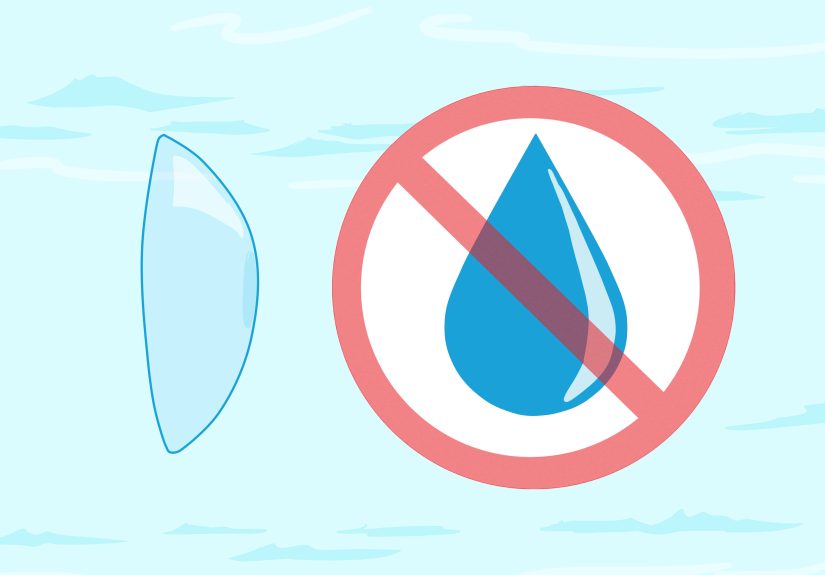
- Tap water: Water can contain microorganisms that may cling to lenses and cause serious eye infections.
- Saliva: Your mouth is full of bacteria. Your contact lens does not need an introduction.
- Homemade saline: This is not a DIY project. Use sterile products made specifically for contact lens care.
- Expired solution: Once it is expired, it is out of the game.
- Eye drops as a cleaning substitute: Rewetting drops and artificial tears are not disinfecting solutions.
- Old solution left in the case: Dump it out every time. Always start fresh.
How to Clean Contact Lenses in Specific Situations
If your lens touches water
If reusable contact lenses are exposed to water, remove them as soon as possible and clean and disinfect them according to instructions before wearing them again. If daily disposable lenses touch water, remove and discard them. Water exposure may happen while showering, swimming, using a hot tub, or even rinsing your face too enthusiastically like you are starring in a skincare commercial.
If you accidentally nap in your lenses
If your lenses are not approved for overnight wear and you fall asleep in them, remove them as soon as it is safe to do so. If they feel dry or stuck, use contact-lens-compatible lubricating drops first and let the lens loosen before removal. Then clean and disinfect reusable lenses thoroughly. If your eyes stay red, painful, or blurry, stop lens wear and call your eye doctor.
If your eyes feel irritated midday
Do not pop the lens into your mouth, rinse it in sink water, and put it back in. That is not a cleaning method. If you need to remove a reusable lens during the day, use clean hands and proper solution. If irritation continues, stop wearing the lenses until you know why.
If you have pink eye or another eye infection
Stop wearing contact lenses immediately. Depending on the situation, your eye care professional may recommend discarding the lenses, the case, and even certain eye makeup products to avoid reinfection. Reusing contaminated accessories is a classic way to make a bad situation last longer than necessary.
Common Contact Lens Cleaning Mistakes
Most contact lens problems do not start with dramatic mistakes. They start with small shortcuts that become habits. Here are the biggest offenders:
- Topping off yesterday’s solution instead of replacing it
- Skipping the rub step because the bottle says “no-rub”
- Rinsing lenses or the case with water
- Wearing lenses while showering or swimming
- Sleeping in lenses that are not approved for overnight wear
- Using a lens case for way too long
- Wearing monthly lenses for six weeks because “they still seem fine”
- Using the wrong solution for your lens type
- Reusing daily disposable lenses
In other words, the most dangerous phrase in contact lens care might be: “It’ll probably be okay.”
Signs Something Is Wrong
Stop wearing your contact lenses and get professional advice promptly if you have any of the following:
- Eye pain
- Persistent redness
- Sensitivity to light
- Blurred vision that does not improve after lens removal
- Excess tearing or discharge
- A feeling that something is stuck in your eye
These symptoms can point to irritation, a scratched cornea, inflammation, or infection. The safest move is not to tough it out. Your eyes are not a place for brave nonsense.
Smart Habits That Make Contact Lens Care Easier
Create a simple nightly routine
Keep your solution, case, and backup glasses in the same place. The easier the routine is, the more likely you are to follow it when you are tired.
Carry backup glasses
If your lenses get irritated, dry, or contaminated, having glasses nearby saves you from making bad decisions just because you still need to function.
Set reminders for replacement schedules
Use your phone to track when lenses and cases need replacement. Monthly lenses have a way of magically becoming “I think these are still this month’s pair?”
Use travel-sized supplies carefully
When traveling, bring enough fresh solution and a clean case. Never decant solution into mystery containers unless they are specifically meant for sterile lens care products.
Visit your eye care professional regularly
Routine eye exams help confirm that your lenses still fit well, your eyes are staying healthy, and your cleaning routine matches your current lens type and eye needs.
Real-Life Experiences With Cleaning Contact Lenses
People usually learn proper contact lens care in one of two ways: from a very responsible eye care professional, or from one regrettable personal experience that becomes a lifelong lesson. Often, it is a little of both.
One common experience comes from the “quick shortcut” phase. A lot of contact lens wearers admit that at some point, usually during a busy workweek or late college night, they topped off old solution instead of replacing it. It feels efficient in the moment. Then the lenses start feeling filmy, dry, or oddly uncomfortable, and suddenly that shortcut no longer seems so clever. Many people say the difference between fresh solution and reused solution becomes obvious the second they stop cutting corners. Their lenses feel cleaner, insertion is easier, and their eyes are less red by the end of the day.
Another common story involves water. Someone showers with lenses in because it seems harmless. Someone else jumps into a pool and thinks, “I’ll just keep my eyes closed.” Another person rinses a lens quickly in tap water after dropping it because they are in a hurry. These experiences often end with irritation, dryness, or the unnerving feeling that the lens never quite felt right afterward. Even when no infection develops, wearers frequently describe a shift in attitude after that moment. Contact lenses stop feeling like casual accessories and start feeling like something that deserves actual respect.
Frequent travelers also learn a lot about contact lens hygiene. People who travel for work often discover that the hardest part is not packing the lenses. It is maintaining the routine when they are tired, in a hotel bathroom, and tempted to skip steps. The people who do best tend to build a simple ritual: wash hands, remove one lens at a time, rub, rinse, soak, clean the case, done. No improvising. No hotel-sink creativity. No “good enough” logic after midnight.
Then there is the allergy-season crowd. Many contact lens wearers say spring and fall make their lenses feel dirtier faster because pollen, dust, and dryness team up like tiny villains. Some switch to daily disposables during heavy allergy months. Others become much more consistent about rubbing and rinsing lenses every night and changing cases on time. The big lesson from these experiences is that comfort is not random. It is often the direct result of better habits.
Perhaps the most useful experience of all is the one shared by long-time lens wearers who eventually realize that contact lens care works best when it is boring. Not dramatic. Not creative. Not full of hacks. Just boring, dependable, repeatable steps. The people with the fewest problems are usually the ones who stopped negotiating with the routine. They use fresh solution. They keep water away. They replace cases. They do not sleep in lenses that are not meant for it. They treat eye irritation early instead of pretending it will disappear by lunchtime.
That may not sound glamorous, but in contact lens care, boring is beautiful. Boring means comfortable eyes, clear vision, and far fewer reasons to Google your symptoms at 2 a.m.
Conclusion
If you want the best way to clean contact lenses, the formula is simple: wash and dry your hands, rub reusable lenses with fresh solution, rinse them thoroughly, soak them in clean disinfecting solution, and clean the case every day. Keep lenses away from water, never top off old solution, and replace both lenses and cases on schedule. That routine may not be exciting, but your eyes will absolutely appreciate the lack of drama.
Clean lenses are not just about comfort. They are about eye health, infection prevention, and making sure a useful vision tool stays useful. Build the right habits now, and your future self will thank you every time your eyes feel normal, comfortable, and blissfully uninteresting.