Table of Contents >> Show >> Hide
- China Doll Plant Basics (What You’re Actually Growing)
- Light: Bright Indirect, Like a Good Selfie Filter
- Watering: Even Moisture Without Turning the Pot Into a Swamp
- Soil and Pot: Drainage Is Non-Negotiable
- Temperature and Humidity: Keep It Cozy, Not Chaotic
- Fertilizer: Feed It, But Don’t Overcaffeinate It
- Pruning: The Secret to a Bushy, Not-So-Leggy Plant
- Repotting: When and How to Upgrade Without Starting Drama
- Troubleshooting: The Leaf Drop Mystery (And Other China Doll Plot Twists)
- Pests: The Usual Suspects and How to Handle Them
- Propagation: Can You Make a Baby China Doll Plant?
- Outdoor “Summer Vacation”: Helpful, But Introduce It Slowly
- Is China Doll Plant Safe Around Pets and Kids?
- Final Takeaway: Treat It Like a Plant That Hates Surprises
- Grower Experiences: of “What People Learn the Hard Way”
The China doll plant (Radermachera sinica) is that friend who looks effortlessly put-together… but only if their
schedule, skincare routine, and climate-controlled apartment remain untouched. Treat it right and you’ll get a glossy,
ferny mini-tree that makes your living room feel like it has its life together. Surprise it with a draft, a drought,
or a “new spot with better vibes,” and it may respond by dropping leaves like it’s quitting a group project.
Don’t worrythis is not a plant-care horror story. It’s a “learn its love language” story. China doll plants thrive on
consistency: bright, indirect light, even moisture, warm temps, and decent humidity. Give it those basics, and it can
be a surprisingly rewarding, fast-growing houseplant.
China Doll Plant Basics (What You’re Actually Growing)
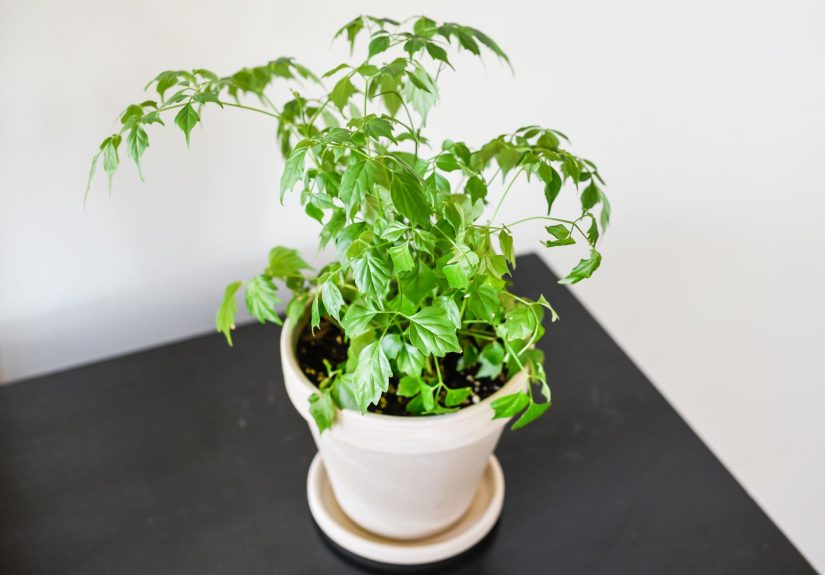
China doll is a broadleaf evergreen tree in nature, but indoors it’s usually grown as a compact “floor plant” or
tabletop tree. The leaves are glossy, finely divided, and airykind of like a fern that went to business school.
Indoors, it typically stays in the 4–6 foot range with pruning, but it can get tall and lanky if light is weak or if
you never pinch it back.
Quick care snapshot
- Light: Bright, indirect light (some gentle morning sun is fine)
- Water: Keep evenly moist; let the top inch or two dry slightly between waterings
- Humidity: Prefers moderate-to-higher humidity; avoid super-dry air
- Temperature: Warm and stable (avoid drafts and sudden changes)
- Soil: Rich, well-draining potting mix in a pot with drainage
- Maintenance: Prune to stay bushy; watch for spider mites, scale, and mealybugs
Light: Bright Indirect, Like a Good Selfie Filter
If China doll care had a headline, it would be: “Bright, indirect lightevery day, forever.” This plant
does best near a window where it gets strong light without harsh midday sun scorching the leaves.
Best window placements
- East-facing: Excellentgentle morning sun, bright the rest of the day
- North-facing: Often good if the window is large and unobstructed
- West/South-facing: Works well with a sheer curtain or by setting the plant a few feet back
Real-life example: If you can comfortably read a book there during daytime without turning on a lamp,
that’s usually “bright enough.” If your plant is reaching, stretching, and turning into a green coat rack, it wants
more light.
Grow lights: a totally valid shortcut
If your home is dim, a grow light can turn China doll from “dramatic” to “delightful.” Use a consistent daily schedule
(think 10–12 hours) and keep the light at an appropriate distance per the fixture instructions. Consistency matters
more than perfection.
Watering: Even Moisture Without Turning the Pot Into a Swamp
China doll plants are famously sensitive to watering swings. Let it dry out hard, and you may see leaf drop. Keep it
soggy, and you risk root rot. Your goal is “evenly moist,” not “permanently wet.”
How to know when to water (without guessing)
- Finger test: Stick a finger 1–2 inches into the soil. If it feels dry at that depth, water.
- Chopstick test: Insert a wooden chopstick and pull it out. Damp soil will cling; dry won’t.
- Weight test: Lift the pot after watering (heavy) and again when it’s thirsty (lighter).
How to water correctly: Water thoroughly until it runs from the drainage holes. Then empty the saucer.
A pot that sits in water is basically a “root rot spa.”
A realistic watering rhythm
There’s no universal schedule because light, pot size, temperature, and humidity change everything. But many homes land
somewhere like:
- Spring/summer: Water when the top 1–2 inches dry (often weekly-ish)
- Fall/winter: Water less often as growth slows (sometimes every 10–14 days)
If you want to be fancy, a moisture meter can helpjust use it as a guide, not as the law.
Soil and Pot: Drainage Is Non-Negotiable
Use a quality indoor potting mix that holds some moisture but drains well. A little extra perlite or orchid bark can
help if your mix stays wet too long. The pot must have drainage holes.
Pot size matters more than you’d think
China doll plants often do well slightly snug in their pots. Upsizing too aggressively can leave extra wet soil around
the roots, which is a common path to root problems. When repotting, move up just one pot size (for example, from a 10″
pot to a 12″ pot).
Temperature and Humidity: Keep It Cozy, Not Chaotic
China doll plants prefer warm, stable indoor temperatures and do not enjoy sudden changes (drafts, blasts of AC,
heating vents, cold windows at night). If your plant could write a Yelp review, it would complain about “unexpected
breezes.”
Temperature sweet spot
- Aim for typical comfortable room temps, especially during active growth.
- Keep it away from cold drafts and avoid big temperature swings.
Humidity tips that actually work
If your air is dry, leaf edges may crisp and the plant can become more prone to pests like spider mites. Helpful
strategies:
- Humidifier: The most effective solution in dry climates or winter heating season
- Group plants together: Creates a slightly more humid micro-zone
- Pebble tray: Helps a bit (think “bonus points,” not “miracle fix”)
- Bathroom vacation: If you have bright light in a bathroom, China doll often loves it
Fertilizer: Feed It, But Don’t Overcaffeinate It
During spring and summer, China doll plants appreciate regular feeding because they can grow quickly under good
conditions. Use a balanced liquid houseplant fertilizer diluted to half strength.
- Growing season (spring/summer): About once a month is a common approach
- Fall/winter: Ease off or pause feeding while growth slows
Pro tip: Water the plant before fertilizing to reduce the risk of fertilizer burn. Also, if white crust
builds up on the soil surface, you may be seeing mineral saltsflush the pot with plain water occasionally.
Pruning: The Secret to a Bushy, Not-So-Leggy Plant
China doll plants can become tall and sparse if you let them. Pruning encourages branching, keeps the shape compact,
and helps you avoid the “single-stick tree with leaves only at the top” look.
How to prune without fear
- Use clean, sharp scissors or pruners.
- Pinch or cut back the tips of stems to encourage side branching.
- Remove dead or yellow leaves and weak, spindly growth.
- For a plant that dropped leaves, trim back bare stems moderately to stimulate new growth.
If you want a fuller plant, rotate the pot every week or two so it grows evenly toward the light.
Repotting: When and How to Upgrade Without Starting Drama
Repot when roots circle the pot, poke out drainage holes, or when the plant dries out extremely fast after watering.
The best time is typically spring, when the plant is ready to grow again.
Repotting steps
- Choose a pot only 1–2 inches wider than the current pot.
- Use fresh, well-draining potting mix.
- Gently loosen circling roots (don’t shred them like lettuce).
- Water thoroughly and place back in bright, indirect light.
Expect some adjustment after repotting. Keep conditions steady and avoid moving it around repeatedly.
Troubleshooting: The Leaf Drop Mystery (And Other China Doll Plot Twists)
1) Leaf drop after moving locations
China doll plants are notorious for reacting to change. Moving from a nursery to your home, from one room to another,
or from indoors to outdoors can trigger leaf drop. The solution is boring but effective: stability.
Pick a good spot and let it adapt. Avoid “just one more move.”
2) Leaf drop from underwatering
If the soil dried out too much, the plant may drop leaves. Rehydrate thoroughly, then return to even moisture. Avoid
going from bone-dry to soaked repeatedlythink “steady,” not “feast or famine.”
3) Yellowing leaves
Yellow leaves often point to overwatering, poor drainage, or low light. Check the roots and soil moisture. If the pot
stays wet for many days, improve drainage and adjust watering frequency.
4) Crispy edges and fine webbing
Crispy edges can mean dry air. Fine webbing, speckling, or dusty-looking leaves often suggests spider mites (tiny pests
that love dry conditions). Raise humidity, rinse leaves, and treat promptly.
5) Drooping leaves
Drooping can happen from both overwatering and underwateringyes, plants love being confusing. Check soil moisture at
depth before reacting. If the soil is wet and drooping persists, consider root issues. If it’s dry, water deeply.
Pests: The Usual Suspects and How to Handle Them
Healthy China doll plants can still get pests, especially in dry indoor air. Common offenders include spider mites,
mealybugs, scale, aphids, and whiteflies.
First line of defense: cleaning
- Rinse the foliage in a lukewarm shower to remove dust and dislodge pests.
- Wipe leaves gently with a damp cloth (support stems so you don’t snap them).
- Quarantine new plants for a couple of weeks before placing them near others.
If pests show up anyway
- Insecticidal soap: Effective for many soft-bodied pests when used thoroughly and repeatedly
- Neem oil: Can help; follow label directions and test on a small area first
- Manual removal: Scale can be wiped off with cotton swabs and diluted alcohol
Repeat treatments as neededmost pest life cycles require multiple passes. Also, address the underlying cause (often
dry air + stressed plant).
Propagation: Can You Make a Baby China Doll Plant?
Yes, though it can be a little finicky. Stem cuttings are the standard method, and success improves with warmth,
humidity, and patience (so… the opposite of scrolling).
Simple stem-cutting method
- Take a healthy green stem cutting about 3–6 inches long.
- Remove lower leaves so at least one node can sit in the rooting medium.
- Optional: dip in rooting hormone.
- Place in moist potting mix or a propagation medium; keep warm and humid.
- Cover loosely with a clear bag or use a propagation dome (vent daily to prevent mold).
Keep the medium lightly moistnot soggyand provide bright, indirect light. If it roots, you’ll see new growth.
Outdoor “Summer Vacation”: Helpful, But Introduce It Slowly
In warm weather, you can move a China doll plant outdoors to a protected spot with bright shade or gentle morning sun.
The key is slow acclimation. Going from indoor light to outdoor brightness overnight is like walking
out of a movie theater into noon sunlightsomething’s getting burned.
- Start with a few hours outside in shade, then gradually increase exposure over 1–2 weeks.
- Check frequently for pests (outdoors is basically “bug networking season”).
- Bring it back inside before cold nights, and expect some leaf drop during transitions.
Is China Doll Plant Safe Around Pets and Kids?
Many popular references list China doll as non-toxic, but it’s still wise to keep houseplants out of
reach of pets and toddlers. Even non-toxic plants can cause mild stomach upset if chewed, and spilled soil is a whole
separate household event.
Final Takeaway: Treat It Like a Plant That Hates Surprises
The easiest way to win with a China doll plant is to stop trying to “optimize” it every week. Give it bright, indirect
light; water when the top layer dries slightly; keep temperatures stable; and boost humidity if your home is dry. Prune
lightly to keep it full and watch for pests before they throw a party on your leaves.
Once your plant settles in, it can be a gorgeous, glossy centerpiece that grows with youquietly, steadily, and with
far fewer tantrums than its reputation suggests.
Grower Experiences: of “What People Learn the Hard Way”
If you ask a group of houseplant people about China doll plants, you’ll usually get a mix of admiration and a
thousand-yard stare. Not because the plant is impossiblebecause it’s consistent in one particular way: it reacts to
inconsistency. A lot of growers say their “aha” moment came when they stopped moving it around like furniture.
That sunny corner might look great on day one, but if it’s next to an AC vent, you’ve basically given your plant a
surprise wind tunnel. The fix that many people report working best is boring: pick a stable spot, rotate the pot
gently for even growth, and let the plant acclimate without constant location changes.
Another common experience is the “leaf drop panic.” Someone brings a China doll home, it drops a bunch of leaves, and
they assume it’s dyingso they change everything at once: more water, less water, new pot, new fertilizer, new window,
and maybe a heartfelt apology. Ironically, that whirlwind can prolong the stress. Many growers find that the fastest
comeback happens when they keep care steady: bright indirect light, evenly moist soil, and patience. Some also prune
lightlyespecially bare stemsto encourage fresh branching once the plant decides life is worth living again.
People also talk a lot about humidity. In dry homes (especially winter heating season), China doll can become a magnet
for spider mites. A frequent “lesson learned” is that pest problems often show up after the plant has been stressed by
dry air and inconsistent watering. Growers who turn the corner usually do a few practical things: rinse the foliage
regularly (a lukewarm shower is a fan favorite), increase humidity with a small humidifier nearby, and treat early
signs of mites before the plant looks like it’s auditioning for a role as a dusty prop. Many also discover that a
“bathroom with a bright window” can be a cheat codesteady moisture in the air without complicated setups.
Repotting stories show up too. A common mistake is jumping to a much larger pot because the plant looks like a “tree”
and therefore must want “tree space.” But in real homes, that often means the soil stays wet too long. Growers who have
the best long-term luck tend to size up gradually, prioritize drainage, and adjust watering to match the season. And
then there’s the pruning glow-up: once someone starts pinching tips and shaping the plant, it often transforms from a
leggy stick into a fuller, bushier mini-canopy. The takeaway from these shared experiences is pretty clear: China doll
plants don’t want constant tinkering. They want a calm, bright routineand they’ll reward you with leaves that look
like they’ve been polished by a tiny plant butler.