Table of Contents >> Show >> Hide
- Why Boiling Sweet Potatoes Works So Well
- What You Need
- How to Boil Sweet Potatoes Step by Step
- How Long to Boil Sweet Potatoes for Different Recipes
- Should You Boil Sweet Potatoes Whole or Cut Up?
- Common Mistakes to Avoid
- Do You Lose Nutrients When You Boil Sweet Potatoes?
- Best Ways to Use Boiled Sweet Potatoes
- How to Store Boiled Sweet Potatoes
- Kitchen Experiences and Real-Life Lessons From Boiling Sweet Potatoes
- Final Thoughts
Boiling sweet potatoes is one of those kitchen skills that sounds almost too simple to need instructionsuntil you end up with cubes that are somehow both mushy and undercooked. Impressive, yes. Helpful, no. The good news is that learning how to boil sweet potatoes is easy once you know the right timing, the best prep method, and a few tricks that keep them tender instead of waterlogged.
Whether you want silky mashed sweet potatoes, meal-prep cubes for lunch bowls, or a quick base for casseroles, pies, soups, and baby-food-level smooth purees, boiling gets the job done. It is fast, reliable, and wonderfully low-drama. No roasting pan. No waiting forever. No wondering whether your oven is lying to you again.
This guide walks you through exactly how to boil sweet potatoes, how long to cook them, whether you should peel them first, and what to do with them once they are perfectly fork-tender.
Why Boiling Sweet Potatoes Works So Well
Boiling sweet potatoes is popular for one very practical reason: it softens them quickly. If your goal is to mash, puree, whip, blend, or fold them into another recipe, boiling is often the fastest route from firm root vegetable to creamy orange goodness.
It is especially useful when you want a smooth texture. Once boiled, sweet potatoes mash easily with butter, olive oil, milk, yogurt, coconut milk, or broth. They also blend beautifully into soups, pancakes, muffins, casseroles, gnocchi, and even sauces. Basically, boiled sweet potatoes are the overachievers of the side-dish world.
That said, boiling is not the best choice if you want deep caramelized flavor. Roasting usually wins that beauty contest because dry heat intensifies sweetness and creates those toasty edges everyone mysteriously “just picks at” while standing in the kitchen. But for speed, softness, and versatility, boiling is excellent.
What You Need
- Sweet potatoes
- A vegetable peeler or paring knife
- A chef’s knife and cutting board
- A large pot or saucepan
- Water
- Salt
- A colander for draining
That is it. No fancy gadgetry. No culinary torch. No soundtrack required, although a little confidence music never hurts.
How to Boil Sweet Potatoes Step by Step
1. Wash the Sweet Potatoes
Start by scrubbing the sweet potatoes under cool running water. Even if you plan to peel them, washing first is smart because dirt on the skin can transfer to the flesh when you cut through it. Root vegetables are humble, but they do come from the ground and like to bring a little of the yard with them.
2. Decide Whether to Peel or Not
You can boil sweet potatoes with the skin on or off. Both methods work. If you want the smoothest mash or puree, peel them before cooking. If you want to keep prep simple or preserve more of the natural structure, boil them whole with the skin on and peel afterward once they are cool enough to handle.
For many everyday recipes, peeling before boiling is easiest. For whole boiled sweet potatoes, leaving the skin on can make handling simpler and helps the flesh stay intact while cooking.
3. Cut Them for Even Cooking
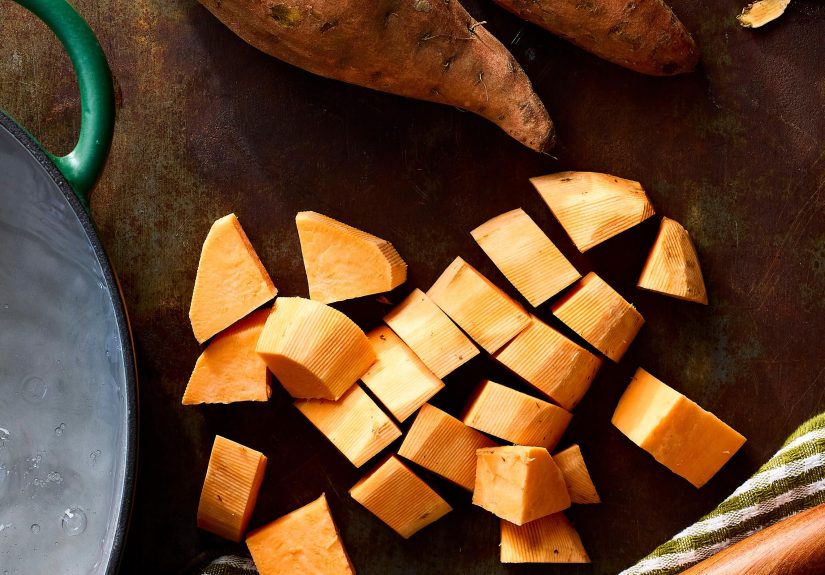
If you are not boiling them whole, cut the sweet potatoes into evenly sized chunks. One-inch cubes are ideal. Uniform pieces cook at the same rate, which means you do not end up with one piece that is tender and another that feels like it still has trust issues.
Smaller cubes cook faster, while larger chunks hold their shape a little better. Pick the size based on what you plan to do next:
- 1-inch cubes: best for mashing, meal prep, soups, and quick cooking
- Larger chunks: good for salads, skillet finishes, or recipes where you want less breakage
- Whole sweet potatoes: best when you plan to peel later or stuff them after cooking
4. Put Them in a Pot and Cover With Water
Place the sweet potatoes in a pot and cover them with water by about 1 to 2 inches. Add a generous pinch of salt. Salted water will not magically turn sweet potatoes into restaurant food, but it does improve flavor and helps the final dish taste less flat.
5. Bring to a Boil, Then Simmer
Bring the pot to a boil over medium-high or high heat. Once the water reaches a steady boil, reduce the heat slightly to maintain a gentle boil or active simmer. This keeps the potatoes cooking evenly without knocking them around too much.
6. Cook Until Fork-Tender
The exact cooking time depends on the size of the sweet potatoes and whether they are whole or cut. Here is a practical guide:
| Cut | Approximate Time | Best Use |
|---|---|---|
| Small cubes | 10–12 minutes | Quick mash, soup, baby food, puree |
| 1-inch cubes | 12–15 minutes | Most everyday recipes |
| Larger chunks | 15–20 minutes | Salads, bowls, chunkier mash |
| Whole small to medium sweet potatoes | 30–40 minutes | Peel after cooking, stuffed potatoes |
| Whole large sweet potatoes | 45–50 minutes | Batch cooking, casseroles, large mash |
The real test is not the clock. It is the fork. Slide a fork or knife into the thickest part. If it goes in easily with little resistance, they are done.
7. Drain Well
Drain the sweet potatoes in a colander as soon as they are cooked. If you are mashing them, let them sit for a minute or two so excess steam can escape. This simple step helps prevent watery mash, which is tragic because sweet potatoes deserve better.
How Long to Boil Sweet Potatoes for Different Recipes
The best cooking time depends on what you are making next. Here is how to think about it:
For Mashed Sweet Potatoes
Cook peeled cubes for about 12 to 15 minutes, or until very tender. You want them soft enough to mash smoothly without much effort. If you stop too early, the mash can turn lumpy. If you cook them too long, they can absorb too much water.
For Sweet Potato Casserole or Pie
Boil peeled chunks until just tender, usually 15 to 20 minutes. Since the potatoes may be baked again later, you do not need to push them into full collapse mode.
For Meal Prep
Keep the cubes slightly firmer, around 10 to 12 minutes, especially if you plan to reheat them in a skillet, toss them into grain bowls, or stir them into soups later in the week.
For Whole Sweet Potatoes
Expect around 30 to 50 minutes depending on size. This method works well when you want to peel them after cooking or keep the inside soft for stuffing and topping.
Should You Boil Sweet Potatoes Whole or Cut Up?
Both methods are useful, but they serve different purposes.
Boiling cut-up sweet potatoes is faster and better when you need them for mashing, pureeing, or mixing into another dish. The downside is that cut pieces can absorb more water if overcooked.
Boiling whole sweet potatoes takes longer, but the texture can stay a little richer because less surface area is exposed to the water. This is a nice method for recipes where you want to peel later, slice them cleanly, or avoid extra prep at the start.
If speed matters, cut them up. If convenience matters more, boil them whole. If you are hungry and impatient, welcome to the club.
Common Mistakes to Avoid
Cutting Uneven Pieces
When the chunks vary wildly in size, some pieces will turn mushy before others are done. Aim for uniform pieces for even cooking.
Overcooking
Sweet potatoes can go from perfect to too-soft surprisingly fast. Check early, especially when boiling cubes. Overcooked sweet potatoes are still edible, but they may become watery or fall apart in recipes where you wanted neat pieces.
Underseasoning the Water
Salt matters. Even though sweet potatoes are naturally sweet, a little salt helps balance flavor and keeps the final result from tasting one-note.
Skipping the Drain Time
If you mash the sweet potatoes immediately without letting excess steam escape, the mash can taste wetter and looser than you intended. Let them breathe for a minute. They have been through a lot.
Do You Lose Nutrients When You Boil Sweet Potatoes?
Boiling can cause some water-soluble nutrients to leach into the cooking water, which is true for many vegetables. Still, sweet potatoes remain a nutritious choice after boiling. They are known for their fiber, potassium, vitamin C, and especially beta-carotene, the orange pigment associated with vitamin A activity.
Boiling also has a few advantages. It softens the starch, creates a gentle texture, and may produce a lower glycemic effect than some dry-heat methods, depending on how the sweet potatoes are cooked and served. If nutrition is your main concern, there is no need to panic over the pot. A boiled sweet potato is still doing plenty of good work on your plate.
To make the meal more balanced, pair boiled sweet potatoes with protein, healthy fats, and something fresh or green. Butter is lovely. Greek yogurt is smart. Black beans are dependable. Tahini is fancy without trying too hard.
Best Ways to Use Boiled Sweet Potatoes
- Mashed sweet potatoes: with butter, cinnamon, salt, and a splash of milk
- Sweet potato casserole: topped with pecans or, if your family insists, marshmallows
- Soup: blended with broth, onion, garlic, ginger, or coconut milk
- Meal-prep bowls: paired with rice, quinoa, chicken, salmon, or beans
- Baby food or puree: blended until completely smooth
- Baked goods: folded into muffins, pancakes, waffles, and quick breads
- Savory mash base: topped with chili, sautéed greens, or roasted vegetables
Boiled sweet potatoes are a blank canvas, but a delicious one. They work with sweet flavors, savory flavors, spicy flavors, and “I found this in the fridge and made a miracle” flavors.
How to Store Boiled Sweet Potatoes
Let boiled sweet potatoes cool, then store them in an airtight container in the refrigerator. They generally keep well for about 3 to 5 days. You can store them whole, cubed, or mashed depending on how you plan to use them.
For longer storage, freeze them in portions. Mashed sweet potatoes freeze especially well. Thaw in the refrigerator and reheat gently on the stove, in the microwave, or in the oven with a small splash of liquid if needed.
Kitchen Experiences and Real-Life Lessons From Boiling Sweet Potatoes
One of the most common experiences home cooks have with boiled sweet potatoes is discovering that timing matters more than almost anything else. The first time many people make them, they treat sweet potatoes like regular potatoes and assume there is plenty of wiggle room. There is some wiggle room, sure, but not endless freedom. Sweet potatoes are softer by nature, so a few extra minutes can turn tidy cubes into orange confetti. That sounds festive, but it is less exciting when you wanted a clean grain bowl for lunch.
Another everyday lesson is that the size of the cut changes everything. Big chunks seem efficient until you realize the centers are still firm while the edges are already soft. Tiny cubes cook quickly, but they can go too far if you get distracted by a phone call, a child, a dog, or a sudden urge to reorganize the spice drawer. Most experienced cooks eventually land on the same habit: cut the pieces evenly, set a timer a little early, and test with a fork before wandering off to do something heroic.
Many people also find that boiled sweet potatoes are not just a holiday ingredient. Yes, they show up at Thanksgiving wearing cinnamon and butter like they own the room, but on ordinary weeknights they are incredibly useful. A batch of boiled sweet potatoes can become breakfast hash in the morning, soup at lunch, and a side dish at dinner. That kind of flexibility is why so many home cooks keep coming back to them. They are affordable, filling, naturally sweet, and easy to pair with all kinds of flavors.
There is also the texture lesson. If you plan to mash them, you learn quickly that draining well makes a huge difference. Sweet potatoes already hold plenty of moisture, so skipping the steam-off step often leads to a mash that is looser than expected. On the other hand, when you let them drain and rest for a minute, the mash becomes thicker, fluffier, and more concentrated in flavor. It is a small detail, but it feels like a secret handshake once you notice the improvement.
Then there is the seasoning lesson. Sweet potatoes are naturally flavorful, but they still benefit from salt. A lot of cooks who say boiled sweet potatoes taste bland are really describing underseasoned sweet potatoes. Salt in the water helps. Salt in the final dish helps more. Add a little butter, pepper, olive oil, chili flakes, cinnamon, smoked paprika, maple syrup, or garlic, and suddenly the same pot of boiled sweet potatoes feels entirely new.
Perhaps the biggest real-world experience is this: boiled sweet potatoes reward simplicity. You do not need a complicated method or a long ingredient list. You just need good timing, a little salt, and a clear plan for what happens after the potatoes leave the pot. Once you learn that, they stop feeling like a seasonal side dish and start becoming one of the most dependable ingredients in your kitchen.
Final Thoughts
If you have been wondering how to boil sweet potatoes without turning them into mush, the answer is refreshingly simple: cut them evenly, salt the water, watch the clock, and test with a fork. That is the core method. Everything else is just choosing the right size, timing, and final use.
Boiled sweet potatoes may not be flashy, but they are practical, nutritious, and endlessly useful. They can be mashed, whipped, blended, chilled, reheated, and reinvented in more ways than most side dishes could ever dream of. Learn the method once, and you will have it for soups, casseroles, meal prep, holiday dinners, and fast weeknight cooking.
In other words, this is one of those basic kitchen skills that pays you back immediately. And deliciously.