Table of Contents >> Show >> Hide
- The Big Picture: China Is Moving Fast in Military Aviation
- Meet the J-35A: China’s New Public-Facing Stealth Fighter
- The J-36: The Mysterious Heavyweight
- The J-50: The Smaller Next-Generation Puzzle Piece
- What “Fifth-Generation” and “Sixth-Generation” Actually Mean
- How China’s New Fighter Fits Into Its Carrier Ambitions
- What We Still Do Not Know
- Why the United States Is Watching Closely
- Is China Ahead in the Sixth-Generation Fighter Race?
- What This Means for Aviation Fans and Regular Readers
- Experience Section: Watching the Story of China’s New Fighter Unfold
- Conclusion: What We Know So Far
China’s new jet fighter has become one of the most talked-about aviation mysteries in the world, and for good reason. In a defense world where most next-generation aircraft are hidden behind classified budgets, blurry runway photos, and press releases that say everything and nothing at the same time, China has suddenly given aviation watchers plenty to discuss. The result is a cloud of excitement, uncertainty, and strategic eyebrow-raising.
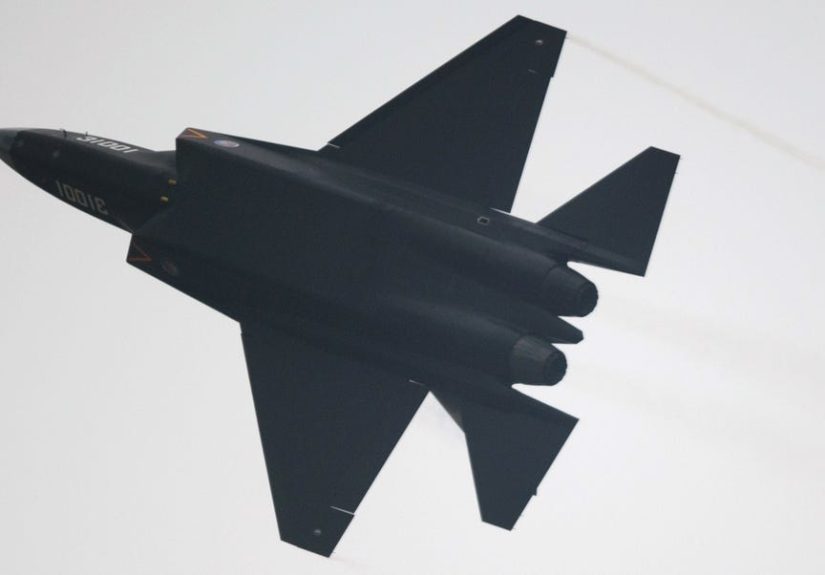
The phrase “China’s new jet fighter” can point to more than one aircraft. The most official and publicly displayed example is the Shenyang J-35A, a fifth-generation stealth fighter that made its high-profile appearance at China’s Zhuhai Airshow. Then there are the more mysterious next-generation aircraft widely referred to by analysts as the J-36 and J-50, both seen in public imagery and discussed as possible sixth-generation combat aircraft. In plain English: China is not just adding a new fighter. It appears to be building a whole family of advanced aircraft designed to make the rest of the world pay attention.
So what do we really know? What is confirmed, what is educated guessing, and what is just aviation internet caffeine doing its thing? Let’s break it down without turning this into a graduate seminar in radar cross sections.
The Big Picture: China Is Moving Fast in Military Aviation
China’s airpower story has changed dramatically over the past two decades. Once known for relying heavily on Russian-derived aircraft and older designs, China now produces advanced fighters, carrier aircraft, drones, airborne early warning planes, and increasingly sophisticated engines. The People’s Liberation Army Air Force, often shortened to PLAAF, has been modernizing at a pace that has surprised many outside observers.
The new fighter conversation sits inside that larger trend. China already operates the Chengdu J-20, its first operational fifth-generation stealth fighter. The J-35A adds another stealth platform to the mix, while the J-36 and J-50 suggest China is already looking beyond fifth-generation aviation toward aircraft that could combine stealth, long range, sensor fusion, networking, and drone coordination.
That does not mean every new prototype is ready for frontline service. A jet can look futuristic and still need years of testing, refinement, maintenance planning, pilot training, and production scaling. Aircraft development is not a movie trailer. It is more like building a spaceship while arguing with physics, budgets, engines, and software bugs.
Meet the J-35A: China’s New Public-Facing Stealth Fighter
The J-35A is the most concrete aircraft in this discussion because China has actually shown it publicly. It was displayed at the Zhuhai Airshow, China’s major aviation and aerospace exhibition, where Beijing often showcases its latest military and civilian aerospace achievements.
The J-35A is a twin-engine stealth fighter developed by Shenyang Aircraft Corporation. It is generally described as a land-based variant, while a related J-35 version is associated with China’s aircraft carrier ambitions. That distinction matters. A land-based fighter serves air force needs from regular runways. A carrier-capable fighter has to survive the much harsher world of naval aviation, where takeoffs and landings are less “smooth airport experience” and more “controlled chaos on a moving steel island.”
Why the J-35A Matters
The J-35A matters because it may give China a second stealth fighter type alongside the J-20. For comparison, the United States has long operated two major stealth fighter families: the F-22 and F-35. If China can field both the J-20 and J-35A in meaningful numbers, it would signal a major step in its effort to build a more flexible, modern air force.
The J-20 is generally viewed as a larger aircraft focused on long-range air superiority and high-end missions. The J-35A appears smaller and potentially more adaptable. That could make it useful for a wider range of missions, including air defense, escort roles, and eventually naval aviation if the carrier variant matures.
Still, many details remain unclear. Public observers do not know the full performance of the J-35A’s engines, sensors, stealth materials, avionics, or long-term maintenance needs. And in modern air combat, those hidden details matter as much as the shape of the aircraft. A fighter is not just wings and engines; it is a flying computer, sensor hub, communications node, and maintenance headache with a cockpit.
The J-36: The Mysterious Heavyweight
Then there is the aircraft many analysts call the J-36. This is where the story gets more mysterious. Public photos and videos that appeared in late 2024 showed a large, tailless aircraft flying with what appeared to be a chase plane. The aircraft looked unlike traditional fighters. Its broad body, unusual planform, and apparent three-engine arrangement immediately triggered debate.
Some analysts describe the J-36 as a possible sixth-generation fighter. Others argue it may be closer to a regional strike aircraft or medium bomber. That debate is not just wordplay. It reflects a real uncertainty about what China is building. Modern aircraft categories are getting blurry. A future “fighter” might not look like a classic dogfighter at all. It might act as a command aircraft, sensor platform, long-range interceptor, or coordinator for uncrewed aircraft.
Why the J-36 Looks Different
The J-36 appears much larger than a traditional fighter. Its tailless design suggests a focus on reducing radar visibility from multiple angles. Its broad shape may also allow room for fuel, sensors, and internal payload capacity. But public imagery can only reveal so much. Analysts can estimate, compare, and squint at pixels, but they cannot confirm classified performance data from photographs.
The most important point is not whether the J-36 should be called a fighter, bomber, or “giant stealth triangle with ambition.” The important point is that China appears to be testing large, advanced combat aircraft designs while the United States and its allies are also racing toward next-generation air systems.
The J-50: The Smaller Next-Generation Puzzle Piece
The J-50, associated with Shenyang, appears to be another tailless stealth aircraft under testing. Compared with the J-36, it is generally described as smaller and closer to fighter size. Public imagery has shown features that analysts associate with advanced stealth shaping, unusual control surfaces, and a design philosophy aimed at high-speed efficiency.
If the J-36 is the heavyweight mystery, the J-50 may be the sleeker cousin. It appears to point toward China’s interest in next-generation fighter concepts that go beyond the J-20 and J-35 families. Again, there is a big caution label here: most of what is discussed publicly about the J-50 comes from imagery analysis and expert interpretation, not official specification sheets.
That said, even the existence of visible prototypes is significant. Aircraft do not appear in the sky by accident. A flying demonstrator suggests years of design work, manufacturing capability, and testing infrastructure behind it.
What “Fifth-Generation” and “Sixth-Generation” Actually Mean
Fighter generations are useful, but they can also become marketing confetti. A fifth-generation fighter usually includes stealth shaping, advanced sensors, high-performance avionics, and the ability to share information across a battlespace. The F-22, F-35, J-20, and potentially J-35A live in this category.
Sixth-generation aircraft are harder to define because most are still in development. Common expectations include improved stealth, longer range, advanced electronic systems, artificial intelligence support, adaptive engines, and the ability to work closely with uncrewed aircraft. In other words, the pilot may not just fly a jet; the pilot may manage a small airborne team of sensors and drones.
This is why the J-36 and J-50 are so interesting. Their designs suggest that China is not merely copying old ideas. It is experimenting with shapes and roles that match the broader global shift toward networked air combat.
How China’s New Fighter Fits Into Its Carrier Ambitions
China’s navy is another major part of the story. China has invested heavily in aircraft carriers, including newer ships designed to support more advanced launch systems. A carrier-capable stealth fighter would be a major upgrade for Chinese naval aviation.
The carrier version of the J-35 could become especially important here. A stealth aircraft operating from a carrier would give China more options beyond its coastline. However, carrier aviation is extremely difficult. Launching and recovering aircraft at sea requires training, maintenance, coordination, and long experience. The United States has spent generations perfecting this art, and even then, carrier operations remain one of the most demanding jobs in aviation.
So while a J-35 carrier variant could strengthen China’s naval reach, it would not instantly transform China into a fully mature global carrier power. Hardware is only one part of the equation. Doctrine, training, logistics, and crew experience matter just as much.
What We Still Do Not Know
The most honest answer about China’s new fighter is this: we know enough to take it seriously, but not enough to make wild claims. Public reporting confirms that the J-35A has been shown, that related carrier ambitions are real, and that unusual next-generation aircraft have been spotted. But the most important performance details remain uncertain.
Key Unknowns
First, engine performance remains a major question. China has made significant progress in aerospace engines, but high-performance fighter engines are among the hardest technologies to master. Power, reliability, fuel efficiency, heat management, and maintenance life all matter.
Second, stealth is not just about shape. Radar-absorbent materials, manufacturing precision, maintenance quality, and sensor integration all affect real-world performance. A jet can look stealthy in photos and still vary widely in actual low-observable capability.
Third, software and networking are crucial. Modern fighters depend on data. The aircraft that sees first, shares first, and coordinates best often has the advantage. That means sensors, electronic warfare systems, communications, and pilot interface design may be more important than dramatic airshow maneuvers.
Finally, production scale matters. A prototype is impressive. A squadron is more impressive. A fully trained force with spare parts, pilots, maintainers, and doctrine is what really changes the balance.
Why the United States Is Watching Closely
The United States is investing in its own next-generation fighter programs, including the Air Force’s F-47 under the Next Generation Air Dominance effort and the Navy’s future carrier-based fighter plans. These programs are often discussed in the context of China’s growing military capabilities in the Indo-Pacific.
That does not mean a dramatic air war is inevitable. Defense planning often focuses on worst-case scenarios precisely to prevent them. But China’s fighter development affects how the United States, Japan, Australia, Taiwan, South Korea, and other regional actors think about deterrence, basing, air defense, and future technology investments.
In simple terms, every new Chinese aircraft design creates new questions for planners: How far can it fly? How well can it see? How many will be built? Can it operate with drones? Can it support carrier operations? And, perhaps most importantly, how quickly can China move from prototype to practical capability?
Is China Ahead in the Sixth-Generation Fighter Race?
This is where the internet likes to grab a megaphone and run into traffic. Seeing a prototype does not automatically mean China is ahead. But it does mean China is moving quickly and visibly.
The United States may have deeply classified programs that are not publicly photographed. China may show prototypes before they are operational. Different countries reveal different things for different reasons. Sometimes a public sighting is accidental. Sometimes it is a message. Sometimes it is both, with better lighting.
What can be said safely is that China has demonstrated a serious commitment to advanced fighter development. The J-35A shows progress in fielding another stealth platform. The J-36 and J-50 suggest active experimentation with next-generation designs. Together, they show that China wants to compete not just in aircraft numbers, but in aircraft quality and future air combat concepts.
What This Means for Aviation Fans and Regular Readers
For aviation fans, China’s new fighter developments are fascinating because they show how fast the design language of air combat is changing. The classic fighter jet silhouettesharp nose, vertical tails, swept wingsis no longer guaranteed. Future aircraft may look flatter, broader, smoother, and stranger.
For regular readers, the main takeaway is simpler: China is investing heavily in aircraft that could expand its military options, especially around contested areas in Asia. These jets are not just machines; they are signals of industrial capacity, strategic ambition, and technological competition.
The best way to understand them is to avoid both panic and dismissal. They are not magic aircraft. They are also not meaningless showpieces. They are signs of a country trying to build a more capable, modern, and flexible air force.
Experience Section: Watching the Story of China’s New Fighter Unfold
Following the story of China’s new jet fighter feels a little like watching a movie trailer where half the scenes are blurred, the actors are wearing masks, and the studio refuses to confirm the title. You see enough to know something big is happening, but not enough to write the final review. That is exactly what makes the J-35A, J-36, and J-50 so compelling for aviation observers.
The first experience many people have with these aircraft is visual. A photo appears online. The aircraft looks unusual. Then analysts begin identifying details: the wing shape, the canopy, the landing gear, the lack of vertical tails, the possible engine arrangement. Within hours, aviation forums and defense publications are full of theories. Some are careful. Some are bold. Some sound like they were written after three energy drinks and a documentary marathon.
But that is part of the modern defense-watching experience. Unlike the Cold War, when aircraft might remain secret for years, today’s prototypes can be spotted by satellites, phone cameras, airfield watchers, and open-source analysts. A single image can start a global conversation. The challenge is separating what the image actually shows from what people want it to mean.
With China’s new fighter programs, the biggest lesson is patience. Early impressions can be wrong. A jet that looks like a fighter may perform a bomber-like role. A demonstrator may never become a production aircraft. A design feature that looks revolutionary may be experimental. The reverse is also true: something that looks odd at first may later prove to be a smart solution to a difficult engineering problem.
Another experience is realizing how much modern airpower depends on systems, not just aircraft. It is tempting to ask whether the J-35A is “better” than the F-35 or whether the J-36 is “ahead” of America’s future F-47. Those questions are catchy, but they are too simple. Aircraft operate inside networks of satellites, radars, tankers, command centers, drones, maintenance crews, training pipelines, and supply chains. A fighter is only as good as the system that supports it.
That makes the China fighter story bigger than one sleek aircraft. It is really a story about industrial maturity. Can China produce advanced engines reliably? Can it maintain stealth coatings at scale? Can it train pilots and deck crews for carrier aviation? Can it connect aircraft, drones, ships, and ground systems into a fast-moving network? These questions are less glamorous than a dramatic takeoff photo, but they matter more.
There is also a human side to this story. For readers who are new to military aviation, the terminology can feel intimidating. Stealth, sensor fusion, fifth-generation, sixth-generation, tailless configuration, carrier variantit can sound like someone spilled alphabet soup into a wind tunnel. But the core idea is understandable: countries are building aircraft that can travel farther, detect more, share more information, and survive in more dangerous environments.
The best experience, then, is learning to read the news with curiosity and caution. China’s new jet fighter developments are important, but they should not be treated like comic-book superweapons. They are advanced machines built within real-world limits. They require money, maintenance, training, testing, and time. The smart reader watches the trend, not just the headline.
And the trend is clear: China wants to be a top-tier aerospace power. The J-35A gives it a more visible stealth fighter story. The J-36 and J-50 hint at more ambitious next-generation thinking. Whether these aircraft become dominant platforms or stepping stones to something else, they show that the future of air combat is arriving with strange shapes, quiet test flights, and plenty of unanswered questions.
Conclusion: What We Know So Far
China’s new jet fighter story is not about one aircraft alone. It is about a fast-moving aviation ecosystem. The J-35A is the clearest example, a publicly displayed fifth-generation stealth fighter tied to both air force modernization and possible naval aviation growth. The J-36 and J-50 are more mysterious, but they suggest China is actively testing next-generation designs that could reshape how analysts think about future airpower.
The smart conclusion is balanced: China has made serious progress, but many details remain unknown. Public sightings and airshow appearances are important, yet they do not reveal the full truth about engines, sensors, stealth quality, software, production readiness, or pilot training. The aircraft are impressive signs of ambition, not proof of instant dominance.
For now, here is what we know: China is building more advanced fighters, experimenting with new shapes, and pushing hard to close gaps with the world’s leading aerospace powers. The sky is getting more competitive, and China clearly intends to be more than a spectator.
Note: This article is based on public information and open reporting. It avoids classified, operational, or instructional details and focuses on general aviation analysis for readers.