Table of Contents >> Show >> Hide
- What Makes Greek Beeswax Candles Different?
- Why Beeswax Matters in Greek Orthodox Tradition
- A Short History Behind the Glow
- How Greek Beeswax Candles Are Typically Made
- Where You Will See Greek Beeswax Candles Used
- Why People Still Love Them Today
- How to Choose High-Quality Greek Beeswax Candles
- How to Burn Them Properly
- Greek Beeswax Candles in Modern Design and Everyday Life
- Conclusion
- A Longer Reflection on the Experience of Greek Beeswax Candles
Some home decor trends come and go faster than a cheap taper in a windy hallway. Greek beeswax candles are not one of them. They have staying power because they are more than decoration. They sit at the intersection of craftsmanship, faith, scent, memory, and that rare modern luxury known as “quiet.” In Greek culture, especially in Greek Orthodox life, beeswax candles are not just something you light. They are something you offer, something you notice, and often something you remember.
That is part of what makes them so appealing today. In a world full of candles that smell like “cashmere moon espresso driftwood storm,” Greek beeswax candles keep things beautifully simple. They bring a natural golden tone, a soft honey-like aroma, and a sense of purpose. They can feel elegant without trying too hard, which is honestly more than can be said for most of us before coffee.
This guide explores what Greek beeswax candles are, why they matter, how they are used, what makes them different from ordinary candles, and how to choose and burn them well. Whether you are interested in Orthodox tradition, handmade goods, or just want a candle that feels less like marketing and more like meaning, this is a good place to begin.
What Makes Greek Beeswax Candles Different?
At the most basic level, Greek beeswax candles are candles made from beeswax and connected to Greek tradition, especially Greek Orthodox worship and home devotion. They are often sold as tapers, thin church candles, vigil-style candles, or longer lambada candles associated with Pascha, the Greek Orthodox celebration of Easter.
What makes them stand out is not just the wax itself, but the cultural setting around them. In Greek Orthodox churches, beeswax candles are used as offerings of prayer and devotion. In many homes, they are part of an icon corner or a personal prayer routine. In monasteries and church shops, they are frequently hand-dipped or hand-rolled in traditional styles, which gives them a tactile, human quality that machine-made mass-market candles often lack.
In other words, a Greek beeswax candle is usually doing more than glowing on a shelf and trying to look photogenic for social media. It may also be carrying ritual meaning, family memory, and a living craft tradition.
Why Beeswax Matters in Greek Orthodox Tradition
In Greek Orthodox practice, candles made of beeswax have long carried special significance. They are commonly lit before icons, during services, and in moments of personal prayer. The act is simple but layered: a person lights a candle, offers a prayer, and places that small flame in the presence of God, the Virgin Mary, or a saint.
That simplicity is part of the beauty. Greek Orthodox teaching commonly frames the candle as both an offering and a sign of devotion. In parish practice, worshippers often light candles for the living and the departed. The candle becomes a visible gesture of an invisible hope. That may sound poetic, but in church life it is also very practical. You walk in, you pause, you light the candle, and for a moment the noise in your head has to sit down and be quiet.
Beeswax is especially valued because it feels fitting for sacred use. It comes from the life of the hive, carries a natural fragrance, and has long been associated with purity, care, and offering. In many American Orthodox parishes, traditional 100% beeswax tapers are still preferred for church use, even when other candle types exist for convenience.
For Greek families, the connection often continues at home. A beeswax candle may be lit before an icon during a feast day, before a difficult conversation, after receiving good news, or in memory of someone loved. It is one of those objects that can belong equally to liturgy and daily life, which is a fancy way of saying it works just as well in church as it does on your kitchen table at 6:30 a.m.
A Short History Behind the Glow
If you are picturing ancient Greeks wandering around with endless armfuls of candles, it is worth pausing for a quick reality check. In the ancient Mediterranean, oil lamps were often more common for everyday lighting than candles. But across the broader premodern world, beeswax candles came to be prized because they were cleaner, better smelling, and generally more refined than lower-grade alternatives such as tallow.
That historical reputation matters. Beeswax was not the bargain-bin light source. It was the good stuff. Museums and historical collections in the United States note that beeswax candles were valued for burning with a better smell and less smoke than tallow candles, which helps explain why beeswax retained an aura of quality long before modern branding departments discovered the word “artisan.”
As Christian worship developed, candles took on stronger ritual and symbolic importance. In Greek Orthodox tradition, that symbolism remained deeply embedded. So while the Greek beeswax candle you buy today might look simple, it carries a long story behind it: ancient material knowledge, Christian devotional practice, and centuries of handmade continuity.
How Greek Beeswax Candles Are Typically Made
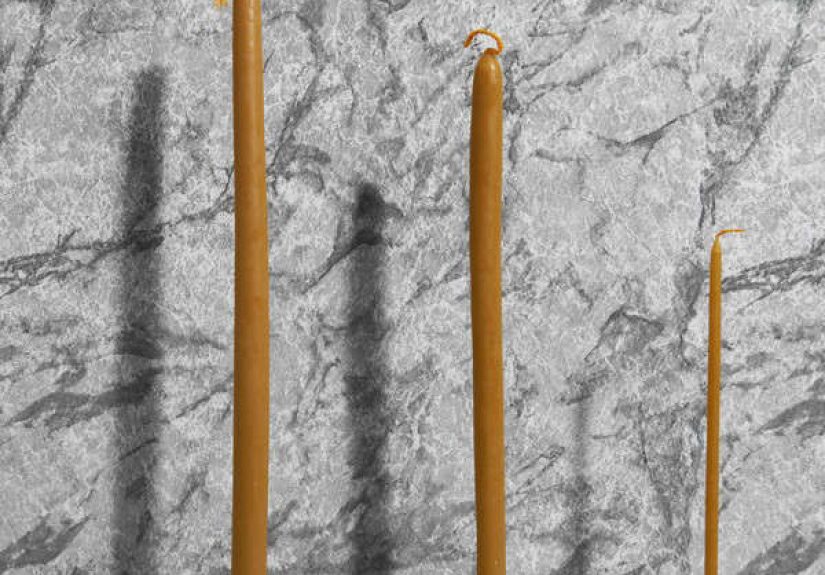
Many of the best Greek-style beeswax candles sold in the United States follow traditional methods. Some are hand-dipped in repeated layers, building the candle gradually around a cotton wick. Others are rolled from sheets of beeswax foundation, a style especially common in home craft settings and smaller devotional candles. Monasteries and Orthodox workshops often emphasize small-batch production, natural wax, and cotton wicks with no unnecessary additives.
This is where texture and appearance start to matter. Genuine beeswax candles usually have a warm golden color that can range from pale honey to deep amber depending on the wax source and how filtered it is. Their scent is naturally subtle. A good beeswax candle should not smell like a dessert menu tackled by a perfume counter. It should smell faintly sweet, warm, and real.
Handmade versions can vary a little in shape or tone, and that is usually a good sign rather than a flaw. Uniform perfection is wonderful in surgery and terrible in peaches. With handmade candles, slight variation often points to real wax and real hands doing real work.
Where You Will See Greek Beeswax Candles Used
In Church
In many Greek Orthodox churches, worshippers encounter beeswax candles immediately upon entering the narthex. Candles are lit before icons as prayers are offered for health, help, gratitude, repentance, remembrance, or rest for the departed. The act is brief, but it shapes the whole mood of arrival. You do not just enter the building. You enter prayerfully.
At Pascha
One of the most memorable uses is during Pascha. Longer candles, often called lambades or lambathes, are associated with the Easter celebration and the passing of flame during the midnight service. Even people who cannot explain every detail of the service tend to remember that moment: darkness, then light, then a crowd holding living fire carefully and reverently, hoping nobody tilts too far toward Aunt Maria’s sleeve.
At Home
In home prayer corners, Greek beeswax candles are often used with icons, vigil lamps, incense, or quiet daily prayer. They can also be lit during fasting seasons, feast days, memorial days, and family milestones. Some people keep them for explicitly devotional use, while others use them more broadly to create a calm, reflective atmosphere.
For Gifts and Celebrations
Because they are beautiful and meaningful, Greek beeswax candles also make thoughtful gifts. They work for Easter baskets, housewarmings, baptisms, weddings, memorial tables, and holiday gatherings. A well-made beeswax candle feels both humble and substantial, which is a rare gift category. Most gifts are either too flashy or too forgettable. This one quietly lands in the middle.
Why People Still Love Them Today
Part of the appeal is practical. Beeswax candles are attractive, naturally scented, and often associated with careful craftsmanship. But part of the appeal is emotional. They make people slow down. They ask for attention in a gentle way. You trim the wick, light the flame, and suddenly the room feels less frantic.
There is also a growing appreciation for natural materials. Consumers who care about what goes into the products they bring home often prefer candles with straightforward ingredients and a traceable tradition. Greek beeswax candles fit that preference well, especially when bought from monasteries, church suppliers, or makers who clearly state that the candles are made from 100% beeswax with cotton wicks.
And then there is the atmosphere. Greek beeswax candles do not usually shout. They do not arrive with a gimmick, a punchy slogan, or a label describing the scent as “frosted cedar yoga thunder.” They glow. They smell lightly of honey and wax. They invite stillness. Sometimes that is exactly the luxury people want.
How to Choose High-Quality Greek Beeswax Candles
If you are shopping for Greek beeswax candles, start with the material. Look for a clear statement that the candle is made from 100% beeswax rather than a blend. Some blended candles are fine, but if you want the traditional look, scent, and feel, pure beeswax is the better choice.
Next, check the wick. Cotton wicks are a strong sign of a well-made traditional candle. The shape also matters. Thin tapers are excellent for church-style use, icon corners, and short devotional moments. Thicker tapers or pillars are better for longer burns and decorative settings.
Pay attention to color and scent. Natural beeswax ranges in tone, and that variation is normal. The fragrance should be mild and pleasantly waxy, sometimes with a hint of honey. If the candle smells aggressively perfumed, you may be looking at a product that is more “inspired by bees” than actually rooted in beeswax tradition.
Finally, consider the source. Greek Orthodox church bookstores, monastery shops, and established candle makers with clear product information are often the best places to buy. These sellers usually understand both the practical side of candle-making and the devotional context that makes these candles special.
How to Burn Them Properly
Even the nicest candle can behave badly if you treat it like a tiny fire-powered chaos wand. Proper candle care matters. Before each use, trim the wick to about one-quarter inch. Keep the candle away from drafts, fans, open windows, curtains, and anything flammable. Place it on a stable, heat-resistant holder. Keep the wax pool clear of debris, and never leave a burning candle unattended.
These steps are not glamorous, but they make a real difference. They help prevent high flames, soot, uneven burning, and dripping. For slender church tapers, a good holder is especially important because the candle itself is narrow and designed for upright use. For home prayer corners, many people use simple brass or ceramic holders that support the candle securely without distracting from the icon setup.
Storage matters too. Keep beeswax candles in a cool, dry place away from direct sun or excess heat. Beeswax is durable, but it is still a natural material. Treat it kindly and it will return the favor by not becoming a droopy golden noodle in July.
Greek Beeswax Candles in Modern Design and Everyday Life
Although these candles are deeply connected to Greek Orthodox tradition, they are also finding a place in broader home design. Their natural color works beautifully with wood, stone, linen, brass, and white plaster interiors. They fit especially well in Mediterranean, minimalist, rustic, and old-world inspired spaces.
That said, the best way to style Greek beeswax candles is not to over-style them. They do not need elaborate staging to look good. A few tapers in a simple holder, a small cluster on a mantel, or one candle near an icon or framed family photograph is usually enough. They bring atmosphere without demanding a whole production team.
This is one reason they continue to appeal to both religious and nonreligious buyers. For one person, the candle is a devotional object. For another, it is a handmade natural product with beautiful light and cultural depth. For many, it is both.
Conclusion
Greek beeswax candles endure because they combine material quality with meaning. They are rooted in Greek Orthodox worship, connected to a long handmade tradition, and still practical for modern homes. They look beautiful, smell naturally warm, and create a kind of light that feels less like decoration and more like presence.
That may be the real secret. A Greek beeswax candle is never just wax and wick. It is ritual without fuss, beauty without noise, and history without dust. It can mark a prayer, soften a room, honor a memory, or simply remind you to pause for five minutes and act like a human being instead of a browser tab with anxiety.
If you want a candle with story, substance, and soul, Greek beeswax candles make an excellent choice. They are traditional, useful, quietly elegant, and still very much alive in both church and home. Not bad for something that mostly just stands there and glows.
A Longer Reflection on the Experience of Greek Beeswax Candles
To understand the appeal of Greek beeswax candles, it helps to think less like a shopper and more like a participant. The experience starts before the flame. It begins with the look of the candle itself: slender, warm-toned, slightly matte, and somehow more alive than a glossy store-bought candle in a glass jar. It looks like something made to be used with intention. That alone changes the mood.
Then comes the scent, which is one of the most underrated parts of the experience. A true beeswax candle does not storm into the room announcing itself. It stays close. You notice it when you lean in. There is a faint sweetness, a warm waxiness, and something almost sunlit about it. It smells less like a product and more like a material. That difference is subtle, but once you notice it, it is hard to un-notice.
In a church setting, the experience is even stronger. You walk into the narthex, hear footsteps soften, see rows of candles already glowing, and immediately understand that this is not ordinary light. People are not lighting candles because the power went out. They are lighting them because the gesture means something. Some pause for a long time. Some whisper a name. Some cross themselves quickly and move on. Every candle feels small, but together they create a visual kind of prayer that fills the room without a single speech.
At Pascha, the emotional force is different again. A longer candle in your hand can feel almost ceremonial before it is even lit. Then the flame is passed from person to person, and suddenly one small point of light becomes many. Children try to hold the candle very seriously. Adults try to keep wax off their sleeves. Everyone becomes strangely protective of a flame that would look tiny anywhere else. It is one of those moments when symbolism stops being abstract and becomes completely physical.
At home, the experience turns more intimate. A Greek beeswax candle in an icon corner can change the tone of a morning or evening in less than a minute. The room does not need to be large. The prayer does not need to be eloquent. The candle does not care whether you are polished, tired, grateful, distracted, or all four at once. You light it, and the act itself creates a border between rush and reflection.
Even outside explicitly religious use, the experience remains powerful. On a dining table, in a quiet reading hour, or beside an old family photograph, the candle adds a kind of grounded warmth that electric lighting rarely manages. It does not flatten the room. It deepens it. The flame moves, the wax softens, and time becomes a little more noticeable. In a culture obsessed with speed, that can feel almost rebellious.
Maybe that is why people keep returning to Greek beeswax candles. They are honest objects. They do not pretend to solve your life, improve your personality, or transport you to an imaginary tropical spa curated by marketing interns. They offer light, scent, beauty, and a place to focus. Sometimes that is enough. Sometimes that is exactly what was missing.
Note: This article is formatted for web publishing, omits source links by design, and removes any citation-style artifacts for clean posting.