Table of Contents >> Show >> Hide
Some cities are good at furniture. Some are good at fashion. Barcelona, however, has a special talent for making light behave better. Not louder. Not shinier. Better. It is the kind of city where a lamp is rarely just a lamp. It is a mood manager, a space editor, a quiet sculptor of corners, dinners, and late-night reading sessions.
That is what makes the phrase “Go Fish” such a smart entry point into Barcelona lighting design. The idea points to one of the city’s most memorable handmade lighting stories: fish-trap-inspired pendant lights that turn humble maritime forms into poetic illumination. But it also opens onto something larger: a whole design culture built around warmth, craft, restraint, and the belief that light should shape how a room feels as much as how it looks.
In other words, Barcelona does not merely manufacture fixtures. It produces lighting with a point of view. And in the best examples, that point of view is both practical and a little mischievous. A lamp can be woven like a fishing basket, painted so it changes the color of the glow, or engineered to be nearly invisible until evening arrives and it suddenly becomes the star of the room. That balance of wit and usefulness is the secret sauce.
Why This Story Starts at the Waterfront
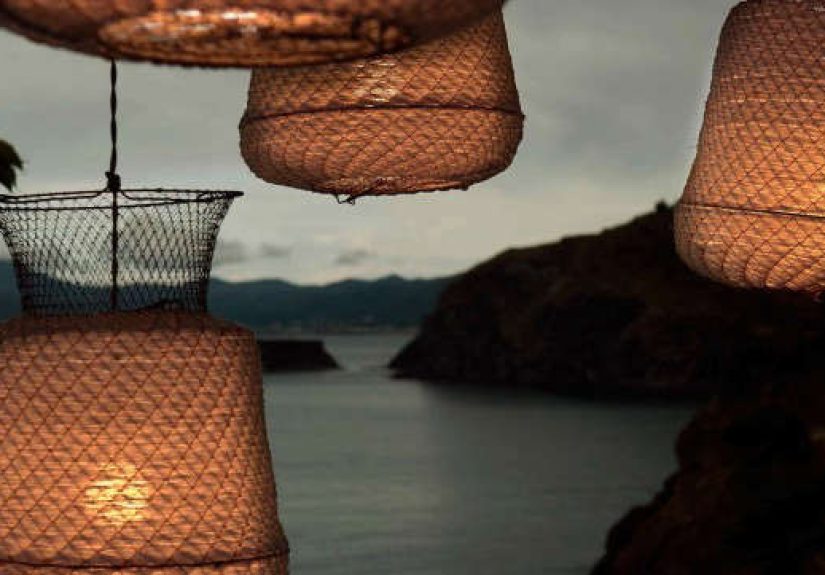
The most literal version of “Go Fish” comes from the Colimbo lights created by Barcelona-based duo Manolito & Manolita. Their now well-known pendant forms grew out of the designers’ experience weaving fish traps at Barcelona’s old port. That origin matters because it tells you almost everything you need to know about the project: these lamps were not designed in a vacuum, and they were not born from a trend forecast predicting that “nautical but artsy” was about to dominate Instagram. They emerged from direct contact with craft, place, and material.
The resulting fixtures are ingenious because they preserve the memory of the fish trap without becoming costume jewelry for the ceiling. They do not shout, “Look, I am a thematic seafood restaurant prop!” Instead, they borrow structure, rhythm, and technique from fishing equipment and turn them into something unexpectedly elegant. The mesh body, the woven character, and the softened interior all work together to transform a rough functional object into a pendant light with delicacy and presence.
That transformation is where the design gets interesting. Plenty of objects get “inspired by” traditional tools. Far fewer truly reinterpret them. The Colimbo lights feel inventive because they do not simply copy a fish trap; they translate it. The geometry stays lean. The texture stays visible. The history stays legible. But the function changes completely, moving from catching life in the sea to casting atmosphere indoors.
From Fishing Gear to Interior Poetry
Material Intelligence, Not Material Drama
One reason these lights stand out is their material honesty. The Colimbo design combines a meshed fishing-trap structure with cotton fabric and straightforward electrical components. That mix creates an effect that feels both handmade and quietly modern. There is no fake rusticity, no overworked luxury finish, no attempt to disguise what the object is doing. It lets texture do the heavy lifting.
And texture, in lighting, is not a small thing. Texture determines whether light feels clinical or intimate. A bare bulb can interrogate your living room like a detective in a crime show. A woven surface, by contrast, filters, softens, and complicates the glow. It makes the light feel inhabited. It creates the sense that illumination has passed through something human before reaching the room.
That is why fish-trap-inspired lighting works so well in contemporary interiors. The form introduces pattern without visual chaos. It feels organic without becoming sloppy. It adds craft without forcing the room into full beach-house cosplay. You get structure, shadow, and atmosphere in a single move.
Warmth Is the Real Luxury
If there is a recurring theme in Barcelona lighting, it is this: warmth beats spectacle. The city’s best-known lighting brands and designers repeatedly return to soft diffusion, tactile materials, and a human-scaled relationship with space. They understand something many bad lamps never learn: brightness is not the same thing as comfort.
That philosophy explains why inventive lighting from Barcelona often looks calm even when the concept is bold. A fish trap becomes a pendant, but the effect is serene. A glass orb is dipped in layers of color, but the glow stays gentle. A highly engineered lamp still aims to disappear into daily life when it is not in use. The goal is not to dominate the room. The goal is to make the room behave more beautifully.
Why Barcelona Keeps Producing Great Lighting
Barcelona is uniquely suited to lighting design because the city lives in constant conversation with light itself. Mediterranean daylight is sharp, directional, and dramatic. Interiors must respond to it. Old apartments often need to balance bright exterior conditions with shaded, intimate indoor zones. Hospitality spaces have long relied on atmosphere rather than brute luminosity. As a result, designers working in Barcelona tend to think about contrast, diffusion, and emotional tone with unusual sensitivity.
There is also the city’s layered design culture. Barcelona has deep roots in architecture, decorative arts, industrial design, and craft traditions. It has a habit of taking everyday objects seriously without becoming pompous about them. That attitude produces designers who are willing to refine a lamp for decades, rethink a typology instead of replacing it, and use ordinary materials in ways that feel surprisingly fresh.
In practical terms, this means Barcelona lighting often lands in a sweet spot between sculpture and utility. It is expressive, yes, but rarely useless. It is refined, but not sterile. It can feel playful without behaving like a prank. That is harder to pull off than it sounds.
The Bigger Barcelona Lighting Scene
Marset: Character Through Atmosphere
No conversation about Barcelona lighting is complete without Marset, a company that has become almost synonymous with contemporary Spanish lighting design. Marset’s best work demonstrates how technical precision and emotional warmth can coexist without awkward small talk. The brand repeatedly returns to the idea that light should create atmospheres with character, and its catalog shows how many ways that can happen.
Take the range of approaches visible in Marset designs. Some lamps are pared down to their functional essence, as in the enduring logic of the Funiculi line. Others experiment with color and diffusion, such as the Dipping Light, where layers of painted glass change the quality of illumination. Still others explore transparency and visual lightness, like newer pieces that expose their internal structure rather than hiding it behind decorative fuss.
What ties these approaches together is not one look but one belief: lighting should improve life, not just decorate it. In Barcelona interiors featured in design media, Marset fixtures often appear in reading corners, dining areas, and compact urban rooms where calm, low-glare lighting matters. The lamps are modern, but they do not feel cold. They are sleek, but they still know how to relax.
Santa & Cole: Serenity as Design Strategy
If Marset often represents the nuanced evolution of contemporary lighting, Santa & Cole shows another side of Barcelona’s design intelligence: editorial curation, historical continuity, and a deep commitment to serenity. The company has long championed lighting that is less about flashy novelty and more about emotional durability.
That might sound suspiciously like something printed on a luxury brochure next to a photo of a lamp and a very expensive bowl. But in Santa & Cole’s case, the idea holds up. Many of its best-known lights use linen, wood, parchment-like shades, and simple structural forms to create an intimate, civilized glow. These are not lights that want applause every time you turn them on. They want to make daily life better for years.
Even classic pieces associated with Barcelona design heritage, such as lamps by Miguel Milá, reveal this preference for clarity and usefulness. Height adjustment, softly diffused ambient light, and material warmth are not treated as bonus features. They are the point. The result is lighting that feels cultured without being snobbish, and modern without acting like it is too cool to read by.
What the Best Barcelona Lamps Share
Whether you are looking at a fish-trap pendant, a minimal task lamp, or a softly shaded floor light, several themes keep reappearing in inventive lighting from Barcelona:
First, form follows atmosphere. Not just function. Barcelona designers care deeply about how a room feels when a light is on.
Second, materials matter. Mesh, glass, wood, cotton, ribbon, linen, and metal are chosen not only for looks but for the way they shape the glow.
Third, restraint wins. Even when the concept is unusual, the final object is often edited until it feels inevitable.
Fourth, everyday life remains central. These lamps are made for homes, restaurants, workspaces, and shared interiors where people actually live, eat, read, talk, and occasionally forget where they left their glasses.
How to Bring This Look Home
The easiest mistake people make when trying to recreate Barcelona-style lighting is assuming they need one dramatic designer fixture and a prayer. In reality, the look depends more on behavior than on brand names. Start by thinking in layers. Use one ambient source to soften the room, one task light where actual human activities happen, and one sculptural piece that gives the eye a place to rest.
If you love the “Go Fish” spirit specifically, look for pendant lights or shades with woven structure, mesh detailing, or handcrafted texture. The goal is not to turn your dining area into a fictional fishing village. The goal is to introduce organic filtering and sculptural shadow. Black metal mesh, natural fiber, parchment, linen, or basket-like forms can all create that effect.
Placement matters too. These kinds of lights work best where intimacy is welcome: above a dining table, in a reading corner, over a kitchen island that doubles as a social hub, or in a bedroom where overhead glare should be treated like a hostile intruder. Use warm bulbs. Let the fixture cast shadows. Accept that not every corner needs stadium-level visibility.
And remember that inventive lighting does not have to be expensive to be thoughtful. What matters most is the relationship between the shade, the bulb, the room, and the activities inside it. Barcelona design teaches us that a lamp earns its keep by making space more livable, not merely more photogenic.
What “Go Fish” Really Means
At first glance, “Go Fish: Inventive Lighting from Barcelona” sounds like a catchy headline, maybe even a little cheeky. But it captures something real. Barcelona design excels at pulling ideas from unlikely places and giving them a second life. Fishing traps become pendant lights. Functional classics get reissued instead of discarded. Soft materials are used to civilize modern interiors. New technology hides inside forms that still feel warm, tactile, and familiar.
This is inventive lighting in the best sense of the phrase. It is not inventive because it screams for attention, but because it solves aesthetic and emotional problems with originality. How do you light a room without flattening it? How do you make an object memorable without making it obnoxious? How do you honor craft without drifting into nostalgia? Barcelona keeps offering answers.
And perhaps that is why these lights travel so well. Even when they are deeply rooted in Catalan and Mediterranean contexts, they make sense in Brooklyn lofts, California dining rooms, small urban apartments, boutique hotels, and quietly ambitious homes everywhere. Good atmosphere, it turns out, speaks fluent international.
Experiences Related to “Go Fish: Inventive Lighting from Barcelona”
What is it actually like to live with this kind of lighting? That may be the most important question of all, because inventive lighting should ultimately be judged not in a showroom but in real life, when the groceries are on the counter, the emails are still unanswered, and the room needs to become kinder than the day was.
A fish-trap-inspired pendant, for example, changes a dining table in subtle ways. In daylight, it reads as an object with craft, texture, and curiosity. It gives the room a center of gravity even before the switch is flipped. By evening, it becomes more theatrical, but not in a flashy way. The mesh and woven elements break up the glow, creating soft patterns that make plates, hands, and glassware look slightly more cinematic. Suddenly Tuesday dinner feels less like administrative maintenance and more like an event with decent taste.
In a living room, Barcelona-style lighting often creates a feeling of layered calm. A floor lamp with a linen or fabric shade does not blast the entire room into submission. It creates a zone. A chair becomes a reading nook. A side table becomes a destination. The room gains little islands of purpose. This is especially powerful in small spaces, where one good lamp can make a studio apartment feel like it has several emotional neighborhoods instead of one long, overexposed rectangle.
There is also the experience of visual quiet. Many inventive lights from Barcelona are designed to remain graceful when switched off. This sounds minor until you have lived with a bulky or overly trendy fixture that looks like it is constantly asking for compliments. Barcelona lamps often have better manners. They participate in the room rather than interrupting it. Then, when evening comes, they quietly prove why they are there.
Restaurants understand this instinctively, which is why Barcelona interiors and hospitality projects so often rely on portable lamps, low-hung pendants, or softened pools of warm light. Good lighting changes conversation. It slows people down. It makes food look more appealing, faces more rested, and the room more intentional. A badly lit restaurant can make everyone look like they are preparing for a tax audit. A well-lit one suggests dessert is still a sensible choice.
Workspaces benefit too. Barcelona lighting is often good at balancing focus and comfort, which sounds obvious but is surprisingly rare. In a home office, a well-designed task or accent lamp can create concentration without making the space feel clinical. The experience is less “cubicle under interrogation” and more “organized adult with surprisingly good taste.” That shift matters because we do not merely use rooms; we absorb their emotional temperature.
Perhaps the best experience these lights offer is continuity across the day. Morning light, afternoon shadow, evening glow, late-night quiet: inventive lighting from Barcelona tends to respect those transitions rather than fighting them. It complements daylight, softens dusk, and gives darkness some dignity. In a world full of objects trying to dominate our attention, there is something deeply refreshing about a lamp that simply helps life unfold more beautifully.
Conclusion
“Go Fish: Inventive Lighting from Barcelona” is more than a clever phrase. It points to a design culture that understands how atmosphere is built: through craft, restraint, warmth, and a willingness to find beauty in unlikely places. From the fish-trap logic of the Colimbo lights to the refined modernism of Marset and the cultivated serenity of Santa & Cole, Barcelona continues to show that lighting can be smart without being cold, artistic without being impractical, and memorable without becoming a diva.
That may be the city’s greatest lighting lesson. A great lamp does not merely help you see. It helps a room become itself.