Table of Contents >> Show >> Hide
- Why This Ginger-Apple Strudel Works
- Ingredients for Ginger-Apple Strudel
- Best Apples for a Flaky Apple Strudel
- How Ginger Changes the Flavor
- Step-by-Step Ginger-Apple Strudel Recipe
- Tips for the Best Homemade Apple Strudel
- Serving Ideas
- Storage and Make-Ahead Tips
- Common Mistakes to Avoid
- Final Crumb
- Kitchen Experience: What This Recipe Feels Like in Real Life
Note: Clean HTML body only for publishing. Source links and reference artifacts have been intentionally removed.
Some desserts whisper politely. This one walks into the room in a flaky coat, smelling like warm apples, butter, and just enough ginger to make everyone suddenly “remember” they were going to have only a tiny slice. A great ginger-apple strudel recipe hits all the right notes: crisp pastry, tender fruit, bright spice, and a filling that stays luscious instead of turning into a sugary puddle with commitment issues.
This version is designed for real home kitchens, not fairy-tale bakeries with mysterious marble counters and a pastry chef named Klaus who rolls dough thinner than human patience. You can make it with store-bought phyllo dough for an easier route, but still get that classic strudel feel: golden layers wrapped around apples, fresh ginger, brown sugar, cinnamon, and a little lemon for balance. It is cozy, lightly dramatic, and absolutely worth turning on the oven for.
If you have been looking for an easy apple strudel recipe that still tastes special, this one is your flaky little victory lap. Let’s bake.
Why This Ginger-Apple Strudel Works
Strudel is one of those desserts that looks fancy enough to impress guests but is really a clever game of layering, rolling, and baking with confidence. The magic here comes from balancing texture and moisture. Apples naturally release juice as they cook, and phyllo dough is famously delicate. Put those two together carelessly and you get a dessert that tastes nice but slumps like it had a long week.
This recipe solves that with a few smart moves. First, use apples that hold their shape well when baked. Second, add lemon juice to brighten the filling and keep the flavors from tasting flat. Third, use breadcrumbs to absorb extra juices without turning the filling gummy. Finally, combine both fresh ginger and ground ginger so the flavor is deeper and more fragrant than a one-note spice bomb.
The result is a homemade apple strudel with a crisp outer shell, a warm spiced center, and enough personality to stand out on a holiday table, weekend brunch spread, or random Tuesday when life demands pastry.
Ingredients for Ginger-Apple Strudel
For the Strudel
- 6 medium apples, peeled, cored, and thinly sliced
- 1 tablespoon fresh lemon juice
- 1 tablespoon finely grated fresh ginger
- 1/2 teaspoon ground ginger
- 1 teaspoon ground cinnamon
- 1/4 teaspoon nutmeg
- 1/2 cup light brown sugar
- 1/4 cup granulated sugar
- 1/3 cup raisins or golden raisins
- 1/3 cup chopped walnuts or pecans
- 1/2 cup fine dry breadcrumbs
- Pinch of salt
- 10 sheets phyllo dough, thawed
- 6 tablespoons unsalted butter, melted
- 1 tablespoon coarse sugar, optional, for topping
- Powdered sugar, for serving
Optional Vanilla Drizzle
- 1/2 cup powdered sugar
- 1 to 2 teaspoons milk
- 1/4 teaspoon vanilla extract
Best Apples for a Flaky Apple Strudel
Not all apples bake the same, and your strudel deserves better than mystery mush. The best choices are apples that stay firm enough to keep a little bite while becoming tender in the oven. Granny Smith is the classic reliable option because it is tart and sturdy. Honeycrisp, Braeburn, Pink Lady, Jonagold, and Crispin also work beautifully.
For the best flavor, use a mix of apples rather than one variety. Think of it as assembling a tiny apple cast: one for tartness, one for sweetness, one for texture, and one for dramatic tension. A combination of Granny Smith and Honeycrisp is especially good if you want a filling that tastes bright, balanced, and deeply apple-forward.
Try to slice the apples thinly and evenly. Thick chunks can stay too firm while paper-thin slices may collapse too much. Aim for slices around 1/8 inch thick for that sweet spot between tender and structured.
How Ginger Changes the Flavor
Classic apple strudel often leans on cinnamon, raisins, and a touch of citrus. Ginger takes that familiar profile and sharpens it in the best way. Fresh ginger adds a bright, almost zesty heat that cuts through the sweetness, while ground ginger brings warmth and depth. Together, they make the filling taste more alive.
This is not a “ginger challenge” dessert. No one should take a bite and feel like they wandered into a spice aisle by accident. The goal is balance. Apples stay the star, but ginger gives the whole pastry more energy and complexity. It is the culinary version of opening a window in a warm kitchen.
Step-by-Step Ginger-Apple Strudel Recipe
1. Prepare the Filling
In a large bowl, combine the sliced apples, lemon juice, fresh ginger, ground ginger, cinnamon, nutmeg, brown sugar, granulated sugar, raisins, chopped nuts, breadcrumbs, and salt. Toss until everything is evenly coated. Let the mixture sit for 10 to 15 minutes.
This short rest gives the apples time to release some juice and allows the sugar and spice to settle in. The breadcrumbs will begin doing their quiet hero work, soaking up excess moisture so your apple strudel with phyllo dough stays crisp instead of soggy.
2. Heat the Oven
Preheat your oven to 375°F. Line a large baking sheet with parchment paper.
3. Set Up the Phyllo
Unroll the phyllo dough and cover it with plastic wrap and then a lightly damp kitchen towel. This is important because phyllo dries out faster than gossip spreads in a small town.
Place one sheet of phyllo on a clean work surface. Brush lightly with melted butter. Add another sheet on top and repeat until you have 5 sheets layered. Then repeat with the remaining 5 sheets to create a sturdy, flaky pastry base.
4. Add the Filling
Spoon the apple mixture in a long mound along one side of the stacked phyllo, leaving a border around the edges. Do not dump all the liquid from the bowl into the pastry. If the filling looks extra juicy, use a slotted spoon or your hands to transfer mostly the fruit and leave behind some of the excess liquid.
5. Roll It Up
Fold in the short ends slightly, then roll the pastry over the filling, gently but firmly, into a log. Place the strudel seam-side down on the prepared baking sheet. Brush the top with the remaining melted butter and sprinkle with coarse sugar if using.
6. Bake Until Golden
Bake for 35 to 45 minutes, or until the strudel is deeply golden and crisp. If it browns too quickly, loosely tent it with foil during the last 10 minutes.
7. Cool Before Slicing
Let the strudel cool for at least 15 minutes before slicing. This is the hardest step because the kitchen now smells like autumn got its life together. Still, waiting helps the filling set so each slice holds together better.
8. Finish and Serve
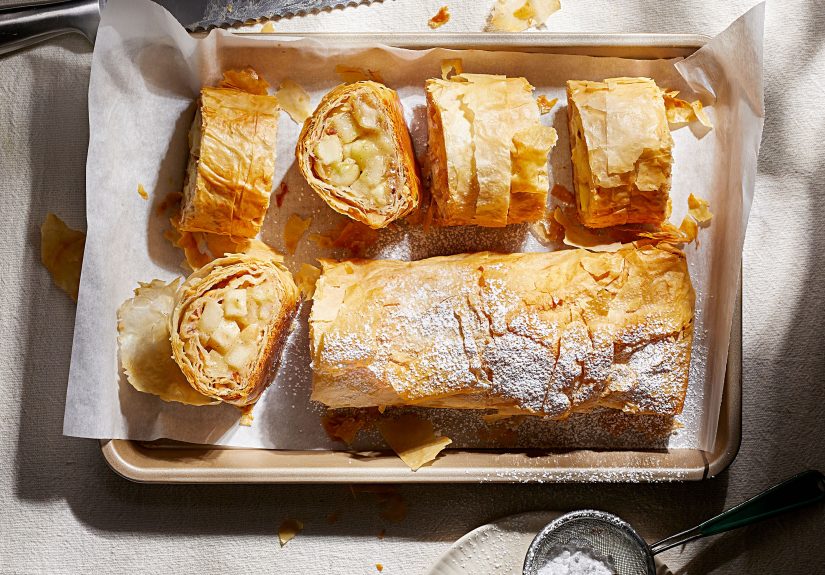
Dust with powdered sugar. For the optional drizzle, whisk the powdered sugar, milk, and vanilla together until smooth and lightly spoon over the strudel. Serve warm or at room temperature.
Tips for the Best Homemade Apple Strudel
Keep the Phyllo Covered
Phyllo dries quickly, which makes it brittle and harder to work with. Keep unused sheets covered the entire time.
Do Not Overfill
A generous filling is wonderful. An overloaded strudel is a structural crisis with powdered sugar. Use enough filling for a plump roll, but not so much that the pastry tears.
Use Breadcrumbs on Purpose
Breadcrumbs are not filler here. They are moisture insurance. They absorb juices and help keep the layers flaky.
Choose the Right Apples
Firm, flavorful apples make the difference between a beautiful sliced pastry and something more spoonable than sliceable.
Fresh Ginger Matters
Fresh ginger gives the filling a lively edge that powdered spice alone cannot replicate. Use both for the best balance.
Serving Ideas
This ginger apple pastry is flexible enough to play several roles. Serve it warm with vanilla ice cream for a classic dessert situation. Add softly whipped cream for a lighter finish. Pair it with coffee for brunch, black tea for afternoon company, or a scoop of cinnamon ice cream if you are feeling just a little extra. No judgment here. Strudel is not the place for emotional restraint.
For holidays, plate slices on a long serving platter and dust with powdered sugar right before serving. For a breakfast-for-dessert moment, reheat a slice and eat it in the kitchen while pretending you are only checking texture. That is called quality control, and I fully support it.
Storage and Make-Ahead Tips
Store leftover strudel loosely covered at room temperature for up to 1 day, or refrigerate it for up to 3 days. Reheat in a 325°F oven until crisp again. The microwave will warm it, but it also softens the pastry, so use it only if time is short and standards are temporarily negotiable.
You can also prepare the filling a few hours ahead and keep it chilled. Assemble and bake the strudel when ready to serve. This is especially helpful during the holidays when oven timing becomes a full-contact sport.
Common Mistakes to Avoid
Using watery apples: Some apples release too much juice and break down too quickly. Save those for applesauce.
Skipping the rest after mixing the filling: That short wait helps the flavors blend and gives you a better idea of how juicy the filling really is.
Brushing too much butter: Phyllo needs butter, but drowning it will weigh the layers down. Light brushing works best.
Slicing too soon: Hot filling is delicious, but it also likes to wander. Let the pastry rest before cutting.
Final Crumb
If you want a dessert that tastes classic but not boring, this Ginger-Apple Strudel Recipe is a keeper. It has the familiar comfort of baked apples and cinnamon, the brightness of lemon, the warmth of ginger, and the sort of flaky texture that makes people think you worked harder than you actually did. That is not cheating. That is strategy.
Whether you bake it for a fall dinner, a holiday table, or a weekend when the weather politely suggests pie-adjacent behavior, this strudel delivers. It is crisp, fragrant, a little elegant, and very hard to stop eating. In other words: excellent news for everyone except your plan to “just have one bite.”
Kitchen Experience: What This Recipe Feels Like in Real Life
The most interesting thing about making a ginger-apple strudel is that it feels more dramatic than it really is. Before you start, the ingredients look harmless enough: apples, phyllo, sugar, butter, spices. Very normal. Very civilized. Then the butter starts melting, the ginger gets grated, and suddenly your kitchen smells like a bakery that also has excellent opinions about fall.
One of the first real-life lessons people notice with this recipe is how much the apples matter. Use apples that are too soft, and the filling can drift into mushy territory. Use firm, flavorful apples, and each slice has actual character. That texture difference is huge. It is the gap between “nice homemade dessert” and “whoa, this tastes bakery-level.” The same goes for slicing. When the apples are cut evenly, the whole strudel bakes more consistently, and the filling slices neatly instead of staging a delicious escape.
Then there is the phyllo moment. Everyone who works with phyllo for the first time assumes it will be a disaster. It looks fragile. It sounds fragile. It has the emotional energy of tissue paper in a windstorm. But once you keep it covered and stop trying to handle it like a priceless museum artifact, it becomes surprisingly manageable. Small tears are not a crisis. In fact, after rolling and baking, many of them disappear into the flaky layers anyway. Strudel is forgiving in that way. It wants to look impressive, but it does not require perfection.
Another real kitchen truth: the filling nearly always looks juicier than expected after it sits for a few minutes. That is not failure. That is apples being apples. The smart move is simply to transfer the fruit thoughtfully and not pour every last drop of liquid into the pastry. That one decision changes the final texture more than most people realize. A crisp-bottomed strudel feels intentional. A soggy one feels like a life lesson.
And then there is the waiting. Fresh from the oven, the strudel crackles when you touch it, and the smell is outrageous. This is exactly when people are tempted to cut into it immediately. In real life, patience wins. Give it a short rest, and the filling settles just enough to slice beautifully. Rush it, and you still get a tasty dessert, but the slices may slump into a more rustic presentation. Rustic is charming, of course. It is also sometimes code for “I was too hungry to wait.”
Perhaps the best part of this recipe is how it changes through the day. Warm from the oven, it is crisp, fragrant, and deeply comforting. A few hours later, it becomes softer, more settled, and almost richer in flavor. The ginger becomes rounder, the apple flavor deepens, and the whole pastry tastes more connected. Next-day leftovers reheated in the oven can be spectacular, especially with coffee. That is the kind of breakfast decision that makes a person feel both indulgent and oddly efficient.
In the end, this recipe is memorable not because it is fussy, but because it feels rewarding. It gives you the pleasure of making something beautiful without requiring professional pastry drama. It looks special, smells incredible, and tastes like the best parts of apple season wrapped in crisp golden layers. And honestly, that is the sort of kitchen experience worth repeating.