Table of Contents >> Show >> Hide
- Why Did Formula 1 Change Its Logo?
- The Old Logo Had One Thing Money Can’t Buy: Fan Affection
- Fan Reaction: From Confusion to Comedy
- Was the New Formula 1 Logo Actually Bad?
- Liberty Media’s Bigger Plan for Formula 1
- Why Logo Changes Make Fans So Angry
- The Design Lesson: Familiarity Is a Superpower
- Did Formula 1 Win the Long Game?
- Specific Examples of the Reaction
- What Brands Can Learn From Formula 1’s Logo Change
- Experience: What the F1 Logo Change Feels Like as a Fan and Viewer
- Conclusion: A Logo Can Start a Fight, But the Sport Decides the Winner
Formula 1 has never been shy about speed, noise, money, glamour, and the occasional decision that makes fans clutch their team caps like someone just insulted their family dog. But when F1 changed its long-running logo at the end of the 2017 Abu Dhabi Grand Prix, the reaction was not exactly a gentle round of applause. It was more like a pit lane full of people yelling, “Who approved this?” while someone in marketing calmly pointed at a PowerPoint slide titled “Digital Future.”
The old Formula 1 logo had been part of the sport’s visual identity for roughly 24 years, depending on how you count its early use and official rollout. To many fans, it was not just a logo. It was a clever little optical illusion: a black “F,” red speed marks, and a hidden white “1” tucked neatly in the negative space. Once you noticed the hidden number, you felt like you had unlocked a secret level of motorsport literacy. It was smart, fast, and familiar. In other words, it had the rare quality every brand wants: people actually remembered it.
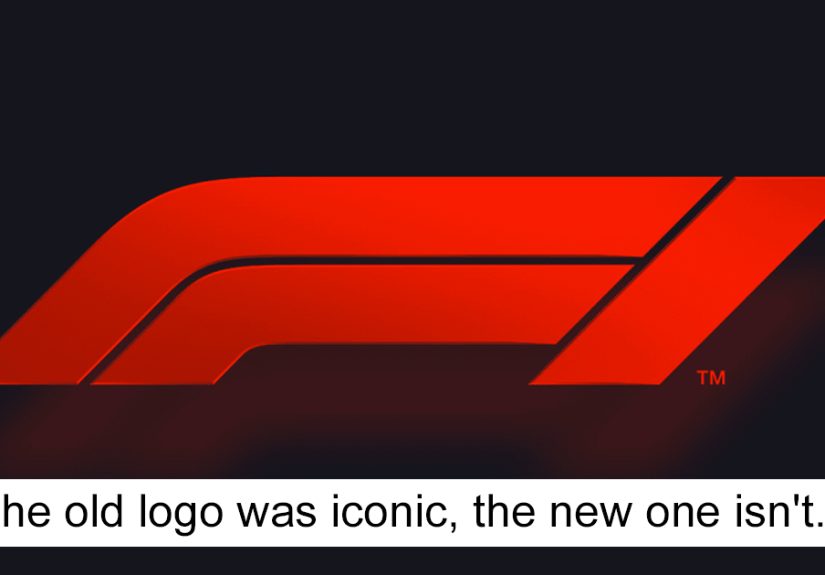
Then came the new red mark, designed as part of Liberty Media’s push to modernize Formula 1. The sport’s new owners wanted a brand that worked better on phones, merchandise, broadcast graphics, apps, social media, and the many digital places where modern fans live. That explanation made perfect business sense. Unfortunately, business sense is not always the same thing as fan emotion. And Formula 1 fans, as any tire strategist can confirm, are emotional people with spreadsheets.
Why Did Formula 1 Change Its Logo?
The short answer: Formula 1 wanted to look less like a guarded old empire and more like a global entertainment brand ready for the digital age. After Liberty Media completed its acquisition of Formula 1 in 2017, the sport began moving away from the Bernie Ecclestone era and toward a more open, content-driven, fan-friendly model. The logo change was the visual starting gun for that larger transformation.
The previous F1 logo was iconic, but it had limitations. It was detailed, horizontally stretched, and closely tied to a pre-smartphone era. It looked great on TV graphics and race posters, but modern brand systems need to work everywhere: tiny app icons, social avatars, embroidered caps, vertical video, sponsor decks, esports screens, and mobile-first advertising. A logo that looked clever at billboard size could become awkward at thumbnail size.
The new Formula 1 logo was designed by Wieden+Kennedy London, with a wider brand identity that included typography, visual systems, and campaign messaging. The mark used simple red forms to suggest speed, attack, control, and the low, flat shape of a Formula 1 car. From a design strategy perspective, the idea was clear: create something flexible, bold, and easy to deploy across a fast-moving media landscape.
The Old Logo Had One Thing Money Can’t Buy: Fan Affection
Here is the problem with replacing a beloved sports logo: fans do not judge it like a creative director. They judge it like a family member looking at a baby photo album. The old F1 logo was not perfect, but it had emotional equity. It had appeared through eras of Michael Schumacher dominance, Fernando Alonso title fights, Lewis Hamilton’s rise, Sebastian Vettel’s Red Bull years, and countless Sunday mornings when fans sacrificed sleep for a race that was either thrilling or a strategic procession with very expensive engines.
Its negative-space “1” became part of the charm. Some fans admitted they had not noticed it for years, which somehow made them love it more once they did. That is powerful branding. It gave people a moment of discovery. It rewarded attention. It felt like a clever joke shared between the sport and its audience.
The new logo, by contrast, was immediate. No hidden trick. No visual puzzle. Just a sharp red emblem, modern and simplified. To brand strategists, that may sound like progress. To some fans, it felt like Formula 1 had traded a tailored racing suit for a gym logo.
Fan Reaction: From Confusion to Comedy
The internet did what the internet does best: it reacted quickly, loudly, and with the grace of a wet-weather restart. Some fans compared the new Formula 1 logo to a generic sportswear brand. Others said it looked like a cable news graphic, a toothpaste mark, a video game badge, or something designed five minutes before a meeting. The jokes came faster than a qualifying lap at Monza.
But beneath the memes was a serious point. Fans were not merely complaining because change exists. They were reacting to the feeling that something distinctive had been flattened. The old logo had personality. The new one had efficiency. The old one said, “Look closely.” The new one said, “Please scale cleanly across digital assets.” That may be useful, but it is not exactly poetry.
Even some drivers were not instantly sold. Lewis Hamilton, already one of the sport’s biggest global stars, indicated that he preferred the old logo. When the most marketable driver on the grid sounds unconvinced, the brand team probably does not pop champagne immediately. Or if they do, it is the nervous kind.
Was the New Formula 1 Logo Actually Bad?
Not necessarily. This is where the debate gets more interesting than the first wave of jokes. The new F1 logo was not a random doodle. It was part of a carefully planned rebrand intended to support Formula 1’s next chapter. It worked better as a modern identity system. It was easier to animate, easier to place on merchandise, easier to use in broadcast graphics, and easier to recognize at small sizes.
In branding, usefulness matters. A logo is not just a pretty badge. It is a tool. It must survive being printed on hats, squeezed into app icons, stretched across banners, placed next to sponsor logos, animated in video intros, and reproduced in thousands of contexts. The old logo had legacy. The new one had utility.
That said, utility alone does not win hearts. A logo can be technically correct and emotionally cold. The strongest sports identities do both: they work across media and make people feel something. The new F1 logo’s challenge was that it arrived before many fans had experienced the benefits of the broader Liberty Media transformation. The badge changed first; the proof came later.
Liberty Media’s Bigger Plan for Formula 1
The logo change makes more sense when viewed as one piece of Liberty Media’s broader Formula 1 overhaul. After taking control, Liberty pushed the sport toward digital content, younger audiences, better fan access, stronger social media, new graphics, and entertainment-style storytelling. This was not just about replacing an old mark. It was about repositioning Formula 1 from a sometimes-closed racing championship into a global media product.
That strategy later became easier to understand. Formula 1 expanded its social presence, invested in streaming and digital platforms, embraced behind-the-scenes content, and reached new audiences through documentary-style storytelling. Many people who once thought F1 was “cars going in circles” suddenly learned about team principals, driver rivalries, tire strategy, budget politics, and the emotional damage caused by a poorly timed safety car.
In that context, the logo was a signal. It told sponsors, broadcasters, teams, and fans that Formula 1 was no longer satisfied with being respected only by traditional motorsport audiences. It wanted to be culturally louder. It wanted to live on phones. It wanted to speak to people who may not know what DRS stands for but definitely understand drama.
Why Logo Changes Make Fans So Angry
Every major logo redesign creates the same strange ritual. A company unveils a new identity. Designers explain the strategy. Fans say the old one was better. Social media produces memes. Someone claims their cousin could have made it in Microsoft Paint. Then, a few years later, everyone mostly gets used to it.
Sports logos are especially sensitive because they are tied to memory. A fan does not see a logo as a file named “final_final_v8_red.svg.” They see championships, heartbreaks, rivalries, posters, jackets, video games, and childhood weekends. Change the symbol, and it can feel like changing the emotional wallpaper of their favorite sport.
Formula 1’s old logo also had the advantage of being genuinely clever. The hidden “1” was the kind of design detail that made fans feel proud of the brand. Removing it felt, to some, like sanding off the personality. The new logo may have been more practical, but practicality rarely gets a standing ovation from people wearing vintage team shirts.
The Design Lesson: Familiarity Is a Superpower
One reason the Formula 1 logo debate still matters is that it reveals a key branding lesson: familiarity creates value. A logo does not become iconic only because it is beautiful. It becomes iconic because people see it repeatedly during meaningful moments. The old F1 mark appeared during podium celebrations, crashes, championship fights, and opening sequences. It absorbed the emotion of the sport.
When a brand replaces a familiar symbol, it is not starting from neutral. It is asking people to give up stored feelings. That is why “cleaner” is not always better. A cleaner logo may improve production, but it can also remove quirks that made the old identity memorable.
Still, brands cannot live entirely in nostalgia. Formula 1 needed to modernize. The sport had to compete not just with other racing series, but with Netflix, TikTok, the NFL, gaming, YouTube, and every other entertainment option fighting for attention. In that battle, a flexible visual identity is not a luxury. It is survival equipment.
Did Formula 1 Win the Long Game?
Looking back, the logo backlash now feels like an early chapter in a larger success story. Formula 1’s global popularity has grown significantly since the Liberty Media era began, especially among younger fans and American audiences. The sport became more visible, more accessible, and more discussed outside traditional motorsport circles. Whether someone loves or dislikes the current logo, it is hard to deny that the broader rebrand helped support F1’s modern identity.
The funny part is that many fans who once roasted the new logo now barely notice it. That does not mean everyone loves it. It means the logo has done what logos eventually do when attached to a strong product: it became normal. If the racing is good, the rivalries are spicy, and the championship battle has actual tension, people are less likely to spend Sunday morning yelling about kerning.
Still, the old logo has not vanished from fan memory. It remains a beloved piece of Formula 1 history, especially for those who grew up with it. Vintage merchandise featuring the old mark still carries a certain cool factor. It says, “I was here before the brand guidelines discovered social media.”
Specific Examples of the Reaction
The strongest criticism centered on three ideas. First, fans felt the old logo was more distinctive. The hidden “1” gave it a cleverness that the new mark did not try to replicate. Second, some thought the new logo looked too generic, like a startup sports brand rather than the identity of the world’s premier racing series. Third, the timing felt abrupt. The logo appeared immediately after the 2017 season finale, giving fans little emotional runway to accept the change.
Supporters of the redesign made a different argument. They said the old logo looked dated, was not ideal for digital platforms, and belonged to an era when Formula 1 did not need to compete as aggressively for online attention. They saw the new mark as clean, confident, and adaptable. In their view, the backlash was predictable because any change to a passion brand causes noise.
Both sides had a point. The old logo was more charming. The new logo was more functional. The old logo had character. The new logo had scalability. The old logo made fans smile when they spotted the hidden number. The new logo made brand managers sleep better at night. Somewhere between those two truths sits the real story.
What Brands Can Learn From Formula 1’s Logo Change
1. Never Underestimate Nostalgia
Nostalgia is not just sentimental decoration. It is brand capital. When people have lived with a symbol for decades, they attach meaning to it. A redesign should respect that emotional history, even when the business case for change is strong.
2. Explain the “Why” Before the Internet Explains It for You
Formula 1 did explain its reasoning: digital use, modern platforms, merchandise, and a new entertainment strategy. But fan reaction moves fast. If the emotional explanation does not land instantly, memes will fill the gap. And memes do not usually attend stakeholder meetings.
3. A Logo Is Only as Strong as the Experience Behind It
A logo cannot carry a weak product forever. It also cannot ruin a strong one forever. Formula 1’s modern growth helped the new identity feel more natural over time. The racing product, media strategy, and fan experience gave the logo a context in which it could survive.
4. Clever Design Details Matter
The hidden “1” in the old logo was more than a design trick. It was a memorable feature that fans could talk about. When a redesign removes such a detail, it should replace it with another kind of emotional hook. Otherwise, the new identity can feel polished but less personal.
Experience: What the F1 Logo Change Feels Like as a Fan and Viewer
Experiencing the Formula 1 logo change as a fan was a little like walking into your favorite local diner and discovering it had become a minimalist coffee bar. The coffee might be better. The Wi-Fi might be faster. The chairs might be imported from Denmark and designed by someone named Lars. But part of you still misses the sticky menu, the noisy booth, and the slightly crooked sign that made the place feel like yours.
That is the emotional tension behind the F1 logo debate. The old logo belonged to a version of Formula 1 that many fans considered more mysterious, more exclusive, and perhaps more romantic. It was the era when race broadcasts felt like windows into a private, high-speed world. The sport was glamorous, technical, and occasionally impossible to understand unless you had spent years learning its strange language. The old logo fit that world. It was sharp, fast, and a little cryptic.
The new logo felt different from day one. It was brighter, flatter, and more direct. It looked ready for mobile apps, video thumbnails, esports, and global campaigns. At first, that directness felt almost too simple. Fans who loved the old negative-space trick saw the new mark and thought, “That’s it?” It was like replacing a magic trick with a very efficient barcode. Useful, yes. Enchanting, maybe not immediately.
But over time, the experience changed. The new logo began appearing everywhere: race intros, social clips, timing graphics, paddock videos, merchandise, and digital promos. It became attached to a new kind of Formula 1 experience. Fans were getting more access, more personality, more driver content, more behind-the-scenes drama, and more reasons to talk about the sport between race weekends. The logo became part of that shift. It stopped being only “the new logo” and became the signpost of modern F1.
For newer fans, especially those who discovered Formula 1 through streaming content, social media, or recent American races, the current logo may feel completely natural. They did not lose the old mark in real time, so they do not carry the same emotional bruise. For longtime fans, however, the old logo still has a special pull. Seeing it on retro merchandise can trigger instant memories of older cars, louder engines, different broadcast graphics, and championship fights that seemed larger than life.
That split is what makes the story so interesting. The logo change was not simply about design. It was about generational ownership. Longtime fans felt protective of the sport they had followed for years. New leadership wanted to expand the audience. Designers wanted a system that worked in a digital world. Sponsors wanted a modern global platform. Everyone was looking at the same symbol, but each group saw a different problem.
In daily fan experience, the lesson is surprisingly human: people can adapt to change while still missing what came before. A fan can enjoy modern Formula 1, appreciate the slicker graphics, follow drivers on social media, laugh at paddock memes, and still believe the old logo was better. Those ideas can coexist. Motorsport is full of contradictions anyway. Fans complain about predictable races, then complain when chaos ruins strategy. They want tradition, but also better entertainment. They want purity, but also team radio clips and dramatic camera angles. Formula 1 lives in that tension.
The 2017 logo change captured that tension perfectly. It was a small graphic mark carrying a huge symbolic load. It represented new ownership, new marketing, new audiences, and a new attitude toward entertainment. It also represented the loss of a familiar piece of racing culture. That is why the reaction was so loud. Fans were not just judging red shapes. They were reacting to the feeling that Formula 1 itself was changing.
Conclusion: A Logo Can Start a Fight, But the Sport Decides the Winner
Formula 1’s decision to change its 24-year-old logo was bold, risky, and guaranteed to irritate people who had emotional roots in the old identity. The reaction was fierce because the old logo had earned affection through years of racing history. It was clever, familiar, and tied to memories that no design presentation could easily replace.
Yet the new Formula 1 logo also marked a turning point. It signaled a sport preparing for a digital, global, entertainment-driven future. While the first reaction may have been messy, the long-term story is more balanced. The redesign did not erase Formula 1’s history. It became part of a wider transformation that helped the sport reach new fans while giving longtime fans something to argue about, which, frankly, is one of motorsport’s most reliable fuel sources.
In the end, the logo debate proves that strong brands are not built only in design studios. They are built in memories, habits, race weekends, arguments, jokes, and shared moments. Formula 1 changed a logo, but fans reacted because they cared. For any sport, that kind of noise is not always a disaster. Sometimes it is proof that the engine is very much alive.
Note: This article is written in original American English for web publishing and is based on verified historical information about Formula 1’s 2017 rebrand, fan reaction, and Liberty Media’s broader modernization strategy.