Table of Contents >> Show >> Hide
- When a Bridge Decided to Become a Robot-Built Celebrity
- What Is the First 3D-Printed Steel Bridge?
- How the 3D-Printed Steel Bridge Was Made
- Why the MX3D Bridge Matters
- The Engineering Lessons Behind the Bridge
- Benefits of 3D-Printed Steel Bridges
- Challenges Facing 3D-Printed Steel Infrastructure
- How the Bridge Changed the Conversation About Construction
- Real-World Examples Inspired by 3D-Printed Steel
- What the First 3D-Printed Steel Bridge Means for the Future
- Experience-Based Reflections: What It Feels Like to Encounter the First 3D-Printed Steel Bridge
- Conclusion: A Bridge Between Today’s Construction and Tomorrow’s Cities
Note: This article is written in standard American English, based on real information from reputable engineering, architecture, research, and additive-manufacturing sources, and formatted as HTML for web publishing.
When a Bridge Decided to Become a Robot-Built Celebrity
The first 3D-printed steel bridge did not quietly stroll into history. It arrived in Amsterdam looking like infrastructure from the future, dressed in stainless steel, shaped by robots, monitored by sensors, and opened with the kind of ceremony that makes ordinary bridges feel underdressed. Officially known as the MX3D Bridge, this pioneering pedestrian bridge became a symbol of how far construction technology has moved beyond blueprints, bolts, and “please don’t drop that beam.”
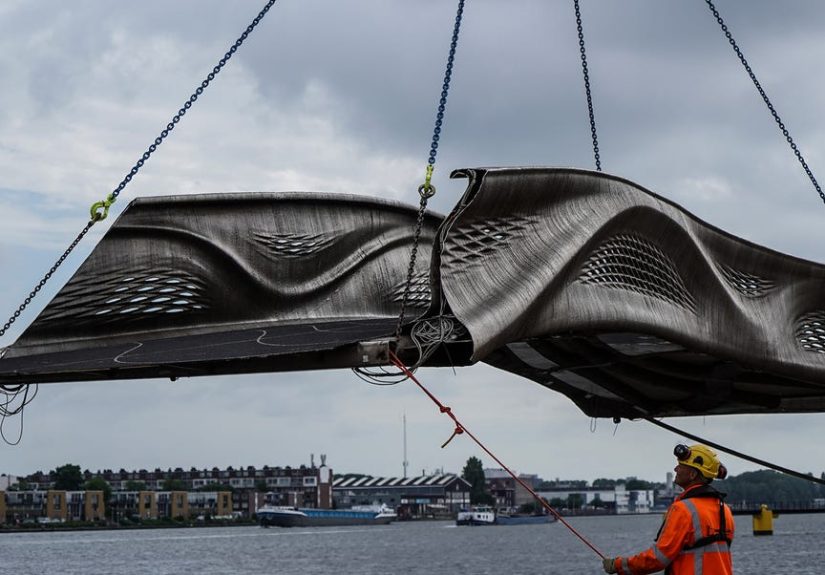
Installed over the Oudezijds Achterburgwal canal in Amsterdam and unveiled in July 2021, the bridge was created by Dutch company MX3D using Wire Arc Additive Manufacturing, often shortened to WAAM. In plain English, that means robotic arms used welding technology to deposit molten stainless steel layer by layer until a full-scale pedestrian bridge existed where once there was only a digital model and a very ambitious engineering team.
The result is more than a walkway. It is a living laboratory, a public artwork, a data-gathering machine, and a serious engineering experiment wrapped into one shiny structure. It proves that 3D printing with steel is not limited to small parts, prototypes, or futuristic press releases. It can produce real infrastructure that people can walk across, photograph, study, and occasionally point at while saying, “Wait, robots made that?”
What Is the First 3D-Printed Steel Bridge?
The first 3D-printed steel bridge is a stainless-steel pedestrian bridge developed by MX3D, designed with creative input from Joris Laarman Lab, engineered with support from Arup, and studied by leading research teams including Imperial College London, the University of Cambridge, The Alan Turing Institute, and other partners. The bridge is about 12 meters long and was built using industrial robotic arms equipped with welding tools.
Unlike conventional bridges, which are usually fabricated from standard beams, plates, and connections, the MX3D Bridge was built through a digital-to-physical process. Engineers created a design using advanced computer modeling, then robots followed programmed toolpaths to deposit metal in controlled layers. Imagine icing a cake, except the icing is molten stainless steel, the cake is a canal bridge, and the baker is a robotic arm that absolutely never asks for a lunch break.
The bridge is often described as the world’s first 3D-printed stainless steel bridge and the first 3D-printed steel pedestrian bridge placed into public use. Its importance comes from the combination of structural performance, digital design freedom, robotic manufacturing, and real-time monitoring. It is not just a “look what we printed” object. It is a test case for the future of smart infrastructure.
How the 3D-Printed Steel Bridge Was Made
Robots, Welding, and Layer-by-Layer Construction
The bridge was manufactured using Wire Arc Additive Manufacturing. WAAM is a form of metal 3D printing that feeds metal wire into an electric arc, melts it, and deposits the material layer by layer. It is especially useful for large metal objects because it can build substantial forms more quickly than many powder-based 3D-printing methods.
In the case of the MX3D Bridge, robotic arms moved through space while depositing stainless steel. Instead of printing inside a small enclosed chamber, the system allowed large-scale metal forms to be created in open air. That matters because bridges, ship components, industrial parts, and architectural structures are usually too large for traditional metal 3D printers.
The printing process required far more than pressing “start” and hoping for the best. Engineers had to manage heat, distortion, material strength, geometry, surface finish, and quality control. Metal does not always behave politely when heated and cooled repeatedly. It expands, contracts, warps, and occasionally acts like it has strong opinions. That is why testing, simulation, and structural validation were essential parts of the project.
Why Stainless Steel?
Stainless steel was chosen because it offers strength, corrosion resistance, and a striking visual identity. For a bridge placed over a canal, corrosion resistance is not a decorative bonus; it is a practical necessity. The material also allowed the bridge to maintain a sculptural, flowing appearance while still performing as public infrastructure.
The bridge’s organic form would have been difficult and expensive to create using only conventional fabrication methods. With robotic additive manufacturing, the design could include complex curves and non-standard shapes without requiring a separate mold or custom tooling for every detail. That design freedom is one of the biggest promises of 3D-printed steel construction.
Why the MX3D Bridge Matters
It Connects Digital Design to Real Infrastructure
The first 3D-printed steel bridge matters because it connects several major trends in engineering: digital design, robotics, additive manufacturing, structural monitoring, and sustainable construction. Instead of treating these as separate buzzwords floating around a conference room, the project brought them together in a real public structure.
Traditional bridge construction depends heavily on standardized components, manual assembly, and long-established fabrication methods. Those methods are still important and will remain so for a long time. But 3D-printed steel offers another tool in the toolbox. It can create complex components, customized connections, optimized shapes, and potentially less material waste when used wisely.
It Is Also a Smart Bridge
The MX3D Bridge is often called a smart bridge because it includes a network of sensors designed to collect performance data. These sensors help researchers study how the bridge responds to pedestrian traffic, vibration, environmental conditions, and structural loads. The data feeds into a digital twin, which is a virtual model that mirrors the real bridge’s behavior.
Digital twins are becoming increasingly important in infrastructure management. Instead of waiting for damage to become visible, engineers can monitor behavior over time and identify changes earlier. In the future, bridges, buildings, and other structures may routinely report their own health, like fitness trackers for concrete and steel. The bridge will not complain about step goals, but it may reveal stress patterns, movement, and maintenance needs.
The Engineering Lessons Behind the Bridge
Design Freedom Comes With Responsibility
One of the most exciting things about 3D-printed steel is that it allows designers to escape the strict limits of standard shapes. A beam does not always need to look like a beam. A connection does not always need to be a flat plate with predictable holes. Forms can be optimized for load paths, aesthetics, and fabrication efficiency.
But design freedom is not a free pass to create metal spaghetti and call it innovation. Every printed shape must still meet structural requirements. Engineers need to understand material properties, fatigue behavior, weld quality, load paths, and long-term durability. The first 3D-printed steel bridge showed that additive manufacturing can be beautiful, but beauty still needs math, testing, and probably several engineers with very serious spreadsheets.
Testing Is the Unsung Hero
Before a bridge can safely carry pedestrians, it must be tested and evaluated. The MX3D Bridge underwent extensive structural testing and analysis before installation. Researchers studied the printed steel material, the bridge’s geometry, and its load-bearing behavior. This process helped demonstrate that a robot-printed structure could satisfy real engineering expectations.
Testing is especially important because additively manufactured metal can behave differently from conventionally produced steel. The layer-by-layer process creates unique surface textures, microstructures, and geometric features. Engineers must account for these differences rather than assuming printed steel behaves exactly like rolled or cast steel. That careful approach is what turns a bold experiment into credible infrastructure.
Benefits of 3D-Printed Steel Bridges
More Efficient Use of Material
Additive manufacturing builds objects by adding material only where it is needed. In theory, this can reduce waste compared with subtractive manufacturing, where material is cut away from a larger block. For construction, that could mean lighter, more optimized components that still deliver the required strength.
In practice, the sustainability benefits depend on the whole process: energy use, material sourcing, transportation, finishing, maintenance, and lifespan. A 3D-printed bridge is not automatically greener simply because it sounds futuristic. However, the ability to design efficient forms and reduce unnecessary material gives engineers a powerful path toward lower-impact construction.
Customization Without Traditional Tooling
Bridges often need site-specific solutions. Soil conditions, span length, architecture, pedestrian flow, local codes, and visual requirements can all influence the final design. Traditional fabrication can handle customization, but unique parts often increase complexity and cost. With robotic 3D printing, customization can be driven directly from digital models, reducing the need for specialized molds or one-off tooling.
Potential for Faster Prototyping
Large infrastructure projects are rarely quick, but additive manufacturing can accelerate some parts of the design and prototyping process. Engineers can test shapes, revise models, and fabricate complex components without waiting for every conventional manufacturing step. For special connections, artistic structures, replacement parts, or remote projects, this flexibility could become valuable.
Challenges Facing 3D-Printed Steel Infrastructure
Codes and Standards Must Catch Up
For 3D-printed steel bridges to become common, building codes, bridge standards, and inspection practices need to evolve. Engineers and public agencies must know how to qualify printed materials, verify strength, inspect finished parts, and evaluate long-term durability. Organizations such as ASTM, NIST, AISC, and research universities are helping develop the knowledge base needed for broader adoption.
This is one of the least glamorous but most important parts of the story. A bridge cannot rely on “trust me, the robot seemed confident.” Public infrastructure requires repeatable quality, documented performance, and clear safety rules.
Surface Finish and Fatigue Performance
WAAM parts often have a distinctive layered surface. That texture can be visually appealing, but it can also affect fatigue performance, especially in structures exposed to repeated loading. Bridges experience constant cycles from pedestrians, wind, temperature changes, and vibration. Engineers must determine when surfaces can remain as printed and when machining, grinding, or finishing is necessary.
Cost and Scale
3D printing steel is not automatically cheaper than conventional fabrication. Robots, software, process monitoring, skilled operators, testing, and post-processing all cost money. The technology makes the most sense where it offers clear advantages: complex geometry, reduced waste, high customization, difficult-to-source parts, or integrated digital monitoring.
How the Bridge Changed the Conversation About Construction
Before the MX3D Bridge, many people associated 3D printing with desktop plastic objects, hobbyist projects, or small industrial parts. The first 3D-printed steel bridge expanded that imagination. It showed that additive manufacturing could step into the world of civic infrastructure, where safety, durability, and public trust matter.
The bridge also changed how architects and engineers talk to each other. Architecture often dreams in curves, gestures, and emotional experiences. Engineering asks whether the dream can survive wind, people, corrosion, and municipal paperwork. The MX3D Bridge gave both sides a shared example: a structure that is expressive, data-rich, and technically serious.
Real-World Examples Inspired by 3D-Printed Steel
Since the MX3D Bridge gained global attention, interest in 3D-printed steel infrastructure has continued to grow. In the United States, the American Institute of Steel Construction and industry partners have explored additively manufactured pedestrian bridge concepts and demonstration projects. These efforts show how 3D-printed steel can work with conventional structural steel rather than replacing it entirely.
That hybrid approach may be especially important. The future may not be a world where entire bridges are printed from end to end. Instead, 3D printing may be used for specialized nodes, custom joints, architectural features, repair parts, and optimized components that connect to standard beams and columns. In other words, the robot does not have to take over the whole construction site. It can simply handle the parts where it is genuinely better.
What the First 3D-Printed Steel Bridge Means for the Future
The first 3D-printed steel bridge is not the final answer to infrastructure’s problems. It will not single-handedly fix aging bridges, construction delays, material costs, or the eternal mystery of why roadwork cones appear months before work begins. But it does point toward a smarter, more flexible future.
Future bridges may be designed with performance data from the start. They may include embedded sensors, digital twins, and automated inspection systems. Components may be printed near the site or fabricated with custom geometries that reduce weight and improve efficiency. Maintenance teams may use live data to prioritize repairs rather than relying only on scheduled inspections.
The deeper lesson is that infrastructure can become more adaptive. A bridge does not have to be a silent object. It can be measured, modeled, improved, and understood throughout its life. The MX3D Bridge represents that shift from static construction to data-informed infrastructure.
Experience-Based Reflections: What It Feels Like to Encounter the First 3D-Printed Steel Bridge
Seeing the first 3D-printed steel bridge, even through photos and project documentation, feels different from looking at a conventional bridge. Most bridges communicate strength through straight lines, heavy beams, and familiar geometry. The MX3D Bridge communicates strength through motion. Its curves look almost liquid, as if the steel briefly remembered being molten and decided to keep the memory.
That emotional reaction matters because infrastructure is not only about function. People live with bridges. They walk across them, photograph them, meet friends near them, complain about traffic on them, and use them as quiet landmarks in daily life. A bridge that sparks curiosity can change how the public thinks about engineering. Instead of seeing construction as background noise, people begin to ask how things are made.
From a writer’s perspective, the bridge is a gift because it makes technical ideas easier to explain. Additive manufacturing can sound abstract until someone says, “This bridge was printed by robots using stainless steel.” Suddenly, the concept has a shape, a location, and a story. It becomes easier to discuss digital twins, sensors, structural health monitoring, and robotic fabrication because readers can picture a real object doing real work.
From an engineering-learning perspective, the bridge teaches humility. The concept is bold, but the execution required years of development, collaboration, redesign, testing, and validation. That is a useful reminder for anyone excited about emerging technology. Innovation is not magic. It is iteration wearing safety glasses. The final structure may look effortless, but behind it are countless decisions about heat input, deposition paths, material behavior, load testing, software, and inspection.
For students, designers, and young engineers, the bridge offers a powerful lesson: the future of construction will reward people who can think across disciplines. A project like this does not belong only to welders, only to architects, only to software developers, or only to civil engineers. It belongs to teams that can translate between design ambition and physical reality. The robot may print the steel, but humans still print the meaning.
For cities, the bridge creates an interesting question: how much experimentation should public spaces allow? Cities need safe, reliable infrastructure, but they also need room for pilot projects that test better ways to build. The MX3D Bridge succeeded partly because it was treated as both infrastructure and research. That model could inspire future urban experiments, especially when new materials, sensors, and manufacturing methods are involved.
For everyday pedestrians, the experience is simpler. You walk across a bridge. It holds you. The canal passes underneath. The city continues around you. Then you remember that the structure beneath your shoes was created by robotic arms depositing molten steel in layers, and the ordinary act of crossing becomes a tiny meeting with the future.
That may be the most important legacy of the first 3D-printed steel bridge. It does not ask people to imagine the future as something far away. It places the future underfoot, at human scale, in a historic city, doing the oldest job a bridge can do: helping people get from one side to the other.
Conclusion: A Bridge Between Today’s Construction and Tomorrow’s Cities
The first 3D-printed steel bridge is more than a technological milestone. It is a working example of how robotics, digital design, stainless steel, sensor networks, and structural engineering can combine to reshape the built environment. The MX3D Bridge proves that 3D printing can move beyond prototypes and into public infrastructure, while also showing that innovation must be supported by testing, standards, and long-term monitoring.
Its greatest value may not be that every future bridge will be printed exactly the same way. Instead, its value lies in expanding what engineers, architects, cities, and manufacturers believe is possible. The bridge shows that construction can be smarter, more customized, more data-driven, and more imaginative. Not bad for something whose basic job is still, charmingly, “stand here so people do not fall into the canal.”