Table of Contents >> Show >> Hide
- What Is Piet Boon 3, Exactly?
- Why This Book Still Deserves Shelf Space
- The Core Design Lessons Inside Piet Boon 3
- Why Piet Boon 3 Matters to American Readers
- How the Book Fits into the Bigger Piet Boon Story
- Who Should Read Piet Boon 3?
- Why “Required Reading” Is the Right Label
- The Experience of Reading Piet Boon 3
If coffee table books had personalities, Piet Boon 3 would be the one wearing a perfectly cut linen jacket, quietly judging your cluttered entryway, and somehow making you grateful for the feedback. This is not a shouty design book. It does not arrive banging cymbals and screaming about trend forecasts. Instead, it does something harder and far more impressive: it makes restraint feel luxurious, craftsmanship feel emotional, and calm feel like the ultimate flex.
That is exactly why Required Reading: Piet Boon 3 is not just a nice title. It is an honest one. The book, the third monograph connected to Studio Piet Boon, presents a portfolio of recent international projects and captures the design language that made the Dutch studio so influential: balanced proportions, natural materials, meticulous detailing, and spaces that look expensive without acting needy. In other words, it is design for adults. Gorgeous, self-assured adults who do not need every room to perform jazz hands.
What Is Piet Boon 3, Exactly?
Piet Boon 3 is a large-format interior and architecture monograph centered on the work of Studio Piet Boon. Published in 2011, the volume is associated with writer Joyce Huisman and photographer Richard Powers, which already tells you something important: this is not a random collection of pretty rooms tossed into a hardcover and sent into the world to fend for itself. It is a carefully built design document, one that records how the studio’s vision matured as its work expanded across the Netherlands and far beyond it.
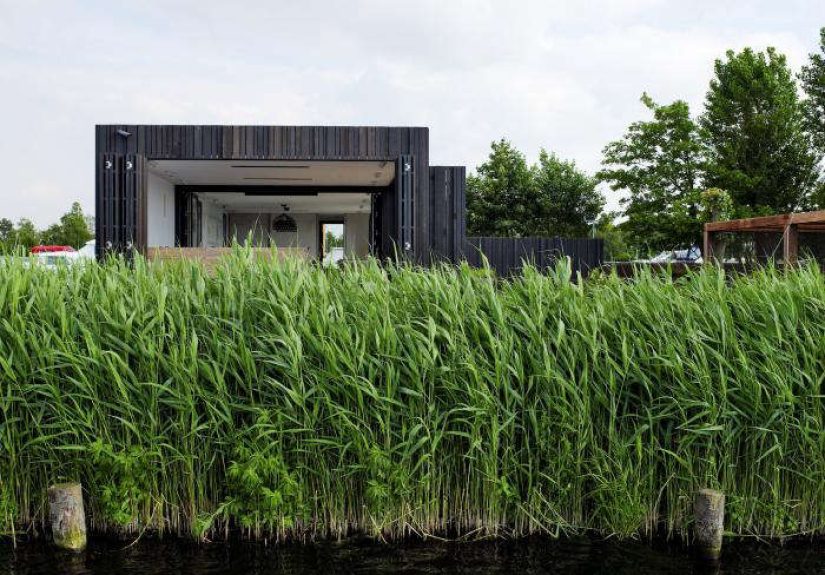
The book’s project selection is one of its strongest arguments for relevance. Instead of staying local and comfortable, it moves across countries and climates, showing how the studio adapts its signature approach to different contexts. That matters. Plenty of designers have a look. Fewer have a point of view sturdy enough to travel. A beach residence, a city apartment, a houseboat, a resort-style property, or a private villa all ask different questions. Piet Boon 3 is interesting because it shows one studio answering those questions without losing its accent.
And yes, that accent is unmistakably Dutch: disciplined but warm, elegant but practical, minimal but not sterile. The interiors do not feel starched. They feel lived-in by people with very good taste and, more importantly, working doorknobs.
Why This Book Still Deserves Shelf Space
It teaches restraint without making design feel boring
Minimalism has a branding problem. Too often, people hear the word and picture a room containing one chair, one lamp, and one emotional support pebble. Piet Boon’s work is a useful corrective. The rooms in Piet Boon 3 are pared down, but they are not empty. They are edited. That difference is the whole game.
Throughout the book, you can see how visual calm is created through proportion, repetition, and material contrast rather than decorative overload. Walls are allowed to breathe. Furniture sits with confidence. Colors stay mostly within quiet ranges of white, gray, taupe, black, wood, and stone, but the spaces never feel flat because texture does the heavy lifting. A matte plaster wall next to polished stone, a thick oak surface next to soft upholstery, a dark metal accent against pale architecture: these are the moves.
That is one reason the book remains such required reading for interior design lovers. It demonstrates that a room can be understated and still memorable. It proves that subtlety is not the enemy of drama. In the right hands, subtlety is the drama.
It treats materials like protagonists, not props
One of Piet Boon’s most consistent strengths is his respect for materials. Wood looks like wood. Stone looks like stone. Metal is allowed to be metal instead of pretending to be something trendier for social media. The result is an aesthetic that ages better than many interiors built around quick visual tricks.
That focus on material integrity is what gives the book its staying power. Even when you are looking at projects completed years ago, they do not read as dated in the way hyper-trendy rooms often do. Boon’s rooms are grounded in tactile reality. They care about what happens when light hits oak grain in the morning, how a dark finish deepens a room’s mood, or how a soft textile can calm a strict architectural line. This is not design chasing novelty. It is design building atmosphere.
For readers who want to understand why some luxury interiors feel serene while others feel like an overfunded panic attack, Piet Boon 3 is incredibly useful.
It makes functionality look glamorous
Another quiet triumph of the book is how often functionality appears as beauty. This is not accidental. Boon’s career began in the world of making and building, and that practical foundation still shows. Doors line up beautifully because someone actually cared about how they open. Kitchens feel sculptural, but they also look like places where humans might cook dinner instead of merely photograph lemons. Bathrooms read as sanctuaries, not plumbing showrooms with trust issues.
That blend of utility and refinement is one of the signature lessons of the Piet Boon aesthetic. A room should work. A chair should feel good. A layout should support the life taking place inside it. Fancy theory is nice, but it should eventually make room for everyday use. There is something refreshingly unpretentious about that.
The Core Design Lessons Inside Piet Boon 3
1. Balance matters more than excess
Studio Piet Boon is often associated with perfectly balanced design, and Piet Boon 3 shows what that phrase really means. Balance here is not symmetry for symmetry’s sake. It is the careful negotiation between softness and structure, light and shadow, simplicity and richness. A room can feel substantial without becoming heavy. It can feel luxurious without becoming loud.
That lesson lands especially well in large homes. Oversized spaces are difficult; they can easily become cold or impersonal. Yet again and again, Piet Boon interiors use proportion, tonal layering, and carefully placed furnishings to make volume feel intimate. Big rooms stop being empty boxes and start becoming composed experiences.
2. Neutral does not mean lifeless
American design coverage often points to Piet Boon when discussing modern homes built around light woods, white walls, black accents, and soft gray palettes. The reason is simple: he understands that neutral rooms do not succeed because they are neutral. They succeed because they are varied. Tone-on-tone palettes only work when the textures are rich, the silhouettes are precise, and the materials have enough depth to keep the eye engaged.
Piet Boon 3 is full of examples that prove this. A monochrome room is never just one note. There is always grain, depth, sheen, roughness, softness, patina, or shape giving the palette a pulse. It is a master class in how to keep a room calm without making it sleepy.
3. Architecture and interior design should talk to each other
One of the pleasures of this book is seeing how thoroughly the interiors respond to the architecture around them. Boon does not decorate over the building. He works with it. Ceilings, volumes, sight lines, openings, and circulation all shape the emotional effect of the finished room. The furniture feels inevitable because the spatial logic is so strong.
That is why the book appeals to more than just décor enthusiasts. Architects, stylists, developers, and serious design readers can all find something to admire in the way the projects resolve the relationship between shell and atmosphere. These spaces do not feel assembled. They feel authored.
Why Piet Boon 3 Matters to American Readers
It would be easy to file Piet Boon under “European luxury” and move on, but that would miss the point. His work has long resonated in the United States, and not only as inspiration pinned to mood boards at 1:12 a.m. when someone decides they are finally ready to become “a minimalist.” Studio Piet Boon has been involved in significant New York projects, including multi-residential work in Manhattan and Brooklyn, and American shelter magazines have repeatedly turned to Boon-designed spaces when discussing modern kitchens, neutral palettes, and contemporary homes that still feel warm.
That matters because it shows the work translating across cultural contexts. The design language of Piet Boon 3 is not trapped in a single European fantasy. It adapts beautifully to urban American developments, large suburban homes, and hospitality spaces alike. Readers in the United States can look at the book and see not only beautiful ideas, but also applicable ones: how to soften scale, how to use black as grounding contrast, how to make open-plan spaces feel calm, and how to preserve architectural clarity while still creating comfort.
In a culture that often swings between maximalist display and algorithm-approved sameness, that is no small achievement.
How the Book Fits into the Bigger Piet Boon Story
Part of what makes Piet Boon 3 so compelling is that it arrives after the studio had already built a recognizable identity. Earlier books introduced the world to the signature. This volume shows what happens when that signature matures and travels. The projects feel more assured, more international, and more fluent in the language of contemporary luxury.
By this point, Studio Piet Boon was no longer just a name tied to custom homes. It had expanded into a broader multidisciplinary practice touching interiors, exteriors, styling, and product design. That wider range is important because the book reflects a studio thinking across total environments rather than isolated rooms. You can sense that the furniture, materials, layout, lighting, and finishing decisions all belong to the same brain trust. The result is coherence, and coherence is one of the rarest luxuries in design.
That is also why the book feels bigger than a portfolio sampler. It reads as a statement of philosophy. The message is clear: timeless design is not a vague aspiration. It is the product of discipline, material intelligence, craftsmanship, and an ability to remove what is unnecessary without removing the soul.
Who Should Read Piet Boon 3?
This book belongs on the shelf of anyone who cares about interior architecture, contemporary Dutch design, or luxury homes that rely on nuance rather than spectacle. Designers will appreciate the compositional control. Homeowners will find practical inspiration hiding inside the polished pages. Developers and hospitality professionals can study how high-end spaces communicate value through detail rather than clutter. Even casual readers who just enjoy beautiful books will find plenty to love here, especially if they prefer interiors that whisper instead of yell.
And if you are tired of design books that look great for ten minutes and then evaporate from memory like scented mist, Piet Boon 3 is a much better investment. It has substance. It has point of view. It has rooms you will keep thinking about long after you close the cover.
Why “Required Reading” Is the Right Label
Calling a design book “required reading” can feel dramatic, like assigning homework in a room filled with cashmere throws. But in this case, the label fits. Piet Boon 3 is required reading because it teaches lessons that still matter: respect the architecture, trust materials, edit with discipline, design for living, and remember that luxury does not need to scream to be heard.
Most importantly, it reminds readers that timeless interiors are not born from fear of personality. They are born from confidence. Confidence in proportion. Confidence in materials. Confidence in detail. Confidence in knowing when to stop. That final skill, incidentally, is also useful in life, shopping, and group texts.
The Experience of Reading Piet Boon 3
Spending time with Piet Boon 3 is not really like “reading” in the traditional sense, at least not for the first few minutes. It is more like entering a sequence of rooms that have already decided they are cooler than you, then slowly realizing they are also kinder than expected. The initial reaction is visual. You notice the scale, the light, the stillness, the confidence of the compositions. Then, gradually, the book changes gears. It stops being a parade of beautiful spaces and becomes a lesson in how those spaces make you feel.
That reading experience usually unfolds in stages. First comes admiration: the kind of admiration that makes you sit up a little straighter and suddenly become aware of the pile of random cables on your own desk. Then comes analysis. You start noticing patterns. Why does this room feel restful? Why does that stairway seem so composed? Why does a nearly all-neutral space feel layered instead of bland? The answer is almost never a single hero object. It is the relationship between elements: weight against air, matte against gloss, dark against pale, precision against softness.
Then comes the most interesting stage: translation. This is where readers begin mentally applying the lessons to their own lives. Not necessarily in the “I, too, will build a villa on a dramatic coastline” sense, though dreams are free and should be encouraged. More often, it is smaller and more useful. Maybe your living room does not need more furniture; maybe it needs less visual noise. Maybe the reason your kitchen feels busy is not the layout but the lack of material consistency. Maybe calm is not created by removing personality, but by giving the eye a clearer hierarchy.
That is the magic of a strong design book. It sharpens perception. After a while, you do not just look at the rooms in Piet Boon 3; you start looking through them. They train you to recognize how serenity is built. They make you more sensitive to proportion, texture, and sequencing. You begin to understand why a black accent can anchor a pale room, why a rough plaster wall can warm a minimalist interior, or why generous negative space can feel luxurious rather than unfinished.
There is also an emotional side to the experience. For all its polish, Piet Boon 3 does not feel icy. The best spreads carry a sense of refuge. Even the most formal spaces suggest that life could happen there comfortably. Someone could cook, read, host, nap, argue lovingly about where the bowl should go, and then move the bowl back to where it was because the original placement was obviously correct. The spaces feel composed, but never dead.
That may be the book’s biggest achievement. It invites aspiration without becoming alienating. It inspires without lecturing. It offers a version of luxury that is rooted in atmosphere, not just expense. Readers come away with more than envy; they come away with a clearer design vocabulary and a better sense of what they respond to. In that way, the experience of reading Piet Boon 3 is both aesthetic and educational. It pleases the eye, sharpens judgment, and quietly persuades you that maybe the future of good interiors is not more stuff, but better decisions.
And honestly, that is a pretty excellent thing for one beautifully behaved book to accomplish.