Table of Contents >> Show >> Hide
- What the Wooden Studio Shelf Actually Is (and Why It Looks Like a Tiny Home)
- Why Designers (and Normal People) Keep Falling for It
- Where the Studio Shelf Shines in Real Homes
- A Styling Playbook: How to Make It Look Good on Purpose
- Installation: Make It Cute, Then Make It Safe
- Care and Maintenance: Keep the Wood Looking Good
- Is It Worth It? A Practical Pros-and-Cons Breakdown
- Who Should Buy the Wooden Studio Shelf?
- Conclusion: A Tiny House for Your Favorite Things
- Experience Notes: What Living With the Studio Shelf Feels Like (A 500-Word Reality Check)
Some shelves are just… shelves. Flat plank. Two brackets. The emotional range of a saltine cracker. Ferm Living’s Wooden Studio Shelf is not that shelf. This one shows up dressed like a tiny house, ready to host your favorite objects and quietly judge your cable management. It’s a wall shelf with a little architectural swagger: a clean, house-shaped silhouette, a warm wood body, and a “roof” that can double as a clever book perch. In other words, it’s storage that also does small talk.
If you love Scandinavian designsimple forms, honest materials, and details that feel intentionalthis shelf hits the sweet spot. It’s playful without turning your room into a kindergarten. Practical without looking like it came from the “office supply aisle” section of your life. And it’s one of those rare pieces that can work in a bedroom, an entryway, a kitchen nook, or a kid’s room without needing a personality transplant.
What the Wooden Studio Shelf Actually Is (and Why It Looks Like a Tiny Home)
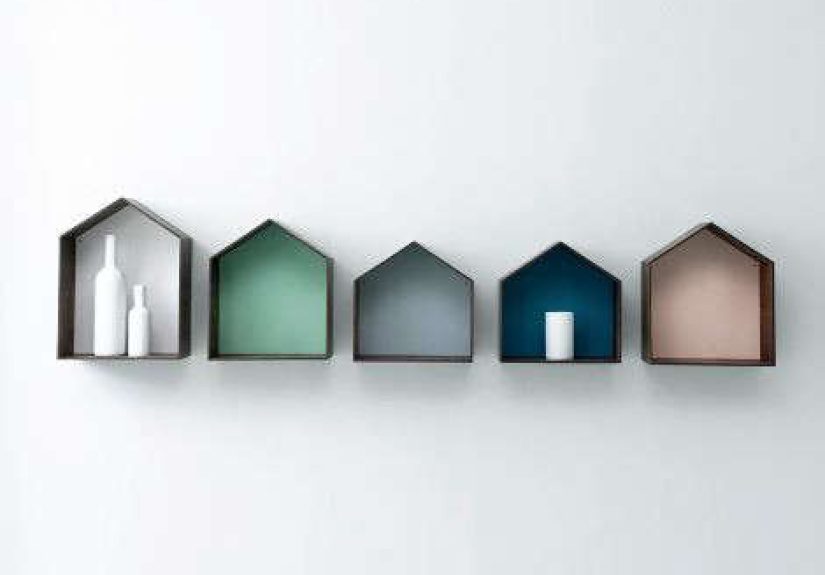
The Wooden Studio Shelf is a wall-mounted shelf from Ferm Living that takes the outline of a simple housewalls and pitched roofand turns it into a compact storage and display piece. It’s crafted from smoked oak veneer and was designed with a colored backboard option in the original line, which adds a graphic pop behind whatever you place inside. The result feels like a miniature façade on your wall: part shelf, part decor, part “my keys live here now and they’re thriving.”
The defining detail is the roofline. Unlike a standard rectangle shelf, the angled top creates a natural spot to lean a book, a notebook, a small frame, or even a record sleeve (if you’re brave and your wall anchors are braver). In small rooms, that roof detail matters: it gives you a little extra utility without adding bulk.
A quick design translation
- House shape = visual charm and a built-in “frame” for styling.
- Wood veneer = warmth and grain without the heaviness of solid wood.
- Roof as perch = a smart “secondary surface” for books or vertical items.
- Backboard color = instant contrast (and a cheat code for making objects pop).
Why Designers (and Normal People) Keep Falling for It
The Studio Shelf works because it solves a real problemwhere do I put a few everyday things?without looking like a compromise. In many homes, shelves are chosen last, after the big furniture decisions. That’s how you end up with a random ledge that’s technically functional but visually… not invited to the party.
Ferm Living flips that script. The shelf is meant to be seen. It reads like a small piece of wall art that also holds your objects, which makes it especially helpful in tight spaces where every item needs to pull double duty. It’s also why it has such strong bedside appeal: it can replace a nightstand when your floor plan says “no” but your water glass says “yes.”
It’s playful, but not loud
A lot of whimsical storage leans heavily into “theme.” This shelf stays in the grown-up lane because the geometry is simple, the finish is sophisticated, and the overall look is more modern graphic than cartoon cottage. Think “architect’s sketch,” not “storybook village.”
It makes styling easier, not harder
The house outline creates boundaries, which is secretly great news if you’re the kind of person who puts three things on a shelf and somehow it still looks chaotic. The frame effect encourages a tidy, curated arrangementlike your objects are posing for a candid photo that was absolutely not planned for 45 minutes.
Where the Studio Shelf Shines in Real Homes
1) A bedside shelf that frees up floor space
Wall shelves are a classic small-bedroom move, and the Studio Shelf is especially suited for it because it’s compact, visually light, and offers both an “inside” surface and a roof perch. Try it for:
- A book + reading glasses + lip balm (the holy trinity of nighttime survival)
- A small lamp or clip light (depending on the shelf’s placement and your setup)
- A phone charger routed neatly along the wall (bonus points for hiding the cable)
2) An entryway “drop zone” that looks intentional
The entryway is where good intentions go to dieunless you give them a shelf. The Studio Shelf can hold keys, a small dish, sunglasses, and a tiny plant that makes you feel like you have your life together. If your entryway is narrow, the wall-mounted footprint keeps traffic flowing.
3) A kitchen nook shelf for everyday pretties
Not everything in the kitchen has to be hidden. The Studio Shelf can be a sweet spot for a small timer, a favorite mug, a little spice jar set, or a mini framed recipe card. The wood warms up white tile and neutral paint, which helps kitchens feel less clinical.
4) A kid’s room “tiny museum” for treasures
The house shape is kid-friendly without screaming “kids product.” That makes it useful in a nursery or playroom, and it transitions nicely as children grow. Use it to display small books, figurines, or the rotating collection of “important rocks” they found outside.
5) A home office shelf for tools you actually use
In a work zone, the Studio Shelf can keep your most-used items visible and reachable: notebook, pen cup, headphones, a small clock, or a plant (because plants are basically emotional support coworkers). If you group multiple shelves, you can create a small wall composition that functions like modular storagewithout installing a full shelving system.
A Styling Playbook: How to Make It Look Good on Purpose
The Studio Shelf looks best when you treat it like a micro-display. The goal isn’t to cram it full; it’s to create a small arrangement with breathing room. Here are a few reliable approaches:
The “Rule of Three” (because it works and doesn’t argue)
- One vertical item: a book, small frame, or vase.
- One rounded item: a candle, bowl, or small planter.
- One textured item: a woven coaster, ceramic object, or wood element.
Use the roof like punctuation
The roof perch is where you put the “final touch”: a slim book, a postcard, or a small print. It’s a natural place to add height and make the arrangement feel finishedlike a sentence that ends with a period instead of three nervous ellipses.
Let the backboard do the work
If your version includes a colored backboard, echo that color somewhere nearbyone pillow, one vase, one piece of art. That tiny repetition makes the shelf feel integrated into the room, not like it wandered in from a different design story.
Installation: Make It Cute, Then Make It Safe
A wall shelf is only charming when it stays on the wall. Because the Studio Shelf is designed to hold objects (not just exist as a sculpture), treat installation as a safety tasknot a vibes-only activity.
Best practices for mounting
- Find studs when you can. Stud mounting is the most secure option for shelves that will hold real weight.
- If studs aren’t available, use the right anchors. Drywall anchors vary widely in strengthchoose based on load.
- Use a level. A shelf that’s slightly crooked will haunt you forever. (Ask me how I know. Don’t.)
- Plan for what you’ll put on it. A couple of books and a ceramic vase weigh more than your optimism suggests.
If you’re renting or mounting into drywall, pick anchors rated for your wall type and your planned load. Drywall can hold very little on its own, but correct hardware and stud anchoring can dramatically increase what’s safe to hang.
Care and Maintenance: Keep the Wood Looking Good
Wood veneer is durable, but it’s not a “soak it and hope” material. The safest routine is simple: dust regularly, wipe gently with a slightly damp cloth when needed, and dry the surface promptly. Avoid harsh cleaners, abrasive tools, or letting water sit.
Wood-friendly care habits
- Use a soft microfiber cloth for dusting.
- For smudges, use a lightly damp cloththen dry immediately.
- Avoid abrasive sponges and strong ammonia/alcohol-based cleaners that can damage finishes.
- Use coasters or small trays if you’re placing anything that could sweat (candles, small plants, cold drinks).
If your shelf has an oiled finish (common across many oak veneer pieces), occasional oiling may help maintain its lookespecially in dry climates. Always follow the brand’s care guidance for the specific finish you own.
Is It Worth It? A Practical Pros-and-Cons Breakdown
Pros
- High design impact for a small footprint (perfect for apartments and tight rooms).
- Built-in styling help thanks to the house frame and roof perch.
- Warmth + modern edge from smoked oak veneer and clean geometry.
- Flexible placementbedside, entry, office, kids’ room, kitchen nook.
Cons
- Limited capacity compared with full shelving systems (it’s a micro-shelf, not a library).
- Requires thoughtful mounting if you plan to store heavier items.
- Availability can vary depending on the market, finishes, and production runs.
Who Should Buy the Wooden Studio Shelf?
The Studio Shelf is for people who want storage that also feels like designespecially if you’re short on floor space or you’re trying to make a small wall area look intentional. If you love Scandinavian interiors, modern minimalism, or that warm “Japandi-adjacent” calm, it fits right in.
It’s also a smart choice if you’ve ever looked at your nightstand situation and thought, “What if I had less furniture but still had a place for my stuff?” This shelf is basically that thought, but made of smoked oak veneer and good decisions.
Conclusion: A Tiny House for Your Favorite Things
Ferm Living’s Wooden Studio Shelf is the kind of object that makes everyday life feel more considered. It’s not trying to be a giant storage solution. It’s trying to be the perfect small one: a sculptural wall shelf that holds the essentials, frames your decor, and adds warmth with wood grain and clean lines.
If your space needs a little structuresomewhere to land your keys, stage your favorite ceramics, or keep your bedtime book within reach this shelf does the job with style. And if anyone asks why your shelf looks like a tiny house, you can tell them: “Because my stuff deserves property values, too.”
Experience Notes: What Living With the Studio Shelf Feels Like (A 500-Word Reality Check)
Here’s the most honest thing about the Studio Shelf: you don’t just use ityou start assigning it roles like it’s a new roommate. The first week tends to go something like this. You mount it, step back, and immediately tilt your head like an art critic. Then you put one object on it. Then you remove that object. Then you put a different object on it. Then you decide the shelf is “more of a ceramics shelf.” And thenplot twistit becomes a key shelf because life always wins.
As a bedside shelf, it’s a small-space superpower. You realize how much visual calm you get when the floor next to your bed isn’t occupied by furniture legs. The essentials fit neatly: a book inside the “house,” glasses in a small dish, and your phone on the roof (or inside, if you don’t trust gravity after midnight). The shelf encourages editing. You keep what you need, not what you might need in a hypothetical future where you read three books at once and also journal every night.
In an entryway, it becomes a behavior trainer. Instead of dropping keys on the nearest surface like a dramatic mic drop, you start placing them in the same spot. The shelf’s shape helpsthere’s a natural “inside” area that feels like the correct place for small items, and the roof perch becomes a spot for mail you’re pretending you’ll open immediately. If you add a tiny tray, you’ve basically built a miniature landing zone that makes leaving the house feel smoother. It’s not life-changing, but it is “I found my keys on the first try” changing, which counts.
The styling part is where the shelf really earns its keep. Because it looks like a little building, it’s almost impossible to style it in a way that feels totally random. A small plant reads like “this is the home’s garden.” A candle reads like “this is the home’s warm lighting.” A tiny framed photo reads like “this is the home’s tiny gallery wall.” You don’t have to overthink it; the shape does a lot of narrative work for you. You’ll also notice that the shelf photographs wellwhether that matters to you or not, it’s a nice bonus when your room looks good in real life and on a screen.
The only “lesson learned” moment tends to be weight and placement. You quickly discover the difference between “this will hold a couple of light objects” and “this will hold a stack of hardcover art books and a chunky vase.” If you mount it properly and respect the limits of your wall type, it feels solid and reliable. If you wing it, you’ll spend a lot of time listening for mysterious creaks that may or may not be in your imagination. The happy middle is treating it like what it is: a beautifully designed small shelf meant to make daily essentials feel curatedlike your stuff has a designated home, instead of a rotation of temporary witness protection programs.