Table of Contents >> Show >> Hide
- Why Cabinet Door Storage Bins Work So Well
- Plan Overview: What You’ll Build
- Materials and Tools
- Measure First: The “Door Still Closes” Checklist
- Recommended Sizes (With an Adjustable Formula)
- Cut List: One Adjustable Bin (Board Build)
- Build Steps (No-Fuss Version)
- Build Steps (Cleaner Joinery Version)
- Mounting the Bin to the Cabinet Door
- Hinges, Weight, and “Why Is My Door Sagging?”
- Finishing for Kitchens and Bathrooms
- Common Mistakes (So You Don’t Invent New Words)
- FAQs
- Conclusion: A Small Build That Makes Daily Life Easier
- Real-World Build Notes and Experiences (What I’d Do Differently Next Time)
The inside of a cabinet door is the most underrated piece of real estate in your home. It’s like a tiny
apartment with great views (of cleaning supplies) that nobody ever rents out. A simple set of
door-mounted wooden storage bins can turn that “dead space” into a tidy, grab-and-go zone for
small bottles, sponges, foil boxes, kid snacks, hair tools, or whatever else keeps migrating to the front
of your cabinet like it pays rent.
This guide gives you practical, beginner-friendly DIY cabinet door storage bin woodworking plans
you can adapt to almost any cabinet: bathroom vanities, under-sink kitchen bases, pantry cabinets, and even
laundry storage. You’ll get sizing formulas, a cut list you can copy, two build options (no-fancy-tools and
“cleaner joinery”), and installation tips so your door still closes like it’s supposed to.
Why Cabinet Door Storage Bins Work So Well
Door-mounted bins do three things traditional cabinet organization struggles with:
they pull small items forward (so you see them), keep categories separated (so nothing avalanches),
and use vertical space that’s otherwise wasted. You’re not adding “more stuff” to your cabinet
you’re relocating clutter to a place that’s easy to access.
Best places to use a door-mounted bin organizer
- Under the kitchen sink: sponges, gloves, dishwasher tabs, scrub brushes, small spray bottles.
- Bathroom vanity: hair products, extra soap, floss, travel-size items, first-aid basics.
- Pantry cabinet door: snack bars, sandwich bags, wraps, seasoning packets.
- Laundry cabinet: stain sticks, lint rollers, dryer sheets, measuring scoop, clothespins.
Bonus: wooden bins look built-in and intentional. Plastic caddies can be fine, but they often waste space
because they’re “one-size-fits-nobody.” These bins are the opposite: they’re made to match your door.
Plan Overview: What You’ll Build
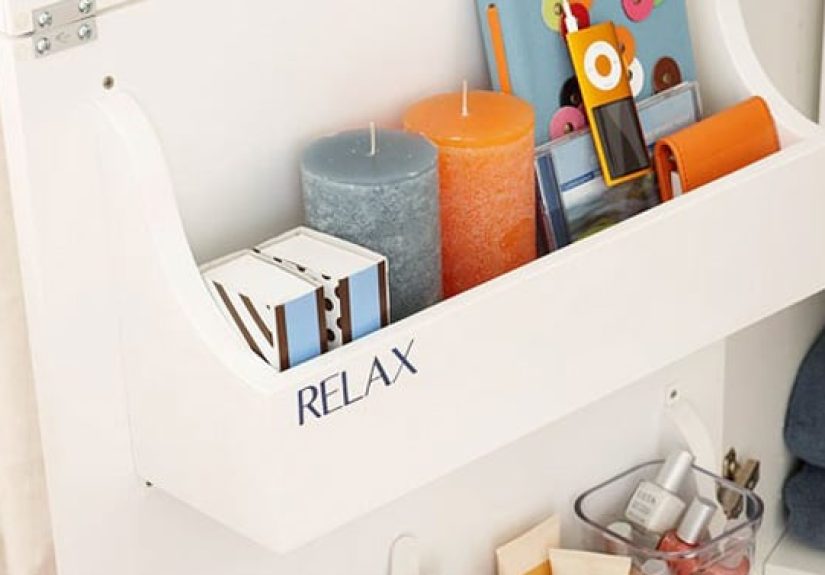
You’ll build one or two shallow “box bins” that mount to the inside of a cabinet door. Each bin is a simple
rectangle with a bottom, a front rail (so items don’t fall out), and side panels. You can keep the sides square
or add a gentle curve for a softer, furniture-like look.
Two popular layouts
- Two-bin stack (most common): a smaller top bin for little items + a taller bottom bin for bottles.
- Single long bin: one wide bin for wraps, foil boxes, dish tabs, or hair tools.
This plan is intentionally adjustable. Cabinets are like snowflakes: no two are exactly alike, and they’ll both
ruin your day if you ignore measurements.
Materials and Tools
Lumber (pick one approach)
-
Option A: 1x boards (fast + beginner friendly)
1×4 is great for small bins. If you want a deeper or taller bin, bump up to 1×6. -
Option B: Plywood box (clean + stable)
1/2″ plywood for the bin panels, plus a 1×2 face rail for the front edge.
Hardware and supplies
- Wood glue
- 1-1/4″ brad nails or 1-1/4″ finish nails (or #6 x 1-1/4″ screws)
- #8 x 3/4″ or #8 x 1″ screws for mounting (length depends on your door thickness)
- Washers (optional, helpful for soft/older doors)
- Two to four small mending plates per bin (optional “quick mount” method)
- Sandpaper (120 and 180/220 grit)
- Finish: water-based clear coat (best for cabinets) or paint
Tools
- Measuring tape, pencil, square
- Miter saw or circular saw (or a good handsaw if you’re patient)
- Jigsaw (only if you want curved sides)
- Drill/driver + bits (and a countersink bit if using screws)
- Clamps (nice to have, not mandatory)
Safety note: If you’re using power tools, wear eye protection, keep fingers away from the party zone
(the blade), and work with a trusted adult if you’re new to tools.
Measure First: The “Door Still Closes” Checklist
The #1 reason door-mounted organizers fail isn’t bad craftsmanshipit’s bad clearance planning.
Before you cut anything, figure out what space you truly have.
Step 1: Measure usable door space
- Open the door and measure the flat interior area (ignore raised panels and trim that sticks out).
-
Mark the hinge-side “no build zone.” Leave clearance so the bin doesn’t collide with hinges or the face frame.
A safe starting point is 1/2″ to 1″ from the hinge-side edge. -
Decide your max bin width:
Max Bin Width = Interior Flat Width − (left clearance + right clearance)
Step 2: Measure cabinet interior clearance (depth)
Close the door slowly and watch what happens inside the cabinet. Your bin depth must be less than the distance
from the inside of the door to the nearest shelf, drawer box, or plumbing obstacle.
- Under-sink cabinets: plan around the P-trap and supply lines.
- Base cabinets with shelves: check if the shelf is adjustable (you may be able to move it).
- Cabinets with pull-outs: open and close pull-outs while the door is partially closed.
Step 3: Decide what the bin should hold
This sounds obvious, but it’s the step most people skip… and then they end up with a gorgeous bin that can only
store disappointment and two rubber bands.
- Foil/plastic wrap boxes: long and flat → a wide shallow bin.
- Spray bottles: tall + needs depth → one taller bin (or skip and store bottles elsewhere).
- Small toiletries: medium height + shallow depth → perfect for 1×4/1×6 bins.
Recommended Sizes (With an Adjustable Formula)
Use these as starting points, then customize. The goal is a bin that fits your door and the stuff inside it.
Simple sizing formula
- Bin outside width (W): door usable width − 1″ total clearance
- Bin depth (D): cabinet interior clearance − 1/2″ safety margin
- Bin height (H): based on contents (typically 4″–7″)
Example (typical under-sink door)
If your usable door width is 15″, a practical bin width is about 14″. If your interior clearance is
4″, aim for a bin depth around 3″–3-1/2″. That keeps the door from bumping shelves and prevents
the “why won’t you close?” moment.
Cut List: One Adjustable Bin (Board Build)
This cut list builds one bin. Make two bins if your door has the space (a short one on top and a taller
one on bottom is a classic combo).
Choose your board width
- 1×4 (actual ~3-1/2″ tall): best for small items, wraps, and light supplies.
- 1×6 (actual ~5-1/2″ tall): better for toiletries and medium bottles.
Parts (for a 14″ wide x 3-1/2″ deep bin)
- Bottom: 1 piece @ 14″ long (depth is your board width)
- Back: 1 piece @ 14″ long
- Front rail: 1 piece @ 14″ long (same board; you can shorten height if you want a “lip”)
- Sides: 2 pieces @ board height (3-1/2″ for 1×4, 5-1/2″ for 1×6)
- Optional face lip: 1×2 @ 14″ long (adds height without increasing depth)
Tip: If you want the “curved side” look, cut the side pieces a little longer and draw a gentle curve
on the top front corner. A small paint can, bowl, or roll of tape makes an easy tracing template.
Build Steps (No-Fuss Version)
1) Sand the parts before assembly
It’s easier to sand flat boards than to sand inside corners later. Start with 120 grit, finish with 180 or 220.
Knock down sharp edgesyour knuckles will thank you.
2) Assemble a basic box
- Lay the bottom on your work surface.
- Glue and attach the back to the rear edge of the bottom.
- Attach the sides (glue + nails/screws) so they sit flush with the bottom and back.
- Attach the front rail (glue + nails/screws).
If you’re using nails, add glue for strength. If you’re using screws, drill pilot holes to prevent splitting,
especially near board ends.
3) Add an optional “anti-spill” lip
For bins that hold smaller items, add a 1×2 lip on the front rail. It keeps bottles from tipping out when you open
the door with the confidence of someone who has never spilled a cabinet full of shampoo before.
4) Dry fit the bin in the cabinet
Hold it up to the door and close the door gently. If anything rubs, adjust nowtrim depth, move the bin higher,
or reduce width. Fixing it now is a 30-second tweak. Fixing it after paint is a tiny tragedy.
Build Steps (Cleaner Joinery Version)
Want a sturdier build with fewer visible fasteners? Use pocket holes or a plywood box.
This is optionalyour cabinet won’t judge you either way.
Option 1: Pocket-hole joinery
- Drill pocket holes in the bottom panel (or in the ends of the front/back rails).
- Use wood glue at each joint and clamp square.
- Drive pocket screws and double-check for racking.
For long joints, space pocket holes so the joint stays strong without overdoing it. (You’re building a bin, not a bridge.)
Option 2: Plywood box + face rail
- Cut 1/2″ plywood for bottom, back, sides, and front.
- Glue and nail/screw the box together.
- Add a 1×2 face rail on the front edge for a finished look and extra stiffness.
Plywood is stable and stays flatter over time, which is nice for humid bathrooms and kitchens.
Mounting the Bin to the Cabinet Door
You have two solid approaches: mount directly with screws through the bin, or use metal mending plates as quick brackets.
Either way, the key is pre-drilling and using the right screw length so you don’t poke through
the front of the door (because that’s a memorable day for all the wrong reasons).
Mount method A: Direct screw-through (simple and sturdy)
- Hold the bin in place and mark the screw locations (two at minimum; four is better for wider bins).
- Drill small pilot holes through the bin back (not through the door yet).
- Hold the bin up again, then drill shallow pilot holes into the door (use tape on the bit as a depth flag).
- Drive screws snugnot gorilla-tight.
Mount method B: Mending-plate brackets (easy removal later)
Mending plates can act like small brackets: one side screws to the bin, the other side screws to the door. It’s fast,
adjustable, and makes it easier to remove the bin if you repaint or swap organizers later.
Placement tips so the door behaves
- Mount heavier bins closer to the hinge side to reduce leverage on hinges.
- Keep bins clear of hinge arms and soft-close mechanisms.
- Don’t block interior shelves or pull-outstest with everything in motion.
Hinges, Weight, and “Why Is My Door Sagging?”
A cabinet door is designed to hold its own weightnot a fully stocked chemistry lab. Keep the load reasonable,
and your hinges will stay happier. If your door starts to sag or loosen, it’s usually fixable with tightening,
a hinge adjustment, or repairing stripped screw holes.
Smart weight rules
- Store light to medium items (sponges, small bottles, wraps, toiletries).
- Avoid heavy items (large glass bottles, bulk cleaners, canned goods).
- Distribute weight across two bins instead of one overloaded bin.
Quick hinge adjustment cheat sheet
- Side-to-side: closes gaps between doors.
- In-and-out (depth): makes the door sit flush with the frame.
- Up-and-down (height): fixes sagging alignment.
If screws keep loosening, don’t keep tightening until the holes give up. Fix the root problem: repair the screw holes,
use slightly longer screws, or upgrade hinges if the door is truly overburdened.
Finishing for Kitchens and Bathrooms
Cabinets see moisture, splashes, and frequent wiping. A protective finish isn’t optionalit’s what keeps your bins from
turning into “rustic” before their time.
Good finish options
- Water-based clear coat: dries fast, low odor, easy cleanup, stays clear on light woods.
- Paint + clear coat: great for matching cabinetry and adding extra durability.
- Hardwearing topcoat: ideal for high-use cabinets (especially under-sink areas).
Simple finishing steps
- Final sand to 180–220 grit.
- Remove dust thoroughly (vacuum + tack cloth or microfiber).
- Apply thin coats; sand lightly between coats if needed.
- Let it cure before loading the bins (dry is not the same as cured).
Care tip: Clean finished wood gentlyavoid harsh abrasives and avoid soaking it with water.
A damp microfiber cloth is usually plenty.
Common Mistakes (So You Don’t Invent New Words)
1) Building before measuring door clearance
If your bin hits a shelf, your door won’t close. If your door won’t close, your cabinet becomes a display case
for chaos. Measure depth clearance first.
2) Using screws that are too long
Always measure your door thickness and choose screw length accordingly. If you’re unsure, do a test pilot hole on a hidden spot.
3) Overloading the door
Door organizers are perfect for small items. If you want to store heavier items, consider pull-outs or shelves inside the cabinet instead.
4) Skipping finish in a wet area
Unfinished wood + under-sink humidity = a science experiment you didn’t sign up for. Seal it.
FAQs
Can I install these on any cabinet door?
Most cabinet doors can handle a light-to-moderate door organizer. If your door is already loose or the hinges are worn,
repair and tighten everything first, then keep the stored items light.
What if my door has a raised panel?
Mount bins to the flattest, strongest parts of the door. If the interior panel is recessed, you may need small spacer blocks
behind the bin so it sits flat and doesn’t rock.
Will this work on inset and overlay doors?
Yesjust confirm clearance. Inset doors sometimes have tighter tolerances, so use shallower bins and test fit carefully.
How do I keep items from rattling?
Add thin shelf liner inside the bins or use small trays. You can also add a slightly taller front lip.
Conclusion: A Small Build That Makes Daily Life Easier
A cabinet door storage bin organizer is one of those rare DIY projects that’s low-cost, fast to build, and genuinely improves how
your home functions. It turns “where did that go?” into “oh, it’s right here,” which is basically the dream.
Build one bin to solve one annoying problem. If it feels great (it will), build a second bin. Then stand back and admire your work,
because you just upgraded your cabinet like it got a promotion.
of experience content (as requested)
Real-World Build Notes and Experiences (What I’d Do Differently Next Time)
The first time people build a cabinet door storage bin, they usually obsess over the woodworking (cuts, curves, fasteners) and
underestimate the reality of cabinets: they’re cramped, busy, and full of surprises. My biggest “lesson learned” is that the
cabinet itself is part of the project. The bins are the easy part; the clearances are where the drama lives.
For example, an under-sink cabinet looks roomy until you actually close the door while imagining a bin full of items.
The plumbing, the shutoff valves, and even the way a shelf pin sticks out can turn into a collision point. A quick trick that saved me:
I taped a rectangle of cardboard to the door that matched my planned bin depth, then slowly closed the door. Cardboard tells the truth
without wasting lumber. If it scraped, I adjusted the plan before cutting wood. It’s the cheapest “prototype” you’ll ever build.
Another real-world note: mounting height matters more than you think. Too low, and the bin hits the cabinet bottom or
interferes with stuff stored on the floor of the cabinet. Too high, and you lose the most usable space on the door. I’ve had the best
luck leaving a little breathing room at the bottom (so you can still slide in taller items in the main cabinet) and mounting the
top bin high enough that your hand fits comfortably under it. If you have two bins, give yourself enough vertical space so you’re not
“pinching” your fingers every time you grab something.
Wood choice also shows up in real life. Cheap soft pine works, but it dents easily in a busy kitchen. If you tend to yank the door open
like you’re auditioning for an action movie, a slightly harder wood (like poplar) holds up better. The finish matters, too: under-sink
areas see humidity and occasional drips. A water-based clear coat is forgiving, dries faster, and doesn’t stink up your whole house for
three days. If you paint the bins, I recommend letting them cure longer than you think you needpaint that feels dry can still be soft
enough to stick to a shampoo bottle like it’s making a new friend.
Installation taught me one more thing: a cabinet door is not a workbench. It flexes. If you mount the bin with screws only and crank them
down too hard, you can warp the bin slightly or stress the door. Pre-drilling and snug-tight (not over-tight) is the sweet spot. Washers
are underrated here; they spread the load and help the screw head bite cleanly without digging into the wood like a tiny angry beaver.
Finally, the “stuff” you store will influence how much you love the project. The bins work best when you give them a job:
one bin for dish tabs and sponges, one for small bottles, one for wraps. If you let them become a miscellaneous junk drawer on a hinge,
you’ll be right back where you startedjust with prettier clutter. The moment I assigned categories, the organizer started saving time every day,
which is the whole point of building it in the first place.
SEO tags at the very end, in JSON format (as requested)