Table of Contents >> Show >> Hide
- First Things First: When a Sore Neck Is Not “Just” a Sore Neck
- Why Your Neck Might Be Sore
- 12+ Remedies & Stretches to Ease Neck Pain
- 1. Use Ice, Then Heat to Calm the Pain
- 2. Try Gentle Range-of-Motion Neck Stretches
- 3. Do Chin Tucks to Fight “Tech Neck”
- 4. Roll Your Shoulders and Activate Your Upper Back
- 5. Fix Your Desk and Screen Setup
- 6. Take “Microbreaks” from Your Phone and Laptop
- 7. Try Self-Massage or a Massage Tool
- 8. Use Over-the-Counter Pain Relievers Carefully
- 9. Consider Topical Creams or Patches
- 10. Upgrade Your Sleep Setup
- 11. Manage Stress to Relax Tight Neck Muscles
- 12. Stay Moderately Active (But Don’t Overdo It)
- 13. Ask About Physical Therapy or Professional Help
- How to Prevent Future Neck Pain Flare-Ups
- Real-Life Experiences & Practical Tips for Living with a Sore Neck
Woke up feeling like you slept in a pretzel? Or maybe your neck is protesting after hours of scrolling, gaming, or hunching over a laptop. A sore neck is incredibly common, but that doesn’t make it any less annoying. The good news: many cases of neck pain respond really well to simple home remedies and easy stretches you can do in a small space (yes, even at your desk).
This guide walks you through why your neck might be screaming at you, which symptoms mean it’s time to call a doctor, and 12+ remedies and neck stretches to ease pain safely. Think of it as a friendly, slightly nerdy manual for getting your neck to forgive you.
First Things First: When a Sore Neck Is Not “Just” a Sore Neck
Most mild neck pain comes from strained muscles, poor posture, or sleeping at a weird angle. However, sometimes neck pain can signal something more serious.
Call your doctor or seek urgent medical care right away if:
- Your neck pain started after a fall, car accident, or other trauma.
- You have severe pain that doesn’t improve at all with rest or over-the-counter medicine.
- You also notice weakness, numbness, or tingling in your arms or legs.
- You have trouble walking, balancing, or using your hands.
- You have a fever, severe headache, confusion, or feel very ill.
- The pain radiates into your chest or jaw (this can be an emergency).
If you’re unsure whether your symptoms are serious, it’s always safer to check with a healthcare professional instead of guessing.
Why Your Neck Might Be Sore
Before jumping into remedies, it helps to know why your neck is upset. Common causes include:
- Muscle strain or overuse: Hunching over a phone (“text neck”), working at a poorly set-up desk, or lifting something awkwardly.
- Poor posture: Chin jutting forward, rounded shoulders, and slouching all put extra load on your neck muscles.
- Sleeping position: A pillow that’s too high, too flat, or old enough to have “retirement plans” can misalign your neck.
- Stress and tension: Many people subconsciously “store” stress in their neck and shoulders, leading to tight knots and stiffness.
- Wear-and-tear conditions: Age-related changes like cervical osteoarthritis or disk degeneration can cause chronic neck discomfort.
If your neck pain is new, mild to moderate, and clearly related to posture, sleep, or a long day at the computer, home remedies and gentle stretches are often a great place to start.
12+ Remedies & Stretches to Ease Neck Pain
1. Use Ice, Then Heat to Calm the Pain
Ice first, then heat is a classic rule for many minor muscle strains. Cold helps decrease swelling and numbs sharp pain; heat relaxes tight muscles and improves blood flow.
- For the first 24–48 hours after pain starts, apply an ice pack wrapped in a thin towel for about 15–20 minutes at a time.
- After the first couple of days, switch to warmth (a heating pad on low, a warm towel, or a hot shower) for 15–20 minutes.
- Always protect your skin with a cloth and don’t fall asleep on an ice pack or heating pad.
If your pain is chronic (it’s been around for weeks or longer), gentle heat may feel better than ice. If any temperature makes your pain worse, stop using it.
2. Try Gentle Range-of-Motion Neck Stretches
Once the worst of the pain has calmed, very gentle stretching can help ease stiffness. Move slowly, and never push into sharp or electric-like pain.
Simple neck mobility routine:
- Neck nods: Slowly lower your chin toward your chest, then bring your head back to neutral (not all the way back). Repeat 10 times.
- Side-to-side turns: Turn your head as if you’re looking over your shoulder, only as far as is comfortable. Alternate sides 10 times.
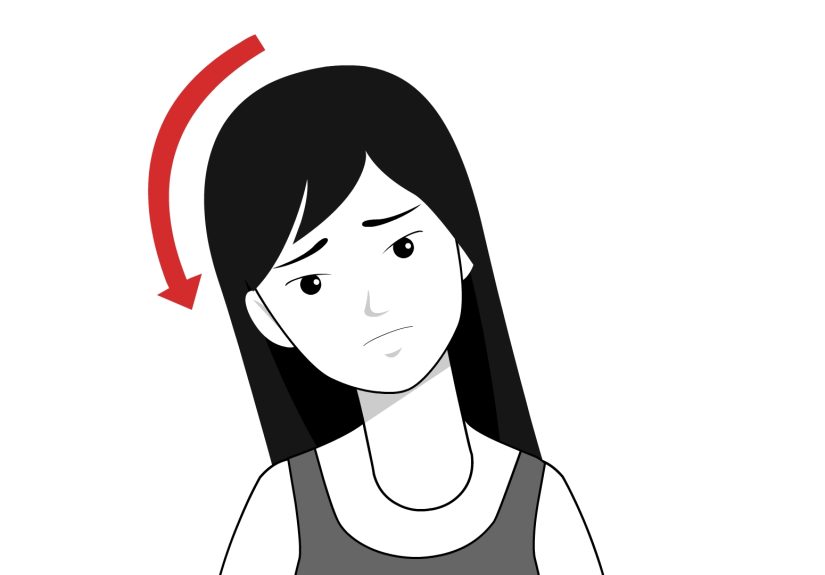
- Ear-to-shoulder tilt: Gently tilt your right ear toward your right shoulder (don’t raise the shoulder). Hold 10–15 seconds, then switch sides.
Keep your movements smooth and controlled. You’re coaxing the muscles to relax, not trying to “crack” anything back into place.
3. Do Chin Tucks to Fight “Tech Neck”
Chin tucks are a simple exercise that helps bring your head back over your shoulders, reducing strain on your neck.
How to do a chin tuck:
- Sit or stand tall, shoulders relaxed.
- Imagine someone gently pushing your chin straight back, making a “double-chin” face.
- Hold for 5 seconds, then relax.
- Repeat 10 times, a few times per day.
It’s not glamorous, but chin tucks can strengthen the deep neck muscles that support better posture.
4. Roll Your Shoulders and Activate Your Upper Back
A tight neck often comes with tight shoulders. Loosening them can take pressure off your neck.
- Shoulder rolls: Roll your shoulders up, back, and down 10 times, then reverse the direction.
- Shoulder blade squeezes: Gently squeeze your shoulder blades toward each other and down your back, hold for 5 seconds, then release. Repeat 10 times.
These small moves wake up neglected upper-back muscles that help keep your neck in a friendlier position.
5. Fix Your Desk and Screen Setup
If your workstation is working against you, your neck will keep complaining no matter how much you stretch.
Desk-friendly tweaks:
- Raise your monitor so the top is at or slightly below eye level.
- Keep the screen about an arm’s length away.
- Use a chair that supports your lower back and lets your feet rest flat on the floor.
- Keep your keyboard and mouse close so you’re not reaching forward constantly.
Set a reminder to do a quick posture check every 30–60 minutes: feet grounded, shoulders relaxed, ears stacked roughly over your shouldersnot hovering somewhere in front of your chest.
6. Take “Microbreaks” from Your Phone and Laptop
Looking down at your phone for long periods multiplies the load on your neck. You don’t need to abandon your phone, but you can give your neck a break.
- Hold your phone higher, closer to eye level when possible.
- Use a stand or prop your device instead of craning your neck downward.
- Every 20–30 minutes, look up, roll your shoulders, and do a couple of gentle neck movements.
Think of these as “neck resets” throughout the daytiny investments that can prevent a full-blown flare-up.
7. Try Self-Massage or a Massage Tool
Gentle massage can help relax tight neck and shoulder muscles and improve blood flow.
Simple massage ideas:
- Use your fingertips to gently knead the muscles at the base of your skull and along the tops of your shoulders.
- Place a tennis ball between your upper back and a wall, then gently roll to target tense spots.
- Use a soft massage tool or foam roller on your upper backnot directly on your neck bones.
If massage makes your pain worse or causes numbness or tingling, stop and talk to a healthcare professional.
8. Use Over-the-Counter Pain Relievers Carefully
For many people, over-the-counter (OTC) medications can temporarily ease neck pain so you can move more comfortably.
- Acetaminophen (Tylenol): Helps reduce pain.
- Nonsteroidal anti-inflammatory drugs (NSAIDs): Such as ibuprofen or naproxen, can reduce both pain and inflammation.
Important: Always follow the dosing instructions on the label and ask your doctor or pharmacist if you have kidney, liver, heart, stomach, or bleeding issues, or if you take blood thinners or other prescription medications. OTC does not mean “risk-free.”
9. Consider Topical Creams or Patches
Topical pain relieversgels, creams, or patchescan be applied directly to the painful area. Many contain ingredients such as menthol, capsaicin, or salicylates that create a warming or cooling sensation and help distract from pain.
They don’t fix the root cause, but they can take the edge off while you work on posture, stretching, and strengthening.
10. Upgrade Your Sleep Setup
If your neck always seems worse in the morning, your sleep setup may need a makeover.
- Use a pillow that keeps your neck aligned with your spinenot bending up or sagging down.
- Side sleepers often do best with a medium-height, supportive pillow.
- Back sleepers usually need a flatter pillow that supports the natural curve of the neck.
- Try not to sleep on your stomach, which forces your neck to twist to one side for hours.
Sometimes simply replacing an old, squashed pillow makes a huge difference in morning stiffness.
11. Manage Stress to Relax Tight Neck Muscles
Stress doesn’t just live in your headit often lands in your neck and shoulders. Reducing stress can indirectly reduce neck pain.
- Practice slow, deep breathing for 2–5 minutes at a time.
- Try gentle yoga or stretching routines that focus on the upper back and shoulders.
- Experiment with short guided meditations or relaxation apps.
You don’t have to be perfectly calm all the time. Even a few minutes of intentional relaxation can help unwind muscle tension.
12. Stay Moderately Active (But Don’t Overdo It)
Total bed rest is rarely recommended for simple neck pain. In fact, staying completely still for days can make muscles stiffer and weaker.
Instead:
- Keep up with light daily activities as tolerated.
- Avoid heavy lifting, intense workouts, or contact sports until your neck feels better.
- Introduce gentle stretches and posture work gradually, not all at once.
If movement significantly worsens your pain or causes new symptoms (like numbness or weakness), stop and talk with a healthcare professional.
13. Ask About Physical Therapy or Professional Help
If your neck pain keeps coming back, sticks around for more than a few weeks, or limits your daily activities, it may be time to bring in reinforcements.
- Physical therapists can design a personalized program of stretches and strengthening exercises to improve posture and support your neck.
- Chiropractors, physiatrists, or spine specialists may help evaluate persistent or complex pain, depending on your situation.
Professional guidance is especially helpful if you sit for work, have underlying spine conditions, or are nervous about which movements are safe.
How to Prevent Future Neck Pain Flare-Ups
Once your neck starts feeling better, it’s tempting to forget about ituntil the next flare-up. A few small habits can dramatically reduce how often your neck acts up.
- Build movement into your day: Set regular reminders to stand, stretch, and reset your posture.
- Strengthen your upper back: Rowing exercises, band pull-aparts, and wall slides can support better posture.
- Keep screens at eye level: Whether it’s your laptop, desktop, or phone, think “eyes, not chin” leading the way.
- Stay hydrated and active: Good circulation and overall fitness support healthier muscles and joints.
- Listen to early warning signs: If your neck starts feeling tight, don’t waittake a short stretch break.
Neck pain prevention isn’t about perfection. It’s about stacking small, doable habits that are kind to your spine over time.
Real-Life Experiences & Practical Tips for Living with a Sore Neck
Information is helpful, but sometimes it’s those real-world “this actually worked for me” tricks that make self-care easier. Here are some experience-based insights that many people with recurring neck pain find useful.
Turning Your Workspace into a Neck-Friendly Zone
Many people don’t realize how much their desk setup matters until they fix it. Imagine working all day with your head slightly forwardyour neck muscles are basically doing a slow, all-day plank. People who adjust their monitor height, pull their keyboard closer, and use a supportive chair often notice their neck and shoulders feel less exhausted at the end of the day.
A helpful experiment: take a side photo of yourself while working. If your head is far in front of your shoulders, that’s a cue to tweak your setup. Even simple changeslike stacking books under your laptop or adding a rolled towel behind your lower backcan reduce strain.
The “Two-Minute Reset” Habit
Another practical strategy is to set a small, recurring timer on your phone or computerevery 30–60 minutes. When it goes off, you do a tiny routine: stand up (if you can), roll your shoulders, do a couple of chin tucks, and slowly turn your head side to side.
It’s less about doing a perfect exercise plan and more about interrupting the long, frozen positions that your neck hates. People are often surprised by how much better they feel at the end of the day when they treat movement as maintenance instead of a once-a-day chore.
Learning the Difference Between “Good Stretch” and “Uh-Oh” Pain
When you’re dealing with neck pain, it can be scary to move. A useful rule many physical therapists use is this: a gentle pulling or stretching feeling that eases when you stop is usually okay; sharp, stabbing, or electric-like pain that lingers or radiates is a “nope.”
Over time, you’ll get better at reading your body’s signals. The goal is to nudge the muscles toward comfort, not to “force” them to behave. When in doubt, it’s always okay to reduce the range of motion or skip a movement entirely and ask a professional for guidance.
Building a “Neck Care Toolkit” at Home
People who live with recurring neck stiffness often find it helpful to keep a few tools handy:
- A reusable hot/cold pack in the freezer.
- A supportive pillow they actually like (and remember to replace every few years).
- A soft massage ball or tennis ball for upper-back trigger points.
- A simple resistance band for posture and upper-back exercises.
Having these on hand makes it easier to take action when you feel the first signs of tightness, instead of just hoping it will magically resolve.
Balancing Rest and Movement
One of the biggest mindset shifts is understanding that “babying” your neck isn’t the same as never moving it. Too much rest can make muscles weaker and more sensitive, but too much activity can aggravate pain. The sweet spot is somewhere in the middle: you respect the pain, stay away from clearly aggravating activities, but still move gently and regularly.
Many people find it helpful to think in terms of “less but more often.” Instead of one big intense session of stretches, they sprinkle short, easy movements throughout the day. This rhythm often feels safer and more sustainable, especially when pain is recent or unpredictable.
Knowing When to Ask for Help
Finally, there’s a lot of value in knowing when it’s time to bring in a professional. If you’ve adjusted your posture, tried gentle stretches, used ice/heat, and still feel stuckor if your pain is getting worseit’s not a failure to ask for help. A healthcare provider or physical therapist can check for underlying issues, guide you toward safe exercises, and rule out red flags.
Think of neck care as a long-term partnership between you, your daily habits, and, when needed, the professionals who can help you troubleshoot the tricky parts.
Bottom line: A sore neck is common and often improves with smart self-care, better posture, and gentle movement. By learning a few simple remedies and stretchesand listening carefully to your bodyyou can give your neck a much better chance at staying calm, comfortable, and complaint-free.