Table of Contents >> Show >> Hide
- What Is a “Bookcase Hutch Hack,” Exactly?
- Pick Your Hack Style: Three Proven Approaches
- Plan Like a Pro (So You Don’t Redo It Like a Procrastinator)
- Tools & Materials Checklist
- Step-by-Step: The Classic Bookcase Hutch Hack
- Step 1: Prep the Wall and Find Studs
- Step 2: Build or Place the Base (Level It Like You Mean It)
- Step 3: Assemble and Position the Bookcase
- Step 4: Secure the Units Together (So They Act Like One)
- Step 5: Anchor the Hutch to the Wall
- Step 6: Add a Back Panel for the “Custom Hutch” Effect
- Step 7: Build a Face Frame (The Secret Sauce)
- Step 8: Add Molding and Finish Trim
- Step 9: Fill, Sand, Caulk (Yes, All Three)
- Step 10: Prime and Paint for a Durable, Furniture-Grade Finish
- Step 11: Hardware, Lighting, and Styling
- Design Upgrades That Make It Look Expensive
- Budget, Timeline, and Realistic Expectations
- Common Mistakes (and How to Avoid Them)
- Where This Hack Works Best in Your Home
- of Real-World “Experience” Lessons DIYers Wish They Knew
- Conclusion: Your Built-In Look, Your Rules
- Information Synthesized From Common U.S. DIY & Home-Improvement Guidance
Want that “custom built-in hutch” look without the custom built-in hutch price? Same. The good news: you can
turn an everyday bookcase into a gorgeous, hardworking bookcase hutch with a sturdy base, some trim, and a
paint job that screams “I definitely hired a carpenter” (even if your carpenter was… you, in sweatpants).
This guide breaks down the most reliable approaches DIYers usestacking a bookcase on a cabinet base, building
a platform, adding a face frame and molding, upgrading the back panel, and finishing it with a durable cabinet-grade
paint. You’ll get practical options, common mistakes to avoid, and specific examples so you can pick the version that
fits your space, budget, and patience level.
What Is a “Bookcase Hutch Hack,” Exactly?
A DIY bookcase hutch hack is a makeover that combines two pieces into one:
a lower cabinet base (storage + visual weight) and an upper bookcase
(display + books + pretty things you swear you use). Then you “hack” it into looking like one seamless built-in
by adding trim, a face frame, a finished back, and a pro-looking paint finish.
The magic is in the details: leveling, anchoring, bridging gaps, and finishing the edges so your hutch looks
intentionalnot like two pieces awkwardly stacked like a furniture totem.
Why People Love This Project
- Big impact, smaller budget: You get the built-in vibe without paying built-in prices.
- More storage where it counts: Closed storage below, display storage above.
- Flexible design: Farmhouse, modern, traditionaltrim and hardware do the heavy lifting.
- Renter-friendly(ish): Some versions are mostly furniture + straps (but anchoring is still key).
Pick Your Hack Style: Three Proven Approaches
Option A: Bookcase + Sideboard (Fastest “Furniture Hutch” Build)
You start with a solid sideboard/buffet/credenza, then mount a matching (or paint-matched) bookcase on top.
This is the quickest route if you want a freestanding hutch that can move with you.
- Best for: dining rooms, apartments, and “I need storage by Saturday” timelines
- Watch out for: depth mismatch (bookcase shallower than base can look odd without trim)
Option B: Bookcase + Stock Base Cabinets (Best Built-In Look)
This approach uses kitchen-style base cabinets (unfinished or ready-to-assemble) and a bookcase on top,
then gets wrapped in trim so it reads like a single built-in unit. If you’ve ever admired those wall-to-wall
“library” installs, this is the technique behind the curtain.
- Best for: home offices, living rooms, dining rooms, and “I want it to look custom” goals
- Watch out for: leveling the base cabinets (worth the effortcrooked shelves haunt dreams)
Option C: Bookcase on a DIY Platform (Budget-Friendly + Custom Height)
Build a 2×4 platform (like a mini stage), top it with plywood, and set the bookcase(s) on it. Add a toe-kick
and trim to hide the platform. This is a favorite when you’re using affordable bookcases and need a more
“built-in” stance without buying cabinets.
- Best for: tight budgets, odd heights, and multi-bookcase walls
- Watch out for: platform must be square, strong, and anchored properly
Plan Like a Pro (So You Don’t Redo It Like a Procrastinator)
Measure These Before You Buy Anything
- Wall width: include outlets, switches, and baseboards
- Ceiling height: leave room for crown molding (and for actually placing the unit)
- Base depth: deeper bases feel intentional; shallow bases can look top-heavy
- Bookcase depth: if the top is shallower than the base, plan trim to “step” the transition
- Door swing and drawer clearance: especially if this is near a table, desk, or walkway
Decide Your “Built-In Illusion” Level
The more “built-in” you want it to look, the more you’ll do: scribing trim to walls, adding a face frame, covering
gaps, and running crown to the ceiling. If you want a movable hutch, keep it furniture-style and focus on
safety anchoring and clean trim transitions.
Tools & Materials Checklist
You don’t need a workshop that looks like a home improvement show set, but a few basics make this project
smoother (and less… spicy).
Tools
- Tape measure, pencil, level (a long level is a game-changer)
- Stud finder
- Drill/driver + bits
- Miter saw (or a miter box for smaller trim)
- Brad nailer (optional but very helpful for trim)
- Clamps (for joining multiple bookcases)
- Sander or sanding block
Materials
- Bookcase(s) and a base (sideboard, cabinets, or a 2×4 platform)
- Plywood (for platform top or backing, depending on your design)
- Trim boards (1x2s / 1x3s for face frame; baseboard/crown to match your room)
- Wood filler, paintable caulk
- Primer + cabinet-grade paint
- Furniture straps or brackets for wall anchoring
- Optional: beadboard/shiplap panels, wallpaper, puck lights, or sconces
Step-by-Step: The Classic Bookcase Hutch Hack
This step-by-step works whether you’re doing Option A (sideboard base), Option B (base cabinets), or Option C
(platform). The details shift, but the order of operations stays smart.
Step 1: Prep the Wall and Find Studs
- Clear the area and mark your hutch footprint on the wall with painter’s tape.
- Use a stud finder and mark studs vertically (light pencil marks are fine).
- If baseboards interfere and you want a true built-in look, remove the baseboard in the footprint area.
Why this matters: Most of the safety and sturdiness comes from anchoring into studs, not from
hoping drywall anchors will hold a whole library during a gravity event.
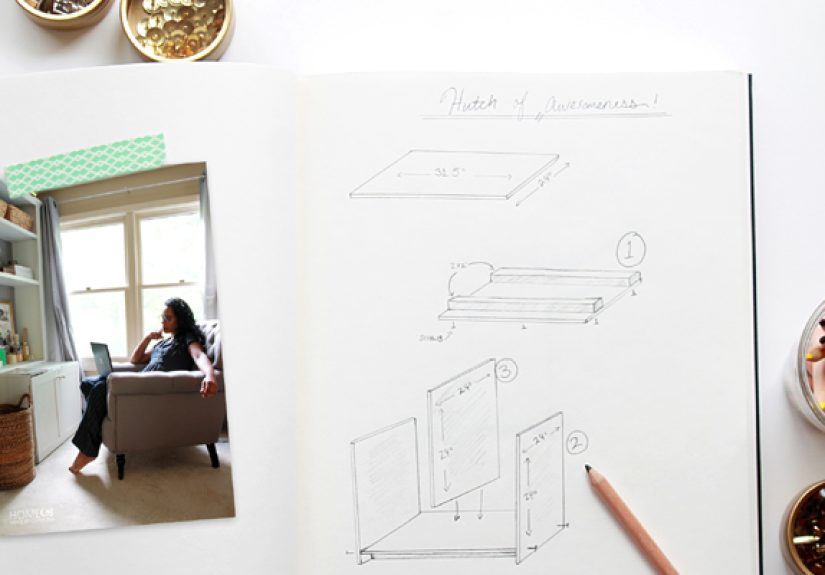
Step 2: Build or Place the Base (Level It Like You Mean It)
If you’re using base cabinets, set them in place, shim until level, and screw them together. If you’re building a
platform, build a simple 2×4 rectangle frame with cross supports, then top it with plywood.
- Pro tip: Check level front-to-back and side-to-side. Fix it now, not after trim.
- Toe-kick trick: A recessed toe-kick makes the whole thing feel built-in instead of “stacked.”
Step 3: Assemble and Position the Bookcase
Assemble the bookcase(s) per instructions. For multi-unit installs, position them on the base and clamp the sides
together so the faces align. If you have crown or trim planned, make sure you leave enough room at the top.
Example: If you’re building a wider hutch, two narrow bookcases can flank a center open section
for a countertop workspace or coffee bar setup. The lower base can hold drawers or doors, while the top stays open
for dishes, books, or decor.
Step 4: Secure the Units Together (So They Act Like One)
- Clamp adjoining bookcases so the front edges are flush.
- Pre-drill and screw through the side panels to join them (use appropriate screws for the material).
- If your base is multiple cabinets, screw those together as well.
Joining units reduces wobble and prevents “independent leaning”which is not a personality trait you want in tall furniture.
Step 5: Anchor the Hutch to the Wall
Even if this is “just furniture,” treat it like tall furniture: anchor it. Use anti-tip straps or brackets into studs,
following the hardware instructions. Place anchors as wide apart as practical.
- Safety note: Anchoring matters in any home, and especially with kids or pets around.
- Placement: Anchors go high and into studs for the best stability.
Step 6: Add a Back Panel for the “Custom Hutch” Effect
A finished back is the difference between “bookcase” and “hutch moment.” Options:
- Painted plywood: clean, smooth, modern
- Beadboard or vertical planks: classic cottage and farmhouse
- Wallpaper backing: fast drama, easy to change later
If the bookcase already has a thin back, you can apply a panel over it (depending on structure) or replace it with a sturdier backing
if the design allows. The goal: make the interior look finished, not flimsy.
Step 7: Build a Face Frame (The Secret Sauce)
A face frame is trim applied around the front edges to hide seams, cover gaps, and make multiple units read as one.
You can use 1×2 or 1×3 boards (or matching trim) and attach with glue + brad nails.
- Vertical stiles: cover seams between bookcases
- Horizontal rails: cap the top of the bookcase section and bridge transitions
- Scribe to the wall: if walls are wavy (they are), scribing makes it look custom
Step 8: Add Molding and Finish Trim
Add baseboard (or a baseboard-style trim) to the bottom to match your room. Then add crown molding at the top.
If you want the full built-in effect, run crown to the ceiling and fill any gaps with caulk for a seamless look.
Example: In a dining room, you can match the hutch crown molding to the existing ceiling trim so the whole wall
looks like it was designed that waylike your house came with “character” instead of “online shopping impulses.”
Step 9: Fill, Sand, Caulk (Yes, All Three)
This is where the project goes from “I made something!” to “Wait, did you have this built?” Fill nail holes and seams
with wood filler, sand smooth, then caulk trim edges (paintable caulk only) for that crisp, finished look.
Step 10: Prime and Paint for a Durable, Furniture-Grade Finish
For a hutch, durability matters. Many DIYers get the best results with a bonding primer plus a cabinet-grade enamel
(often a waterborne alkyd or urethane-modified enamel) because it levels smoothly and holds up to daily use.
- Prep: Clean surfaces, scuff-sand glossy parts, and remove dust before priming.
- Primer: Use a bonding primer suited to your surface (especially for laminate/veneered pieces).
- Paint: Apply thin coats; let it dry fully between coats.
- Cure time: “Dry” isn’t “cured.” Treat it gently for a couple of weeks for best hardness.
Finish tip: A foam roller can give a smooth finish on flat areas; a quality angled brush helps on trim.
If you’re spraying, you can get an ultra-smooth lookbut good prep and patience still matter more than fancy tools.
Step 11: Hardware, Lighting, and Styling
Hardware is the easiest way to set the style: matte black for modern farmhouse, warm brass for traditional, sleek pulls for modern.
Add puck lights or small LED strips to make the upper shelves glow (hello, cozy library vibes).
- Styling rule: Mix books + baskets + a few statement pieces. Too many tiny items reads cluttered fast.
- Function win: Put everyday items on lower shelves; keep “display-only” items up top.
Design Upgrades That Make It Look Expensive
Add Doors to the Bottom
If your base is open shelving or you used bookcases as the lower half, adding doors instantly makes it feel like a real hutch.
You can buy cabinet doors or build simple shaker-style doors with basic trim.
Create a Countertop “Break” Between Base and Bookcase
A wood countertop or butcher-block-style layer between the base and top adds polish and gives you a landing zone for a coffee bar,
mail station, or serving area. It also helps visually separate the two sections in a way that looks intentional.
Make the Back Panel a Feature
Painted planks, wallpaper, or a darker contrasting color in the back can add depth. This works especially well if your hutch is
white or a light neutralcontrast makes your decor pop without trying too hard.
Trim to Match Your Home
Matching baseboard and crown to your existing trim is the “built-in cheat code.” It ties the hutch into the architecture so it looks
like it’s always belonged.
Budget, Timeline, and Realistic Expectations
Typical DIY Cost Range
- Budget build: $200–$500 (basic bookcase + platform base + trim + paint)
- Midrange: $500–$1,200 (bookcase + stock cabinets + countertop + upgraded hardware)
- High-finish DIY: $1,200+ (premium paint, lighting, custom doors, more built-in carpentry)
How Long It Usually Takes
- Weekend version: assembly + base + anchoring + basic trim
- 1–2 weeks (most common): add face frame, caulk/fill/sand, prime + paint, cure time, styling
The biggest time surprise is paint curing. If you want a tough finish, plan for patiencebecause fingerprints love fresh paint like
toddlers love quiet rooms (they don’t).
Common Mistakes (and How to Avoid Them)
Mistake 1: Not Leveling the Base
If your base isn’t level, your shelves won’t look level, and your brain will notice every single time you walk by.
Shim early. Shim often.
Mistake 2: Skipping Wall Anchors
Tall furniture should be anchored. Always. Even if it feels stable. Especially if it feels stable. (That’s how gravity gets you.)
Mistake 3: Using Wall Paint on High-Touch Surfaces
A hutch gets bumped, wiped, and loved. Use primer + durable trim/cabinet paint for the best wear, and let it cure fully.
Mistake 4: Forgetting About Outlets and Cords
If you’re adding lights, a coffee station, or electronics, plan cord routes before installing backing and trim. A hidden cord path
looks professional; a dangling cord looks… like you forgot.
Where This Hack Works Best in Your Home
- Dining room: dishes below, serving pieces above, countertop space for entertaining
- Home office: files and supplies below, books and display above
- Living room: media and games below, decor and books above
- Entryway: baskets, keys, and drop-zone storage below; seasonal decor above
In almost any room, a bookcase hutch adds vertical storage and makes a wall feel “finished.” It’s like giving your space a haircut:
suddenly everything looks more put together.
of Real-World “Experience” Lessons DIYers Wish They Knew
If you ask a bunch of DIYers about their bookcase hutch hack, you’ll hear the same story: the build is fun, the trim is satisfying,
and the tiny details are where the project either looks customor looks like two pieces of furniture that met five minutes ago
and decided to move in together.
One of the most common “aha” moments is realizing that walls are not straight. Not even close. The first time someone holds a bookcase
tight to the wall and spots a wedge-shaped gap, it’s a rite of passage. The fix is simplescribe trim to the wall or use a wider face frame
piece that can cover the gapbut it’s much easier when you expect it. The same goes for floors: a slightly sloped floor can turn a
confident install into a shim party. The good news is shimming isn’t a failure; it’s just how houses behave.
Another big lesson: paint is a process, not a single dramatic moment. Many DIYers report that the best-looking finishes come from doing the
boring steps wellcleaning, sanding, priming, and applying thinner coats than you think you need. Rushing the dry time is the easiest way to
get dents, sticky doors, or a finish that feels “soft” longer than expected. The trick is to schedule painting like a slow-cooker meal:
you do the setup, you walk away, and you come back later for the magic.
There’s also a surprisingly emotional stage called “The Caulk Crisis.” It happens right after trim goes on, when you notice every seam and
wonder if you’ve ruined everything. Then you caulk, wipe it smooth, and suddenly the whole unit looks like one piece. It’s not exaggeration
to say a tube of paintable caulk can be the difference between “DIY project” and “built-in glow-up.”
People also underestimate how much styling changes the final vibe. The same hutch can read modern, cozy, or traditional based on
what’s on the shelves. A useful approach: store practical items below (baskets, board games, files), and style above with a mix of books,
a few taller objects, and some negative space so it doesn’t feel crowded. If you’re going for that “expensive” look, add one bigger focal
piece and repeat a color or material (wood tones, black accents, brass hardware) so your shelves feel curated rather than accidental.
Finally, DIYers often say the most satisfying part isn’t the perfect trim lineit’s the daily convenience. Having closed storage for clutter
and open shelving for the things you actually love to see makes a room feel calmer. And every time someone says, “Wow, that looks built-in,”
you get to smile politely while your inner monologue does backflips.
Conclusion: Your Built-In Look, Your Rules
A DIY bookcase hutch hack is one of the most rewarding home upgrades because it blends practicality with a high-end look.
Whether you choose a fast furniture stack, a cabinet-based built-in approach, or a budget platform build, the key is the same:
level it, join it, anchor it, trim it, and finish it well.
Take your time on the “invisible” stepsstuds, shims, face frames, caulk, and paint curingand your finished hutch will look like it came
with the house (the fancy version of the house, obviously).
Information Synthesized From Common U.S. DIY & Home-Improvement Guidance
This article was informed by widely used DIY methods and best practices commonly shared across reputable U.S. home-improvement and decor
publishers and retailers, including:
- This Old House
- Family Handyman
- Bob Vila
- The Spruce
- Apartment Therapy
- Better Homes & Gardens
- Martha Stewart
- HGTV
- Lowe’s How-To Guides
- The Home Depot How-To Guides
- Consumer Reports (home safety guidance)
- Popular Woodworking
- Fine Woodworking