Table of Contents >> Show >> Hide
- Who Is Buttrick Projects Architecture+Design?
- Design DNA: What Makes the Work Instantly Recognizable?
- Project Deep Dive: Five Case Studies That Explain the Practice
- Art House (Palo Alto, CA): Expansion With Cultural Purpose
- Filbert Cottages (San Francisco, CA): Preservation That Adds Value, Not Just Nostalgia
- Hilltop House (Lyme, CT): Typological Bridging
- Ranch Dressing (Mill Valley, CA): Remodel as Spatial Recalibration
- Understory (Palo Alto, CA): Zoning-Aware Family Design
- Why BPAD’s Approach Feels Timely in 2026
- A Practical Blueprint You Can Borrow From BPAD
- Conclusion
- Experience Notes: from Real-World Residential Design Practice
- SEO Tags
Some architecture firms scream. Some whisper. Buttrick Projects Architecture+Design does something trickier:
it speaks clearly, then lets light, proportion, and materials finish the sentence.
Based in the Bay Area, the studio has built a reputation for homes that feel contemporary without feeling cold,
and historic without feeling frozen in amber. If a lot of residential design is either “look at me!” or “please don’t notice me,”
Buttrick’s work lands in the rare middle: memorable, livable, and deeply site-aware.
This article breaks down what makes the firm’s approach stand out, how its projects map to current U.S. design priorities,
and what homeowners, developers, and fellow designers can learn from its methods. We’ll look at real project patterns
adaptive reuse, daylight strategy, envelope performance, zoning intelligence, and landscape integrationthen zoom out
to why this design language feels particularly relevant right now.
Who Is Buttrick Projects Architecture+Design?
Buttrick Projects Architecture+Design (often shortened to BPAD) positions itself as a modern contemporary practice serving Marin County,
the broader Bay Area, and other California regions. The studio is led by Jerome Buttrick, Managing Principal, with an MArch from
Harvard Graduate School of Design and a BA in Art History from Northwestern. That blendformal design training plus historical literacy
shows up in the work: modern forms that still understand precedent.
The firm’s portfolio spans new homes, remodels, and historic interventions. On the projects side, you’ll find names like
Art House, Hilltop House, Filbert Cottages, Ranch Dressing, and Understory,
each with a distinct personality but a shared commitment to craft, context, and calm.
Design DNA: What Makes the Work Instantly Recognizable?
1) Old + New Without Drama for Drama’s Sake
A lot of “historic meets modern” projects behave like two architects fighting in one building.
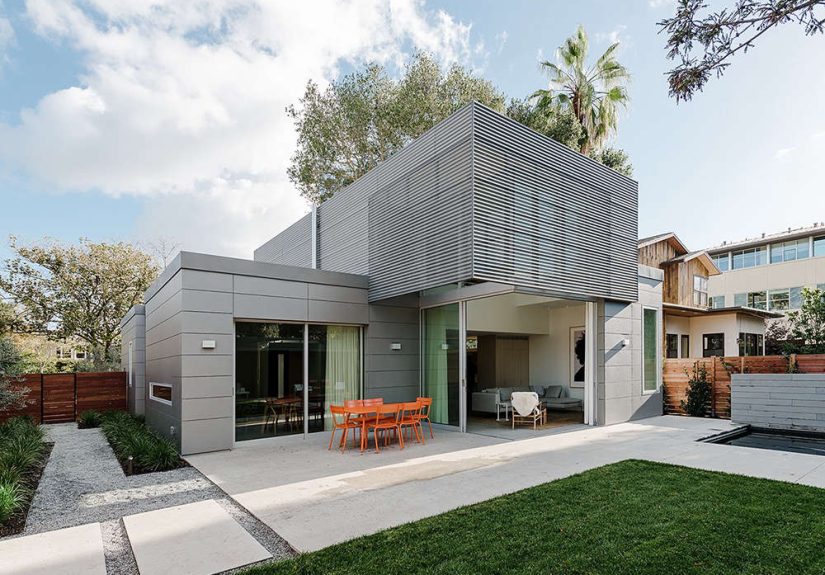
BPAD tends to avoid that duel. In several projects, modern additions are clearly contemporary but restrained in massing and palette,
allowing the original building fabric to remain legible. The result is a conversation, not a takeover.
2) Daylight as a Building Material
BPAD’s homes repeatedly use daylight as an active design tool rather than a happy accident.
The firm’s project narratives call out UV-filtering glass, skylight sequencing, and strategic openings that create soft, usable light
throughout the day. This is where aesthetics and performance overlap: better visual comfort, reduced daytime electric lighting demand,
and healthier indoor experiences.
3) Indoor-Outdoor Boundaries That Actually Disappear
Many projects claim “indoor-outdoor living.” BPAD often makes it literal through sliding wall systems, courtyard logic,
garden-linked circulation, and living volumes oriented to trees, sky, and slope. Not a patio tacked onto a housemore like
the house and landscape learning to share one plan.
4) Sustainability That Isn’t a Sticker Pack
Instead of treating sustainability as a separate checklist, BPAD project descriptions weave in practical measures:
heat recovery ventilation, dense-pack cellulose insulation, cool roofs, rainscreen assemblies, and reuse of existing materials
where possible. In other words, performance is embedded in architecture, not bolted on after schematic design.
Project Deep Dive: Five Case Studies That Explain the Practice
Art House (Palo Alto, CA): Expansion With Cultural Purpose
Art House adds three small structures across two adjacent parcels while retaining the owners’ original 1920s home.
It more than doubles living area but keeps neighborhood character intact. The new spaces support an art collection, playroom,
informal workspace, and a private courtyard for family life.
What’s compelling is how the project solves multiple goals at once: preservation, expansion, daylight quality for artwork,
and seamless movement between inside and outside. UV-filtering glass openings maximize natural light while a perforated corrugated
zinc scrim softens glare with a dappled effect. Sliding glass doors vanish into wall pockets, making the edge between yard and interior
feel optional.
It’s also technically grounded: the listed sustainable measures include a cool screen envelope, rainscreen cladding, cool roof,
heat recovery ventilation, dense-pack cellulose insulation, and LED lighting. This is the kind of project that proves “beautiful”
and “high-performing” are not mutually exclusive roommates.
Filbert Cottages (San Francisco, CA): Preservation That Adds Value, Not Just Nostalgia
In Filbert Cottages, BPAD restored four landmarked 1906 Earthquake Cottages and created four unique residences
in a rebuilt garden mews. The design retains the cottages’ stacked relationship to the street while integrating an eight-car
subterranean garage via vehicle lift and a restrained zinc-clad addition.
This is textbook adaptive reuse done intelligently: protect heritage, improve livability, and increase long-term utility.
The project also included material reuse from existing structures and landscape elements, plus a GreenPoint Rated Silver designation.
It demonstrates a key principle for historic neighborhoods: preservation doesn’t have to mean “hands off forever.”
It can mean upgrading responsibly so people can actually keep living there.
Hilltop House (Lyme, CT): Typological Bridging
Hilltop House is a useful study in architectural synthesis. BPAD references the long single-gable language of
Shingle Style precedent while introducing modern gestures like exposed steel columns and a sliver-shaped entry hall.
Material choicesmahogany, locally milled red oak, locally quarried green slateanchor the house in craft and place.
Industry data lists this built single-family project at 3,120 square feet. More importantly, it shows BPAD’s recurring move:
respect historical memory without reproducing it literally.
Ranch Dressing (Mill Valley, CA): Remodel as Spatial Recalibration
In Ranch Dressing, BPAD reworked a 1960s boomerang plan by inserting perimeter volumes that improve interior geometry
and strengthen landscape connection. Strategic windows and textured wood siding add relief, while a neutral daylight-washed interior
sets a gallery-like backdrop for art and daily life.
Remodel projects often fail because they try to hide constraints. This one embraces them: the garage/studio element becomes both
sculpture and functional edge condition for the entry court.
Understory (Palo Alto, CA): Zoning-Aware Family Design
Understory is framed by a legacy oak and shaped by zoning constraints, but it never reads as compromised.
The L-shaped plan distributes social and private volumes, including children’s rooms, study, primary suite, and a compact in-law suite
for multigenerational living. The front volume receives light from multiple sides and above; at night it glows like a lantern
for outdoor gatherings.
Performance strategies include super-insulated walls, radiant barrier roof components, and hydronic concrete floors.
Three gardens of different scales support flexible use across seasons and times of dayquiet coffee at 7 a.m., kid chaos at 4 p.m.,
civilized dinner at 8 p.m. Architecture doing shift work, basically.
Why BPAD’s Approach Feels Timely in 2026
Smaller Footprints, Better Volumes
U.S. residential trend tracking shows a sustained pattern: overall square footage pressure is easing downward while volume and spatial quality
remain important. BPAD’s planning approach aligns with this realityless emphasis on raw area, more emphasis on daylight, ceiling strategy,
circulation clarity, and multipurpose rooms that earn their square footage.
Health and Air Quality Are Mainstream Priorities
EPA guidance reminds us Americans spend most of their time indoors, so indoor air quality is now a design imperative, not a luxury add-on.
Research from Harvard’s Healthy Buildings work links improved ventilation and cleaner indoor environments with better cognitive performance.
BPAD’s frequent use of envelope upgrades, ventilation strategies, and daylight-rich plans lands directly in that evidence-based zone.
Reuse, Retrofit, and Embodied Carbon Matter More Every Year
U.S. climate and policy conversations increasingly emphasize reusing existing buildings. National preservation and design bodies point to
reuse and retrofit as powerful levers for reducing embodied carbon and avoiding unnecessary demolition impacts.
In that context, projects like Filbert Cottages are not just aesthetically pleasingthey’re strategically future-proof.
California Performance Rules Keep Raising the Bar
California’s 2025 Energy Code (effective for permit applications on or after Jan 1, 2026) expands heat pump use,
electric-readiness, and ventilation expectations in new residential construction. Firms that already integrate high-performance assemblies
and systems are better positioned for smoother compliance. BPAD’s project language suggests it’s been building in that direction for years.
Resilience Is Now Part of Residential Design
In fire-prone regions, California guidance on home hardening emphasizes ember-resistant assemblies, defensible conditions, and durable material choices.
A design culture that values roof quality, cladding decisions, and site planning detail is no longer niche; it is risk management.
A Practical Blueprint You Can Borrow From BPAD
For Homeowners
- Prioritize relationships over rooms: improve how spaces connect before adding area.
- Use daylight intentionally: orient openings for comfort, not just “more glass.”
- Renovate with a carbon lens: keep and upgrade what still performs.
- Design for tomorrow’s household: include flexible spaces for work, guests, and aging in place.
- Ask for performance specifics: insulation type, ventilation method, roof strategy, and assembly details.
For Designers and Builders
- Start with site intelligence: trees, slope, zoning, and neighborhood grain are design inputs, not obstacles.
- Detail transitions carefully: thresholds are where projects succeed or fail emotionally.
- Treat sustainability as form-giving: let envelope and systems shape architecture from day one.
- Balance restraint and expression: not every project needs a heroic gesture; many need a precise one.
Conclusion
Buttrick Projects Architecture+Design offers a compelling model for modern residential work in the U.S.:
context-aware, technically serious, and quietly expressive. Its projects show that good design is rarely about one move.
It’s about layershistory and innovation, comfort and performance, preservation and reinventionresolved into places where people
genuinely want to live.
If your definition of “luxury” includes daylight that feels good at 3 p.m., a plan that still works in 15 years,
and materials that age with dignity instead of panic, BPAD’s body of work is worth studying closely.
It doesn’t just design houses. It designs long-term relationships between people, place, and time.
Experience Notes: from Real-World Residential Design Practice
In conversations with homeowners, builders, and consultants working on projects in the same lane as Buttrick Projects Architecture+Design,
one pattern comes up constantly: people start by asking for “more space,” but finish by saying, “I can’t believe how much better this house feels.”
That shiftfrom quantity to qualityis the whole game.
One family in a tight urban neighborhood expected a dramatic rear addition to solve everything. Early studies showed they could add square footage,
sure, but they would lose the little garden light that made the existing kitchen tolerable. So the team changed strategy: fewer added feet,
more intelligent section work, skylight placement, and a rebalanced plan with better sightlines. Same budget range, radically different outcome.
The biggest surprise for the owners wasn’t the new finishes; it was that weekday mornings became less chaotic because circulation made sense.
Architecture as stress reduction is not flashy, but it is very real.
Another common experience comes with historic structures. Owners often worry that preservation means “museum mode,” while contractors fear
impossible detailing. In practice, the most successful projects set a clear hierarchy: preserve what carries cultural and spatial identity,
upgrade what improves safety, durability, and daily use. Once that hierarchy is agreed upon, decision-making gets faster.
Instead of arguing over every trim profile, teams focus on what materially improves living qualityair sealing, insulation continuity,
moisture control, and daylight access. The result is a house that keeps its soul without sacrificing comfort.
On new builds, site-driven decisions consistently outperform template-driven ones. Teams that spend time understanding tree canopies,
seasonal sun angles, neighboring windows, and prevailing wind patterns make fewer expensive corrections later.
It’s the difference between architecture that “fits” and architecture that merely “sits.” Clients notice this most in shoulder seasons,
when a well-oriented home stays comfortable longer without mechanical overwork. Utility bills matter, but daily comfort matters more.
Multigenerational planning is another lesson that repeats. A so-called “bonus room” becomes a caregiver suite.
A study becomes a teenager bedroom during exam season. A ground-floor den becomes recovery space after surgery.
Homes with flexible zoning and thoughtful bathroom access age better than homes designed for one life stage.
The smartest clients now ask, “How does this plan adapt in five, ten, fifteen years?” That question alone improves design outcomes.
Finally, resilience conversations are no longer optional in California-adjacent practice. Fire-conscious detailing, noncombustible buffer zones,
roof and vent decisions, and exterior material strategy are now part of baseline design literacy.
Owners increasingly understand that resilience is not fear-based design; it’s continuity-based design.
The goal is simple: a house that still performs under pressure, still supports family routines, and still feels like home.
When teams combine that mindset with careful preservation, high-performance envelopes, and calm spatial composition,
the finished project has a rare quality: it feels inevitable, like it was always meant to be exactly there.