Table of Contents >> Show >> Hide
- The Viral Story That Hit a Nerve for All the Right Reasons
- Why Elsa, Specifically?
- What Made the Dad’s Response So Good?
- What Experts Say About Dress-Up, Pretend Play, and Self-Expression
- Halloween Is Supposed to Be Weird, Wonderful, and a Little Ridiculous
- Why This Story Still Matters
- What Moments Like This Actually Feel Like for Families
- Conclusion
Some viral stories burn bright for a day and then vanish into the internet fog, joining the digital graveyard of forgotten memes, cursed recipes, and motivational quotes posted over photos of mountain lakes. This one stuck around for a better reason. It was funny, simple, and unexpectedly wise. A little boy wanted to be Elsa for Halloween. His dad did not clutch his pearls, summon the Costume Police, or stage a dramatic lecture about what boys are “supposed” to wear. Instead, he basically said: fine by me, and if needed, I’ll go as Anna.
That response landed because it did something many adults still struggle to do: it treated a child’s joy like something worth protecting. Not correcting. Not sanitizing. Not running through the dusty old machine of gender stereotypes. Just protecting.
And that is why the story of a boy wanting to be Elsa for Halloween became much bigger than one costume. It turned into a conversation about parenting, imagination, confidence, and the tiny everyday moments that reveal what families really value when nobody is looking. Or, in this case, when the entire internet is definitely looking.
The Viral Story That Hit a Nerve for All the Right Reasons
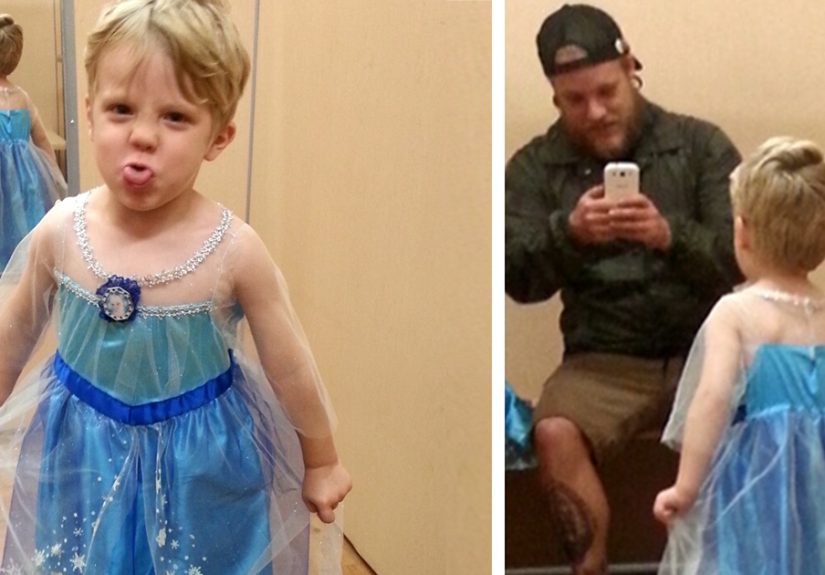
The heart of the story is refreshingly straightforward. In 2015, Virginia dad Paul Henson shared that his 3-year-old son, Caiden, wanted to dress as Elsa from Frozen for Halloween. Caiden also wanted his dad to dress as Anna. Henson was completely on board, and his now-famous reaction framed Halloween the way many parents wish more people would: as a chance for children to pretend to be their favorite characters and have fun.
That was the magic. The father’s response was not dressed up in corporate buzzwords or packaged as a grand speech. It felt normal. Casual. Loving. Slightly hilarious. He did not act like he was granting some rare royal decree from the kingdom of Parenting Excellence. He acted like a dad who understood that childhood is short, costumes are temporary, and joy should not need a permission slip.
The internet, surprisingly enough, behaved like the internet on its best day. Many readers praised the family for being supportive and letting a child enjoy what he loved. The story spread because people recognized themselves in it, or maybe recognized the kind of parent they wanted to be. Beneath the headline was a familiar family scene: a child picks a costume, the grown-up decides whether to encourage that spark or smother it with embarrassment. In this family, encouragement won.
Why Elsa, Specifically?
Let us be honest: in the mid-2010s, Elsa was not merely a Disney character. Elsa was a weather system. She was a full-blown cultural blizzard. Frozen became one of Disney’s biggest phenomena, and its songs, characters, dresses, and glittering ice-palace aesthetic lodged themselves firmly into family life. Kids everywhere wanted in. Some wanted the braid. Some wanted the cape. Some wanted the powers. Some wanted the song. A lot of them wanted all of it, all at once, at top volume, in the backseat of a moving car.
So when Caiden chose Elsa, it was hardly some baffling mystery from the great beyond. He wanted to be a character he loved. That is the entire point of Halloween. Children are not drafting a dissertation on gender performance while standing in the costume aisle next to fog machines and plastic pumpkins. They are thinking, “That one is cool.”
And Elsa was cool. She was powerful, dramatic, iconic, sparkly, and had a signature song that could shake the walls of a suburban house before breakfast. For a child, that is not complicated. That is irresistible.
What Made the Dad’s Response So Good?
The best response was not just that he said yes. It was how he said yes. He answered with confidence, humor, and zero apology. That matters because children notice hesitation. If a parent agrees while also acting embarrassed, the child gets the message that they are being tolerated, not supported. But if a parent says, in effect, “Absolutely, let’s do this,” then the costume becomes what it should have been all along: play.
Henson’s attitude also cut straight through a double standard that has lingered for years. Society often treats it as cute when girls dress as superheroes, pirates, or other characters once marketed mainly to boys. But when boys want a princess costume, some adults suddenly act as though civilization is hanging by a thread attached to a tulle sleeve. That is the contradiction the story exposed so clearly. If imagination is good for one child, it is good for another. If pretend play is harmless for a girl in a cape, it is harmless for a boy in a dress.
The dad’s response worked because it refused to make the child carry adult anxieties. Caiden wanted a costume. Adults tried to turn it into a cultural battleground. His father politely declined the invitation.
What Experts Say About Dress-Up, Pretend Play, and Self-Expression
Here is where the story becomes even more meaningful. Child-development experts have long treated pretend play as more than cute chaos with accessories. The American Academy of Pediatrics has emphasized that make-believe play, including dress-up, helps children build imagination, communication, social understanding, and emotional regulation. The CDC also frames play as an important part of development, while early-childhood educators note that costumes and role-play help children practice storytelling, experiment with identity, and engage with the world in symbolic ways.
In plain English: when kids dress up, they are not “just messing around.” They are learning. They test ideas. They practice confidence. They negotiate roles. They try on bravery, kindness, leadership, silliness, and power. One day they are a firefighter. The next day a dragon. The day after that, a snow queen with a killer soundtrack.
There is also research suggesting that Halloween costume choices can reflect aspects of children’s gender development. That does not mean every costume is a secret manifesto. It means what children choose can tell us something about how they see themselves, the roles they enjoy, and the possibilities they believe are open to them. Adults can respond by shutting those possibilities down, or by giving kids room to explore within safe, loving boundaries.
Pediatric guidance on supporting children’s self-expression also points to something important: parents do not need to panic every time a child chooses clothing, toys, or characters outside traditional expectations. A healthier approach is conversation, curiosity, and support. That is another reason this Elsa Halloween story continues to resonate. The dad’s instinct lined up with what many experts recommend: listen first, shame never, and remember that a child’s imagination is not a problem to be solved.
Halloween Is Supposed to Be Weird, Wonderful, and a Little Ridiculous
There is an extra layer of comedy here that makes the backlash look even stranger. Halloween is the one holiday that practically runs on absurdity. On this sacred autumn evening, skeletons ring your doorbell, tiny vampires demand chocolate, and a six-year-old dressed as a dinosaur may be holding hands with a unicorn wearing sneakers. Yet somehow, some people still decide that this is the moment to become rigid about costume rules.
That makes no sense. Halloween is an annual public festival of imagination. It is where children try on identities without consequences. They get to be larger, louder, bolder, and more magical than usual. For one night, or for one whole week if they are really committed, they are whoever they love most.
And retailers know how central characters are to the whole event. Year after year, costume trends are shaped by movies, television, superheroes, princesses, and pop culture favorites. Princess costumes remain among the most recognizable choices for children. So Caiden’s pick was not radical from a kid perspective at all. It was only treated that way by adults determined to drag their own discomfort into the costume shop.
Why This Story Still Matters
Because it was never only about Elsa.
It was about whether a parent makes a child feel safe when their interests do not match someone else’s expectations. It was about whether imagination gets celebrated or corrected. It was about how quickly kids learn what kinds of delight are allowed in public.
Supportive parenting is often discussed in sweeping language, but in real life it tends to show up in moments that look small from the outside. A costume choice. A haircut request. A favorite color. A toy picked off a shelf. A song sung too loudly in the grocery store. In those moments, adults send signals. “You can be yourself here.” Or the opposite.
The reason this dad’s response felt so powerful is that it offered a better signal. It told his son: I am with you. I am not afraid of your joy. I am not embarrassed by your imagination. I do not need you to edit yourself to make strangers comfortable.
That is not permissive nonsense. That is trust. It is how kids build confidence. It is how they learn home is a safe place before the world gets busy telling them who they should be.
What Moments Like This Actually Feel Like for Families
Now for the part people do not always talk about in viral stories: the lived experience around the headline. Because “Boy wanted to be Elsa and dad said yes” sounds neat and tidy, but real family life is a little messier, funnier, and far more revealing.
It might begin in a costume aisle under unforgiving fluorescent lights. A parent is holding three options: maybe a superhero, maybe a firefighter, maybe something with enough plastic armor to survive a small meteor. The child ignores all of it and marches straight toward the shimmery blue dress. There is no committee meeting. No polling data. No dramatic background music. Just certainty. “That one.” Children are often astonishingly clear about what they love.
Then comes the adult moment. You can almost hear the gears turning. What will people say? What about school? What about relatives with opinions strong enough to power a small city? What about the other kids? What about that one neighbor who always acts like she is on the board of directors for everybody else’s family? These questions are real. Parents do not live in a vacuum, and social pressure is stubborn.
But so is love. And often love sounds wonderfully practical. It sounds like, “Okay, do you want the cape too?” It sounds like checking sizes, hunting for matching shoes, and pretending not to notice that the glitter now lives permanently in your car. It sounds like taking a photo in the dressing room because your child looks thrilled, and you realize this moment matters more than any stranger’s side-eye.
Then Halloween night arrives, and suddenly the experience becomes even more human. A child who felt unsure at school can walk out the door beaming because the people closest to him did not flinch. A parent who said yes may discover that confidence is contagious. The costume is no longer just fabric. It becomes armor made from acceptance.
Families who allow this kind of freedom often describe the same thing: children relax when they do not have to perform for approval. They are funnier. More open. More themselves. They stop scanning the room for danger and start enjoying the moment. That matters at home, at school, and eventually in the wider world.
There is also something memorable about shared participation. The dad agreeing to be Anna was not a side note; it was the masterstroke. It transformed the message from “I permit this” to “I’m joining you.” Kids remember that. They remember when the grown-up did not just tolerate the magic but stepped directly into it. Years later, they may forget the exact candy haul, but they will remember who stood beside them when it might have been easier to shrug, laugh nervously, or say no.
And that is why stories like this endure. Not because they are shocking, but because they model a version of family life many people want more of: less fear, less performance, less obsession with rules that make childhood smaller. More play. More trust. More room to become.
In the end, a little boy wanted to be Elsa for Halloween, and his dad gave the only response that really made sense. He chose love over image, imagination over stereotype, and connection over control. For a holiday built on masks, that kind of honesty was the best costume in the room.
Conclusion
The reason this story still works years later is simple: it captured a parenting truth in one unforgettable snapshot. Kids reveal themselves in tiny choices. Loving adults decide whether to make those choices feel safe. Paul Henson’s response to his son’s Elsa costume request was memorable not because it was flashy, but because it was grounded, funny, and deeply reassuring. It reminded parents that Halloween should be about delight, not policing. It also reminded the rest of us that support does not always arrive as a speech. Sometimes it arrives as a dad saying, “Sure, and I’ll be Anna.”