Table of Contents >> Show >> Hide
- Shade Planning 101: Figure Out What You Actually Need
- 1) Patio Umbrellas: The Quickest Win (and Still Stylish)
- 2) Shade Sails: Modern, Minimal, and Surprisingly Powerful
- 3) Pergolas: Partial Shade That Looks Like a Backyard Upgrade
- 4) Gazebos and Pavilions: When You Want Real Roof Energy
- 5) Awnings and Retractable Canopies: Shade That Disappears When You Don’t Need It
- 6) Covered Patio Roofs and Louvered Systems: The “Outdoor Living Room” Move
- 7) Outdoor Curtains, Panels, and Privacy Screens: Shade You Can Aim
- 8) Plant-Based Shade: Trees, Vines, and “Living Canopies”
- 9) Clever “Hybrid” Shade Ideas That Look Custom (Even If They’re Not)
- 10) Make Shade Feel Cooler: Comfort Upgrades That Matter
- How to Choose the Best Shade Idea for Your Backyard
- Real-World Experiences and Lessons From Backyard Shade Projects (Extra )
- Conclusion: Your Backyard, But Make It Livable
- SEO Tags
A great backyard is basically an outdoor living roomuntil the sun shows up and turns your patio furniture into a stovetop.
If you’ve ever tried to “relax” outside while squinting like a cartoon character and sticking to your chair, you already know:
shade isn’t a luxury, it’s the difference between “hangout” and “heat survival challenge.”
The good news: you don’t need to move to a forest or install a stadium roof to get real relief. The best backyard shade ideas fall into
three big buckets: portable shade (fast fixes), semi-permanent shade (stylish upgrades), and permanent structures
(the “this is our forever backyard” level). This guide walks you through the smartest options, how to choose one for your space,
and how to make it look intentionallike you planned it, not like you panic-bought a random umbrella at the first sign of summer.[1]
Shade Planning 101: Figure Out What You Actually Need
Before you pick a pergola on vibes alone, take five minutes to “audit” your yard. The best shade solution depends on how you use the space,
how the sun moves across it, and how much flexibility you want.
Ask yourself these four questions
- What am I shading? Dining table, lounge seating, grill zone, kids’ play area, or pool deck.
- When do I need shade most? Morning coffee spot vs. afternoon hangout vs. all-day coverage.
- Do I want shade that moves? Adjustable options (umbrellas, canopies, louvers) are great for changing sun angles.
- Do I need rain protection too? Some solutions help with drizzle; others are sun-only.
Pro tip: watch the sun for a couple daysespecially between late morning and mid-afternoon. Shade problems are often “location problems,”
not “you didn’t buy enough stuff” problems.[1]
1) Patio Umbrellas: The Quickest Win (and Still Stylish)
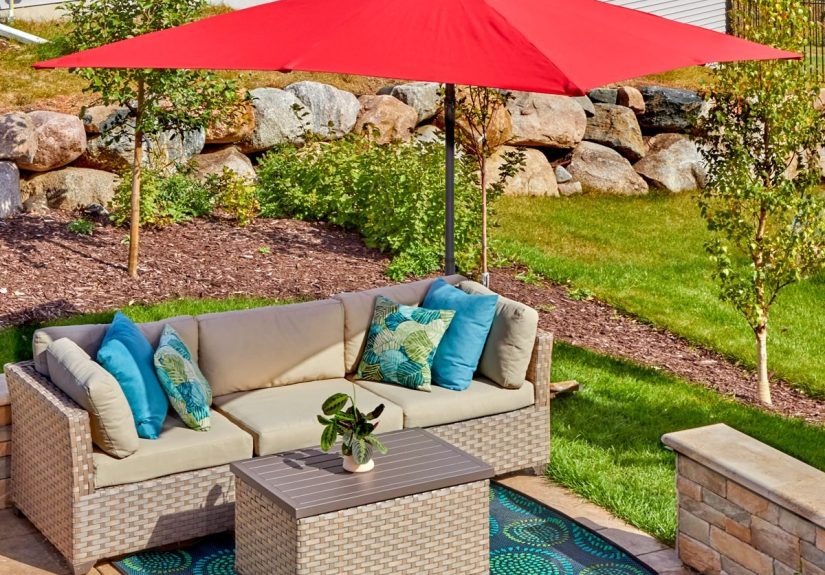
If you want shade todaylike, right nowa patio umbrella is the easiest upgrade. Modern umbrellas come in market styles, cantilever/offset
designs (great for lounging setups), and tilting/rotating frames that follow the sun like a polite companion.[1]
Why umbrellas work
- Fast setup: no construction required.
- Flexible shade: tilt or rotate to block low afternoon sun.
- Design-friendly: easy way to add color and height.
Make umbrellas safer and more effective
- Use a properly weighted base: stability matters, especially in breezy areas.[2]
- Consider cantilever umbrellas: the side pole frees up table and seating space underneath.[3]
- Don’t fight the wind: close it when you’re not using it (your future self will thank you).
Best for: renters, small patios, budget-friendly shade, flexible seating layouts.
Watch out for: wind exposure and undersized coverage (a tiny umbrella over a large table is just a sad hat).
2) Shade Sails: Modern, Minimal, and Surprisingly Powerful
Shade sails are tensioned fabric panelsoften triangles or rectanglesthat create big coverage with a sleek, architectural look.
They’re especially good for awkward spaces where umbrellas don’t reach, or where you want shade without visual bulk.[4]
Why shade sails are a backyard favorite
- Large coverage: great for dining areas, play zones, and pools.
- Clean style: modern lines, lots of color options.
- Airflow friendly: many fabrics are breathable, helping hot air move instead of getting trapped.[5]
Smart design tips (without going full engineering degree)
- Plan anchor points first: you need strong attachment points (posts, sturdy structural locations).[4]
- Add a slight slope: helps reduce water pooling if you’re using a fabric that isn’t meant to hold standing water.[4]
- Think in layers: two smaller sails can look more intentional than one giant “parachute.”
Best for: modern yards, large open areas, pool decks, play spaces.
Watch out for: poorly planned anchors and slack fabric (a flappy sail is noisy, wears out faster, and looks defeated).[4]
3) Pergolas: Partial Shade That Looks Like a Backyard Upgrade
Pergolas are the MVP of “make it feel like an outdoor room.” They define a space, add structure, and provide partial shade with an open-slat roof.
On their own, pergolas create dappled light; paired with a canopy, curtains, or climbing plants, they become true comfort zones.[6]
Pergola shade upgrades that actually work
- Retractable canopy: pull it out when the sun is rude, tuck it away when you want light.[7]
- Outdoor curtains: block low-angle sun and add privacy (also: instant “resort cabana” energy).[8]
- Slatted or angled roof design: lets you control how much sun filters through.[9]
- Vines: living shade that changes with the seasons (and looks amazing).[10]
Example: The “Weekend Entertainer” pergola setup
Put a pergola over your dining area, add a retractable canopy for afternoon coverage, then hang warm string lights for evenings.
Add curtains on the west side if you get harsh sunset glare. The result: lunch, dinner, and late-night hangs all feel comfortable.
Best for: patios that need definition, outdoor dining, lounge seating, long-term yard upgrades.
Watch out for: assuming a pergola alone is full shade. If you want “always shaded,” plan an add-on (canopy, louvers, vines).[6]
4) Gazebos and Pavilions: When You Want Real Roof Energy
If pergolas are “partial shade with style,” gazebos and pavilions are “full coveragebring on the midday sun.” A gazebo usually has a solid roof and a
more enclosed, room-like feel, while pavilions are often larger with a roof that feels like an open-air extension of the house.[11]
Pick a gazebo or pavilion if you want
- Full sun protection: solid roof = consistent shade.
- Rain-friendly coverage: better for unpredictable weather than open-roof structures.[9]
- A true outdoor “destination”: a place that feels like an intentional feature, not just furniture on grass.
Best for: big backyards, hot climates, outdoor dining rooms, “we entertain a lot” homes.
Watch out for: scaletoo large overwhelms a small yard. Too small feels like a fancy bus stop.
5) Awnings and Retractable Canopies: Shade That Disappears When You Don’t Need It
Retractable awnings and canopies are perfect when you want shade sometimesnot always. They’re especially useful over patios attached to a house,
where you want to control light, heat, and glare without committing to a permanent roofline.[12]
Why homeowners love retractable shade
- Adjustable comfort: shade when it’s hot, sun when it’s not.
- Cleaner look: retract it and your yard feels open again.
- Great for small spaces: adds function without taking up floor space.
Where it shines (literally the opposite of shines)
A retractable awning over a sliding door patio can make an outdoor dining area usable during peak sun hoursand can help reduce indoor heat gain
in adjacent rooms, depending on placement and exposure.[12]
6) Covered Patio Roofs and Louvered Systems: The “Outdoor Living Room” Move
If you want the most consistent shadeand you’re thinking long-termcovered patio roofs or louvered roof systems are the top tier.
A solid cover provides dependable relief, while a louvered roof gives you “dial-a-sunlight” control: open it for light, close it for shade,
and adjust for airflow.[9]
Best use cases
- All-day entertaining zones where comfort matters more than flexibility.
- Outdoor kitchens where you don’t want the chef to slow-roast.
- Homes in very sunny regions where partial shade just doesn’t cut it.
Note: permanent roof additions can involve permits and structural planning depending on your location.
When in doubt, consult local requirements and qualified professionals.[9]
7) Outdoor Curtains, Panels, and Privacy Screens: Shade You Can Aim
Overhead shade handles the “sun from above.” But the real villain is often side sunthat low-angle light that sneaks under a canopy
and blasts you right in the eyeballs at 5 p.m.
Outdoor curtains, shade panels, and privacy screens solve that problem by letting you “aim” your shade where you need it most.
They also make a space feel cozy, finished, and a little bit fancy (even if your fancy drink is lemonade in a plastic cup).[8]
Easy ways to use vertical shade
- Hang curtains on a pergola: close the west side in late afternoon for instant relief.[8]
- Use outdoor-rated roller shades: clean lines, strong sun control, great for modern patios.[8]
- Add a slatted screen wall: blocks glare, adds privacy, and looks custom.
8) Plant-Based Shade: Trees, Vines, and “Living Canopies”
Want shade that looks like it belongs in the yard instead of being bolted on? Go natural.
Trees and vines provide cooling shade and can improve comfort by reducing the amount of direct sun hitting patios and nearby walls.[13]
Shade trees: the long game (that pays off)
A well-placed tree can create beautiful, dappled shade and make a backyard feel calmer and coolerespecially as the canopy matures.
The key is choosing the right tree for your climate, space, and proximity to hardscapes (patios, walkways, foundations). Local extension resources
can help you select species that fit your region and site conditions.[14]
Vines on pergolas and trellises: shade that grows
Climbing vines can turn a pergola or trellis into a living roof. Some popular options are prized for flowers and fragrance, while others
are grown for leafy coverage. Many vigorous vines need strong support and regular pruning to keep them from taking over your entire zip code.[10]
Example: The “Small Yard, Big Shade” approach
If you don’t have room for a massive structure, add a compact pergola or trellis near your seating area, then train a well-chosen vine
for seasonal coverage. Pair with a small umbrella for immediate shade while the plants fill in.
9) Clever “Hybrid” Shade Ideas That Look Custom (Even If They’re Not)
The most comfortable backyards usually combine two or three shade strategies. This is where you go from “we bought shade” to
“we designed an outdoor space.”
Hybrid combos that work in real life
- Pergola + retractable canopy + curtains: overhead control plus side-sun defense.[7]
- Shade sail + privacy screen: big coverage plus wind buffer and glare block.[4]
- Tree shade + umbrella: the tree handles broad cooling; the umbrella targets a table or chair.
- Covered patio + outdoor roller shades: creates a truly usable outdoor room in bright climates.[8]
10) Make Shade Feel Cooler: Comfort Upgrades That Matter
Shade is step one. Comfort is step two. If you want your backyard to feel like a retreat (not a dim, stuffy cave), focus on airflow,
heat-reflecting surfaces, and the little details that keep people outside longer.
Small changes that make a big difference
- Prioritize airflow: breathable shade (like many fabric sails) can feel cooler than solid covers in still air.[5]
- Use light, outdoor-safe textiles: they stay cooler to the touch and brighten the space.
- Add layered lighting: once the sun drops, you want the space to stay inviting (string lights, lanterns, sconces).
- Create “zones”: one shaded dining zone, one shaded lounge zonepeople spread out and the yard feels bigger.
How to Choose the Best Shade Idea for Your Backyard
If you want the fastest fix
Start with an umbrella. If you love the space and use it often, upgrade later with a sail or pergola.
If you want the best style-to-budget upgrade
Shade sails give you big impact without building a full structure, especially for wide, sunny areas.[4]
If you want a true outdoor room
Go pergola plus an adjustable shade layer (canopy, curtains, or louvers). It’s the sweet spot of function and design.[6]
If you want full protection
Consider gazebos, pavilions, or covered patio roofs for consistent shade and weather shielding.[9]
Real-World Experiences and Lessons From Backyard Shade Projects (Extra )
People often assume shade is a simple purchase: buy a thing, place it somewhere, instantly become a relaxed outdoor person who reads books on patios.
In reality, the best backyard shade setups come from a few “I didn’t think about that” momentsso here are common lessons homeowners share after
testing shade in everyday life.
Lesson one: the sun moves in ways that feel personal. Many patios get blasted not at noon, but in late afternoon when the sun drops
low and shines straight under overhead shade. That’s why vertical shadecurtains, roller shades, or side panelsoften becomes the surprise hero.
A pergola can look gorgeous at 1 p.m. and still feel like you’re sitting in a spotlight at 5 p.m. unless you plan for side sun.
Lesson two: “big enough” is usually bigger than you think. A common mistake is choosing shade that covers the table but not the
people around it. Chairs pull out. Guests rotate. Someone always ends up half-shaded like a badly rendered video game character.
When you’re measuring, imagine the “in-use” footprintchairs out, a walkway behind them, and space for someone to stand up without bumping a pole.
Lesson three: wind is the boss, even in calm neighborhoods. Backyard shade is basically a giant sail (sometimes literally),
and breezes can turn lightweight setups into constant maintenance. People who love umbrellas long-term tend to invest in stable bases,
position umbrellas where fences or hedges break the wind, and build the habit of closing them when not in use.
With fabric shade, taut installation and sturdy supports matter because flapping fabric doesn’t just look messyit wears faster and can get noisy.
Lesson four: shade should match how you actually live. Families with kids often prefer large, continuous shade over “pretty but partial”
coverage, because play zones need comfort for longer stretches. Entertainers often want adjustable shadecanopies or louversbecause the backyard
needs to work from sunny brunch to evening dinner. And if you’re a “quiet coffee outside” person, even a compact, well-placed umbrella can feel perfect.
Lesson five: the best shade looks intentional when you repeat materials. Homeowners get the most “designer” look when they coordinate
one or two elements across the spacematching the shade fabric to cushion tones, repeating wood stain from pergola to planters, or echoing black metal
hardware in lights and furniture. The yard suddenly feels cohesive, like an outdoor room, not a storage area for random patio objects.
Finally, the biggest “experience-based” takeaway is this: shade is a comfort system, not a single item. The most-loved backyards
usually have an overhead solution for general protection, plus one targeted tool (like curtains, a side panel, or a second umbrella) to handle the
tricky angles. Once you treat shade like something you can fine-tunerather than a one-time purchaseyou’ll end up with a backyard that’s actually
usable on bright days. And that’s the whole point: more time outside, less time sprinting indoors like a vampire who forgot sunscreen.
Conclusion: Your Backyard, But Make It Livable
The best shade ideas for your backyard depend on your space and your lifestyle: umbrellas for quick flexibility, shade sails for modern coverage,
pergolas for outdoor-room vibes, and roofs or gazebos when you want consistent protection. Add vertical shade for low sun, mix solutions for comfort,
and let your yard evolve over time. The goal isn’t to block every ray foreverit’s to create a backyard you’ll actually use, even when the sun is
doing the most.