Table of Contents >> Show >> Hide
- Quick Cheat Sheet (Save Your Future Self)
- 1) Addressing the President in Person (Spoken Greeting)
- 2) Addressing the President in Writing (Letters and Email)
- 3) Addressing the President in Formal Settings (Introductions, Announcements, and Third-Person Reference)
- Bonus: What About Former Presidents?
- Frequently Asked Questions (Fast Answers, No Lecture)
- Conclusion: Respectful, Clear, and (Almost) Impossible to Mess Up
- Experiences People Commonly Have When Addressing the President (Real-World Scenarios)
- 1) The school letter project that suddenly feels very official
- 2) A community event where you might actually speak (and your brain might panic)
- 3) The introduction moment you didn’t know you’d be responsible for
- 4) Meeting a former President (and getting the title wrong in your head)
- 5) Writing with strong feelingswithout letting the tone go off the rails
Addressing the President of the United States isn’t about being fancyit’s about being clear, respectful, and
(ideally) not becoming the main character in someone else’s “Most Awkward Moments in D.C.” story.
The good news: the rules are simpler than people think. The better news: once you learn them, you’ll sound
confident whether you’re speaking in person, writing a letter, or introducing the President at an event.
This guide breaks down the three most common (and correct) ways to address the President,
with practical examples, do’s and don’ts, and a few real-world scenarios so you can use the right words
without sweating through your shirt.
Quick Cheat Sheet (Save Your Future Self)
| Situation | Use This | Avoid This |
|---|---|---|
| Speaking directly to the President | Mr. President / Madam President | “Hey President [Last Name]” / first name |
| Writing a letter/email | Dear Mr. President: / Dear Madam President: | “Dear President [Last Name]” (not standard) |
| Introducing/announcing formally | The President of the United States | Overly grand titles (“Your Excellency”) |
1) Addressing the President in Person (Spoken Greeting)
If you’re speaking directly to the Presidenteven for one sentencethe safest, most widely accepted form is:
“Mr. President” (or “Madam President”).
Why this works so well: it acknowledges the office, not personal preference, and it’s instantly recognizable
to everyone in the room. It’s also short, which matters when your brain decides to buffer at the worst time.
What to say (and how often to say it)
- First greeting: “Mr. President, thank you for your time.”
-
During a longer conversation: You can use “Mr. President” again when you re-enter the discussion,
ask a question, or shift topics. -
After that: Keep it natural. You don’t have to say “Mr. President” every eight words like it’s a
subscription you forgot to cancel.
Examples you can actually use
In a quick handshake line:
“Mr. President, it’s an honor to meet you. Thank you for being here.”
Asking a question at a forum:
“Mr. President, what is your plan to support small businesses in rural communities?”
Formal thanks at an event:
“Madam President, thank you for your leadership and for joining us today.”
Common mistakes (and why they go wrong)
-
Using the President’s first name (“Hi, Joe” / “Hi, Kamala”): too familiar and not appropriate
in formal civic settings. -
“President [Last Name]” directly to the person: you’ll hear it in media coverage and casual speech,
but “Mr. President”/“Madam President” is the standard for direct address. -
Overly royal-sounding titles (“Your Excellency”): not typical in U.S. presidential protocol,
and it can feel out of place.
Pro tip: If you’re nervous, default to “Mr. President” (or “Madam President”) once at the start.
Speak clearly. Keep your sentence short. You’re not auditioning for a 12-minute monologue.
2) Addressing the President in Writing (Letters and Email)
Writing to the President is where people overthink the mostusually because “Dear Dude in Charge” isn’t
a recognized format. In official-style correspondence, the convention is straightforward:
- Address block / envelope: “The President” + “The White House” (and the White House street address, if used)
- Salutation: “Dear Mr. President:” or “Dear Madam President:”
- Closing: “Respectfully,” (or “Respectfully yours,” in a more formal tone)
How to format a letter without sounding like a robot
The best letters are polite, specific, and brief. Think: one main topic, a clear request or point,
and enough context to understand why you care. Avoid writing like you’re submitting a 40-page term paper titled
“Feelings, Volume 7.”
Sample letter (adaptable, not copy-and-paste stiff)
Inside address:
The President
The White House
Washington, DC 20500
Salutation:
Dear Mr. President:
Body example:
I’m writing as a resident of [City, State] to share my concerns about [issue]. In my community, we’ve seen
[one concrete example], and it affects families by [one clear impact]. I appreciate the work your administration
has done on [related effort], and I hope you’ll consider [specific action/request]. Thank you for your time and
for your service to the country.
Closing:
Respectfully,
[Your Name]
[Your City, State]
[Optional: email/phone]
Email: same manners, faster delivery
Email uses the same logic: start with “Dear Mr. President:” (or “Dear Madam President:”), keep it focused,
and close with “Respectfully,” plus your name and location. Even if you’re sending a message digitally,
the tone should still be formalthis is not a “pls respond thx” situation.
What not to do in presidential correspondence
- Don’t use slang, insults, or threats. Aside from being inappropriate, it can trigger security review.
- Don’t cram five unrelated issues into one letter. Pick one lane and drive in it.
- Don’t write in all caps unless your goal is to be read as “a human air horn.”
3) Addressing the President in Formal Settings (Introductions, Announcements, and Third-Person Reference)
Sometimes you won’t be speaking to the Presidentyou’ll be speaking about the President, or
introducing the President to others. In those settings, you’ll typically use:
“The President of the United States” (most formal) or “the President” (still formal, slightly shorter).
Announcing the President
If you’re emceeing an event, making an official announcement, or handling ceremonial remarks, use:
“Ladies and gentlemen, the President of the United States.”
That line is popular for a reason: it’s clear, correct, and it doesn’t accidentally turn into improv.
Introducing someone to the President
Traditional U.S. etiquette often treats the President as the “reference point” in introductions. In other words,
others are presented to the President:
“Mr. President, may I present Dr. Taylor, director of our program.”
Place cards and printed programs
For seating cards or formal place settings, you’ll often see:
“The President”
(not the person’s first and last name). On event programs and formal materials, “The President of the United States”
is also common for maximum clarity.
Referring to the President in writing or speech
- Formal: “the President of the United States”
- Standard: “the President”
- Avoid for formal settings: casual nicknames, shorthand, or overly familiar phrasing
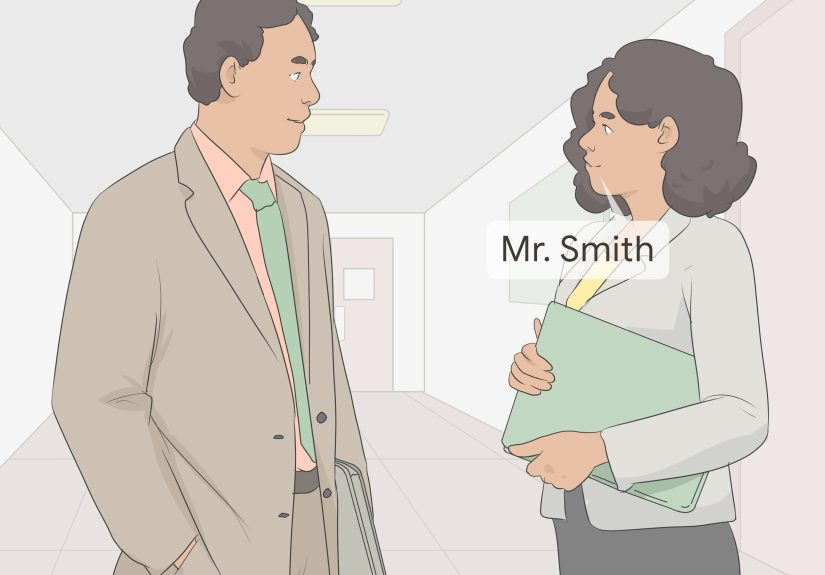
Bonus: What About Former Presidents?
People get tripped up here because the word “President” feels permanent in everyday conversation. But in many
formal etiquette and protocol references, “Mr. President” is reserved for the current President.
For a former President, formal address is typically:
“Mr. [Last Name]” (or “Ms./Mrs. [Last Name]” as appropriate).
In writing, you may also see “The Honorable [Full Name]” used in formal contexts. If you’re unsure, choose the
more neutral option (“Mr./Ms. [Last Name]”) and keep your tone respectful.
Frequently Asked Questions (Fast Answers, No Lecture)
Is “Dear President [Last Name]” correct?
It’s common in casual use, but it isn’t the standard in widely cited U.S. protocol guidance for
addressing the President in a letter. “Dear Mr. President:” (or “Dear Madam President:”) is the safer choice.
Can I say “sir” or “ma’am”?
Yes, but it’s best as a secondary form (especially in longer exchanges). Start with “Mr. President”/“Madam President”
and you can use “sir/ma’am” naturally afterward if the interaction continues.
What should I write on the envelope?
“The President” and “The White House” are commonly used on official-style addressing. If you include a street address,
use the White House address format typically shown in U.S. correspondence guides.
What’s a good closing line?
“Respectfully,” is a strong default. Some formal guides also use “Respectfully yours,” or “Most respectfully,” but
“Respectfully,” is simple, correct, and won’t make you sound like you’re signing a treaty in 1792.
What if I don’t know whether to use Mr. or Madam?
Use the form that matches the President. When in doubt in a generic article or template, you can write
“Mr. President / Madam President” and then choose the correct one when you send or speak.
Conclusion: Respectful, Clear, and (Almost) Impossible to Mess Up
If you remember nothing else, remember this:
- In person: “Mr. President” / “Madam President.”
- In writing: “Dear Mr. President:” / “Dear Madam President:” and close with “Respectfully,”
- In formal announcements and introductions: “The President of the United States.”
These three approaches cover nearly every real-life scenario, from formal ceremonies to a thoughtful letter.
They’re respectful without being over-the-topand they help you communicate like someone who knows the rules,
not someone guessing in real time.
Experiences People Commonly Have When Addressing the President (Real-World Scenarios)
Not everyone meets the President in person, but plenty of people brush up against “presidential address” moments in
surprisingly everyday ways. Here are a few realistic scenariosand what tends to work bestso you can picture the
etiquette in action.
1) The school letter project that suddenly feels very official
A classic experience: a teacher assigns a civics projectwrite to the President about an issue you care about.
At first, it feels like any other assignment. Then you open a blank document, type “Hi,” and realize you’re about to
email the highest office in the country. That’s where the standard salutation helps. “Dear Mr. President:” (or
“Dear Madam President:”) immediately sets a respectful tone and helps you focus on the message instead of the nerves.
Students who do best usually pick one specific topic, share one local example, and ask
one clear question. The result reads like a serious note from a real personnot a rambling list of
everything wrong with the universe.
2) A community event where you might actually speak (and your brain might panic)
Another common scenario: a public event, roundtable, or town-hall-style appearance where attendees can ask questions.
People often rehearse their question and still freeze at the opening words. This is exactly why “Mr. President” is
so useful: it’s short, universally understood, and buys you half a second to breathe. A steady opener like
“Mr. President, thank you for coming. My question is…” keeps the moment calm and respectful. The people who struggle
usually do so because they try to be overly clever (jokes that don’t land) or overly long (a three-minute speech
disguised as a question). A clear greeting plus a clear question is the winning combo.
3) The introduction moment you didn’t know you’d be responsible for
Sometimes someone ends up introducing dignitaries because of their rolestudent body president, event host,
organization leader, or the person holding the microphone when the schedule goes sideways. If that introduction is
the President, the simplest formal announcement is the best: “Ladies and gentlemen, the President of the United States.”
People who have done formal hosting say the same thing: you want words that are correct even when your heart is racing.
This phrasing is reliable, respectful, and doesn’t require you to guess what’s “most impressive.” The goal isn’t to
sound fancy; it’s to be correct and professional.
4) Meeting a former President (and getting the title wrong in your head)
A surprisingly common experience is seeing a former President at a university commencement, foundation event, or public
talk. Many people instinctively want to say “Mr. President” because it feels polite. In some formal etiquette guidance,
though, that phrase is reserved for the current President, and “Mr./Ms. [Last Name]” is often preferred for former
Presidents. In real life, the most important thing is respectful toneso even if you default to “President [Last Name]”
in casual conversation, you can still keep it gracious and appropriate. The lesson is less about memorizing trivia and
more about matching the formality of the setting.
5) Writing with strong feelingswithout letting the tone go off the rails
Many people write to the President when they’re frustrated, worried, or passionate. That emotion can be validand the
letter can still be respectful. The best “experience-based” advice here is practical: write your draft, then read it
once pretending you’re the staffer who has to summarize it. If it’s clear, focused, and civil, it’s easier to take
seriously and easier to route to the right office. “Respectfully,” at the end doesn’t weaken your point; it signals
that you’re engaging as a citizen, not just venting. In the long run, respectful clarity is more persuasive than
sarcasm, insults, or dramatic exaggeration.
In short, most presidential-address moments aren’t about “perfect etiquette.” They’re about using a few standard,
widely recognized forms of address so your message lands the way you intend. And if you ever blank completely, just
remember: “Mr. President” is the conversational equivalent of a seatbeltsimple, protective, and you’ll be glad you used it.