Table of Contents >> Show >> Hide
- What Makes a Fictional Serial Killer “The Best” (In the Most Uncomfortable Way Possible)
- Top TV & Movie Fictional Serial Killers
- 1) Dr. Hannibal Lecter (The Silence of the Lambs, Hannibal)
- 2) Norman Bates (Psycho, Bates Motel)
- 3) Patrick Bateman (American Psycho)
- 4) Dexter Morgan (Dexter)
- 5) Joe Goldberg (You)
- 6) Ghostface (Scream)
- 7) John Doe (Se7en)
- 8) Jigsaw / John Kramer (Saw)
- 9) Michael Myers (Halloween)
- 10) Freddy Krueger (A Nightmare on Elm Street)
- 11) Chucky / Charles Lee Ray (Child’s Play)
- 12) Buffalo Bill (The Silence of the Lambs)
- 13) The Trinity Killer (Dexter)
- Honorable Mentions (Because Horror Has a Deep Bench)
- How to Watch (and Talk About) Fictional Serial Killers Without Getting Weird About It
- Fan Experiences: The 500-Word Reality of Loving a “Killer List” (Without Losing Your Mind)
- Conclusion
Fictional serial killers are the spicy jalapeños of pop culture: you know they’re bad for your nerves,
but you keep going back anyway. They show up wearing a polite smile, a suspiciously clean raincoat,
or (in one case) a plastic doll body with the confidence of a man who just discovered the “Caps Lock” key.
And somehowthrough great writing, great performances, and a whole lot of expertly timed dreadthey become
unforgettable.
This list isn’t here to glamorize violence (real-life harm isn’t entertainment, full stop). Instead, it’s about
the craft: the characters that defined horror, thrillers, and prestige TV; the villains who rewired plot twists;
and the “oh no, don’t go in there” icons who live rent-free in our brains.
What Makes a Fictional Serial Killer “The Best” (In the Most Uncomfortable Way Possible)
In fiction, “best” doesn’t mean “most deadly” or “most brutal.” It means the character is
memorablea mix of psychology, storytelling, performance, and cultural impact.
The truly iconic ones tend to share a few traits:
- A clear signature: a voice, a ritual, a mask, a code, or a philosophy that feels instantly recognizable.
- Story gravity: they bend the plot around them even when they’re barely on screen.
- Theme power: they reflect a fearprivacy, vanity, institutions, obsession, morality, or “the suburbs.”
- Performance heat: an actor (or ensemble) sells the menace with restraint, charisma, or both.
With that in mind, here’s a top TV and movie killer list that balances classic cinema legends with modern
streaming-era nightmares.
Top TV & Movie Fictional Serial Killers
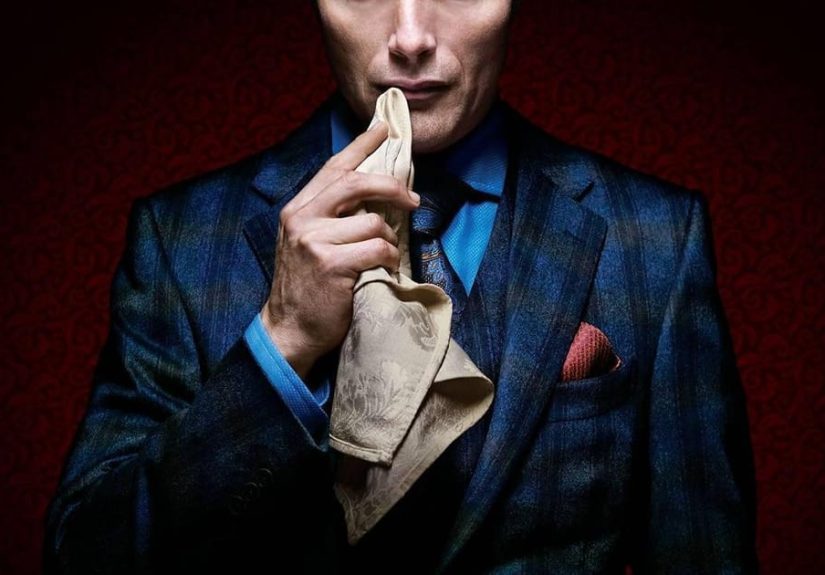
1) Dr. Hannibal Lecter (The Silence of the Lambs, Hannibal)
If evil had a dress code, Hannibal Lecter would be the guy reminding everyone that “tasteful” doesn’t mean
“safe.” His menace isn’t loudhe’s surgical, curious, and often weirdly courteous, which makes the danger
feel closer, not farther. Lecter works because he’s a master manipulator who treats conversation like chess:
every question is a probe, every compliment has a hook.
What cements him as an all-timer is the contrast: refined manners paired with predatory intelligence.
He doesn’t chase victims down hallways; he gets inside minds. And when a villain can terrify you while sitting
completely still, you’ve got a legend.
2) Norman Bates (Psycho, Bates Motel)
Norman Bates changed the game by making horror feel personal and plausible. He’s not a monster from another
realmhe’s awkward, soft-spoken, and disarmingly “normal” on the surface. That’s the trick: the threat isn’t
announced with theme music; it’s revealed through human fragility, repression, and a story that turns your
assumptions into confetti.
Norman’s enduring power comes from how the character sits at the crossroads of sympathy and dread.
You don’t just fear himyou fear what’s happening inside him, and how easily the situation can slide from
uncomfortable to catastrophic.
3) Patrick Bateman (American Psycho)
Patrick Bateman is what happens when “self-improvement” becomes a horror subgenre. He’s polished, status-obsessed,
and trapped in a world where image matters more than humanity. The character hits hard because he’s not just a killer;
he’s a satire of unchecked vanity and emptinessan elegant suit wrapped around a void that wants applause.
The unsettling part is how easy it is to see why people around him don’t notice (or don’t want to notice).
Bateman thrives in an environment that rewards surface-level charm, and that’s the point: the scariest monsters
sometimes look like they belong in the boardroom.
4) Dexter Morgan (Dexter)
Dexter is the antihero who launched a thousand moral debates and at least one awkward “so… who are we rooting for?”
group chat. He’s compelling because the show builds tension around a paradox: a serial killer with a “code,”
presenting himself as a cleaner of society’s messiest corners.
Dexter works as a character because he’s both narrator and problem. You’re inside his rationalizations, watching him
compartmentalize, improvise, and try to pass as human. The result is a long-running psychological tightrope walk:
suspense, dark humor, and a constant question of where accountability begins.
5) Joe Goldberg (You)
Joe Goldberg is proof that modern horror doesn’t need a haunted housesometimes it just needs a phone, a charming smile,
and a guy who thinks stalking is “romantic persistence.” Joe is terrifying precisely because he frames his behavior as love,
and because the world around him often enables it with excuses, fascination, and viral attention.
As a fictional serial killer, Joe’s signature is obsession disguised as devotion. He’s the villain who narrates his own
delusion so convincingly that you can feel the show daring viewers to catch themselves getting comfortable. It’s not just
scary; it’s a cultural mirror.
6) Ghostface (Scream)
Ghostface isn’t one personit’s an identity, a costume, and a meta-horror engine. The mask, the voice, the phone calls:
it’s an instantly recognizable “brand” of fear that plays with slasher rules while still delivering real tension.
The genius is that the character is both scary and self-aware.
What makes Ghostface iconic is the blend of theater and threat. The killer is performativetaunting, improvising,
turning murder into a twisted game of horror trivia. And because the face can change, paranoia becomes the point:
anyone could be behind the mask, which keeps the franchise’s suspense evergreen.
7) John Doe (Se7en)
John Doe is the nightmare of inevitability: a killer who feels like he planned the story before the movie even began.
He’s not about jump scares; he’s about a slow, sinking realization that the case is a trap built from patience,
ideology, and psychological warfare.
The character’s most chilling feature is narrative control. John Doe doesn’t just commit crimes; he orchestrates meaning,
forcing the protagonistsand the audienceto confront moral exhaustion and despair. When a villain can dominate a film
with limited screen time, that’s storytelling power in its darkest form.
8) Jigsaw / John Kramer (Saw)
Jigsaw is a villain built on a twisted idea of “teaching lessons,” and that self-justifying philosophy is what makes him
so unsettling. He’s not the fastest slasher or the flashiest monster; he’s an architect of scenarios, turning moral judgment
into a mechanism. The character taps into a very specific fear: being trapped in someone else’s worldview.
Jigsaw’s legacy is also structural. He helped define a franchise era where horror became puzzle-box storytellingmystery,
reveals, and interconnected timelines layered on top of dread. Whether you see him as mastermind or madman, he’s undeniably
one of the most influential fictional killers of modern cinema.
9) Michael Myers (Halloween)
Michael Myers is the embodiment of silent, relentless terror. No witty monologues. No visible motive you can neatly file away.
Just a presencean almost mechanical inevitability moving through suburbia like the world’s worst neighborhood watch.
Part of what makes Michael iconic is how he turns ordinary spaces into danger zones: a street, a backyard, a bedroom hallway.
The character’s simplicity is the weapon; he’s less a person than a shape, which is why he remains a blueprint for slasher
villains decades later.
10) Freddy Krueger (A Nightmare on Elm Street)
Freddy Krueger weaponizes the one place you’re supposed to be safe: sleep. That premise is brilliant because it’s universaleveryone
has to close their eyes eventually. Freddy’s kills happen in dream logic, where reality rules don’t apply, turning teenage anxiety,
guilt, and fear into a literal battleground.
Freddy also stands out because the character blends horror with showmanship. He’s not just frightening; he’s theatrical, a nightmare
host with a cruel sense of humor. That combination helped make him a pop-culture icon without dulling the fear at the core of the concept.
11) Chucky / Charles Lee Ray (Child’s Play)
Chucky is what happens when your childhood toy aisle becomes a crime scene. The character works because of the contrast:
a small doll shouldn’t be threateninguntil it is. The “possessed by a serial killer” angle turns the ordinary into
something distrustful, and it’s hard to unlearn that fear once you’ve seen it.
Chucky’s longevity comes from personality. He’s vicious, sarcastic, and weirdly committed to being the worst.
The franchise leans into dark comedy without losing the menace, which keeps the character fresh across sequels,
reinventions, and fan generations.
12) Buffalo Bill (The Silence of the Lambs)
Buffalo Bill is disturbing not because of supernatural power or unstoppable force, but because the story frames him through
investigation and dreadclues, routines, and the chilling intimacy of a predator selecting victims. The fear is procedural:
the sense that horror can be methodical.
As a character, Buffalo Bill also highlights why thrillers can hit harder than pure horror. The terror isn’t only what happens,
but the awareness that it could happen in a world that looks like ours. The film’s tension escalates through atmosphere and detail,
making him one of cinema’s most unnerving fictional killers.
13) The Trinity Killer (Dexter)
The Trinity Killer stands out because he’s not a one-note villainhe’s a slow-burn study in control, ritual, and the masks people wear.
His presence pushes Dexter into one of the series’ most intense moral and emotional spirals, because Trinity exposes the cost of “living
two lives” better than almost anyone.
What makes Trinity memorable is how the character escalates tension without constant spectacle. He feels like a storm system:
patterns, repetition, inevitable impact. And in a show built on cat-and-mouse suspense, he’s the adversary that makes the game
feel genuinely dangerous.
Honorable Mentions (Because Horror Has a Deep Bench)
- Francis Dolarhyde (Red Dragon): a killer portrayed with chilling intensity and unsettling symbolism.
- Jason Voorhees (Friday the 13th): more slasher force than character study, but undeniably iconic.
- Leatherface (The Texas Chain Saw Massacre): terror rooted in chaos, atmosphere, and raw panic.
- Various “killer-of-the-week” standouts: TV has a long history of unforgettable villains who steal episodes and haunt seasons.
How to Watch (and Talk About) Fictional Serial Killers Without Getting Weird About It
Let’s be honest: it’s easy for pop culture to turn villains into “icons.” Costumes get sold, catchphrases become memes,
and suddenly your group chat is ranking killers the way people rank pizza toppings. If you enjoy the genre, the healthiest
approach is to keep the focus on craft:
- Performance: how an actor uses stillness, voice, timing, or charisma to create dread.
- Writing: how tension builds, how motives (or lack of motives) shape fear, how twists land.
- Theme: what the villain representsvanity, obsession, moral hypocrisy, surveillance culture, or “evil with great skincare.”
In other words: appreciate the storytelling, not the harm. Fictional serial killers can be fascinating characters while still being,
unequivocally, the bad guys.
Fan Experiences: The 500-Word Reality of Loving a “Killer List” (Without Losing Your Mind)
If you’ve ever watched a thriller and immediately needed to turn on every light in the house “just for ambiance,”
congratulationsyou’ve participated in the universal fan experience of fictional serial killer stories. These characters
don’t just entertain; they change how viewers watch, think, and even socialize around movies and TV. Not because anyone
wants real violence (nope), but because the genre is built to hijack your attention with suspense, mystery, and adrenaline.
One classic experience is the “rules debate”. Horror fans love arguing about what counts as a “serial killer”
versus a slasher, a mastermind, or a supernatural boogeyman. Is Ghostface one person or a persona? Is Jigsaw technically
a serial killer if his “games” are designed as moral traps? These debates aren’t just nitpickingthey’re part of how fans
process story logic and genre tradition. The conversation becomes a second layer of entertainment, especially after a twist
ending blows up everyone’s theories.
Then there’s the binge-watch spiral. Serial killer shows are designed for “one more episode” energy:
cliffhangers, reveals, cat-and-mouse pacing, and escalating stakes. A lot of fans learn (sometimes the hard way) that the
best way to binge is with boundaries: watch earlier in the evening, break after intense episodes, and pick a palate cleanser
afterwardcomedy, comfort TV, or even a wholesome cooking video where nobody gets chased through a hallway. Your nervous system
deserves a snack, too.
Social viewing is another huge piece of the experience. Watching scary movies with friends turns dread into community:
people gasp together, laugh at the same “don’t go in there” moment, and collectively judge the character who decided to
investigate a noise in the basement. Post-watch conversations often focus on the filmmaking: the soundtrack that builds anxiety,
the camera work that hides information, and the performance choices that make a villain unforgettable. That’s the sweet spot
enjoying the art without romanticizing the character.
Finally, killer lists create a special kind of pop-culture memory. You might not recall every plot detail, but you’ll remember
the feeling: the silence before a reveal, the dread of a ringing phone, the shock of a twist, or the uneasy calm of a villain
who smiles too politely. Over time, fans often gravitate toward different typessome prefer psychological villains like Lecter,
others prefer the meta fun of Ghostface, and some love supernatural fear engines like Freddy. The best part is discovering your
“fear flavor,” swapping recommendations, and building a watchlist that thrills you without leaving you emotionally fried.
In short: loving fictional serial killer stories is less about the killing and more about the craftthe tension, the puzzles,
the performances, and that deliciously terrifying feeling of being safe on your couch while your brain screams, “RUN!”