Table of Contents >> Show >> Hide
- Smart Layout and Storage Strategies
- 1. Start with a ruthless closet edit
- 2. Zone your closet like a boutique
- 3. Use double-hanging rods to unlock vertical space
- 4. Add floor-to-ceiling shelving
- 5. Turn corners into storage gold
- 6. Add a closet island or storage bench
- 7. Include hidden hampers and laundry solutions
- 8. Install pull-out accessories: racks, rods, and trays
- 9. Use drawers and cubbies for everyday essentials
- Lighting, Color, and Finishes
- 10. Upgrade the lighting like it’s a tiny room (because it is)
- 11. Add LED strips to shelves and rods
- 12. Choose a cohesive color palette
- 13. Embrace rich wood tones for a luxe look
- 14. Use mirrors to visually double your closet
- 15. Bring in a statement light fixture
- 16. Layer texture with rugs, wallpaper, and fabrics
- Display-Worthy Storage Ideas
- Ideas for Small Walk-In Closets
- Closet Design Details That Feel Luxurious
- 30. Add a built-in vanity or dressing station
- 31. Bring in soft-close hardware and quality pulls
- 32. Consider glass-front cabinets or doors
- 33. Add a statement rug
- 34. Integrate tech: outlets, charging, and even speakers
- 35. Make room for seasonal rotation
- 36. Include a dedicated “donation” bin
- 37. Personalize it so it feels like your space
- Real-Life Walk-In Closet Experiences and Lessons Learned
- Conclusion
If you’ve ever stood in the middle of your walk-in closet thinking, “How do I own this much and still have nothing to wear?”you’re in the right place. A great walk-in closet isn’t just extra hanging space; it’s a mini boutique, a dressing room, and a daily sanity-saver all in one. With the right walk-in closet ideas and designs, even a modest space can look polished, organized, and a little bit luxurious.
Below are 37 of the best walk-in closet ideas, from clever storage solutions to designer-approved details. Mix and match the ones that fit your space, your wardrobe, and your lifestyleno celebrity budget required.
Smart Layout and Storage Strategies
1. Start with a ruthless closet edit
Before you think about wallpaper or fancy hardware, you need to know what you’re actually storing. Pull everything out, donate what you don’t love or wear, and group what’s left by category. A good declutter makes your walk-in closet design more accurateyou’ll know whether you need more hanging space, drawers, or shoe storage instead of guessing.
2. Zone your closet like a boutique
Retail stores group items by type and function: denim together, dresses together, shoes on a wall, accessories at a counter. Do the same at home. Create zones for workwear, casual clothes, special occasion outfits, and accessories. Zoning makes your walk-in closet feel intentional and helps you get dressed faster.
3. Use double-hanging rods to unlock vertical space
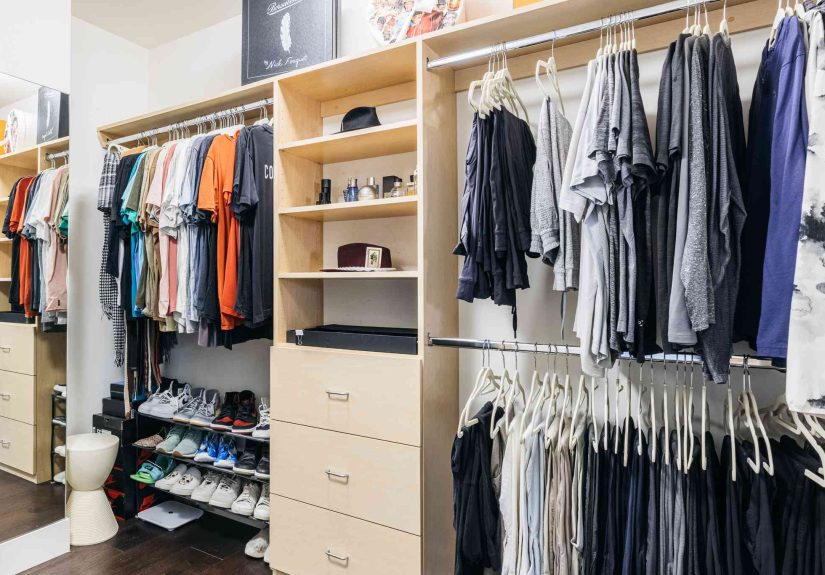
Most walk-ins waste a shocking amount of vertical space. Install double-hanging rods for shirts, jackets, and folded-over pants so you can fit two rows of clothing instead of one. Reserve a single high rod for long dresses, maxi skirts, or coats. This one change can double your storage with almost no extra footprint.
4. Add floor-to-ceiling shelving
Floor-to-ceiling shelves make your walk-in closet feel custom and help eliminate dead zones near the ceiling. Use upper shelves for off-season items and special pieces you don’t reach for daily. Clear bins or matching baskets keep those items dust-free and visually tidy while maximizing every inch of wall space.
5. Turn corners into storage gold
Closet corners are notorious “black holes” where clothes disappear. Solve this with corner shelves, angled hanging rods, or a carousel-style corner unit. Even a simple L-shaped shelf can create a neat landing spot for bags, folded jeans, or storage boxes instead of wasted space.
6. Add a closet island or storage bench
If your walk-in closet is large enough, a central island feels instantly high-end and incredibly practical. Use drawers for underwear, jewelry, and accessories; add a countertop as a folding station or place to lay out outfits. In smaller closets, a storage bench at the end of the hanging area offers both seating and hidden storage for blankets, boots, or off-season clothes.
7. Include hidden hampers and laundry solutions
A beautiful walk-in loses its magic if dirty clothes are piled on the floor. Add a built-in tilt-out hamper, a pull-out laundry basket, or at least a designated hamper tucked into a cubby. If you have the plumbing and budget, a nearby laundry chute or adjacent laundry cabinet is peak convenience.
8. Install pull-out accessories: racks, rods, and trays
Pull-out tie racks, belt organizers, valet rods, and jewelry trays keep small pieces neat and easy to see. These slim organizers slide back into the cabinetry when not in use but make your closet feel like a professionally designed dressing room when you’re getting ready.
9. Use drawers and cubbies for everyday essentials
Not everything needs to hang. Drawers and cubbies are perfect for T-shirts, athletic wear, pajamas, and bags. Deep drawers hide visual clutter, while open cubbies make it easy to grab items quickly. Dividers and organizers prevent the “junk drawer” effect and keep everything in its place.
Lighting, Color, and Finishes
10. Upgrade the lighting like it’s a tiny room (because it is)
Harsh overhead bulbs are the enemy of flattering outfits. Layer your lighting with a ceiling fixture, recessed lights, and LED strips under shelves or along hanging rods. Good lighting helps you see true colors, reduces shadows, and makes your walk-in closet feel like a boutique instead of a storage cave.
11. Add LED strips to shelves and rods
LED strip lights along shelves and hanging bars create an instant “designer closet” vibe. They highlight your clothes and bags like display pieces and make it easier to find black pants in a sea of black clothes. Choose warm white for a cozy, flattering glow.
12. Choose a cohesive color palette
Carrying your bedroom’s color palette into the closet creates a calm, cohesive transition. Light neutrals like white, warm beige, or soft gray make the space feel larger and brighter. If you love color, bring it in with painted cabinetry, a statement rug, or patterned wallpaper on the back wall.
13. Embrace rich wood tones for a luxe look
Dark woods like walnut or mahogany instantly elevate a walk-in closet, especially when paired with brass hardware and warm lighting. The contrast between rich wood and your wardrobe makes accessories pop and gives the space a cocooning, boutique-like atmosphere.
14. Use mirrors to visually double your closet
Full-length mirrors are non-negotiable, but you can go further with mirrored cabinet doors, mirror-backed shelves, or a mirror panel behind a shoe wall. Mirrors bounce light around, make the closet feel larger, and allow you to see outfits from multiple angles without stepping back into your bedroom.
15. Bring in a statement light fixture
Just because it’s a closet doesn’t mean it can’t have a chandelier or a sculptural pendant. A stylish fixture over the island or in the center of the space adds drama and personality. Make sure the scale is appropriate so you don’t bump your head while grabbing a sweater.
16. Layer texture with rugs, wallpaper, and fabrics
A walk-in closet can feel cold if it’s all smooth shelves and metal rods. Soften it with a plush rug underfoot, woven baskets, fabric drawer liners, or a fabric-covered bench. Patterned wallpaper or a painted feature wall behind open shelving adds visual interest and a boutique feel.
Display-Worthy Storage Ideas
17. Create a shoe wall
If you’re a shoe lover, dedicate one wall to shallow shelves spaced just tall enough for each pair. Display heels, sneakers, and boots like art. Keep frequently worn pairs at eye level and stash special-occasion shoes higher up. It’s functional and surprisingly satisfying to look at.
18. Showcase bags and hats on open shelves
Bags and hats look best when they aren’t crushed at the back of a shelf. Use open shelves, cubbies, or wall hooks to show them off. Stuff bags with tissue paper so they hold their shape, and use risers or bookends to keep everything upright and orderly.
19. Add a jewelry drawer with velvet inserts
Jewelry tends to tangle when tossed into bowls or boxes. A shallow drawer with divided velvet trays keeps earrings, rings, and necklaces separated and visible. It feels like shopping your own collection every morning instead of untangling a knot of chains.
20. Create a “favorites” rail
Install a short rail or pull-out valet rod for current favorite pieces: your go-to jeans, a couple of blazers, or the dress you’re wearing this weekend. Rotating items on this rail helps you actually wear what you love and simplifies decision-making on busy mornings.
21. Style your closet like a boutique
Add framed art, a small vase of flowers, or a decorative tray for perfume and watches. These small details transform the closet from “storage room” to “dressing room.” It may sound extra, but making the space pretty encourages you to keep it organized.
22. Use matching hangers for a polished look
Swapping mismatched hangers for matching ones is a simple upgrade with major payoff. Slim flocked hangers save space and keep clothes from slipping, while wood hangers feel classic and sturdy. Whichever style you choose, consistency makes the entire closet look more orderly.
23. Add seating for comfort and practicality
A small ottoman, bench, or pouf gives you a spot to sit while putting on shoes or sorting clothes. If possible, choose a model with hidden storage inside. Upholstery adds softness, and the seat doubles as a landing spot for the next-day outfit you’re planning.
Ideas for Small Walk-In Closets
24. Take storage all the way up to the ceiling
In a small walk-in closet, you can’t afford unused vertical space. Extend shelves and cabinets to the ceiling, and keep a step stool nearby for the highest spots. Store luggage, holiday outfits, or sentimental items up top so everyday pieces remain accessible at arm level.
25. Use pocket or sliding doors
Swinging doors eat up precious floor space. If you’re renovating, consider pocket doors or sliding barn-style doors to free up room for a wider aisle or extra shelving. Even swapping to a curtain in a very tight space can make the closet feel more open and flexible.
26. Choose light colors and reflective surfaces
Light walls, pale cabinetry, glass-front doors, and mirrored surfaces help a compact walk-in feel airy. Glossy paint or glass shelves subtly bounce light around. The goal is to minimize visual heaviness so your closet reads as bright instead of cramped.
27. Install customizable modular systems
Off-the-shelf modular closet systems are perfect for small walk-ins because they can be rearranged as your wardrobe changes. Start with a simple configuration of hanging rods, shelves, and drawers, then add shoe racks, baskets, or extra rods later without tearing everything out.
28. Use doors and walls for hooks and racks
Don’t neglect the back of the door and narrow wall slivers. Add hooks for bags, scarves, hats, or robes; over-the-door racks for shoes; or a slim rail for hanging tomorrow’s outfit. These micro storage zones relieve pressure on the main shelves.
29. Corral small items in clear bins and labeled baskets
When space is tight, visual clutter makes the whole closet feel chaotic. Clear bins let you see what’s inside, while opaque baskets hide messier items. Labelseither printed or handwrittensave you from digging around for that one elusive scarf.
Closet Design Details That Feel Luxurious
30. Add a built-in vanity or dressing station
If you have a little extra wall space, carve out a vanity zone with a shallow counter, mirror, and a stool. Store makeup, hair tools, or grooming essentials in drawers below. This turns your walk-in closet into a true dressing room and frees up bathroom counter space.
31. Bring in soft-close hardware and quality pulls
Upgrading to soft-close hinges and drawers is a small splurge that makes daily use feel more refined. Pair them with stylish hardwarebrass, matte black, or mixed metalsto give basic cabinetry a custom look. You’ll notice the difference every single day.
32. Consider glass-front cabinets or doors
Glass-front doors protect clothing from dust but still let you see inside, which encourages you to stay organized. Frosted or reeded glass offers a softer, more forgiving look if you prefer a little visual blur. Either way, glass surfaces reflect light and add a luxe, showroom feel.
33. Add a statement rug
A cozy rug is a game-changer underfoot. Choose a low-pile option that’s easy to vacuum and doesn’t interfere with doors or drawers. Pattern can help hide lint and dust while also adding personality to a neutral space.
34. Integrate tech: outlets, charging, and even speakers
If you’re remodeling, plan for electrical outlets in smart places: near an island for a steamer, by the vanity for hair tools, or in a drawer for a device charging station. Some homeowners even add small speakers or a smart display so they can check the weather or play music while getting ready.
35. Make room for seasonal rotation
Designate a specific zone for off-season clothing and accessories. Use vacuum-sealed bags, bins, or upper cabinets for bulky winter items in summer and swap them out twice a year. This keeps your primary hanging space focused on what you actually wear right now.
36. Include a dedicated “donation” bin
Build decluttering into your walk-in design by reserving one bin or basket for donations. When something no longer fits or feels like “you,” drop it right into the bin. Once it’s full, move it out of the house. This prevents your closet from slowly reverting back to chaos.
37. Personalize it so it feels like your space
The best walk-in closet ideas are the ones that fit you. Display a favorite photo, your signature fragrance collection, or the pair of shoes you splurged on and love. A closet you genuinely enjoy spending time in is a closet you’re more likely to keep organized.
Real-Life Walk-In Closet Experiences and Lessons Learned
Beyond the pretty photos, the most helpful walk-in closet ideas come from real-life trial and error. Here are some lived-in lessons and experiences that can help you avoid common mistakes and create a space that actually works day to day.
First, almost everyone underestimates how much hanging space they need for long items. It’s tempting to carve every wall into double-hanging rods, but if you love maxi dresses, trench coats, or long cardigans, you’ll quickly run out of room. Many homeowners later regret not reserving at least one full-height section. A good rule of thumb: stand in front of your current closet and count how many truly long pieces you own, then add a little buffer for future purchases.
Second, drawers are magicaluntil they become black holes. People often ask for “as many drawers as possible,” then realize they can’t remember what’s in the bottom ones. The most successful walk-in closet designs balance open and closed storage. Everyday items like jeans, sweaters, and shoes tend to work best in open shelves or cubbies where you can see them at a glance. Drawers are ideal for smaller things: socks, underwear, T-shirts, and accessories that might otherwise look messy on display.
Lighting is another area where experience speaks loudly. Many closets start with a single builder-grade ceiling light that casts harsh shadows and makes colors look off. After a while, people get frustrated trying to tell navy from black or match subtle tones. Upgrading to layered lightingceiling fixture plus under-shelf LEDsgets rave reviews from anyone who’s done it. They often say it’s one of the most impactful changes, especially in windowless walk-ins.
Another common experience: the “Pinterest-perfect” system that doesn’t match your habits. Maybe you fell in love with a wall of open shelving but you’re not the type to fold everything neatly; or you installed lots of hooks but actually prefer everything hidden behind doors. The most successful closets are honest about how you live. If you know you toss sweaters instead of folding them, baskets and deep shelves will serve you better than a tight grid of cubbies.
People also learn quickly that floor space is precious. That cute pile of shoes near the door? It grows. Many homeowners wish they had added a specific landing area for shoes near the entranceeither a low shelf, a shallow built-in, or a mat and rackso footwear doesn’t creep into the main aisle. Keeping the center of the closet clear makes it feel larger and prevents tripping hazards during rushed mornings.
On the emotional side, a well-designed walk-in closet genuinely changes routines. Some people describe feeling calmer when their clothes are displayed neatly and they can see everything they own at once. It’s easier to create outfits, harder to lose track of pieces you love, and more obvious when you’re overbuying a certain category (looking at you, black leggings and white T-shirts). A thoughtfully designed closet also supports intentional shoppingwhen you know your storage limits, you think twice before adding another bulky coat.
Finally, the best experience-based advice is to leave room for change. Your wardrobe and life will evolve: careers shift, kids arrive, hobbies change, and so do your clothing needs. Adjustable shelves, movable rods, and modular accessories make it easy to tweak the layout without a full renovation. Leaving a little “blank space” also keeps the closet from feeling overloaded on day one. You want a system that can grow with younot one that only looks perfect in the initial photos.
When you combine these real-life lessons with the 37 walk-in closet ideas above, you end up with more than just a stylish storage space. You get a personalized, flexible dressing area that supports your daily routines, reflects your style, and makes getting ready feel like a small luxury every single day.
Conclusion
Designing the perfect walk-in closet isn’t about copying a celebrity dressing room. It’s about organizing what you own, maximizing the space you have, and adding just enough style and comfort that you actually enjoy being in there. From smart layout ideas and vertical storage to thoughtful lighting and personal touches, each of these 37 walk-in closet ideas and design tips can help transform your closet into one of the hardest-workingand most delightfulspaces in your home.
Start with a declutter, plan your zones, invest in lighting and quality organizers, and sprinkle in a few boutique-like details. Your future self, rushing around on Monday morning, will be very grateful.