Table of Contents >> Show >> Hide
- The House Had History, Character, and a Few Identity Issues
- After the Redo, the Farmhouse Feels Lighter, Softer, and Far More Cohesive
- Why the Floors Changed Everything
- The Kitchen Proves Old Stone and Stainless Steel Can Absolutely Be Friends
- Lime Walls, Natural Materials, and the Quiet Luxury of Texture
- Room by Room, the Details Are Thoughtful Rather Than Theatrical
- What Makes This Renovation So Successful?
- Why This Catalan Farmhouse Speaks to a Bigger Design Shift
- The Real Magic of the Before-and-After
- Additional Reflections: What It Feels Like to Experience a Home Like This
- Conclusion
Some houses whisper. This one, apparently, had been yelling for help through a maze of awkward levels, heavy-handed updates, and a general sense of “I used to be beautiful, then the 1970s happened.” The good news: Espanyolet listened. The Mallorca-based design studio, led by Thomas Bossert and Melissa Rosenbauer, took on a historic Catalan farmhouse and gave it the kind of renovation that makes design lovers clutch their linen napkins in delight.
The result is not a flashy museum piece and not a sterile minimalist makeover pretending history is inconvenient. Instead, it is a warm, tactile, deeply considered restoration that lets the original architecture do the talking while quietly upgrading how the house lives. That balance is what makes this project so compelling. The old bones remain gloriously old. The new interventions are crisp, useful, and confident. Together, they create a home that feels less “renovated” and more “finally understood.”
For anyone obsessed with farmhouse renovation, Mediterranean interiors, or the art of mixing rustic architecture with modern restraint, this before-and-after transformation is a master class in what happens when a design team resists the urge to over-style and instead edits with purpose.
The House Had History, Character, and a Few Identity Issues
The farmhouse is an old traditional property on Mallorca, used as a holiday home by owners based in Barcelona. They found Espanyolet online and were drawn to the studio’s now-signature modern Mediterranean style. That phrase gets tossed around a lot these days, often attached to anything involving a jute rug and one olive branch in a vase. Here, though, it actually means something.
Before the redesign, the house had already gone through several less-than-great renovations over past decades. Those earlier changes left the interior feeling fragmented rather than cohesive. There were odd steps between rooms, disconnected transitions, and a layout that interrupted flow instead of supporting it. In older homes, this is where things usually go one of two ways: either the renovation erases the building’s soul in the name of convenience, or it keeps every inconvenient quirk and calls it charm. Espanyolet chose the smarter middle path.
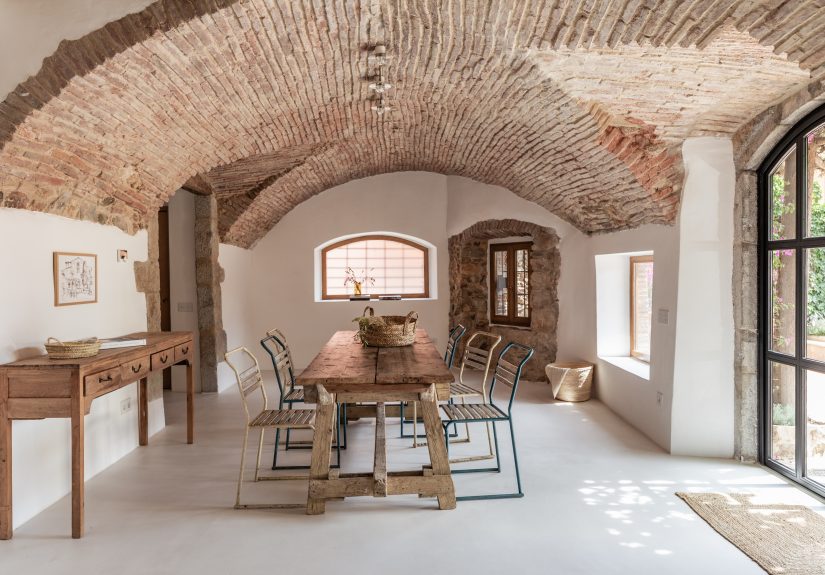
They started by recognizing what was worth saving. The original vaulted brick ceilings, stone stairs, stone door frames, beams, and other traditional features were not treated as quaint leftovers. They became the project’s foundation. That decision matters because the best historic renovations do not compete with the house’s DNA. They work with it.
After the Redo, the Farmhouse Feels Lighter, Softer, and Far More Cohesive
The biggest achievement of the renovation may be how calm the house feels now. Calm is not the same as plain. It is what happens when visual noise is removed, materials speak the same language, and every room feels like part of one story instead of a family reunion of mismatched decades.
Espanyolet stripped the home back to its essential character and then rebuilt the atmosphere through texture, proportion, and tone. Rather than using lots of decorative tricks, the team leaned into architectural honesty. Curves are echoed instead of hidden. Stone is celebrated instead of covered. Natural imperfections are not “fixed” into blandness. The house now has continuity from room to room, which is a huge part of why the transformation feels so satisfying.
This approach follows one of the oldest truths in renovation: the more historic a home is, the more every new decision should earn its place. That means fewer gimmicks, better materials, and a stronger point of view. Espanyolet did exactly that.
Why the Floors Changed Everything
One of the boldest moves in the project was replacing the old floors with microcement after taking the farmhouse back down to its dirt origins. On paper, that might sound like a surprising choice in a historic Catalan farmhouse. In reality, it is one of the reasons the interiors feel so unified.
Microcement gives the house visual ease. It smooths out the interior rhythm without trying to impersonate antique flooring. That honesty is important. Instead of forcing a faux-rustic solution, Espanyolet used a contemporary material that quietly recedes and lets the original masonry, arches, and ceilings stay in the spotlight.
There is also a practical intelligence to the choice. In older homes with irregular geometry and centuries of accumulated changes, the floor can either amplify chaos or create calm. Here, it does the latter. The continuous surface allows the eye to move more freely, making the rooms feel more open and connected. It is a modern intervention, yes, but one that serves the architecture instead of stealing the scene like an overconfident wedding DJ.
The Kitchen Proves Old Stone and Stainless Steel Can Absolutely Be Friends
If you want one image that sums up the project, it might be the kitchen: original arches overhead, old stone character all around, and a stainless steel kitchen inserted with total confidence. It is the kind of contrast that could have gone terribly wrong in lesser hands. Instead, it looks inevitable.
The stainless steel kitchen by Santos brings a sharper, cleaner note to the interior without feeling cold. That is partly because the rest of the room is rich with texture. The steel does not have to generate warmth on its own; the house already provides that through stone, lime, wood, and light. In return, the kitchen gives the historic shell something it needs: precision.
This is one of the smartest lessons from the renovation. When working inside an old structure, not every new element has to mimic age. In fact, it is often stronger when contemporary additions look clearly contemporary. That clarity creates tension, and tension creates beauty. The kitchen works because it respects the old while refusing to cosplay as old. It knows exactly what century it belongs to, and somehow that makes the farmhouse feel even more timeless.
Lime Walls, Natural Materials, and the Quiet Luxury of Texture
Espanyolet’s background in pigment, textiles, and surface treatment shows up everywhere in the house. Their lime walls, created in collaboration with local artisans on Mallorca, are especially important to the project’s atmosphere. These are not flat decorator walls chosen from a fan deck after three minutes of panic. They have depth, variation, and life.
The studio has spoken about using more than one tone in a wall treatment so the surface reflects color into the room rather than sitting there passively. That idea is visible throughout the farmhouse. The walls do not just contain the space; they help generate its mood. Light drifts differently across them over the course of the day, which gives the interiors a softness that ordinary paint rarely achieves.
Natural lime also suits an old house beautifully. It carries a timeworn character without feeling fake, and it supports the breathable, tactile quality that historic stone homes tend to crave. Paired with vintage linen, terracotta, wood, jute, and raw textiles, the palette becomes rich without becoming busy. That is difficult to do. Many homes that aim for “natural texture” end up looking like a basket store exploded. This one stays disciplined.
Room by Room, the Details Are Thoughtful Rather Than Theatrical
One of the farmhouse’s most charming features is the rebuilt sofa de obra, a built-in sofa that looks as though it has always belonged there. Layered with undyed vintage linen, it reinforces the project’s commitment to ease and permanence. Nothing feels overly precious. You can imagine sitting there with coffee, reading, or doing absolutely nothing productive and calling it Mediterranean wellness.
The original stone stairs remain intact, and lighting from Mallorca-based Contain Studio helps draw attention to the arches and vaulted forms throughout the house. This was a particularly smart move because the farmhouse had previously suffered from darkness and messy wiring. The updated lighting does more than brighten the rooms. It stages the architecture. Sconces and hanging fixtures guide the eye toward the features that make the home special.
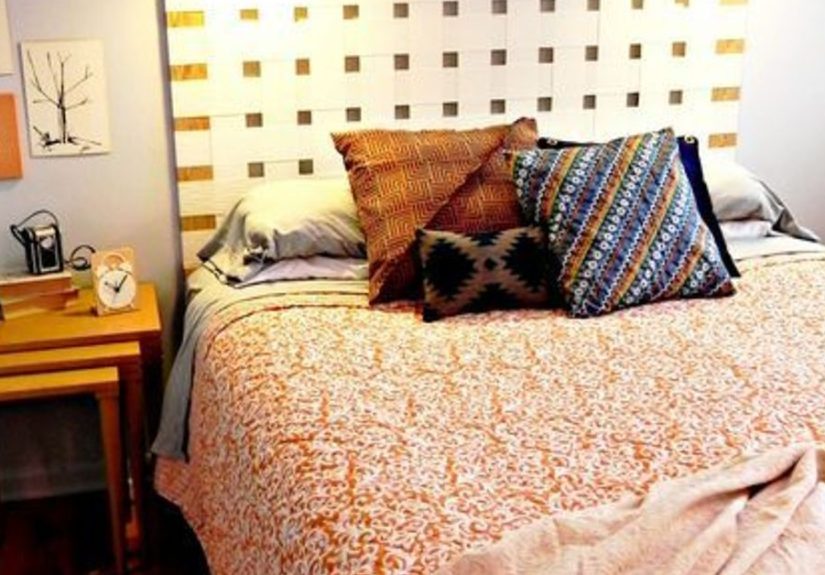
In the bedrooms, the restraint continues. There are cloth headboards, raw linen coverlets, original beams, and an overall sense that every piece belongs because it contributes to the room’s texture, scale, or mood. A built-in desk was preserved. A vintage ship window remains. Pink-toned natural terracotta tiles add warmth without trying too hard to be cute. Even the round jute rugs echo the curves of the structure. Nothing screams for attention, which is precisely why the whole house feels so composed.
What Makes This Renovation So Successful?
It works because Espanyolet did not confuse drama with quality. The before-and-after difference is substantial, but the redesign does not rely on trendy flourishes or visual stunts. Instead, it succeeds through five clear principles.
1. Preserve the best original features
The vaulted ceilings, stone frames, beams, stairs, and other historic elements were treated as assets, not obstacles.
2. Simplify circulation and visual flow
Historic homes do not have to feel clumsy. Better transitions and more cohesive surfaces made the farmhouse easier to inhabit.
3. Contrast old and new with confidence
The stainless steel kitchen and microcement floors are modern, but they are modern in service of the old architecture.
4. Use natural materials that age gracefully
Lime walls, terracotta, linen, jute, wood, and stone create a palette that feels lived-in rather than overproduced.
5. Let texture do the decorating
Instead of cluttering the rooms with trendy accessories, the design relies on material depth, handcrafted surfaces, and quiet tonal variation.
Why This Catalan Farmhouse Speaks to a Bigger Design Shift
This project also taps into a larger movement in home design. More homeowners are moving away from fast-finish interiors and toward spaces that feel storied, tactile, and regionally grounded. That does not mean everyone suddenly wants to live in a ruin with one functioning lightbulb and a poetic relationship with mildew. It means people increasingly value homes that feel rooted.
Espanyolet’s redesign captures that mood beautifully. It is aspirational, but not in a glossy, untouchable way. It feels human. You notice the hand of the maker. You notice the weight of materials. You notice that the house has not been polished into submission. In an era of copy-and-paste interiors, that authenticity is powerful.
The farmhouse also shows why Mediterranean design continues to resonate so strongly. At its best, it is not just a look. It is an approach: keep things natural, let light matter, honor craft, edit hard, and remember that a home should feel better the longer you live with it.
The Real Magic of the Before-and-After
The dramatic part of this renovation is not that a sad old farmhouse became photogenic. Plenty of projects manage that trick. The real success is that Espanyolet made the home feel inevitable, as though this was always the version waiting inside it.
That is what separates a good renovation from a memorable one. A good renovation fixes problems. A memorable renovation reveals identity. This Catalan farmhouse now feels grounded in Mallorca, respectful of its history, and entirely suited to modern life. It is layered but not cluttered, rustic but not rough, contemporary but not cold.
In short, it is the kind of home that makes you want to rethink your own renovation plans, strip back the unnecessary stuff, and ask a simple question: what if the answer is not more, but better?
Additional Reflections: What It Feels Like to Experience a Home Like This
There is also something emotionally persuasive about a project like this that goes beyond finishes and floor plans. Homes with real age carry a kind of tension. You can feel the years in them, but you can also feel the burden of everything that has been added badly over time. When a renovation is done well, that tension lifts. The house exhales.
That is the sensation this Espanyolet farmhouse seems to deliver. Imagine entering a place that once felt dark, chopped up, and vaguely apologetic, and finding it now open in spirit if not always literally open in plan. The arches become dramatic instead of oppressive. The walls reflect light instead of swallowing it. The built-ins feel generous. The materials ask to be touched. You stop scanning the rooms for flaws and start noticing atmosphere.
That experience matters because good design is not only visual. It is physical and psychological. Microcement underfoot changes how a room flows. Limewashed walls soften light and make the air feel calmer. Linen on a built-in sofa changes whether a corner feels decorative or inhabitable. A stainless steel kitchen can sharpen the whole house, but only if it is anchored by textures that keep it from turning clinical. In this farmhouse, that balance appears to be the whole point.
There is a lesson here for anyone renovating an old house, whether it is a Spanish finca, an American farmhouse, or a slightly grumpy bungalow with excellent bones and terrible decisions from 1984. You do not need to make everything look old to respect history. You need to understand what the building is best at and then remove whatever is getting in the way.
Sometimes that means preserving a stone stair even if it is imperfect. Sometimes it means introducing a sleek kitchen because a fake rustic one would feel dishonest. Sometimes it means using fewer materials, fewer colors, and fewer “statement” moments so the architecture can breathe again. And sometimes it means realizing that the room does not need another object; it needs better light.
What makes this farmhouse so memorable is that it feels lived with rather than styled at. You can picture summer mornings there, shutters open, shadows moving across textured walls. You can imagine the upstairs bedrooms staying cool and quiet, the kitchen becoming the social anchor, the built-in sofa collecting books, bags, and people through the week. The house seems ready for actual life, not just a photo shoot.
That may be the most aspirational thing of all. Not perfection. Not trendiness. Not renovation as performance. Just a home that has recovered its character and found its rhythm again. Espanyolet did not merely decorate a historic Catalan farmhouse. They gave it continuity, usefulness, and mood. And in the world of before-and-after transformations, that is the kind of glow-up that lasts longer than whatever color trend is currently terrorizing social media.
Conclusion
Espanyolet’s redesign of this historic Catalan farmhouse is a reminder that the most successful renovations are rarely the loudest. By preserving vaulted ceilings, stone elements, and original character while introducing microcement floors, artisan lime walls, tailored lighting, and a crisp stainless steel kitchen, the studio created a home that feels both rooted and refreshed. It is a sophisticated lesson in modern Mediterranean interior design, historic farmhouse renovation, and the value of letting texture, craft, and architectural integrity lead the conversation.