Table of Contents >> Show >> Hide
- Who Is the Screenwriting Dermatologist?
- Why Creativity in Medicine Matters
- Screenwriting and the Patient Story
- Observation: The Shared Skill of Dermatology and Art
- Narrative Medicine: Listening as Treatment
- Creativity Helps Fight Burnout
- How Creativity Improves Patient Communication
- Creativity and Health Equity
- What Doctors Can Learn from Screenwriters
- What Patients Can Learn from Creative Doctors
- Experiences from the Clinic and the Page: Creativity in Real Life
- Conclusion
Medicine has a reputation for being all white coats, lab values, and handwriting that looks like a squirrel ran across the page. But behind every diagnosis is a story, and behind every effective physician is a mind that can observe, interpret, improvise, and connect. That is where creativity enters the exam roomnot as decoration, but as a clinical tool.
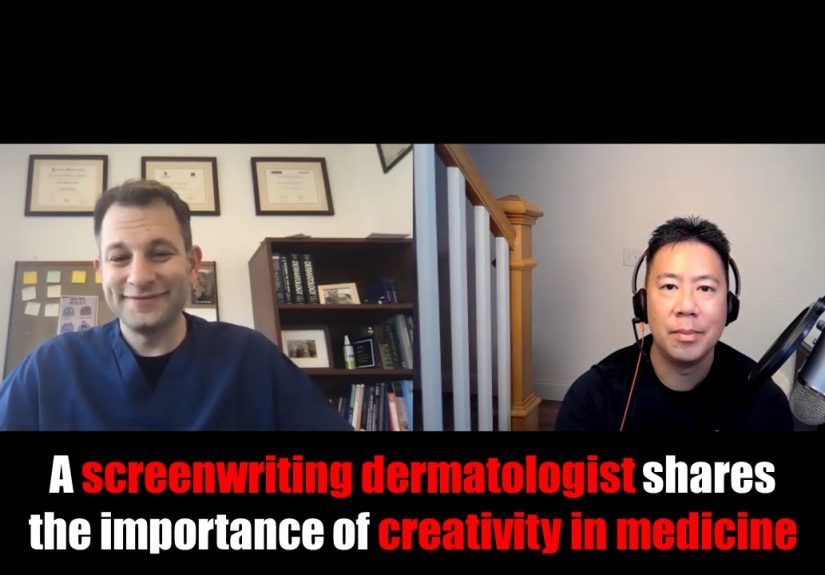
Few physicians illustrate this better than Dr. Jules Lipoff, a board-certified dermatologist known not only for treating skin, hair, and nail conditions but also for writing, screenwriting, medical commentary, and exploring the relationship between pop culture and health. His career offers a refreshing reminder: doctors are not robots in clogs. They are listeners, translators, problem-solvers, and sometimes, storytellers with stethoscopes.
The title “screenwriting dermatologist” may sound like the setup for a sitcom pilot, but the idea is serious. Screenwriting requires structure, character awareness, dialogue, tension, revision, and empathy. Medicine requires many of the same skills. A patient arrives with symptoms, fears, a backstory, and sometimes a plot twist. The physician must listen closely, identify what matters, avoid assumptions, and help guide the next scene toward healing.
Who Is the Screenwriting Dermatologist?
Dr. Jules Lipoff is a dermatologist whose professional interests extend well beyond the clinic. His work has included academic dermatology, teledermatology, access-to-care research, health equity, medical commentary, and consulting on medical issues in media. Earlier profiles have described his background in humor writing, screenwriting, and pop culture, including internships with major humor publications during his undergraduate years.
That combination is not as unusual as it may seem. Dermatology is one of medicine’s most visual specialties. A dermatologist studies color, texture, distribution, borders, patterns, and change over time. In other words, dermatologists are trained observers. Screenwriters are also trained observers. They notice how people speak when they are afraid, how silence changes a room, how a small detail can reveal a larger truth. Put those skills together, and you get a physician who sees medicine as both science and story.
Dermatology also demands communication that is clear, practical, and compassionate. A rash may be medically minor but emotionally enormous. Acne can affect confidence. Psoriasis can shape clothing choices, relationships, and work life. Skin cancer screening may bring fear before a biopsy is even performed. A creative physician understands that the diagnosis is only one part of the patient’s experience. The rest is meaning.
Why Creativity in Medicine Matters
Creativity in medicine does not mean guessing. Nobody wants a doctor to say, “Let’s freestyle this biopsy.” Creativity means flexible thinking supported by evidence. It means asking better questions, seeing patterns others miss, explaining complex information in understandable language, and adapting care to the person in front of you.
Modern health care is full of protocols, algorithms, checklists, and guidelines. These tools are essential. They prevent errors, standardize care, and help clinicians make safer decisions. But patients are not spreadsheets with pulse rates. A guideline may suggest a treatment, while a patient’s life may reveal why that treatment is hard to follow. Maybe the medication is too expensive. Maybe the instructions are confusing. Maybe the patient works nights, cares for a parent, or fears side effects because of a past experience.
Creativity helps physicians bridge the gap between “best practice” and “real life.” It turns medical knowledge into usable care. It helps a doctor explain sunscreen to a construction worker, eczema care to a tired parent, or melanoma warning signs to someone who has never heard of the ABCDE rule. The creative physician is not less scientific. The creative physician is better at delivering science to humans.
Screenwriting and the Patient Story
Screenwriting begins with character. Who wants what? What obstacle stands in the way? What changes by the end? A good clinical encounter asks similar questions. What does the patient want? Relief? A diagnosis? Reassurance? A second opinion? What obstacle blocks that goal? Pain, cost, fear, mistrust, time, stigma, or uncertainty?
Doctors are trained to take histories, but a history is more than a checklist. A patient might say, “This rash started last month,” but the deeper story may include a new job, a new medication, a stressful move, a change in laundry detergent, or a vacation with enough sun exposure to make sunscreen file a complaint. The physician’s task is to listen for the scene behind the symptom.
Screenwriters also understand subtext. Characters rarely say exactly what they mean. Patients may do the same. “I’m fine” may mean “I’m embarrassed.” “It doesn’t bother me” may mean “I’ve given up trying to fix it.” “I Googled it” may mean “I am terrified and need you not to laugh at me.” Creativity makes room for these hidden layers.
Observation: The Shared Skill of Dermatology and Art
In dermatology, the eye matters. A small change in border, color, scale, or pattern can shift the diagnostic possibilities. That is why the arts and humanities have become increasingly relevant in medical education. Visual arts training has been studied as a way to improve observation, description, ambiguity tolerance, and communication among medical learners.
Looking at a painting and looking at a patient are not the same thing, of course. One hangs quietly on a wall; the other may be late for work and worried about insurance. But both require disciplined attention. In art observation, students learn to describe what they see before jumping to conclusions. In medicine, that habit can be powerful. “I see an irregular dark lesion with uneven borders” is more useful than “That looks bad.” Description slows down premature judgment.
Creative observation also encourages humility. Two people may look at the same image and notice different things. In the clinic, nurses, medical assistants, residents, patients, and family members may each hold part of the truth. A creative doctor is willing to ask, “What am I missing?” That question may be one of the most underrated diagnostic tools in medicine.
Narrative Medicine: Listening as Treatment
Narrative medicine is built on a simple but profound idea: patients bring stories, not just symptoms. The field emphasizes attentive listening, reflective practice, and the ability to recognize the meaning of illness in a person’s life. It reminds clinicians that healing is not only the removal of disease; it is also the restoration of dignity, trust, and understanding.
This approach fits naturally with screenwriting. A screenplay teaches that every character has a point of view. Narrative medicine teaches that every patient has one, too. A physician may see “chronic urticaria,” while the patient sees sleepless nights, social anxiety, and a bathroom cabinet full of creams that promised miracles and delivered disappointment.
When doctors listen narratively, they often communicate better. They are more likely to ask open-ended questions, notice emotional cues, and explain the plan in language that fits the patient’s world. This does not require a 90-minute monologue in every appointment. It can be as simple as asking, “What worries you most about this?” or “How is this affecting your daily life?” Those questions are small doors. Creativity helps open them.
Creativity Helps Fight Burnout
Physician burnout is a major concern in American health care. The work is emotionally intense, administratively heavy, and often performed under time pressure. Burnout can leave clinicians exhausted, detached, and less connected to the sense of purpose that brought them to medicine in the first place.
Creative work cannot fix broken systems by itself. A poem will not magically reduce prior authorization paperwork, although many doctors would gladly write a sonnet about that particular villain. But creativity can help clinicians reconnect with meaning. Writing, art, music, comedy, film, and reflective practice can create space to process difficult experiences and remember the human side of care.
For a physician like Dr. Lipoff, screenwriting and commentary are not side hobbies floating far away from medicine. They are connected to the same core impulse: to understand people, communicate clearly, and challenge ignorance. Creative work can help doctors remain curious instead of cynical. It can turn frustration into expression and observation into insight.
How Creativity Improves Patient Communication
One of the most practical benefits of creativity in medicine is better explanation. Patients often leave appointments remembering only part of what they heard. Medical language can sound like alphabet soup wearing a lab coat: CBC, CMP, SPF, BCC, SCC, MRI, and so on. A creative physician translates without talking down.
For example, explaining inflammation as the body’s “smoke alarm” can help patients understand why redness, swelling, and itching happen. Comparing sunscreen to a seatbelt can make prevention feel routine rather than dramatic. Describing a chronic condition as something to manage rather than “cure overnight” can set realistic expectations and reduce disappointment.
Screenwriting also teaches economy. A good line of dialogue does not wander through twelve hallways before finding the kitchen. It gets to the point while revealing character. Doctors need that skill. In a short visit, clarity matters. The best explanation is accurate, brief, memorable, and tailored to the patient. That is not dumbing down medicine. That is delivering it well.
Creativity and Health Equity
Creativity also matters because health care is not experienced equally. Patients differ in language, culture, income, access, gender identity, disability, trust in institutions, and previous encounters with bias. A rigid approach can miss these realities. A creative approach asks how care can be adapted without lowering standards.
In dermatology, health equity includes the need for better representation of skin of color in medical images and education. Conditions can appear differently across skin tones. If clinicians are not trained to recognize that variation, diagnosis may be delayed. Creativity here means rethinking what “normal teaching” looks like and building better tools for a broader population.
It also means meeting patients where they are. Teledermatology, patient education, community clinics, media commentary, and accessible writing can all extend medical knowledge beyond the traditional exam room. A physician who can communicate through multiple formatsclinical notes, public articles, podcasts, scripts, and plain-language explanationshas more ways to reach people.
What Doctors Can Learn from Screenwriters
1. Start with the human problem
In screenwriting, plot matters because people matter. In medicine, the lab result matters because the patient matters. Creative doctors keep the person at the center of the plan.
2. Listen for conflict
Every story has conflict. In medicine, conflict may appear as fear, uncertainty, cost, misinformation, or competing priorities. Identifying the conflict helps the physician design a better solution.
3. Revise without ego
Screenwriters rewrite constantly. Doctors also revise: diagnoses change, treatments fail, new information appears, and plans need adjustment. Creativity makes revision feel like progress, not failure.
4. Use details wisely
A screenwriter knows one detail can define a scene. A doctor knows one detail can change a diagnosis. The trick is noticing the right detail without drowning in noise.
5. Respect the audience
Great writing respects viewers. Great medicine respects patients. Both require clarity, honesty, and emotional intelligence.
What Patients Can Learn from Creative Doctors
Patients can also benefit from thinking creatively about their own care. Before an appointment, it helps to write down the “story” of the concern: when it started, what changed, what makes it better or worse, what has already been tried, and what outcome matters most. Photos can be especially useful in dermatology because skin conditions often change over time. A rash may perform a disappearing act right before the appointment, as if it knows it is being investigated.
Patients should also feel empowered to share context. If a treatment plan is too expensive, too complicated, or unrealistic, saying so is not complaining. It is useful medical information. The best plan is not the one that sounds impressive in the chart; it is the one the patient can actually follow.
Experiences from the Clinic and the Page: Creativity in Real Life
Imagine a dermatologist seeing a teenager with severe acne. The medical part of the visit includes diagnosis, treatment options, side effects, and follow-up. But the creative part begins when the physician notices the teen barely making eye contact. A purely technical visit might end with a prescription. A more creative, human visit might include a simple acknowledgment: “This can be frustrating, and it is not your fault.” That line does not replace medication. It makes the medication easier to trust.
Now picture an older adult coming in for a skin check. The doctor finds a suspicious spot and recommends a biopsy. The patient stiffens. A creative physician recognizes that the fear is not only about the procedure. It may be about cancer, pain, cost, or memories of a spouse’s illness. The doctor slows down, explains the reason for the biopsy, describes what will happen, and checks understanding. The scene changes from “something scary is happening to me” to “I know the next step.”
Creativity also appears in the way doctors teach. A dermatologist might explain eczema as a “leaky skin barrier,” helping a parent understand why moisturizer is not cosmetic fluff but part of treatment. The physician might compare consistent sunscreen use to brushing teeth: not glamorous, not dramatic, but extremely useful when done daily. These metaphors stick because they connect medical advice to ordinary life.
There is also creativity in uncertainty. A patient may arrive with a rash that does not read like a textbook. The clinician must consider possibilities, ask about exposures, review medications, examine distribution, and sometimes admit, “We need more information.” That honesty is not weakness. It is medicine at its best. Screenwriters know that mystery drives attention; physicians know that uncertainty requires discipline. The creative doctor can stay curious without becoming careless.
In writing, the first draft is rarely the final draft. In medicine, the first treatment plan may not be the final plan either. A patient with psoriasis may need adjustments over months. A person with hair loss may need lab work, lifestyle discussion, medication review, and patience. A person with chronic itching may need detective work worthy of a prestige TV series, minus the moody lighting. Creativity helps physician and patient keep working together when the answer is not instant.
Creative experience matters for doctors personally, too. Writing a scene, sketching, playing music, or reflecting after a difficult day can help clinicians process what they carry. Medicine exposes doctors to suffering, hope, grief, humor, and absurditysometimes before lunch. Creative practice gives those experiences somewhere to go. It can restore the sense that medicine is not only a job of tasks, but a life of meaning.
The screenwriting dermatologist reminds us that creativity is not a luxury reserved for weekends, galleries, or people who own suspiciously many notebooks. It belongs in the clinic. It belongs in the way doctors listen, teach, diagnose, adapt, and recover. It belongs wherever science meets a human being with a story.
Conclusion
The importance of creativity in medicine is not about making health care more theatrical. It is about making it more observant, humane, flexible, and effective. A screenwriting dermatologist like Dr. Jules Lipoff shows how the skills of storytellingcharacter, structure, dialogue, revision, and empathycan deepen medical practice. Doctors need science, but they also need imagination. Patients need treatments, but they also need to be heard.
When creativity enters medicine, the exam room becomes more than a place for symptoms and prescriptions. It becomes a place where people are understood in context. And that may be one of the most powerful treatments medicine can offer.
Note: This article is for informational and educational purposes only. It is not a substitute for professional medical advice, diagnosis, or treatment. Patients should consult a qualified health care professional for personal medical concerns.