Table of Contents >> Show >> Hide
- What “Peaked In High School” Really Means
- 40 Cringey Behaviors That Scream “I Peaked In High School”
- They still introduce themselves with old glory
- They treat reunions like a comeback tour
- They believe cliques still matter
- They post endless throwbacks to their “best years”
- They talk about high school like life ended at graduation
- They are obsessed with who got “hot” and who “fell off”
- They still bully people for harmless interests
- They need constant admiration
- They humblebrag like it is an Olympic sport
- They turn every topic back to themselves
- They cannot handle constructive feedback
- They blame everyone else for their adult problems
- They still chase popularity over character
- They cannot celebrate other people’s success
- They confuse confidence with arrogance
- They still use mean nicknames
- They flirt like romance is a competition
- They treat relationships like trophies
- They think adulthood tasks are “beneath them”
- They always expect someone else to rescue them
- They confuse nostalgia with identity
- They still think being feared is better than being respected
- They talk down to service workers
- They constantly name-drop
- They make rude jokes and then hide behind “just kidding”
- They thrive on gossip
- They still need a villain from sophomore year
- They brag without offering value
- They act superior because they were attractive early
- They still dress every moment like a hallway audition
- They mistake attention for connection
- They cannot apologize without a loophole
- They romanticize reckless behavior as being “legendary”
- They make partying their whole identity
- They compete in situations that are not competitions
- They cannot adapt when life changes
- They think being “real” means being rude
- They spend more time curating an image than building a life
- They dismiss growth as “changing too much”
- They confuse being stuck with being young at heart
- Why These Behaviors Are So Cringey
- How To Stop Acting Like High School Was Your Final Form
- Experiences That Perfectly Capture This Vibe
- Conclusion
There is a special kind of secondhand embarrassment reserved for adults who still act like the cafeteria was the center of the universe and senior year was the golden age of civilization. You know the type. They still talk about homecoming like it was the moon landing. They treat every social gathering like a popularity contest. They carry their old teenage status around like it is a lifetime achievement award instead of a phase that happened before back pain and utility bills entered the chat.
To be fair, nostalgia itself is not the villain. Looking back fondly on teenage friendships, first loves, Friday night games, and chaotic school dances is normal. Healthy, even. But there is a big difference between appreciating the past and building a studio apartment in it. When someone’s identity is permanently parked in high school, the result is often a weird cocktail of insecurity, immaturity, and desperate performance. It is less “young at heart” and more “please clap for my 2008 varsity highlight reel.”
This list is meant to be funny, but it is also grounded in real patterns around emotional maturity, self-esteem, validation-seeking, blame-shifting, and social comparison. In other words, it is not really about old yearbooks. It is about what happens when someone never updates their sense of self. So let us lovingly, painfully, and maybe a little theatrically examine the habits that make people think, Yep, this person absolutely peaked in high school.
What “Peaked In High School” Really Means
When people say someone peaked in high school, they usually do not mean that person had a fun adolescence and remembers it fondly. They mean the person seems emotionally stuck there. Their confidence depends on old social status. Their identity is built on who admired them at 17. Their adult behavior still revolves around applause, cliques, comparison, and avoiding accountability. Instead of growing into new roles, new skills, and new relationships, they keep trying to re-stage a season finale that ended years ago.
That kind of behavior often has less to do with actual confidence and more to do with shaky self-worth. People who constantly brag, humblebrag, put others down, demand admiration, or dodge responsibility are not usually radiating inner peace. They are often performing stability while quietly panicking that life stopped validating them once lockers disappeared. Brutal? Yes. Accurate? Also yes.
40 Cringey Behaviors That Scream “I Peaked In High School”
-
They still introduce themselves with old glory
If a grown adult somehow squeezes “starting quarterback,” “prom queen,” or “captain of the dance team” into every third conversation, the warning lights are already flashing.
-
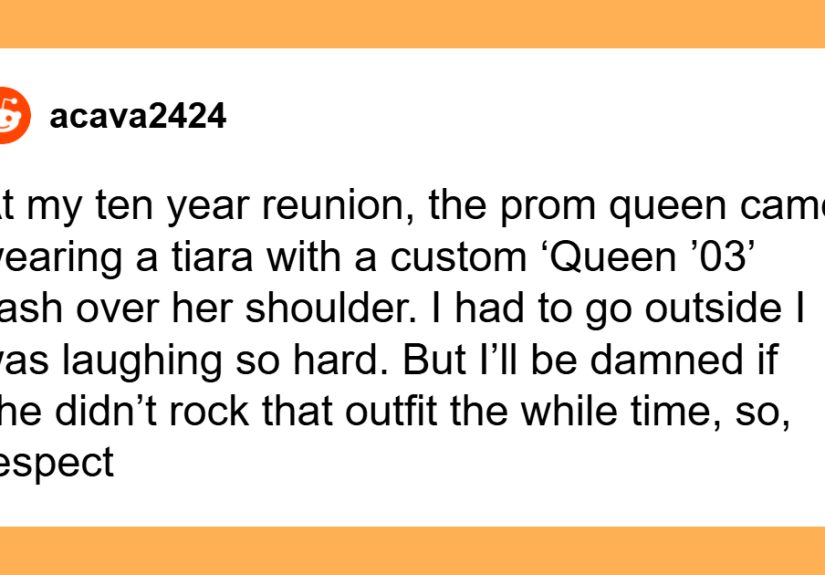
They treat reunions like a comeback tour
Normal people attend reunions to catch up. Peak-in-high-school people attend like they are returning to defend a title belt nobody asked them to keep.
-
They believe cliques still matter
They sort adults into cool kids, weird kids, losers, and VIPs as if the office kitchen is just the cafeteria with better coffee.
-
They post endless throwbacks to their “best years”
A few old photos are nostalgic. A constant stream of grainy selfies from 2009 feels less like memory and more like an emotional hostage situation.
-
They talk about high school like life ended at graduation
If every story begins with “Back in high school…” and almost none begin with “Recently I learned…” there may be some developmental buffering going on.
-
They are obsessed with who got “hot” and who “fell off”
Nothing says stunted like treating human value as a permanent beauty ranking frozen in sophomore year.
-
They still bully people for harmless interests
Mocking someone’s hobby, clothes, job, or personality to look superior is not edgy. It is just recycled adolescent insecurity in grown-up packaging.
-
They need constant admiration
If every conversation must end with praise, awe, or approval, they are not confident. They are emotionally running on borrowed applause.
-
They humblebrag like it is an Olympic sport
“Ugh, it is so exhausting having everyone ask me to lead things.” Translation: please admire me immediately.
-
They turn every topic back to themselves
You mention your new apartment, and suddenly you are trapped in a monologue about their legendary senior prank and six-minute mile.
-
They cannot handle constructive feedback
Any suggestion feels like a personal attack because their identity depends on appearing impressive, not actually improving.
-
They blame everyone else for their adult problems
The boss is unfair. The partner is too demanding. The world is jealous. Accountability remains missing, presumed unavailable.
-
They still chase popularity over character
They care more about being noticed than being decent. That is a very teenage metric for a very adult life.
-
They cannot celebrate other people’s success
Every promotion, engagement, house purchase, or personal win from someone else somehow becomes an attack on their fragile internal ranking system.
-
They confuse confidence with arrogance
Real confidence is calm. Peaked-in-high-school confidence arrives loudly, knocks over furniture, and waits for applause.
-
They still use mean nicknames
Adults who keep trying to roast people with old insults are basically carrying a stale lunch tray of emotional immaturity.
-
They flirt like romance is a competition
They are not trying to connect. They are trying to win. Love, apparently, is just prom court with taxes.
-
They treat relationships like trophies
Instead of asking whether they are kind, compatible, and present, they ask whether their partner looks impressive from across the room.
-
They think adulthood tasks are “beneath them”
Paying bills, cleaning up, planning ahead, keeping promises: these are not optional side quests. They are the main game.
-
They always expect someone else to rescue them
There is always a friend, partner, parent, or coworker cleaning up the mess while they continue starring in their own nostalgia documentary.
-
They confuse nostalgia with identity
Remembering the good old days is fine. Making them your entire personality is how you become emotionally trapped in a yearbook.
-
They still think being feared is better than being respected
Intimidation may work in a hallway full of teenagers. In adulthood, it mostly makes people avoid you and mute your messages.
-
They talk down to service workers
Nothing reveals insecurity faster than treating people as “less than” to create the illusion that you are “more than.”
-
They constantly name-drop
If someone cannot tell a story without referencing five “important” people, it usually means they are outsourcing a personality.
-
They make rude jokes and then hide behind “just kidding”
That is not humor. That is a dodge. It is cruelty with a backup parachute.
-
They thrive on gossip
Because when you have not built a meaningful adult identity, other people’s drama becomes entertainment, currency, and emotional oxygen.
-
They still need a villain from sophomore year
They are carrying 15-year-old grudges like treasured family heirlooms. At some point, the grudge is not the problem. The storage is.
-
They brag without offering value
Sharing expertise is one thing. Fishing for admiration with random self-praise is another. One informs. The other performs.
-
They act superior because they were attractive early
Being cute at 16 is not a lifelong credential. Neither is having perfect hair during the Obama administration.
-
They still dress every moment like a hallway audition
Personal style is great. Dressing purely to dominate an imaginary social hierarchy is something else entirely.
-
They mistake attention for connection
They would rather be noticed by everyone than known by anyone. That is a lonely way to build a life.
-
They cannot apologize without a loophole
“I am sorry you felt that way” is not an apology. It is grammatical camouflage.
-
They romanticize reckless behavior as being “legendary”
At some point, the wild story stops sounding cool and starts sounding like unresolved impulsivity with a soundtrack.
-
They make partying their whole identity
If your biggest personality trait is still “I go hard,” adulthood may be trying to call and you may keep sending it to voicemail.
-
They compete in situations that are not competitions
Dinner becomes a status contest. Parenting becomes a scoreboard. Friendship becomes a pecking order. Exhausting.
-
They cannot adapt when life changes
Emotionally mature people evolve. Stuck people keep demanding that life recreate the one environment where they once felt powerful.
-
They think being “real” means being rude
Honesty without empathy is not maturity. It is often just aggression wearing denim.
-
They spend more time curating an image than building a life
They want the appearance of success, desirability, and relevance more than the slow, unglamorous work required to create those things.
-
They dismiss growth as “changing too much”
Anyone who matures, softens, heals, learns, or evolves gets accused of becoming boring. Translation: “Please do not outgrow the version of me that needed you frozen too.”
-
They confuse being stuck with being young at heart
Keeping your playfulness is wonderful. Keeping your teenage ego, social cruelty, and need for validation is not youthful. It is unfinished.
Why These Behaviors Are So Cringey
The cringe comes from the mismatch. High school is one life stage. Adulthood asks for different muscles: accountability, empathy, flexibility, patience, self-awareness, and the ability to manage uncomfortable feelings without turning every room into a stage. When someone keeps using teenage tools in adult situations, it shows. The bragging sounds brittle. The gossip sounds cheap. The blame sounds tired. The whole performance has the energy of someone trying to wear a championship jacket to a mortgage meeting.
It also tends to hurt other people. Bullying, public put-downs, status games, manipulation, and endless one-upmanship are not just annoying personality quirks. They damage trust and make relationships shallow. People who cannot handle criticism, accept responsibility, or show empathy often leave everyone around them doing emotional cleanup. That is one reason these behaviors feel so exhausting in workplaces, families, friendships, and dating.
How To Stop Acting Like High School Was Your Final Form
The good news is that outgrowing this mindset is possible. It starts with a brutally honest question: Who am I when nobody is clapping? If the answer feels fuzzy, that is not failure. That is information. Build an identity around values instead of applause. Learn to apologize clearly. Practice being happy for people without making it about you. Develop skills that have nothing to do with image. Stop using nostalgia as a résumé. Let your adult life become interesting enough that you do not need to keep screening the trailer for your teenage years.
Real growth is quieter than performative confidence. It looks like paying attention. Keeping promises. Regulating your emotions. Letting other people shine. Learning from embarrassment instead of doubling down on it. The actual flex is not being the coolest person at age 17. It is becoming someone solid, kind, and interesting at 27, 37, 47, and beyond.
Experiences That Perfectly Capture This Vibe
Most people do not learn the phrase “peaked in high school” from a textbook. They learn it from experience. It is the guy at the hometown bar who still tells the same football story with the intensity of a war documentary, except everyone listening has heard it 11 times and is now more fascinated by the mozzarella sticks than the winning touchdown. It is the woman at a wedding who scans the room not to connect, but to figure out whether she still outranks everyone socially. It is the coworker who turns a normal team lunch into a one-man nostalgia festival about how everybody used to want him around. You do not even need a yearbook to recognize the energy. Your nervous system spots it immediately.
Sometimes it shows up online first. You see someone post old prom photos every few weeks with captions about “when life was simple,” then follow it up by mocking other people’s jobs, relationships, or looks. That combination is the giveaway. Healthy nostalgia tends to feel warm. Stuck nostalgia tends to feel sharp, comparative, and defensive. It is not really saying, “I loved that time.” It is saying, “Please confirm I still matter the way I did back then.”
Dating offers some of the clearest examples. A person can be funny, attractive, and charismatic at first, but after two or three conversations, everything circles back to status. Who liked them. Who wanted them. Who they beat. Who they ghosted. Who was jealous. They describe relationships like trophies and conflicts like popularity contests. The issue is not that they had confidence when they were younger. The issue is that they never developed a deeper language for intimacy. Beneath the performance, there is often a fear of being ordinary, vulnerable, or emotionally accountable.
You also see this pattern in less flashy ways. A parent relives old glory through their child’s sports team and loses perspective. A former class clown cannot tolerate being taken seriously at work, so every difficult moment becomes a joke or a deflection. A once-popular friend refuses to evolve because growth would require admitting that charm alone is no longer enough. These moments are cringey, yes, but they can also be a little sad. They suggest a person who learned early that attention equals worth and never got the memo that adulthood offers better ways to be seen.
The most telling experiences, though, are the contrast stories. You run into someone who was quiet, overlooked, or painfully average in high school, and now they are grounded, funny, generous, and fully themselves. Meanwhile, the old campus superstar is still trying to win a contest nobody else remembers entering. That is when the lesson really lands. Peaking was never about who looked best in the hallway. It was about who kept growing after the hallway disappeared.
Conclusion
Everybody has moments of insecurity, nostalgia, and cringe. Most of us have probably done one or two things on this list and then immediately wanted to crawl into a blanket burrito of self-reflection. The difference is whether you learn from it. The people who do not peak in high school are not the ones with perfect teenage years. They are the ones willing to keep becoming. They accept that maturity is more impressive than popularity, accountability is more attractive than swagger, and character lasts a lot longer than cafeteria fame.
So if any of these behaviors felt uncomfortably familiar, do not panic. You are not doomed to spend eternity emotionally loitering by the lockers. Retire the old script. Build a bigger life. Make new memories. And for the love of all things socially recoverable, stop introducing yourself with stats from junior year.