Table of Contents >> Show >> Hide
- Why Tie Up a Long Beard in the First Place?
- Before You Tie It: 3 Minutes of Prep That Makes Everything Easier
- Way #1: The Beard Bun (a.k.a. Beard Knot)
- Way #2: The Classic Beard Braid (Single or Forked)
- Way #3: The Beard Wrap or Roll-Up Tuck (Office-Friendly and Mask-Friendly)
- Common Problems (and How to Fix Them Fast)
- Long-Beard Life: of Real-World Tie-Up Experiences
- Conclusion
A long beard is basically a loyal pet that follows your face everywhere. It’s majestic, it has opinions, and the second you lean into a bowl of ramen, it will absolutely try to “help.”
The good news: you don’t have to choose between a glorious beard and basic daily tasks like eating, working, or not getting zippered into your own jacket.
This guide breaks down three practical, good-looking ways to tie up a long beardwith clear steps, real-world tips, and a little humor (because you’re already living with a small animal on your chin; you’ve earned it).
Why Tie Up a Long Beard in the First Place?
Tying up your beard isn’t about hiding itit’s about control. Think of it like putting your hair up before cooking: not less style, just fewer emergencies.
- Food safety (and dignity): soups, sauces, and anything that drips.
- Work practicality: meetings, customer-facing roles, workshops, and job sites.
- Gym and sports: sweat + friction = tangles and breakage.
- Masks and PPE: keeping hair from bunching, pulling, or escaping sideways.
- Wind management: because you’re not auditioning to be a human kite.
One important note: any style that’s too tightbun, braid, wrap, whatevercan pull on hair and skin. Comfort matters. If it hurts, feels “pinchy,” or leaves you sore afterward, loosen it and switch positions more often.
Before You Tie It: 3 Minutes of Prep That Makes Everything Easier
Most beard “styles” fail for one reason: dry, tangled hair. Prep makes your beard smoother, more cooperative, and less likely to shed flyaways like a stressed-out Christmas tree.
1) Detangle gently
Use a wide-tooth comb first (especially if your beard is curly or dense), then a brush to smooth. Start at the ends and work upward to avoid yanking and breakage.
2) Make sure it’s dry
Wet hair stretches more easily, which sounds helpful until it dries and shrinks into a weird kink or starts snapping at the stressed points. If you just washed your beard, pat it dry and give it a minute.
3) Add a small amount of oil or balm
A few drops of beard oil soften and reduce friction. Beard balm adds light hold and helps flyaways stay in line. Either one makes tying up a long beard dramatically easierand less scratchy for you and anyone brave enough to hug you.
Way #1: The Beard Bun (a.k.a. Beard Knot)
If you want the fastest “I need my beard out of the way right now” option, the beard bun is the MVP. It’s compact, surprisingly secure, and perfect for eating, working, or wearing a mask without turning your beard into a fuzzy accordion.
Best for
- Medium-to-very long beards
- Quick tidy-ups (lunch break, commute, last-minute Zoom call)
- Beards that tangle easily in wind or while walking
What you need
- 1 small elastic (preferably fabric-covered or silicone; avoid metal parts)
- Optional: 1–2 bobby pins (helpful for extra-long beards)
- Optional: a dab of balm for grip
Step-by-step: The simple beard bun
- Gather your beard like a low ponytail under your chin (or slightly lower if your beard is very thick).
- Twist the length gently until it starts to coil on itselfdon’t crank it like you’re tightening a jar lid.
- Loop it into a bun: fold the twisted beard upward toward your chin, making a small “coil” or loop.
- Wrap the elastic around the bun 2–3 times until snug. Aim for secure, not painful.
- Tuck the tail: if any ends stick out, tuck them under the elastic or into the coil. Use a bobby pin only if needed.
Pro tips
- Start looser than you think: you can always tighten one more wrap, but sore follicles are not a vibe.
- Move the bun position occasionally (slightly higher or lower) to reduce repeated stress in one spot.
- Use balm for grip if your beard is silky and the bun slides.
Real-world example: If you’re about to eat tacos, tie a beard bun first. You’ll still look impressivejust with fewer “salsa highlights.”
Way #2: The Classic Beard Braid (Single or Forked)
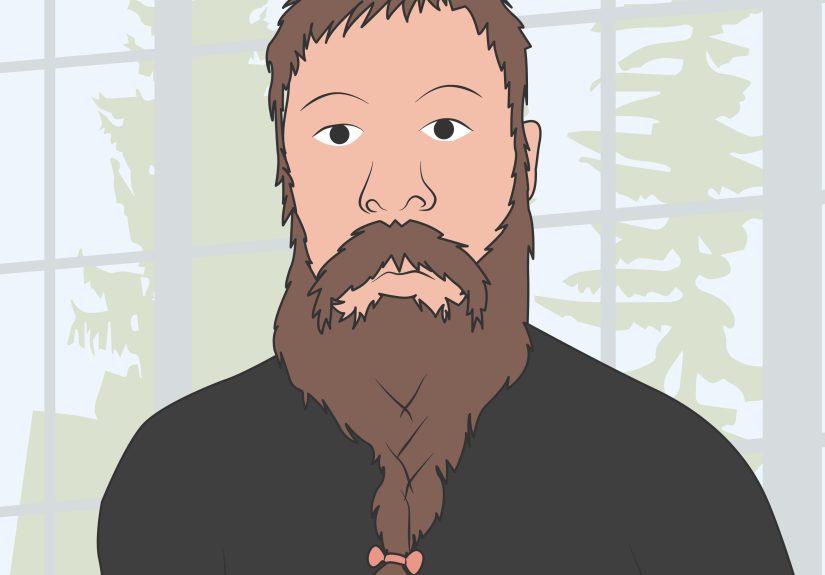
A braid is the most reliable option for very long beards because it keeps hair aligned in one direction. Less friction, fewer tangles, and it looks intentionallike you planned your life instead of just waking up extremely bearded.
Best for
- Long beards that tangle or snag
- Windy commutes, outdoor work, motorcycles
- Days you want a rugged, styled look (without trying too hard)
What you need
- Comb (wide-tooth if thick/curly)
- 1–2 small elastics
- Optional: balm or wax for hold
Step-by-step: The basic 3-strand braid
- Comb straight down so the hair lies evenly.
- Gather the main length from the chin area (or wherever your beard is longest).
- Divide into three sections of roughly equal thickness.
- Braid: cross one outer section over the middle, then the other outer section over the new middle. Repeat.
- Keep tension gentletight enough to hold, loose enough to stay comfortable.
- Secure the end with an elastic.
Variation: The forked braid (two tails)
If your beard is thick, a forked braid can reduce bulk. Braid partway down, then split into two smaller braids and secure each end. It stays flatter under jackets and scarves and can look especially sharp on longer beards.
Pro tips
- Use a tiny bit of balm before braiding if your beard frizzes or the strands won’t “stay put.”
- Don’t sleep in a tight braidloosen it or undo it to avoid kinks and stress.
- If you get “braid bumps” (soreness near the chin), you’re pulling too hard at the start. Loosen your grip and braid lower.
Real-world example: A braid is fantastic for a windy day. Your beard stays contained, and you don’t spend the afternoon picking knots like you’re solving a tiny facial Rubik’s Cube.
Way #3: The Beard Wrap or Roll-Up Tuck (Office-Friendly and Mask-Friendly)
Sometimes you don’t want your beard to be “styled.” You want it to be containedclean, compact, and polite. That’s where a wrap or roll-up tuck shines.
This method is especially useful for work settings, food service, healthcare environments, or any time you need a neater silhouette under a mask, scarf, or neck gaiter.
Best for
- Workplaces where you need a tidy look
- Masks and respirators (less bunching and pulling)
- Beards long enough to fold upward comfortably
What you need
- A soft beard band or cloth strip (or a neck gaiter in a pinch)
- Optional: an elastic for a quick “starter ponytail”
- Optional: balm to reduce flyaways
Step-by-step: The roll-up tuck
- Comb your beard down and apply a tiny amount of balm if it’s frizzy.
- Make a loose low ponytail with an elastic (optional, but helpful if your beard is slippery).
- Fold the beard upward toward your chin in 1–2 folds (like you’re tucking a scarf). The goal is a neat “bundle,” not a tight ball.
- Wrap the cloth band gently around the folded beard and under the chin area to keep it in place.
- Check comfort and breathing: it should feel secure but not restrictive. If you feel pressure points, loosen and re-wrap.
Pro tips
- Choose soft materials that won’t snag hairs (avoid rough fabrics that act like Velcro).
- Keep it breathable if you’re wearing it under a maskcomfort matters over “maximum containment.”
- If your workplace requires it, consider a beard cover/net. It’s not glamorous, but it is very effective.
Real-world example: For a long day of meetings, this keeps your beard looking neat without shouting, “I spent 20 minutes styling my face hair this morning.” (Even if you did. No judgment.)
Common Problems (and How to Fix Them Fast)
“My beard bun slides out after 10 minutes.”
- Use a slightly grippier elastic (fabric-covered or silicone).
- Add a pea-sized amount of balm before tying.
- Try a “starter ponytail” first, then wrap into a bun.
“My braid looks thin and sad.”
- Start the braid lower where the hair is denser.
- Try a two-part (forked) braid to distribute thickness more evenly.
- Use balm to smooth flyaways so it looks fuller.
“It hurts or feels sore afterward.”
- That’s a sign it’s too tight. Loosen your elastic/wrap and change position next time.
- Avoid repeating the exact same tie point every day.
- Give your beard a rest day: brush, oil, and wear it loose.
“I’m getting kinks where I tie it.”
- Don’t tie it wet.
- Alternate between bun, braid, and wrap across the week.
- Condition and brush after you take it down.
Long-Beard Life: of Real-World Tie-Up Experiences
If you’ve never had a long beard, it’s easy to assume it’s just “face hair, but more.” Long-beard people know it’s more like adopting a small, dramatic roommate.
It shows up everywhere you go, it has opinions about weather, and it will absolutely attempt to participate in meals unless you intervene.
The first time most guys learn to tie up a long beard is usually not a glamorous moment. It’s a “why is my mustache wet?” moment. Or a “how did I just dip my beard into salsa?”
moment. That’s when the beard bun becomes a sacred ritual: two seconds, one elastic, and suddenly you can eat in public without turning into a walking napkin.
It’s not vanityit’s survival.
Workdays bring their own beard challenges. In an office, a long beard can look sharp, but it also has a talent for drifting into your coffee when you lean over your desk.
A quick roll-up tuck is underrated here: it keeps everything neat, it sits flatter under a collar, and it stops the beard from rubbing against shirt buttons all day.
(Yes, beard-vs-button friction is real. It’s like sandpapering your patience one tiny snag at a time.)
Then there’s the gym. If you’ve ever done a plank and felt your beard try to become a floor mop, you understand why braids exist.
A braid keeps the beard in a single, predictable line. It also reduces that sweaty, tangled feeling you get when hair rubs against your neck and shirt.
The best part? You don’t have to re-tie it every five minutes. It stays put through cardio, weights, and that one exercise where you question all your life choices.
Wind is the final boss. A loose long beard in a strong breeze will tangle, split into sections, and occasionally slap you in the face like it’s trying to start a rivalry.
A braid is the easiest defense, but a bun also works if you want maximum compactness. This is where products earn their keep:
a touch of oil for softness, a touch of balm for control, and suddenly your beard behaves like it has a job interview.
The funniest “experienced-beard” lesson is that tying it up isn’t only about you. Anyone who hugs you, sits next to you, or shares a meal appreciates a beard that stays in its own lane.
Softening and tidying your beard is quietly considerate. It’s also a power move: you get to keep the length, keep the style, and still function like a modern human.
The goal isn’t to tame your beard into submission. The goal is to coach itlike a talented athlete who occasionally needs boundaries.
Conclusion
Tying up a long beard doesn’t have to be complicated. Pick the style that fits your day:
a beard bun for speed, a braid for control, and a wrap/tuck for maximum neatness.
Keep it comfortable, avoid over-tightening, and rotate styles so your beard stays healthy and happy.