Table of Contents >> Show >> Hide
- Why an Organized School Bag Matters
- Way 1: Create Zones Inside Your School Bag
- Way 2: Build a Pack-and-Check Routine
- Way 3: Lighten the Load and Protect Your Back
- Common Mistakes That Ruin Backpack Organization
- Simple Examples for Different Students
- Final Thoughts
- Experiences Students Commonly Have After Organizing Their School Bags
There are two kinds of school bags in this world: the neat, easy-to-navigate kind and the kind that appears to contain three pencils, six old worksheets, one crushed granola bar, and the emotional damage of a Monday morning. If your bag belongs to the second category, don’t panic. Organizing a school bag is not some magical talent passed down by ultra-tidy people. It is a system, and systems can be learned.
A well-organized school bag does more than make you look like you have your life together. It saves time between classes, reduces stress when you need to find something quickly, protects your papers from becoming modern art, and can even help prevent neck, shoulder, and back strain. In other words, organizing your school bag is not just about being neat. It is about making school easier, faster, and a whole lot less chaotic.
Below are three practical ways to organize your school bag so it works for you instead of against you. These strategies combine smart storage, daily habits, and backpack safety tips, which means your bag can finally stop acting like a black hole with zippers.
Why an Organized School Bag Matters
Before getting into the three methods, it helps to understand why this matters. A messy school bag creates tiny problems that pile up fast. A missing homework sheet leads to panic. A broken pen leaks on your notes. A heavy bag packed with things you do not even need makes your shoulders complain louder than your alarm clock.
When your school bag is organized, you can find your materials quickly, pack only what you need, and move through your day with less friction. You also build stronger school habits. Students who use routines, checklists, and simple categories tend to stay more prepared because they are not relying on memory alone. They are relying on a system, which is much smarter than trusting your brain at 6:45 a.m.
Way 1: Create Zones Inside Your School Bag
The first and most effective way to organize your school bag is to stop treating it like one giant pocket. A backpack works best when every section has a clear job. Think of it less like a sack and more like a tiny portable office, minus the depressing fluorescent lighting.
Start With a Full Reset
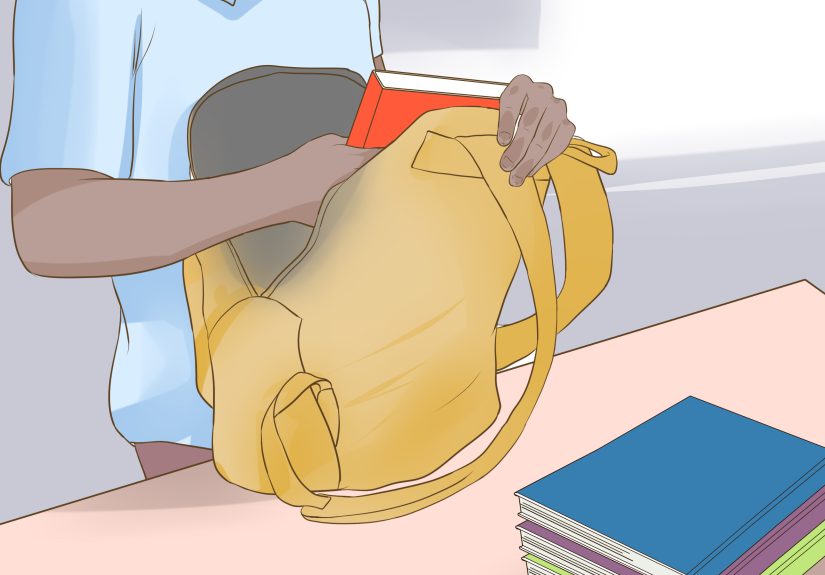
First, empty everything out. Yes, everything. Pens, wrappers, random sticky notes, one sock you cannot explain, all of it. Wipe the inside if needed. Starting with an empty bag gives you a clean slate and helps you see what actually belongs there.
As you sort, divide items into simple groups: books, notebooks, folders, writing tools, tech items, lunch items, and extras such as tissues or hand sanitizer. Throw away trash, move non-school items back home, and keep only what earns its place.
Give Each Pocket a Job
Once your bag is empty, assign every compartment a purpose. This is the secret that keeps your bag organized for longer than one glorious afternoon.
Here is an easy example:
- Main compartment: textbooks, binders, and large notebooks
- Second compartment: folders, homework, and loose papers in a document sleeve
- Front pocket: pencil case, calculator, sticky notes, highlighters
- Small zip pocket: earbuds, ID card, keys, lunch money
- Side pockets: water bottle and umbrella
When every item has a home, you stop wasting time digging through the entire bag for one pen. You also make it much easier to repack after class or after homework.
Put Heavy Items in the Right Place
Organization is not only about neatness. It is also about comfort. Put heavier items, such as textbooks and large binders, closest to your back and near the center of the bag. This helps distribute weight more evenly and makes the backpack easier to carry. Lighter or smaller items can go in the outer sections.
That simple change can make a noticeable difference. When the heaviest stuff sits far from your back, the bag tends to pull backward, swing around, and feel heavier than it really is. Basically, it turns your backpack into a tiny drama queen.
Use Pouches, Folders, and Color Coding
Small items become messy fast unless you contain them. A pencil pouch keeps writing tools from wandering into mysterious corners. A slim folder protects handouts and permission slips. A zip pouch can hold chargers, earbuds, or other small essentials.
Color coding is also surprisingly powerful. Use one color per subject if possible. For example, blue for math, red for English, green for science. When you glance into your bag, you will know right away what belongs where. It sounds simple because it is simple, and that is exactly why it works.
Way 2: Build a Pack-and-Check Routine
The second way to organize your school bag is to create a routine. Even the best compartment system will fail if you stuff everything in at random every day. Organization is not a one-time event. It is a repeatable habit.
Pack Your Bag the Night Before
Morning is a terrible time to make decisions. You are tired, rushed, and possibly trying to eat breakfast while locating your other shoe. Packing your bag the night before solves half the problem before the day even starts.
Check your class schedule, look at your assignments, and pack only what you need for the next day. That means the right folders, books, notebooks, gym clothes, lunch items, or forms that need to be turned in. Doing this at night lowers stress and makes mornings smoother.
Use a Simple Checklist
A checklist is one of the most underrated school organization tools. You do not need anything fancy. A small paper list in the front pocket, a note on your phone, or a laminated card clipped to your bag can do the job.
Your checklist might include:
- Homework folder
- Planner or agenda
- Pencil case
- Charged laptop or tablet
- Water bottle
- Lunch
- Gym clothes or special class materials
Checklists are especially helpful on busy days or when your schedule changes. They reduce forgotten items because you are not trying to remember everything from memory. Memory is helpful, sure, but it is also the same system that forgets why you walked into the kitchen.
Create a School-to-Home Folder
Loose papers are one of the biggest reasons school bags become a mess. The fix is simple: carry one folder just for papers that travel between school and home. Put homework, forms to sign, returned quizzes, and teacher handouts in that one folder instead of letting them float around unprotected.
At the end of the day, check the folder. Remove what is finished, sign what needs signing, and return only what matters to the bag. This habit prevents paper pileups and keeps important documents from getting folded into abstract sculpture.
Do a Weekly Clean-Out
Even organized bags drift into disorder over time. That is normal. The goal is not perfection. The goal is maintenance.
Pick one time each week to do a quick backpack reset. Sunday evening works well for many students. Empty out extra papers, toss trash, refill supplies, and make sure the items you carry still match your schedule. A five- to ten-minute clean-out can save you a lot of frustration later.
You can also use this time to sharpen pencils, recharge devices, restock tissues, and replace anything missing. This small ritual keeps your system alive and prevents the return of backpack chaos.
Way 3: Lighten the Load and Protect Your Back
The third way to organize your school bag is to make sure it is not overloaded. A well-organized bag is not just tidy. It is practical, balanced, and safe to carry. If your backpack feels like you are training for a mountain expedition between algebra and history, it needs help.
Carry Only What You Need
One of the best school bag organization tips is also the most obvious: do not carry your entire academic career on your back. Check your schedule and bring only what you need for that day. If your school provides lockers, use them. If some textbooks can stay at home, even better.
Students often keep unnecessary papers, finished assignments, extra books, and random supplies in their backpacks for days or weeks. That extra weight adds up. Cleaning out unneeded items regularly keeps the bag lighter and easier to manage.
Choose the Right Backpack
If the bag itself fights against organization, the rest becomes harder. A good school backpack should be sturdy, lightweight, and sized appropriately for the student using it. Look for wide, padded shoulder straps, a padded back, and multiple compartments. Adjustable straps help the bag sit closer to the body, which improves comfort and balance.
Some backpacks also include chest or waist straps for added support. Those can be especially useful when students carry heavier supplies. A backpack that is too large encourages overpacking, while one that is too small turns every zipper into a negotiation.
Wear It the Right Way
You can organize your bag beautifully and still ruin the benefits by carrying it poorly. Always use both shoulder straps. Wearing a backpack on one shoulder may look casual, but it puts uneven strain on the body. Keep the straps snug so the pack rests close to your back rather than hanging low.
Ideally, the backpack should sit above the waist and feel stable when you walk. If it swings, droops, or pulls you backward, adjust the straps and reduce the load. If the bag is difficult to lift, that is your sign that it is carrying too much.
Notice Warning Signs
An overly heavy or poorly packed school bag can lead to shoulder discomfort, neck tension, posture problems, and back pain. Pay attention if carrying your backpack makes you lean forward, struggle to stand upright, or feel numbness or soreness. That is not “just school.” That is your body filing a complaint.
If your bag regularly feels too heavy, remove nonessential items, reorganize the weight, and make use of lockers or digital materials when possible. Smart organization should make school feel easier, not like a full-body workout.
Common Mistakes That Ruin Backpack Organization
Even students with good intentions can sabotage their own systems. Here are a few common mistakes to avoid:
- Keeping old papers in the bottom of the bag for weeks
- Using no folder for loose worksheets and forms
- Throwing pens, erasers, and chargers directly into the bag
- Packing every textbook every day “just in case”
- Waiting until the morning to pack
- Ignoring a bag that is too heavy or uncomfortable
If any of those sound familiar, good news: they are easy to fix once you notice them.
Simple Examples for Different Students
Elementary School Student
Use fewer compartments, a bright homework folder, and a simple visual checklist. A parent or caregiver can help with a nightly pack-up and a weekly clean-out.
Middle School Student
Color code subjects, keep a planner in the same pocket every day, and use one pouch for pencils and one folder for papers. This age is perfect for learning a stronger independent routine.
High School Student
Prioritize schedule-based packing, digital organization, and weight management. Keep chargers, earbuds, and calculators in designated spots, and avoid carrying books for classes you do not even have that day.
Final Thoughts
The best way to organize your school bag is not to buy a hundred fancy accessories and hope for the best. It is to build a simple system you can repeat. First, divide your bag into clear zones. Second, use a pack-and-check routine so organization becomes automatic. Third, lighten the load and carry the bag properly so it supports your day instead of slowing you down.
A tidy school bag will not make homework fun, unfortunately. But it will make school life easier, save you time, reduce stress, and help you feel more prepared. And honestly, that is a pretty great return on a ten-minute cleanup.
Experiences Students Commonly Have After Organizing Their School Bags
One of the most interesting things about organizing a school bag is how quickly students notice a difference. At first, the change seems small. The bag looks cleaner. The pockets make more sense. The pencil case is no longer playing hide-and-seek with three pens and a dried-out marker. But after a few days, the benefits become much more obvious.
Many students say the first change they feel is less stress in the morning. Instead of running around the house asking where their math notebook went, they already know it is in the second compartment, right behind the blue folder. That sense of control matters. School days already come with enough pressure, so removing one daily source of chaos can improve the whole mood of the morning.
Another common experience is getting to class faster and feeling more prepared. Students who organize by subject often find that they stop digging through their bag in a panic while the teacher is already talking. They can sit down, unzip one pocket, and take out exactly what they need. That may sound minor, but repeated over a full week, it saves time, reduces embarrassment, and helps students start class focused instead of flustered.
Some students also notice a surprising improvement in homework habits. When papers are protected in folders and assignments are packed the night before, fewer things get lost. That means fewer excuses, fewer missing worksheets, and fewer dramatic statements like, “I definitely did it, but my backpack ate it.” Once the bag becomes more organized, schoolwork tends to become more organized too.
Physical comfort is another big theme. Students who remove unnecessary books and place heavy materials closer to the back often say their backpack feels lighter immediately, even if the total difference in weight is not huge. The bag stops pulling backward. Shoulders feel better. Walking across campus becomes less annoying. It turns out your spine enjoys not being treated like a moving shelf.
There is also a confidence factor. Organized students often feel more capable because they are not constantly reacting to small emergencies. They know where their charger is. They know whether their permission slip is signed. They know their lunch is not upside down on top of their history notes. That confidence can carry into other parts of school life, including time management and study habits.
Of course, no system works perfectly every day. Students still get busy. Papers still pile up sometimes. Life still happens. But the experience most students report is not perfection. It is recovery. When the bag gets messy again, they now know how to reset it quickly. They have a method. And once you have a method, staying organized feels far less overwhelming.