Table of Contents >> Show >> Hide
- Way 1: Start with the Signs and Figure Out What Kind of Hernia You May Be Seeing
- Way 2: Confirm the Diagnosis with a Veterinary Exam, Imaging, and a Little Detective Work
- Way 3: Match Treatment to the Type of Hernia and Follow Through on Recovery
- Common Mistakes Owners Make with Cat Hernias
- What the Experience Often Looks Like for Cat Owners
- Conclusion
Cats are talented at hiding problems. They can limp with dignity, skip dinner with attitude, and pretend a suspicious bulge is none of your business. But when it comes to hernias in cats, ignoring the issue is a terrible idea. A hernia happens when tissue or an organ pushes through an abnormal opening in muscle or body wall. Sometimes that bulge is small and surprisingly calm. Other times, it is the feline version of a flashing red warning light.
If you are trying to diagnose hernias in cats or understand how veterinarians treat them, the good news is that the process is usually very logical. The not-so-good news is that some hernias can become emergencies fast, especially when the bladder, intestines, or stomach become trapped. That means timing matters, observation matters, and getting the right kind of veterinary care matters most of all.
This guide breaks the topic into three practical ways to diagnose and treat hernias in cats. We will cover the signs pet owners notice first, the tests veterinarians use to confirm what is happening, and the treatment options that make sense for each type of feline hernia. Along the way, you will also learn the difference between a small umbilical hernia that may be monitored and a diaphragmatic hernia that can turn breathing into a full-time problem.
Important note: This article is educational and should never replace a veterinary exam. If your cat has trouble breathing, repeated vomiting, severe pain, sudden groin swelling, or cannot urinate, skip the search engine and call a veterinarian right away.
Way 1: Start with the Signs and Figure Out What Kind of Hernia You May Be Seeing
The first step in diagnosing a hernia in cats is often simple observation. Not glamorous. Not high-tech. Just old-fashioned noticing that something looks, sounds, or feels wrong. Depending on the location of the defect, the symptoms can be obvious or sneaky.
What a hernia in a cat actually is
A hernia is not a disease by itself. It is a structural problem. Muscle or tissue fails to close properly, or it tears after trauma, allowing fat, intestine, stomach, bladder, or other tissue to slip where it should not be. In cats, hernias may be congenital, meaning present at birth, or acquired after injury, straining, pregnancy, or muscle weakness.
The most common types of hernias in cats
- Umbilical hernia: A soft bulge near the belly button. This is common in kittens and may be tiny or more noticeable.
- Inguinal hernia: Swelling in the groin area. These can involve fat, intestine, bladder, or reproductive tissue.
- Diaphragmatic hernia: A tear or defect in the diaphragm that allows abdominal organs to move into the chest cavity. This is often linked to trauma and can seriously affect breathing.
- Hiatal hernia: Part of the stomach slips through the opening in the diaphragm near the esophagus. This tends to cause regurgitation, reflux, or vomiting more than a visible lump.
- Peritoneopericardial diaphragmatic hernia: A congenital defect in which abdominal organs can move near the sac surrounding the heart. It sounds dramatic because, frankly, it is.
- Perineal hernia: Rare in cats, but possible. This occurs near the pelvic floor and can cause swelling, straining, or difficulty passing stool or urine.
Symptoms cat owners commonly notice first
The signs depend on the hernia’s location and whether tissue is trapped. A reducible hernia may feel soft and may even seem to come and go. A strangulated hernia is far more dangerous because blood supply can be compromised.
Watch for these red flags:
- A soft or firm bulge near the belly button, groin, or pelvic area
- Pain when the area is touched
- Vomiting or loss of appetite
- Bloating or abdominal discomfort
- Lethargy or hiding more than usual
- Difficulty urinating or repeated attempts to urinate
- Constipation or straining to defecate
- Rapid, labored, or open-mouth breathing
- Regurgitation, reflux, or swallowing problems
- Weight loss in chronic cases
Here is the practical rule: if the problem is outside the body wall, you may see swelling. If the problem is in the diaphragm, you may hear or see breathing trouble instead. If the problem is hiatal, you may think your cat has a stomach issue when the real problem is anatomical. Cats love making diagnostics slightly more dramatic than necessary.
When to treat it like an emergency
Some feline hernias can wait long enough for a scheduled appointment. Others should not. Seek emergency care immediately if your cat has trouble breathing, collapses, cries in pain, develops a suddenly larger bulge, vomits repeatedly, cannot urinate, or seems shocky, weak, or unusually cold. These signs can suggest organ entrapment, obstruction, or serious internal injury.
Way 2: Confirm the Diagnosis with a Veterinary Exam, Imaging, and a Little Detective Work
Once a veterinarian suspects a hernia, the next step is confirming exactly what type it is, how large it is, and whether organs are involved. That matters because a tiny umbilical hernia in a playful kitten is managed very differently from a diaphragmatic hernia after a car accident.
Physical examination comes first
Your veterinarian will start with a hands-on exam. For an umbilical or inguinal hernia, they may feel a defect in the muscle wall or determine whether the bulge is reducible. They will also check whether the area is painful, whether the swelling changes size, and whether your cat has additional signs such as dehydration, fever, poor circulation, or abdominal tenderness.
For groin or pelvic hernias, the exam may include checking rectal tone, bladder position, and whether straining is linked to another issue such as constipation or urinary obstruction. For suspected diaphragmatic or hiatal hernias, the exam shifts toward breathing pattern, lung sounds, heart sounds, and overall stability.
Diagnostic imaging helps identify what is trapped and where
This is where veterinary medicine stops guessing and starts taking pictures. Depending on the type of hernia, your veterinarian may recommend:
- X-rays: Often the first imaging step for diaphragmatic, hiatal, or inguinal hernias. Radiographs can show abnormal organ position, gas patterns, or chest crowding.
- Ultrasound: Useful for identifying soft tissue structures, confirming what has moved through the defect, and checking nearby organs.
- Contrast studies: Sometimes used for hiatal hernias when routine X-rays do not tell the whole story.
- Echocardiography: May help in peritoneopericardial diaphragmatic hernia cases.
- Bloodwork and urinalysis: Important when the cat is sick, has trauma, may need anesthesia, or could have urinary obstruction or internal compromise.
In some cases, especially with groin hernias, imaging is needed because the swelling may come and go. In other words, your cat may decide to hide the evidence right before the appointment. Very on-brand.
Questions your veterinarian will likely ask
- When did you first notice the swelling or symptoms?
- Has the bulge changed size?
- Has your cat had recent trauma, such as a fall or car injury?
- Is your cat vomiting, regurgitating, or eating less?
- Is your cat having trouble breathing, urinating, or defecating?
- Is this a kitten with a lifelong belly-button lump, or is this a new issue?
These details help distinguish congenital hernias from acquired ones and help the veterinarian prioritize emergency treatment if necessary.
How vets differentiate mild from dangerous cases
The biggest question is not “Is this a hernia?” The biggest question is “What is inside it, and is it trapped?” A small umbilical hernia with only fat may be low-risk. An inguinal hernia containing bladder or intestine is much more urgent. A diaphragmatic hernia with respiratory distress is a stabilization-first situation. A hiatal hernia may need medical management before surgery is considered.
This is why at-home diagnosis has limits. You can suspect a hernia. You cannot safely determine organ involvement from your living room while your cat judges you from under the sofa.
Way 3: Match Treatment to the Type of Hernia and Follow Through on Recovery
Treatment for hernias in cats depends on the type, size, symptoms, and whether organs are involved. Some cases can be monitored briefly. Many require surgery. And a few need emergency stabilization before surgery becomes safe.
Umbilical hernia treatment in cats
Umbilical hernias are the ones most likely to be mild, especially in kittens. Small defects may close on their own while the kitten grows. If a small umbilical hernia persists, many veterinarians repair it during a spay or neuter procedure. That is efficient, practical, and far less annoying than scheduling two surgeries for one tiny belly button rebellion.
Larger umbilical hernias or any umbilical hernia containing intestine usually need surgical correction sooner. Emergency surgery is required if the tissue becomes trapped or strangulated.
Inguinal hernia treatment in cats
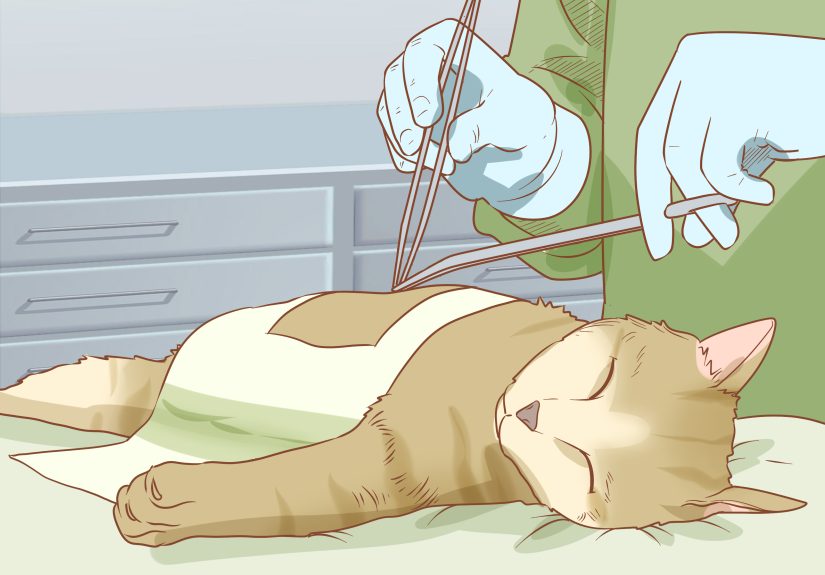
Inguinal hernias are usually treated surgically because delay can allow the condition to worsen. During surgery, the veterinarian returns the displaced tissue to the abdomen, removes any nonviable tissue if necessary, and closes the defect. If the bladder, intestine, or uterus is trapped, the need for surgery becomes much more urgent.
After surgery, most cats recover well with pain medication, rest, incision monitoring, and temporary activity restriction. Jumping, wrestling, and turning the sofa into a parkour course should be paused while healing happens.
Diaphragmatic hernia treatment in cats
Diaphragmatic hernias are serious because organs in the chest cavity crowd the lungs and can make breathing difficult. Treatment often begins with stabilization. That may include oxygen, fluids, close monitoring, and in some cases thoracocentesis, which removes fluid or air from the chest. Once the cat is stable enough for anesthesia, surgery is the definitive treatment.
During surgery, the herniated organs are moved back into the abdomen and the tear in the diaphragm is closed. These procedures are often performed in referral centers or by surgeons with advanced training. Recovery can be excellent, but the patient needs careful postoperative monitoring because breathing complications can occur after repair.
Hiatal and peritoneopericardial hernia treatment
Hiatal hernias are a bit different. Some cats improve with medical and dietary management, especially when reflux and esophagitis are the main issues. Small, frequent meals and medications to reduce acid or improve gastrointestinal motility may be recommended. If symptoms persist or the anatomy needs correction, surgery may be necessary.
Peritoneopericardial diaphragmatic hernias often require surgery when the cat has symptoms, although asymptomatic adult cats may sometimes be monitored depending on the individual case. The decision depends on imaging findings, clinical signs, and overall risk.
What recovery usually looks like
Recovery after feline hernia surgery is not glamorous, but it is manageable. Most cats need:
- Pain control medications exactly as prescribed
- Restricted activity for at least several days to two weeks or longer, depending on surgery type
- An e-collar or recovery suit if they lick the incision
- Incision checks for redness, swelling, discharge, or opening
- Follow-up appointments to make sure healing is on track
- Monitoring for vomiting, poor appetite, breathing changes, constipation, or urinary trouble
Call the veterinarian promptly if the swelling returns, the incision looks infected, breathing worsens, or your cat stops eating. Recurrence is not the most common outcome, but it can happen, especially if healing is disrupted or the original defect was severe.
Common Mistakes Owners Make with Cat Hernias
- Waiting too long because the bulge seems small: Small does not always mean harmless.
- Trying to “push it back” at home: Please do not turn yourself into an amateur abdominal mechanic.
- Assuming vomiting is just a hairball issue: Hiatal or strangulated hernias can mimic routine digestive problems.
- Ignoring breathing changes after trauma: A diaphragmatic hernia may not be obvious on the outside.
- Letting the cat resume full activity too soon after surgery: Incisions and internal repairs need time to heal.
What the Experience Often Looks Like for Cat Owners
One of the most helpful things to understand about feline hernias is what the experience feels like in real life. On paper, a hernia sounds straightforward: tissue slips through an opening, the veterinarian confirms it, treatment follows. In real homes, though, it often begins with uncertainty. A pet owner spots a soft bump while rubbing a kitten’s belly and thinks, “That was definitely not there yesterday.” Or maybe it was there yesterday, but the kitten was busy biting shoelaces and distracting everyone from basic anatomy.
For many owners of kittens with umbilical hernias, the first experience is confusion rather than panic. The bump may be small, painless, and oddly unimpressive. The kitten still eats, climbs curtains, attacks invisible enemies, and behaves like a tiny landlord who owns every room. Because the cat acts normal, owners often wonder whether they are overreacting. In many mild cases, the veterinary visit is reassuring. They learn that some small umbilical hernias can be monitored and may even be repaired later during spay or neuter surgery. The biggest emotional shift is realizing that “visible lump” does not automatically equal “instant catastrophe,” but it also should not be ignored.
The experience is very different when the hernia is internal. Owners of cats with diaphragmatic hernias often describe a far more frightening start. The cat may have had recent trauma, or the signs may seem random at first: faster breathing, less interest in food, hiding, or reluctance to move. In these cases, owners frequently say the scariest part was not seeing an obvious wound. The cat simply seemed off. Then the X-rays reveal the real issue, and suddenly everyone in the room becomes very serious. That moment can be overwhelming, but it also gives families something valuable: clarity and a plan.
Owners dealing with inguinal hernias often talk about how quickly a weird groin swelling becomes a scheduling priority. Even before a diagnosis is confirmed, there is usually an instinct that the area looks wrong in a way that deserves attention. Once surgery is recommended, many owners shift into practical mode. They ask how long recovery will take, whether the cat will need a cone, how to stop jumping, and whether litter box use will be affected. The real challenge, they learn, is not just the operation itself. It is convincing a cat that “quiet rest” is a reasonable life choice.
Postoperative recovery brings its own set of experiences. Most owners say the first night home is the hardest because every movement seems suspicious. Is that breathing normal? Should the cat be sleeping that much? Is the cone a symbol of healing or a declaration of war? Fortunately, many cats improve steadily once pain is controlled and activity is restricted. Owners get better at checking the incision, monitoring appetite, and celebrating small wins like a normal meal, a calm nap, or a litter box trip that does not inspire panic.
The common thread in nearly every experience is this: the earlier the diagnosis, the smoother the path usually feels. Owners who seek care promptly tend to have more options, more control, and fewer last-minute emergencies. That does not make the situation fun, but it does make it manageable. And when the cat is finally back to demanding treats, knocking pens off tables, and pretending the whole medical drama was your idea, most owners feel the same thing: enormous relief, slightly bruised nerves, and a renewed respect for how much trouble one small animal can pack into a single body.
Conclusion
Diagnosing and treating hernias in cats comes down to three smart moves: notice the signs early, confirm the type of hernia with a proper veterinary workup, and choose treatment based on severity and location. Small umbilical hernias may be monitored or repaired during routine surgery, while inguinal and diaphragmatic hernias often need faster intervention. Internal hernias can be especially dangerous because the symptoms may look like breathing trouble, reflux, or digestive upset rather than a visible lump.
The takeaway is simple. If your cat has a suspicious bulge, breathing changes, vomiting, groin swelling, or trouble urinating, do not try to solve it with optimism and internet confidence. Get a veterinary diagnosis. Hernias are often very treatable, but the best outcomes usually happen when the problem is addressed before trapped organs, compromised blood supply, or severe respiratory distress turn a manageable case into an emergency.
Note: This article is for informational purposes only and is not a substitute for professional veterinary care.