Table of Contents >> Show >> Hide
- Before You Decorate: 3 Quick Rules for Sloped-Ceiling Success
- 28 Stylish Low Sloped Ceiling Bedroom Ideas
- 1) Anchor the bed on the tallest wall (and let the slope frame it)
- 2) Try a low platform bed to visually “raise” the ceiling
- 3) Slide the bed under the eavesonly if your head stays safe
- 4) Build a dormer window bed nook (instant boutique-hotel energy)
- 5) Use a daybed for a guest-room-meets-lounge layout
- 6) Go “floating” with wall-mounted nightstands
- 7) Replace table lamps with hardwired sconces
- 8) Install picture lights above art on the tall wall
- 9) Make the slope a “statement ceiling” with paint or wallpaper
- 10) Try color-drenching to blur edges and calm visual clutter
- 11) Use “color capping” to draw the eye upward
- 12) Add vertical paneling or thin battens on the tall wall
- 13) Use mirrors strategically to bounce light along the slope
- 14) Embrace knee-wall storage with built-in drawers
- 15) Add low bookcases or cabinets under the eaves
- 16) Build a window seat with storage underneath
- 17) Design an “angled closet” that follows the roofline
- 18) Put the dresser where the ceiling is highest (or swap for a wide low dresser)
- 19) Use open shelving for the “short zones”
- 20) Choose a flush-mount or semi-flush ceiling light (goodbye forehead hazards)
- 21) Add track lighting along the ridge for flexible illumination
- 22) Use adjustable recessed lighting designed for sloped ceilings
- 23) Layer in LED strips to “trace” beams or shelving
- 24) Make the bed wall cozy with textiles instead of bulky decor
- 25) Use a rug that visually “centers” the standing zone
- 26) Create a micro vanity under the slope with a stool and mirror
- 27) Lean into a style that loves “cozy architecture” (cottage, Scandinavian, or Japandi)
- 28) Don’t forget comfort upgrades: insulation, ventilation, and climate control
- How to Combine These Ideas Without Overdoing It
- Common Mistakes to Avoid in a Low Sloped Ceiling Bedroom
- Real-World Experiences: What It’s Actually Like Decorating Under a Low Slope (500+ Words)
Low sloped ceilings are basically the bedroom version of a fun plot twist. They’re charming, architectural, and wildly
determined to bonk your head if you forget where the “standing zone” ends. But once you stop fighting the slope and
start designing with it, an attic or low slanted ceiling bedroom can become the coziest, most personality-packed
space in your home.
The trick is to treat the slope like a feature wall that happens to be… also the ceiling. That means smart layout,
lighting that doesn’t cast horror-movie shadows, and storage that loves awkward angles. Below are 28 stylish low sloped
ceiling bedroom ideasequal parts practical and prettyso you can maximize space without sacrificing comfort (or your forehead).
Before You Decorate: 3 Quick Rules for Sloped-Ceiling Success
-
Put tall activities where the ceiling is tall. Walking paths, dressing spots, and closet doors belong
at the highest wall or the room’s center ridge. -
Put low activities where the ceiling is low. Sleeping, lounging, reading nooks, and storage are perfect
under eaves and knee walls. - Light the slope on purpose. Layer sconces, flush mounts, and directed lighting so the ceiling feels intentionalnot accidental.
28 Stylish Low Sloped Ceiling Bedroom Ideas
1) Anchor the bed on the tallest wall (and let the slope frame it)
If you have one “full-height” wall, treat it like the main stage. Center your bed there, then let the slope taper around it
like built-in drama. This layout makes the room feel calmer because your eyes know where to land first.
2) Try a low platform bed to visually “raise” the ceiling
A low bed buys you headroom without touching a single joist. Pair it with a simple headboard and you’ll feel more spacious
even if the ceiling is whispering, “Duck.”
3) Slide the bed under the eavesonly if your head stays safe
Sleeping under the slope can be ultra-cozy, but position the bed so your head is in the higher area and your feet point toward
the lowest. Waking up should feel like a vibe, not a concussion.
4) Build a dormer window bed nook (instant boutique-hotel energy)
If you have a dormer, tuck a bed or daybed right into that alcove. Add curtains, wall sconces, and layered bedding, and it becomes
the room’s most photogenic corner.
5) Use a daybed for a guest-room-meets-lounge layout
A daybed is the small-space MVP: sleep at night, sofa by day. It’s especially great under a low sloped ceiling where a traditional
bed might feel bulky.
6) Go “floating” with wall-mounted nightstands
Floor space matters more when the room is tight. Wall-mounted nightstands keep things airy and make it easier to clean around the bed.
Bonus: they look modern even if the ceiling is doing something medieval.
7) Replace table lamps with hardwired sconces
Table lamps eat precious surface area and can look awkward under a slope. Sconces free up your nightstands and give more controlled,
flattering lightespecially helpful in attic bedrooms.
8) Install picture lights above art on the tall wall
Sloped ceilings can limit where art goes, so treat the tall wall like a gallery. Picture lights add polish and make that wall feel
intentionally designed.
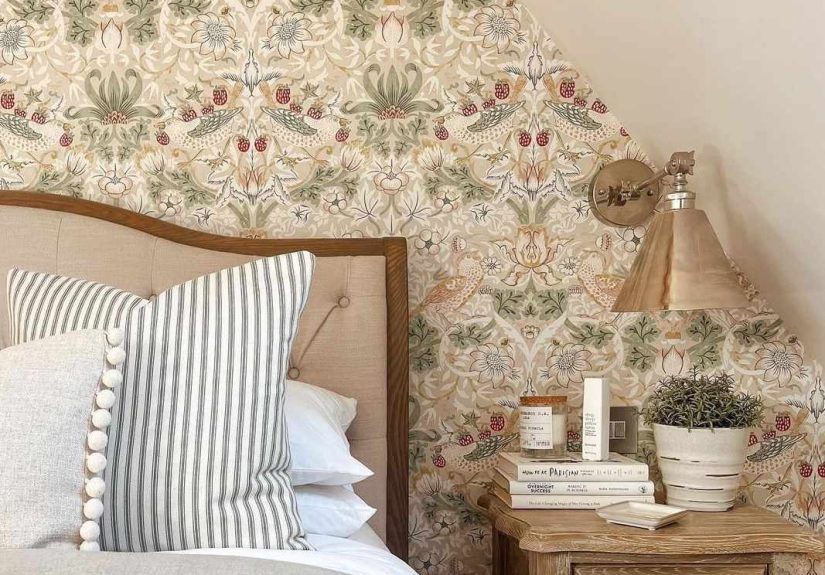
9) Make the slope a “statement ceiling” with paint or wallpaper
Instead of pretending the slope isn’t there, make it the moment. A soft color wash, subtle stripes, or a calm wallpaper can turn
the ceiling line into a design feature instead of a limitation.
10) Try color-drenching to blur edges and calm visual clutter
Painting walls and the sloped ceiling in the same color reduces harsh lines, which can make small, angled rooms feel more cohesive.
Choose a warm white, light neutral, or a muted color for a soft, enveloping look.
11) Use “color capping” to draw the eye upward
A tonal gradientlighter low, slightly deeper up topcan visually lift the room. It’s a clever way to make a low ceiling bedroom feel
taller without changing the architecture.
12) Add vertical paneling or thin battens on the tall wall
Vertical lines cue height. A simple board-and-batten treatment or narrow wood slats behind the bed draws the eye upward and adds texture
without crowding the space.
13) Use mirrors strategically to bounce light along the slope
In rooms where windows are limited, mirrors do heavy lifting. Place one opposite a window or near the brightest spot to reflect daylight
deeper into the room.
14) Embrace knee-wall storage with built-in drawers
The short wall under the slope (the knee wall) is prime real estate for custom drawers. It’s one of the most efficient ways to add storage
in a low sloped ceiling bedroom without adding tall furniture.
15) Add low bookcases or cabinets under the eaves
Not everything needs to be custom. Low, long bookcases can run under the slope, offering storage while keeping the room feeling open.
Style the top with baskets, books, and a few “I’m an adult” decor items.
16) Build a window seat with storage underneath
A window seat is both seating and storageaka the two things sloped rooms often lack. It’s also a perfect spot for reading, coffee,
or pretending you’re in a Nancy Meyers movie.
17) Design an “angled closet” that follows the roofline
If a standard closet feels impossible, use the slope. Angled closet doors or custom framing can turn awkward rooflines into functional
wardrobe space.
18) Put the dresser where the ceiling is highest (or swap for a wide low dresser)
Tall dressers and slopes rarely get along. If height is limited, choose a wider, lower dresser and use wall space above it for art,
a mirror, or shelves.
19) Use open shelving for the “short zones”
Open shelves under the eaves work well for folded items, baskets, and decor. Keep it curated so it reads as intentional stylingnot
“I ran out of closet space” panic.
20) Choose a flush-mount or semi-flush ceiling light (goodbye forehead hazards)
A pendant in a low sloped ceiling bedroom is basically a chandelier-shaped dare. Flush or semi-flush fixtures keep the ceiling clean
and reduce visual clutter.
21) Add track lighting along the ridge for flexible illumination
Track lighting can be aimed where you need itbed, closet, artworkmaking it ideal for rooms with tricky angles. It’s especially useful
when you want brighter light without bulky fixtures.
22) Use adjustable recessed lighting designed for sloped ceilings
Recessed lights can work beautifully on slopes when they’re the right type and aimed correctly. The goal is even light that doesn’t
create dramatic shadow stripes across the ceiling.
23) Layer in LED strips to “trace” beams or shelving
If your room has beams, highlighting them with soft LED strips can add warmth and architecture. You can also tuck LED lighting under
shelves for a gentle glow that feels custom and calm.
24) Make the bed wall cozy with textiles instead of bulky decor
Sloped rooms can feel busy fast. A padded headboard, layered pillows, and a great throw give you style without crowding surfaces.
Think “cozy capsule,” not “decor avalanche.”
25) Use a rug that visually “centers” the standing zone
In an attic bedroom, the standing-height area is precious. A rug placed where you actually walk and dress makes the room feel more
functional and grounded.
26) Create a micro vanity under the slope with a stool and mirror
A small desk or vanity can tuck neatly into a low spotespecially if you use a stool that slides in. Add a wall-mounted mirror and a
sconce, and you’ve got a ready-in-five-minutes station.
27) Lean into a style that loves “cozy architecture” (cottage, Scandinavian, or Japandi)
Low sloped ceilings naturally feel intimate. Styles like cottage and Scandinavian design pair beautifully with angled spaces: light
woods, soft linens, simple shapes, and a little texture to keep it warm.
28) Don’t forget comfort upgrades: insulation, ventilation, and climate control
Attic bedrooms can run hot in summer and chilly in winter. Thoughtful insulation and good ventilation make the room livable year-round
and protect your finishes from moisture issues. Style matters, but so does sleeping through the night.
How to Combine These Ideas Without Overdoing It
If you try all 28 at once, your bedroom will look like a design showroom hosted by a very enthusiastic squirrel. Instead, pick:
- 1 layout move (bed placement or daybed/nook)
- 1 storage strategy (knee-wall drawers, low cabinets, or a window seat)
- 1 lighting upgrade (sconces + flush mount, or track lighting)
- 1 “wow” finish (paint trick, wallpapered slope, or vertical paneling)
That combination gives you a bedroom that looks designedwithout feeling crowded or complicated.
Common Mistakes to Avoid in a Low Sloped Ceiling Bedroom
- Using tall furniture under the lowest part of the slope. It wastes space and looks visually cramped.
- Depending on one overhead light. You’ll get harsh shadows and “mysterious attic vibe” (not always in a good way).
- Ignoring storage until the end. Angled rooms need a storage plan early, or clutter will win.
- Overdecorating the slope. One strong move is chic; five strong moves is chaos.
Real-World Experiences: What It’s Actually Like Decorating Under a Low Slope (500+ Words)
People who live with low sloped ceilings often describe the same emotional arc: excitement (“This attic is adorable!”),
determination (“I can absolutely make a king bed work up here.”), bargaining (“If I only hit my head once a week, that’s basically fine.”),
and finally acceptance (“Okay, the bed is staying exactly here forever.”). The good news is that once you understand how these rooms behave,
designing them becomes less of a puzzle and more of a superpower.
One common experience is learning that the room has two personalities: the “standing zone” and the “cozy zone.”
The standing zone is where you naturally want to put everything importantclosets, dressers, mirrors, and the route you take when you’re
walking in with laundry. The cozy zone under the eaves is where you discover your best ideas: a reading nook, a low bookcase, bins for sweaters,
even a tucked-away vanity that feels like a secret dressing room. Once you stop trying to make every inch function like a normal room, you start
appreciating how the angles create intimate, usable pockets.
Another big lesson is that lighting changes everything. In sloped-ceiling bedrooms, overhead lighting alone can create uneven
brightnessone part of the room feels cheerful, another part feels like it’s hosting a Victorian ghost. Homeowners often report that adding
sconces or wall lights instantly makes the room feel more “finished,” because light becomes layered and intentional. Even simple upgrades like
swapping bulky bedside lamps for sconces can feel like gaining space, since surfaces stay clearer and the eye reads the room as calmer.
Storage is usually the make-or-break moment. Many people start with cute decor plans, then realize the slope ate their closet options.
That’s when knee-wall storage becomes a hero. Whether it’s built-in drawers, low cabinets, or even a row of baskets on open
shelving, using the short wall areas is often the difference between “stylish retreat” and “pile of mystery sweaters.” A surprising bonus:
once storage is tucked into the low zones, the tall zones feel noticeably more openlike the room finally took a deep breath.
There’s also a practical comfort side that shows up quickly in real life: attics can be temperature dramatic.
People often mention that the room feels amazing on a crisp day and then turns into a sauna the moment summer shows up.
That’s why experienced attic-bedroom owners talk about insulation, ventilation, and air flow with the seriousness of a professional weather
reporter. If you’re recreating these low sloped ceiling bedroom ideas, it helps to remember that comfort improvements aren’t “boring”
they’re what lets you actually enjoy the room year-round.
Finally, many people say the most satisfying part of finishing a sloped-ceiling bedroom is realizing the architecture can become the
room’s personality. A flat ceiling is easy, surebut it’s also… polite. A sloped ceiling has character. It tells you where the bed should go,
encourages cozy lighting, and practically begs for built-ins. Once you work with it, you end up with a bedroom that feels custom, special,
and a little storybookminus the part where you’re living in a pumpkin carriage.