Table of Contents >> Show >> Hide
- Before you plant: how butterflies actually “shop”
- 27 colorful butterfly plants (and why butterflies love them)
- 1. Milkweed (Asclepias spp.)
- 2. Purple Coneflower (Echinacea purpurea)
- 3. Black-Eyed Susan (Rudbeckia spp.)
- 4. Blazing Star / Gayfeather (Liatris spp.)
- 5. Joe-Pye Weed (Eutrochium spp.)
- 6. Goldenrod (Solidago spp.)
- 7. Asters (Symphyotrichum spp.)
- 8. Bee Balm (Monarda spp.)
- 9. Lavender (Lavandula spp.)
- 10. Salvia / Sage (Salvia spp.)
- 11. Verbena (Verbena spp.)
- 12. Zinnia (Zinnia elegans)
- 13. Cosmos (Cosmos bipinnatus)
- 14. Mexican Sunflower / Tithonia (Tithonia rotundifolia)
- 15. Sunflower (Helianthus spp.)
- 16. Blanket Flower (Gaillardia spp.)
- 17. Coreopsis / Tickseed (Coreopsis spp.)
- 18. Yarrow (Achillea millefolium)
- 19. Garden Phlox (Phlox paniculata)
- 20. Sedum / Stonecrop (Hylotelephium spp.)
- 21. Mint Family Herbs (mint, oregano, thyme, catnip)
- 22. Lilac (Syringa spp.)
- 23. Summersweet / Sweetspire (Clethra alnifolia)
- 24. Buttonbush (Cephalanthus occidentalis)
- 25. Spicebush (Lindera benzoin)
- 26. Parsley, Dill, and Fennel (kitchen herbs with a secret identity)
- 27. Passionflower Vine (Passiflora incarnata and relatives)
- What about “butterfly bush”?
- Make the buffet last all season (simple planting strategy)
- Common butterfly-garden mistakes (and easy fixes)
- Extra: real-life butterfly-garden “experiences” people commonly notice (about )
- Conclusion
- SEO Tags
Butterflies don’t just “randomly show up.” They’re picky little aerial food critics with three basic demands: (1) nectar for adults, (2) host plants for hungry caterpillars, and (3) a safe place to hang out without getting blasted by pesticides or wind like a leaf in a hurricane.
The good news? You can turn your yard (or even a few sunny containers) into a butterfly hangout that looks like a paint store explodedin the best possible way. Below are 27 colorful butterfly plants that double as an all-season buffet, with a few host-plant MVPs sprinkled in so you’re not just feeding butterflies… you’re helping raise the next generation.
Before you plant: how butterflies actually “shop”
1) Nectar matters, but so do host plants
Adult butterflies sip nectar for energy. Caterpillars, on the other hand, are basically tiny, adorable lawnmowersand many species can only eat specific plants. If you only plant nectar flowers, you’re running a lovely café… with no daycare. A true butterfly garden includes both.
2) Sun is the secret sauce
Most nectar-rich flowers bloom best in full sun (6+ hours). Butterflies also like sunny spots to warm their wings. If your garden is mostly shade, choose the few shade-tolerant options on this list (like asters in part shade) and focus on bright edges and openings.
3) Plant in clumps, not lonely singles
Butterflies spot masses of color and scent more easily than one flower hiding like it owes someone money. Group the same plant in clusters of 3–7 (or more) for maximum “open buffet” vibes.
4) Skip pesticides (even “gentle” ones)
Many common garden sprays can harm butterflies and caterpillars. Even Bt (often used for caterpillars) is a problem in a butterfly garden because it targets larvae. If you want butterflies, accept that some leaves will get munched. That’s not damageit’s proof of life.
5) Add a “puddling” spot
Butterflies often drink from damp soil to get minerals. A shallow dish with sand and water (kept moist) or a muddy patch can turn your garden into a five-star resort.
27 colorful butterfly plants (and why butterflies love them)
1. Milkweed (Asclepias spp.)
Color: orange, pink, white • Why it works: essential host plant for monarch caterpillars, plus nectar for adults. Try butterfly weed (A. tuberosa) for dry sunny spots and swamp milkweed (A. incarnata) for moist soil. Plant in clumps so caterpillars can move plant-to-plant.
2. Purple Coneflower (Echinacea purpurea)
Color: purple-pink • Why it works: big, bold landing pads packed with nectar. Coneflowers bloom mid-to-late summer and pull in monarchs, swallowtails, and more. Bonus: birds love the seed heads if you leave them up.
3. Black-Eyed Susan (Rudbeckia spp.)
Color: gold with dark centers • Why it works: a sunny, daisy-like nectar stop that blooms generously in summer. Great for filling space quickly and pairing with purple blooms for maximum color contrast.
4. Blazing Star / Gayfeather (Liatris spp.)
Color: purple • Why it works: vertical flower spikes act like nectar elevators. Blooms in mid-to-late summer when butterflies are active. Looks amazing mixed with coneflower and black-eyed Susan.
5. Joe-Pye Weed (Eutrochium spp.)
Color: mauve-pink • Why it works: tall, frothy flower clusters with serious nectar outputespecially valuable late summer. If you want “butterflies everywhere,” this one is often a headliner.
6. Goldenrod (Solidago spp.)
Color: golden yellow • Why it works: a fall nectar powerhouse when many gardens fade. (Also: goldenrod doesn’t cause ragweed allergiesragweed does. Goldenrod just gets blamed because it’s flashy.)
7. Asters (Symphyotrichum spp.)
Color: purple, blue, pink, white • Why it works: another crucial late-season nectar source. Asters help fuel butterflies heading into fall. Many varieties handle part shade, too.
8. Bee Balm (Monarda spp.)
Color: red, pink, purple • Why it works: nectar-rich “fireworks” flowers that attract butterflies and hummingbirds. Give it sun and airflow to reduce powdery mildew (aka the plant’s dramatic phase).
9. Lavender (Lavandula spp.)
Color: purple • Why it works: fragrant blooms draw pollinators, including butterflies. Best in sunny, well-drained soil. Great along pathways where you can brush by and smell like you have your life together.
10. Salvia / Sage (Salvia spp.)
Color: blue, purple, red • Why it works: long bloom time and reliable nectar. Many salvias are drought-tolerant once established and keep feeding butterflies when other plants take a break.
11. Verbena (Verbena spp.)
Color: purple, pink • Why it works: clusters of tiny flowers provide easy sipping. Tall verbena (V. bonariensis) floats above beds like purple confetti on stems.
12. Zinnia (Zinnia elegans)
Color: basically all of them • Why it works: one of the best annual nectar sourcesespecially single or semi-double varieties that keep nectar accessible. Deadhead for nonstop blooms until frost.
13. Cosmos (Cosmos bipinnatus)
Color: pink, white, magenta • Why it works: airy foliage, cheerful blooms, and a long season. Cosmos are easy from seed and look great in cottage-style butterfly borders.
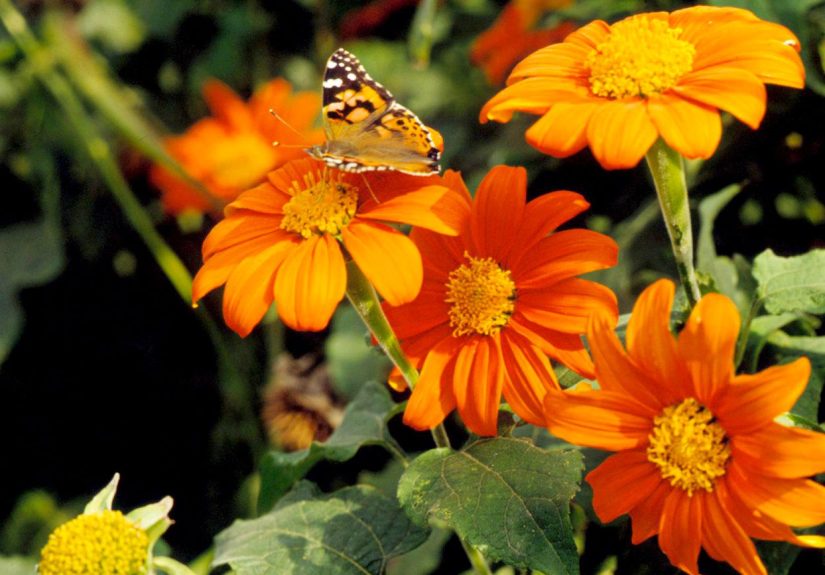
14. Mexican Sunflower / Tithonia (Tithonia rotundifolia)
Color: orange-red • Why it works: a high-nectar annual with big blooms that butterflies can’t ignore. Loves heat and sun. Plant it where you want an instant “wow” wall of color.
15. Sunflower (Helianthus spp.)
Color: yellow, bronze • Why it works: broad flower faces attract butterflies, and later the seeds feed birds. Mix annual sunflowers with perennial types for staggered bloom and structure.
16. Blanket Flower (Gaillardia spp.)
Color: red, orange, yellow • Why it works: heat-loving, long-blooming, and nectar-rich. A strong pick for sunny, drier landscapesand it looks like a sunset that decided to grow petals.
17. Coreopsis / Tickseed (Coreopsis spp.)
Color: yellow, pink, bicolor • Why it works: cheerful blooms for early-to-mid summer, often reblooming with deadheading. Great massed in borders to create a “butterfly runway.”
18. Yarrow (Achillea millefolium)
Color: yellow, white, pink • Why it works: flat-topped flower clusters make easy landing pads. Tough, drought-tolerant, and dependablelike the friend who always shows up with snacks.
19. Garden Phlox (Phlox paniculata)
Color: pink, purple, white • Why it works: fragrant summer blooms that butterflies adore. Provide sun and airflow to help prevent mildew. Great for mid-to-late season color.
20. Sedum / Stonecrop (Hylotelephium spp.)
Color: pink, red • Why it works: late-season nectar that’s especially valuable in fall. The blooms deepen in color as temperatures cool, and butterflies treat it like a last-call nectar bar.
21. Mint Family Herbs (mint, oregano, thyme, catnip)
Color: usually purple/white blooms • Why it works: many mints are excellent nectar sources. Let a few herb plants flower (yes, even if your inner neat-freak protests) and you’ll see more pollinators.
22. Lilac (Syringa spp.)
Color: purple, white • Why it works: fragrant spring blooms help kick off the season. Lilac also adds shelter and structureimportant for butterflies resting out of wind.
23. Summersweet / Sweetspire (Clethra alnifolia)
Color: white, pink • Why it works: a shrub with fragrant summer flowers that draws pollinators. Excellent for moist soils and part sun, and a smart alternative if you want a “shrubby nectar station.”
24. Buttonbush (Cephalanthus occidentalis)
Color: white “pom-poms” • Why it works: a native shrub that thrives in wet areas and supports pollinators. If you have a rain garden or soggy spot, buttonbush turns that problem into a butterfly feature.
25. Spicebush (Lindera benzoin)
Color: yellow spring flowers (plus great foliage) • Why it works: host plant for spicebush swallowtail caterpillars. Plant it in part shade if you want to support more than just adult nectar sipping.
26. Parsley, Dill, and Fennel (kitchen herbs with a secret identity)
Color: yellow umbels (when flowering) • Why it works: classic host plants for black swallowtail caterpillars. Plant extras so you can sharebecause caterpillars do not understand “this is for dinner.”
27. Passionflower Vine (Passiflora incarnata and relatives)
Color: purple-white blooms • Why it works: a showy vine that can act as a host plant for butterflies like gulf fritillaries (region-dependent) and provides nectar, too. Give it a trellis and a little room to sprawl.
What about “butterfly bush”?
You’ll see butterfly bush (Buddleja davidii) on many lists because butterflies do visit it. The catch: in parts of the U.S., it can be invasive and doesn’t serve as a host plant for many native caterpillars. If it’s considered invasive where you live, skip it and plant native heavy-hitters like Joe-Pye weed, goldenrod, asters, buttonbush, or summersweet instead. If you’re set on the look, consider sterile, non-invasive cultivars where appropriate and always follow local guidance.
Make the buffet last all season (simple planting strategy)
Spring: lilac, early herbs, and emerging natives set the stage. Add a few cool-season annuals if you want early color.
Summer: coneflower, bee balm, zinnias, cosmos, coreopsis, blanket flower, and salvia keep nectar flowing nonstop.
Late summer into fall: Joe-Pye weed, blazing star, sedum, goldenrod, and asters carry the garden when migrating butterflies need fuel most.
Quick combo that looks great and works hard: a “sunny trio” of coneflower + liatris + black-eyed Susan, backed by Joe-Pye weed, with zinnias and cosmos filling gaps. Add milkweed nearby for monarch caterpillars, and you’ve got both snacks and nursery space.
Common butterfly-garden mistakes (and easy fixes)
Over-cleaning the garden
Many butterflies overwinter in leaf litter, stems, or tucked-away spots. If you manicure everything in fall, you may be evicting next year’s butterflies. Try leaving some stems and leaves until spring.
Planting “all summer bloomers” but nothing for fall
Late-season nectar is a big deal. Add asters and goldenrod, plus sedum or Joe-Pye weed, to keep butterflies visiting through autumn.
Choosing double flowers for looks
Some double blooms are bred for extra petals, not nectar access. Pick single or semi-double varieties (especially zinnias) so butterflies can actually reach the good stuff.
Spraying first, asking questions later
If you want caterpillars, you can’t treat every chewed leaf like a crime scene. Spot-treat only when truly necessary, use physical barriers, and tolerate a little munching where host plants are doing their job.
Extra: real-life butterfly-garden “experiences” people commonly notice (about )
Butterfly gardening has a funny way of changing what “success” looks like. In a typical flower garden, you might aim for spotless leaves and perfectly timed blooms. In a butterfly garden, the wins are different: a ragged milkweed leaf becomes a bragging right, and a cluster of tiny eggs on dill feels like you’ve been chosen for a very small, very fluttery mission.
Many gardeners report that the first big breakthrough happens when they switch from “one of everything” to planting in clumps. A single coneflower is pretty. A group of seven coneflowers is a billboard. Add a drift of zinnias nearby, and suddenly you’ll see butterflies do the slow, hovering loop they do when they’re deciding where to landlike they’re reading the menu.
Another common moment: realizing butterflies keep different hours than people. Early afternoon sun often brings the most activity, especially on warm, calm days. If you’ve ever thought, “My butterfly garden isn’t working,” and then you checked at 7:00 a.m. in 62-degree weather… congratulations, you accidentally reviewed a restaurant before it opened. Try watching between late morning and mid-afternoon on a sunny day, and you’ll likely notice more visitors.
Gardeners also tend to notice that bloom timing matters more than perfection. A slightly scruffy patch with something blooming in every season can outperform a pristine bed that peaks for two weeks and then goes quiet. That’s why late-season plants like asters, goldenrod, Joe-Pye weed, and sedum often feel like “butterfly magnets.” When other nectar sources dry up, these plants become the neighborhood diner that’s still serving breakfast at 2 p.m.
Then there’s the caterpillar learning curve. People often plant parsley or dill for cooking and are surprised when it turns into a swallowtail nursery. The best approach is to plant extras on purpose. Put the “sharing herbs” in a less prominent spot, and keep your “kitchen herbs” separate, so you don’t have to negotiate with caterpillars over your dinner plans. The same mindset helps with milkweed: if you plant enough, you can enjoy watching monarch caterpillars grow without worrying every time a leaf disappears.
Finally, butterfly gardeners frequently say the garden starts to feel more alive when they add small habitat details: a shallow water dish with sand for puddling, a few flat stones for basking, and a couple of shrubs or grasses for shelter. Those little touches encourage butterflies to stick around instead of just making a quick nectar pit stop. Over time, people often start keeping “butterfly notes”which plants bloom first, which butterflies show up in late summer, and which flowers get the busiest on hot days. It turns gardening into part science experiment, part nature show, and part “I can’t believe I used to care this much about spotless leaves.”
Conclusion
If you want more butterflies, think like a butterfly: provide sun, nectar, host plants, and safe habitat. Start with a few unstoppable classics (milkweed, coneflower, zinnias, asters, goldenrod), plant them in clumps, and let your garden be a little wild around the edges. The payoff is a yard that feels bright, buzzing, and delightfully flutterylike nature’s confetti decided to RSVP “yes.”