Table of Contents >> Show >> Hide
- What the One-Hertz Challenge Is Really Testing
- Meet the Shadow Clock: A Timepiece You Have to Wake Up
- Why “One Hertz” Is Simple… Until You Mean It
- The Physical Design: Making It Look Like a Product (Not a Prototype)
- Practical Build Notes and Smart Variations
- Why Calling It a “Shadow Clock” Is More Than a Cute Name
- Maker Experience: of What It’s Like Living With a Shadow-Activated Clock
- Conclusion: The Best Clocks Don’t Just Tell TimeThey Tell a Story
If you’ve ever looked at a normal wall clock and thought, “This is far too cooperative,” you’re going to enjoy the
Shadow Clock featured in Hackaday’s 2025 One-Hertz Challenge.
It’s a clock that keeps proper time, shows seconds at a tidy one tick per second, and then… refuses to be a clock
until you summon it by waving a hand near it like you’re casting a tiny spell.
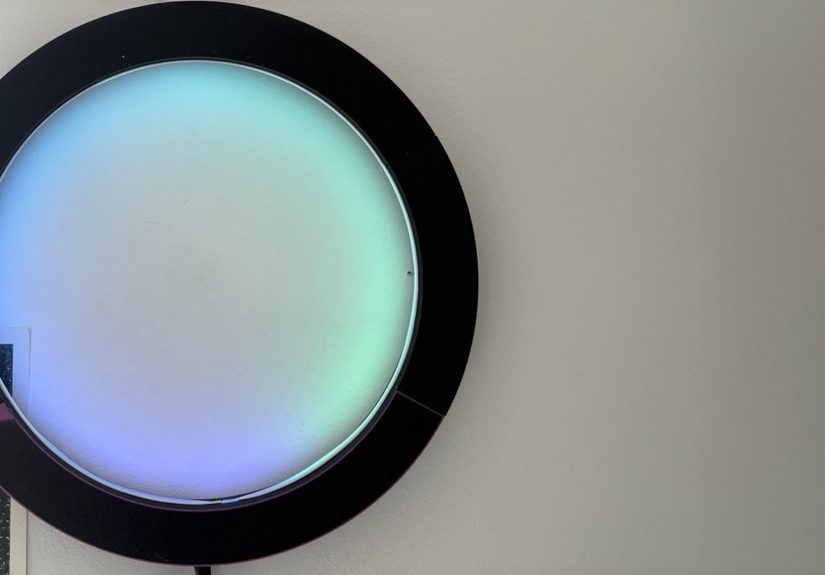
On the surface it’s minimalist decor: a clean circular ring on the wall with smooth LED animations.
But step closer and play a little “shadow puppet theater,” and it snaps into timekeeping modehours, minutes, and
seconds mapped onto a 60-position LED ring. Under the hood, it’s a well-balanced blend of Wi-Fi time syncing,
reliable RTC backup, and proximity sensing that makes the whole thing feel intentional instead of “dev board chic.”
What the One-Hertz Challenge Is Really Testing
Hackaday’s One-Hertz Challenge sounds deceptively simple: build something that does something once per second.
But “once per second” is a rabbit hole with a velvet rope and a bouncer named Physics.
A one-hertz beat can be a blinking LED, a mechanical stepper “thunk,” a relay clack, a metronome swing, or a full
-on clock. The constraint is tiny, but the design space is huge.
The fun part is that one hertz sits right at the intersection of “human-friendly” and “engineering-annoying.”
Human-friendly because we can see and feel one-second events. Engineering-annoying because “exactly one second”
touches drift, temperature, power stability, oscillator accuracy, andif you synchronize to the internetnetwork
latency and time server behavior.
The Shadow Clock lands squarely in the “Clockwork” spirit of the contest: it embraces the classic second-by-second
cadence, but wraps it in an interaction concept that makes the project feel more like an object you’d actually keep
on your wall than a demo you’d pack away after the weekend.
Meet the Shadow Clock: A Timepiece You Have to Wake Up
The Shadow Clock is an open-source, finger-activated LED-ring clock built around an ESP8266 microcontroller.
It displays time on a 60-pixel circular strip of addressable LEDs and keeps itself accurate by syncing over Wi-Fi
using NTP (Network Time Protocol). When Wi-Fi isn’t available, it falls back to a dedicated DS3231 real-time clock
modulebecause even playful clocks should be dependable.
The “shadow” part isn’t a sundial (more on that later). It’s an interaction: two IR distance sensors watch for a hand
or finger near the front opening. When you approachcasting a literal shadow and a figurative “presence”the clock
reveals the time. When you leave, it fades back into ambient animation mode.
The display: 60 LEDs, 60 positions, zero apologies
The clock uses a 60-pixel WS2812B-style LED ring (or strip arranged as a ring), where each pixel corresponds to a
familiar “minute mark” position. That makes the mapping instantly intuitive: the ring itself is the dial.
- Hours are shown as a red position on the ring.
- Minutes are shown as blue.
- Seconds are shown as whiteadvancing once per second, satisfying the contest’s heartbeat.
There’s a clever flourish when indicators overlap. If the hour and minute land on the same LED, the color blending
creates a distinct combined color (for example, red + blue reads as magenta). That’s not just prettyit prevents
ambiguous “missing” indicators and turns overlap into a feature instead of a bug.
The “shadow play” trigger: proximity that feels like magic
The Shadow Clock uses two Sharp IR distance sensors to detect a hand or finger in front of the device.
Those sensors are read through an ADS1115 analog-to-digital converter, which is a practical move: it gives stable,
higher-resolution readings over I2C, and it keeps the ESP8266 focused on the main eventWi-Fi, timing, and LED control.
In plain terms: you approach the clock, the sensors notice, and the clock switches from ambient animation into “time
mode.” When you pull away, the LEDs fade back into colorful motion. This is what makes it feel like decor first and a
gadget secondwhich is the exact opposite of most DIY clocks (said with love).
Timekeeping: Wi-Fi accuracy with a “no drama” backup plan
Time comes from NTP when the network is available. NTP is the workhorse protocol that helps devices synchronize their
clocks over variable-latency internet paths. That means the Shadow Clock can automatically stay correct without you
ever setting it again after a power outage or firmware update.
But Wi-Fi is not a moral virtue. Sometimes routers reboot. Sometimes you move. Sometimes your ISP decides you deserve a
surprise.
That’s why the DS3231 RTC is the perfect sidekick: it’s a temperature-compensated RTC designed to keep accurate time
even when main power is interrupted (typically with a backup battery). In other words, the Shadow Clock stays a clock,
even when the internet is being the internet.
Why “One Hertz” Is Simple… Until You Mean It
If you only need a blink that looks right to a human, 1 Hz is easy. A microcontroller delay loop can approximate it,
a timer interrupt can nail it, and a 555 timer can do it with a grin.
But if you want your one-second ticks to stay aligned with real-world time over days and weeks, you need to respect
the layers beneath that “one second.”
Seconds come from frequency, and frequency comes from reference
In modern timekeeping, the “second” is defined by an atomic reference: a specific number of oscillations associated
with cesium atoms. That definition gives us stability and a global standard. But our daily experience of time is also
tied to Earth’s rotationwhich is irregular enough that leap seconds exist to keep civil time reasonably aligned with
astronomical time.
You don’t need to handle leap seconds perfectly to enjoy a wall clock, but you do need a strategy for long-term drift.
Shadow Clock’s strategy is clean:
it uses NTP for periodic truth-checking, and the DS3231 for consistent local time between syncs.
NTP versus RTC: it’s not a rivalry, it’s teamwork
An RTC like the DS3231 is excellent at being steady. It just counts seconds with a stable oscillator.
NTP is excellent at being correct over the long run, because it references upstream time servers.
Put them together, and you get something better than either alone:
a clock that stays accurate without constant connectivity and corrects itself when the network comes back.
LED timing is its own mini universe
Addressable LEDs like WS2812B “NeoPixel-style” devices require precise signaling. They receive data at a fixed rate
and latch after a short pause, which means your microcontroller has to deliver clean, correctly-timed updates.
With a 60-pixel ring, you have enough resolution for readable time and enough animation headroom to look smooth
without turning your firmware into a timing soap opera.
The Physical Design: Making It Look Like a Product (Not a Prototype)
One of the most underrated challenges in DIY electronics is “finishing.” The Shadow Clock doesn’t dodge that part.
The housing is a 200 mm diameter toruslarge enough to be visually present on a wall, but still within reach for
common 3D printing setups.
Because many consumer FDM printers top out around a 220 × 220 mm bed, the enclosure is designed in multiple segments
that interlock. The idea is practical and builder-friendly: print the ring in wedges, dry-fit, glue (or plastic-weld),
and sand the seams flush. Internal channels guide the LED strip and create recesses for the IR sensors so the front
stays clean.
That split-design approach is quietly important. It means the project scales to more makers and avoids the “cool build,
shame about the printer” problem. And once assembled, the clock reads as intentional decor instead of a ring of LEDs
taped to a pizza pan (again: said with love).
Practical Build Notes and Smart Variations
1) Power planning: the unglamorous hero
Addressable LEDs can draw significant current at high brightnessespecially in full-white animations. Even if you keep
brightness modest (which most wall decor clocks do), build in margin: a quality power supply, proper wiring, and
sensible current limiting make your clock reliable instead of haunted.
2) Sensor behavior: “proximity” is a vibe, not a constant
IR distance sensors can be influenced by surface reflectivity, ambient lighting, and geometry. The best user
experience usually comes from treating the sensors as a “presence detector” rather than a tape measure.
A little smoothing, a thoughtful threshold, and a short “debounce” window can keep the clock from flickering between
modes when a hand hovers indecisively like it’s trying to negotiate with time.
3) Time sync: be polite to servers
NTP is built to be widely used, but good maker citizenship still matters. Don’t sync every second (ironically).
Sync occasionally, rely on the RTC between syncs, and you’ll get accurate time without unnecessary network noise.
If you want extra robustness, you can design a “confidence” approach: trust NTP when available, but sanity-check jumps
against the RTC to avoid sudden, dramatic time leaps caused by transient network issues.
4) Accessibility: color is great until it isn’t
RGB clocks are gorgeous, but not everyone reads color the same way. A strong variation would be an optional alternate
palette (high-contrast colors) or a mode where hours and minutes use different brightness or blinking patterns, not
just different hues.
Why Calling It a “Shadow Clock” Is More Than a Cute Name
Historically, “shadow clocks” were among humanity’s earliest timekeeping toolsdevices that used the sun’s movement to
cast a shadow across marked divisions, evolving into sundials. Those ancient systems were literally Earth’s rotation
made visible. You could watch time happen as the shadow slid across the day.
The Hackaday Shadow Clock isn’t a sundial, but it borrows the poetry of that idea. The user’s presenceexpressed as a
nearby hand and an actual change in light and distanceinvites the clock to “be a clock.” The time display is not
constantly demanding attention; it’s revealed by interaction, like checking a watch instead of staring at a wall.
It’s a modern nod to a very old theme: timekeeping doesn’t just measure timeit shapes how we relate to it. A clock
that only shows you time when you ask for it can feel calmer than one that constantly broadcasts seconds like it’s a
sports scoreboard for your anxiety.
Maker Experience: of What It’s Like Living With a Shadow-Activated Clock
Building (and then living with) a project like the Shadow Clock is a surprisingly personal experience, in the same way
any “always present” object becomes part of your home’s rhythm. The first day is all adrenaline: you’re debugging
wiring, checking that your LED data line isn’t acting like an antenna, and doing the classic maker ritual of moving a
finger slowly toward the sensors while whispering, “Please. Please. Please.” When it finally wakes up and paints the
ring with hour, minute, and second markers, you don’t just see timeyou see proof of life.
The next phase is calibration, which sounds boring until you realize it’s basically teaching your clock manners.
You’ll discover that IR sensors don’t behave like a ruler. A matte wall, a glossy phone case, and a pale hand in
sunlight can all read differently. Most builders end up tuning the thresholds so the clock responds decisively:
close enough to feel intentional, but not so sensitive that it lights up every time a curious houseplant leaf sways
in the HVAC breeze. Adding a little smoothing to the sensor readings helps, but too much smoothing makes the clock
feel sluggishlike it’s waking up from a nap you didn’t approve.
Then there’s the “aesthetic engineering” stage. You’ll test brightness at night (because nobody wants a glowing donut
yelling at them at 2 a.m.), and you’ll likely tweak animation speed so it feels soothing rather than frantic. At this
point, the project stops being an electronics exercise and becomes a design object. The color palette matters. The
fade timing matters. Even the way the indicators overlap matters, because your eye is remarkably good at detecting
“almost right.”
Wi-Fi time sync is one of those features you appreciate most when you forget it exists. After a power outage, the
clock quietly comes back with the correct time. That feels almost magical, but it’s really a practical handshake
between NTP and a reliable RTC backup. If your network is flaky, you’ll notice the value of that RTC immediately:
the clock keeps behaving, keeps ticking, and doesn’t punish you for living in a world where routers sometimes need
encouragement.
And finally, there’s the moment you realize the “shadow” interface changes your relationship with time. You stop
glancing at the wall every few minutes. Instead, you approach the clock when you actually want the answer. That tiny
bit of frictionjust a hand near the ringturns time from a constant broadcast into a deliberate check-in. It’s not
that the clock makes you more mindful (it’s not a therapist, it’s LEDs), but it can make your space feel calmer.
Which is a pretty great outcome for a project that started as “do something once per second.”
Conclusion: The Best Clocks Don’t Just Tell TimeThey Tell a Story
The Shadow Clock works because it respects both sides of the maker brain. On one side, it’s technically solid:
ESP8266 + NTP for correctness, DS3231 for stability, addressable LEDs for expressive display, and IR sensing for a
clean interaction model. On the other side, it’s playful: time appears when you “cast a shadow,” then disappears into
ambient art when you walk away.
In the context of Hackaday’s 2025 One-Hertz Challenge, it’s a reminder that constraints aren’t cagesthey’re prompts.
“Do something once per second” can be a precision flex, a mechanical spectacle, or a delightful object that simply
makes everyday life a little more interesting every time it lights up.