Table of Contents >> Show >> Hide
- A quick Hanukkah history refresher (without the lecture vibes)
- 18 fun Hanukkah facts (history + traditions + a few surprises)
- “Hanukkah” literally means “dedication.”
- It begins on the 25th of Kislev (and that’s why the date “moves”).
- It lasts eight nightsand there’s more than one reason why.
- The “miracle of oil” is a later spotlight in Jewish tradition.
- Hanukkah is not mentioned in the Torah.
- The Hanukkah menorah has nine branchesbecause it’s not the same as the Temple menorah.
- That helper candle has a name: the shamash.
- There’s a “right way” to load candlesand a different “right way” to light them.
- Timing matters: the candles should burn for a while, not just for the photo.
- There are blessingstwo every night, and a third on the first night.
- The dreidel game is basically holiday chaos… with rules.
- The dreidel letters are an acronym for “a great miracle happened there.”
- Chocolate “gelt” has a serious origin: teaching and charity.
- Oil is the edible theme, which is why fried foods are the headline act.
- Sufganiyot became wildly popular in Israel in the 20th century.
- Public menorah lightings are a modern traditionand very American in scale.
- Hanukkah became especially prominent in the U.S. because of its calendar neighbor: Christmas.
- Yes, Hanukkah can overlap with other holidaysand it has produced some legendary mashups.
- How to celebrate Hanukkah (simple, meaningful, and zero guesswork)
- 1) Gather the basics
- 2) Choose a safe, visible spot
- 3) Light after sundown (with one important weekly exception)
- 4) Add one candle each night (and let the joy grow)
- 5) Make it a “whole evening,” not a 90-second ritual
- 6) Bring in the classic traditions (pick what fits your home)
- 7) Celebrate beyond the home
- A warm, modern takeaway
- of real-life Hanukkah experiences (what celebrating often feels like)
Hanukkah (also spelled Chanukah) is often introduced as “the Jewish Festival of Lights,” but that nickname is only the appetizer.
The main course is a mix of real history, later storytelling, family traditions, and a whole lot of oilbecause nothing says “miracle” like
deep-frying on purpose.
If you’ve ever wondered why Hanukkah lasts eight nights, why the menorah has nine branches (math!),
or why a spinning top somehow became a holiday MVP, you’re in the right place. Below are 18 fun factsplus a practical, no-stress guide
for celebrating in a way that’s meaningful, tasty, and not accidentally a fire drill.
A quick Hanukkah history refresher (without the lecture vibes)
Hanukkah commemorates the rededication of the Temple in Jerusalem in the second century BCE, following a Jewish revolt
against the Seleucid (Greek-Syrian) rulers. After reclaiming the Temple, Jewish tradition later emphasized a miracle:
a small amount of ritually pure oil lasted long enough to keep the Temple lamp burning for eight daystime enough to prepare more.
Over the centuries, that mix of dedication, resilience, and “light pushing back darkness” became the heart of the holiday.
18 fun Hanukkah facts (history + traditions + a few surprises)
-
“Hanukkah” literally means “dedication.”
The word comes from a Hebrew root meaning “to dedicate,” pointing to the rededication of the Temple after it was reclaimed.
So yesHanukkah is basically the ultimate grand re-opening. -
It begins on the 25th of Kislev (and that’s why the date “moves”).
The Hebrew calendar is lunisolar, so the Gregorian date changes each year, usually landing in late November or December.
Same Hebrew date, different “what day is it?” energy. -
It lasts eight nightsand there’s more than one reason why.
The famous explanation is the oil lasting eight days. Some historical discussions also connect the length to an eight-day dedication
celebration after a period when normal worship was disrupted. Either way, eight nights became the tradition. -
The “miracle of oil” is a later spotlight in Jewish tradition.
The rededication story appears in ancient sources, while the oil miracle is emphasized in later rabbinic tradition (especially the Talmud).
That’s part of what makes Hanukkah interesting: it blends historical memory with spiritual meaning. -
Hanukkah is not mentioned in the Torah.
Unlike major biblical festivals, Hanukkah developed later in Jewish history. That doesn’t make it “less”it just means it’s a holiday
that grew out of lived events and evolving tradition. -
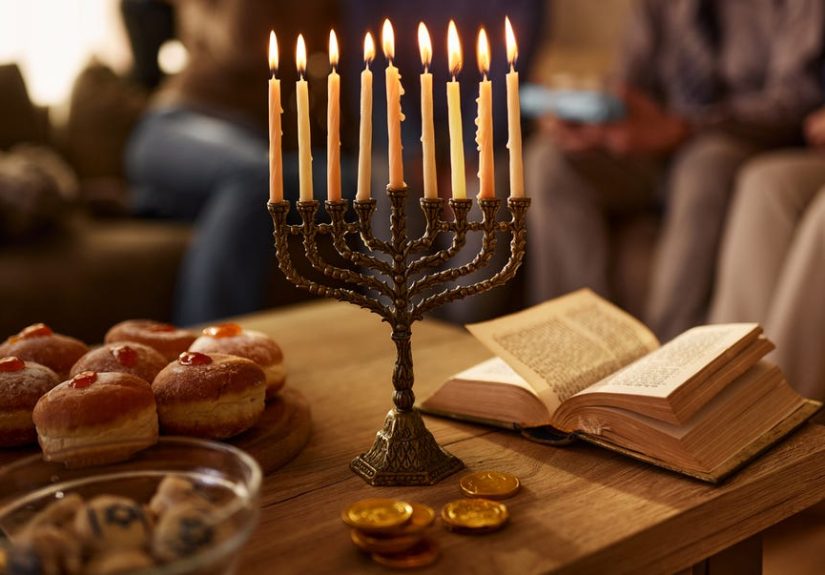
The Hanukkah menorah has nine branchesbecause it’s not the same as the Temple menorah.
The Temple menorah is famously seven-branched. The Hanukkah lamp (often called a hanukkiah) has nine holders:
eight for the nights, plus one helper candle. -
That helper candle has a name: the shamash.
The shamash (“attendant”) is used to light the other candles. It’s usually set aparthigher, lower, or just clearly different
because it’s doing the job, not “counting” as one of the eight. -
There’s a “right way” to load candlesand a different “right way” to light them.
A common custom is to place candles from right to left (like reading Hebrew), but light them left to rightstarting with the newest candle.
Translation: you add a candle, and you celebrate that new light first. -
Timing matters: the candles should burn for a while, not just for the photo.
Many traditions aim for the lights to burn at least 30 minutes after nightfall. It’s a small detail that turns “candle lighting”
into “candle lingering”a built-in pause during a busy season. -
There are blessingstwo every night, and a third on the first night.
Typically, two blessings are said before lighting each night, and an additional blessing (Shehecheyanu) is said on the first night
(or the first time lighting that season). Even if you don’t know Hebrew, many families use transliteration or English readings. -
The dreidel game is basically holiday chaos… with rules.
Players spin a four-sided top and follow what the letter saystake nothing, take half, take all, or add to the pot.
It’s part chance, part strategy, and part “how did my chocolate coins disappear already?” -
The dreidel letters are an acronym for “a great miracle happened there.”
Outside Israel the letters commonly stand for Nes Gadol Haya Sham (“a great miracle happened there”).
In Israel, the last letter often changes to reflect “here.” -
Chocolate “gelt” has a serious origin: teaching and charity.
Gelt literally means “money” (from Yiddish). Giving coins became associated with rewarding learning and giving to others,
and chocolate versions made it kid-friendly (and dentist-discussion-friendly). -
Oil is the edible theme, which is why fried foods are the headline act.
Latkes (potato pancakes) and sufganiyot (jelly doughnuts) aren’t “random.” They’re delicious reminders of the oil story.
If your kitchen smells like a festival and a fryer had a baby, you’re doing it right. -
Sufganiyot became wildly popular in Israel in the 20th century.
Fried doughnuts existed in many places, but sufganiyot became a signature Hanukkah treat in modern Israelespecially as bakeries
and public life helped make them a seasonal star. -
Public menorah lightings are a modern traditionand very American in scale.
In many U.S. cities, giant menorahs are lit in public spaces as a way to share the holiday’s message of light.
It’s part celebration, part community gathering, and part “wow, that candle is taller than my car.” -
Hanukkah became especially prominent in the U.S. because of its calendar neighbor: Christmas.
Historically, Hanukkah wasn’t among the most major religious holidays, but in American life it grew in cultural visibility
especially for families navigating a very Christmas-heavy season. -
Yes, Hanukkah can overlap with other holidaysand it has produced some legendary mashups.
Because the date shifts each year on the Gregorian calendar, Hanukkah has overlapped with Christmas at timesand even aligned with
Thanksgiving in rare years. When that happens, the internet becomes unstoppable.
How to celebrate Hanukkah (simple, meaningful, and zero guesswork)
1) Gather the basics
- A hanukkiah (nine-branched Hanukkah lamp)
- Hanukkah candles (or oil cups if your tradition uses oil)
- A lighter or matches (bonus points for the one that actually works on the first click)
- Optional: blessings in Hebrew, transliteration, or English; songs; treats; dreidel and gelt
2) Choose a safe, visible spot
Many families place the hanukkiah where it can be seenoften near a windowso the light is shared.
Safety matters: stable surface, away from curtains, and never leave lit candles unattended.
3) Light after sundown (with one important weekly exception)
A common practice is lighting after sundown. On Friday night, the Hanukkah candles are typically lit before Shabbat candles.
If you’re unsure in your household tradition, your local synagogue or a trusted Jewish calendar can guide the timing.
4) Add one candle each night (and let the joy grow)
Night one: one candle (plus the shamash). Night two: two candles. By night eight, the hanukkiah is fully lit.
It’s a built-in lesson in increasing lightliterally and metaphorically.
5) Make it a “whole evening,” not a 90-second ritual
After lighting, linger. Talk about the theme of the nightcourage, identity, gratitude, hope, community.
Or keep it casual: sing a song, share a memory, and enjoy the glow.
6) Bring in the classic traditions (pick what fits your home)
- Food: Latkes, sufganiyot, and other oil-cooked favorites (or modern twists like sweet potato latkes).
- Games: Dreidel with gelt, nuts, or any small tokens.
- Giving: Some families do small gifts each night; others focus on charity (tzedakah).
- Music & stories: Songs, children’s books, or retelling the Hanukkah story in age-appropriate ways.
7) Celebrate beyond the home
Community eventspublic menorah lightings, concerts, volunteer nights, or Hanukkah fairscan make the holiday feel bigger than your dining room.
If you’re new to celebrating, attending one community event can be the fastest way to learn the rhythm of the holiday.
A warm, modern takeaway
Hanukkah isn’t about having the “perfect” candles, the “correct” latke crispiness, or the most photogenic menorah placement.
It’s a holiday built around a simple idea: when things feel dark, you don’t argue with darknessyou add light.
One candle. Then another. And another. Until the whole window glows.
of real-life Hanukkah experiences (what celebrating often feels like)
Hanukkah has a funny way of turning small moments into the kind of memories that stick. A lot of families describe the first night as
“the warm-up”you’re locating the candles, negotiating who gets to light first, and realizing the lighter is missing even though you bought
a three-pack “just in case.” Then the second night rolls around and suddenly it feels real: there’s a rhythm, a tiny ceremony, and a growing
line of lights that makes the week feel special.
One common experience is how the holiday naturally creates a daily pause. Even if the day was chaotichomework, work, traffic, life
the act of lighting candles after sundown draws everyone into the same room. The conversation might start with the traditional blessings
and end with a completely untraditional debate about whether applesauce is mandatory with latkes (some people will say yes with the confidence
of a courtroom attorney). That mix of sacred and silly is part of the charm.
Food memories are especially vivid. Many households have a “signature” latke style: extra crispy edges, onion-forward, gluten-free,
or the legendary family recipe that no one is allowed to change (except the person who makes them, who changes it every year). The kitchen
often becomes the gathering placesomeone flipping latkes, someone “taste-testing” the sufganiyot, and someone else doing the very important
job of saying, “Careful, that’s hot,” approximately 0.2 seconds too late.
If you’ve ever watched kids play dreidel, you know the emotional range is impressive: triumph, disbelief, negotiation, and the sudden realization
that chocolate coins are both currency and snack. Adults get pulled in toosometimes for nostalgia, sometimes because competition is a family sport.
Even the simplest game becomes a mini-lesson in luck, patience, and sharing (especially sharing the gelt you definitely didn’t hide in your pocket).
Many people also describe a “bigger-than-us” feeling when they attend a public menorah lighting. There’s something powerful about standing outside
in the winter, seeing a crowd bundled up, and watching a giant hanukkiah glowespecially in places where Jewish visibility feels newly important.
Whether the event is quiet or festive, it can feel like a community promise: we’re here, we remember, and we’ll keep adding light.
And for families celebrating in modern, mixed, or interfaith households, Hanukkah often becomes a flexible tradition that welcomes new customs.
Some families focus on charity nights, others do theme nights (games, stories, cooking, volunteering), and many keep it simple: candles, a snack,
and a few minutes together. In the end, the most consistent “Hanukkah experience” is this: the light grows, the home feels warmer, and the days
feel a little more hopefulone night at a time.