Table of Contents >> Show >> Hide
- Before You Plant: The 10-Minute Tiny-Yard Game Plan
- 1) Design in “Zones,” Not in One Big Blob
- 2) Go Vertical with Trellises, Wall Planters, and Hanging Baskets
- 3) Train Fruit Trees Flat with Espalier
- 4) Build a Raised Bed That Fits the Space (and Your Arms)
- 5) Try Square-Foot Planting for Maximum Harvest
- 6) Treat Containers Like “Moveable Landscaping”
- 7) Make One Container the Star (Your Built-In Focal Point)
- 8) Choose Hardscape That Does Double Duty
- 9) Add a Path (Yes, Even a Short One)
- 10) Build Seating Into the Edges
- 11) Create Privacy Without Building a Fortress
- 12) Plant in Layers to Fake Depth
- 13) Pick Dwarf, Compact, or Columnar Plants (Scale Matters)
- 14) Lean on Native and Low-Maintenance Plants
- 15) Mulch for a Cleaner Look (and Less Work)
- 16) Use Lighting to “Extend” Your Yard After Dark
- Conclusion
- Experiences and Lessons People Commonly Learn in Small-Space Yards (Extra Detail)
A small yard is basically the studio apartment of the outdoor world: everything has to earn its keep, and there’s
zero patience for “decorative clutter.” The good news? When you’re working with a compact plot, you’re forced into
the kind of intentional choices that make big landscapes look pulled together. You don’t need acres. You need a
plan, a few smart design moves, and plants that behave like they’ve read the HOA rules.
Below are 16 small-space landscaping ideas that help you squeeze more function, more beauty, and more “wow” into
every square footwhether you’ve got a tiny backyard, a side yard that feels like a hallway, or a postage-stamp
front lawn. We’ll cover vertical tricks, space-saving plant picks, simple hardscaping, and low-maintenance tactics
(because you deserve weekends that don’t involve arguing with weeds).
Before You Plant: The 10-Minute Tiny-Yard Game Plan
Start with three quick decisions: (1) what you want to do outside (eat, lounge, garden, let pets roam), (2) where
the sun hits for 6+ hours vs. where shade lingers, and (3) what you want to hide (trash cans, utility boxes,
neighbor’s inflatable flamingo army). Then sketch a simple “bubble map” of zones. Small landscapes feel bigger
when they’re organized, not when they’re packed to the brim.
1) Design in “Zones,” Not in One Big Blob
Even a small plot can hold multiple mini-areas: a slim dining spot, a planting bed, and a narrow path that connects
it all. The trick is giving each zone a purpose and a borderedging, gravel, pavers, or a line of plantsso it
reads as intentional. When everything is “everywhere,” the yard feels smaller (and slightly chaotic).
2) Go Vertical with Trellises, Wall Planters, and Hanging Baskets
Vertical gardening is the small-space cheat code. Use trellises for vines, hang baskets where you’d otherwise have
empty air, and mount planters on fences to free up floor space. Bonus: vertical elements create privacy and soften
hard edges without stealing precious ground area.
3) Train Fruit Trees Flat with Espalier
Want fruit in a tiny yard without sacrificing the whole yard? Espalier lets you train a tree along a wall or fence
so it grows in a narrow, flat shape. Choose dwarf or semi-dwarf varieties when space is tight. It’s edible
landscaping that doubles as living artand it’s way more charming than a lonely tomato plant in a corner.
4) Build a Raised Bed That Fits the Space (and Your Arms)
Raised beds pack a lot of growing power into a small footprint. A common guideline is to keep beds narrow enough
to reach across comfortably (often around 4 feet wide), so you can plant and weed without stepping into the soil.
Raised beds also help you control soil quality and improve drainagegreat when your native soil is… less than
inspiring.
5) Try Square-Foot Planting for Maximum Harvest
If you’re growing food, small-space layouts shine with intensive spacing methods like square-foot gardening. The
idea: divide the bed into a grid and assign each square a crop amount that makes sense for its mature size. It
keeps the garden organized and helps you use space efficiently without turning the whole thing into a jungle.
6) Treat Containers Like “Moveable Landscaping”
Containers aren’t just for balconiesthey’re a flexible design tool. Use pots to add color near seating, create a
mini “entry garden,” or test a plant before committing to it in the ground. Just use a quality potting mix (not
heavy garden soil) and make sure containers have drainageroots hate sitting in soggy regret.
7) Make One Container the Star (Your Built-In Focal Point)
In a small yard, one strong focal point does more than ten random accents. A dramatic plantertall, sculptural, or
overflowing with texturepulls the eye where you want it. Place it at the end of a short path, beside steps, or in
an empty corner to create a “destination” that makes the space feel designed.
8) Choose Hardscape That Does Double Duty
Hardscape is how you “buy back” usability in a tiny yard. A small patio, a strip of pavers, or a compact gravel
pad can turn awkward space into a dining area or lounge zone. Keep shapes simple and edges clean; in small spaces,
crisp lines read as bigger and calmer.
9) Add a Path (Yes, Even a Short One)
A path isn’t just for getting somewhereit creates depth. Stepping stones, pavers, or a narrow mulch walkway
guides the eye through the yard, which makes it feel larger than its measurements. Paths also protect plants from
foot traffic, so your greenery doesn’t get trampled by “just cutting through real quick.”
10) Build Seating Into the Edges
Freestanding furniture eats floor space fast. Instead, look for built-in bench seating along a fence line, a low
retaining wall that doubles as a perch, or a slim bistro set tucked into a corner. If you can add storage under a
bench, you’ve officially achieved small-yard gold medal status.
11) Create Privacy Without Building a Fortress
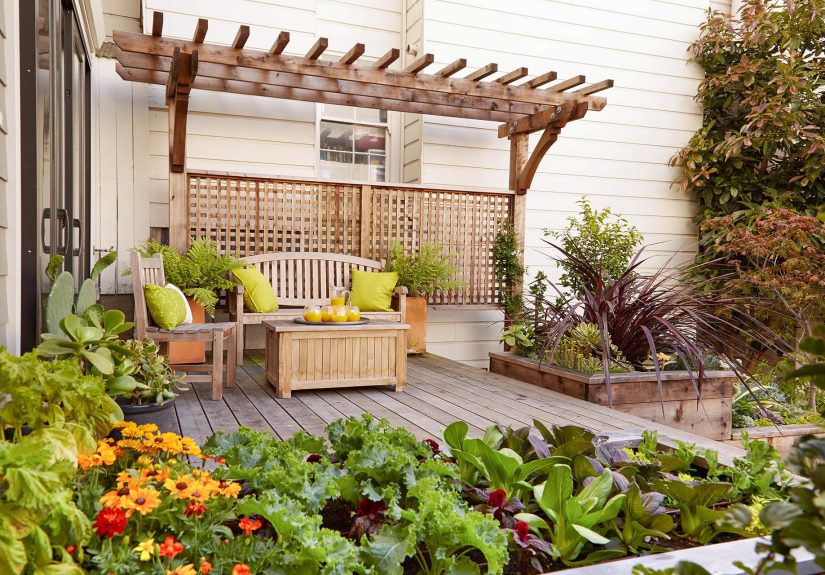
Small-space privacy works best in layers: a lattice panel with a climber, a row of tall planters, or a dense band
of shrubs where you need screening. You can also use pergola-style elements overhead to make a nook feel cozy and
defined. The goal is “garden oasis,” not “witness protection.”
12) Plant in Layers to Fake Depth
Layering is a visual trick that makes tiny gardens look richer and deeper. Use taller plants (or slim vertical
elements) in back, medium-height plants in the middle, and low groundcovers or edging plants in front. Mix leaf
sizes and textures for a “designed” look even when you’re using simple, easy-care plants.
13) Pick Dwarf, Compact, or Columnar Plants (Scale Matters)
In small yards, plant scale is everything. Compact shrubs, dwarf conifers, and columnar trees give structure
without swallowing the space. Read plant tags for mature size and give plants room to growbecause “I’ll just keep
pruning it forever” is a bold plan that rarely survives July.
14) Lean on Native and Low-Maintenance Plants
Native plants are adapted to local conditions and often need fewer inputs once established. They can also support
pollinators and add resilience to your landscape. The secret sauce is “right plant, right place”: match sun, soil
moisture, and space, and your yard will practically take care of itself.
15) Mulch for a Cleaner Look (and Less Work)
Mulch is the underrated hero of small landscapes. It helps conserve moisture, reduces weeds, and makes beds look
finished. It can also protect plants from accidental mower or string-trimmer damage. In tiny yards, where every
detail is visible, mulch is like eyeliner: subtle, but it pulls everything together.
16) Use Lighting to “Extend” Your Yard After Dark
Outdoor lighting makes small spaces feel bigger because you actually use them longer. Try string lights for
overhead glow, small path lights for safety, and a spotlight to highlight a plant or feature. A tiny yard that
looks magical at night is still a tiny yardbut now it’s a tiny yard with ambiance.
Conclusion
The best small-space landscaping isn’t about cramming in more stuffit’s about choosing the right few moves.
Define zones, build upward, pick plants that fit the scale, and use hardscape and lighting to boost function. With
a handful of smart decisions, even the smallest plot can feel like a personal outdoor retreat (not an awkward patch
of “outdoor leftovers”).
Experiences and Lessons People Commonly Learn in Small-Space Yards (Extra Detail)
Small yards have a funny way of teaching fast lessonsusually right after someone buys a plant labeled “vigorous”
because it sounded energetic and positive. One of the most common experiences is realizing that the
“mature size” on plant tags is not a suggestion. In a big yard, an overgrown shrub is annoying. In a
small yard, it’s a full-time roommate that blocks the walkway and steals sunlight from everything else. People who
end up happiest with their small landscapes tend to embrace compact varieties earlydwarf shrubs, columnar trees,
and plants that stay politely in their lane.
Another repeat experience: containers solve problems… and create new ones. They’re perfect for
renters, patios, and “I’m not sure what I want yet” phases. But many small-space gardeners learn (sometimes the
hard way) that pots dry out faster than in-ground beds, especially in sun and wind. After a few days of dramatic
wilted basil, people often upgrade their approachself-watering containers, drip irrigation kits, or at least
mulching the top of the potting mix to slow evaporation. The payoff is huge: once watering becomes consistent,
container gardens look lush instead of “barely surviving.”
Privacy is another area where small-yard experiences get very real, very quickly. Folks often start with the idea
that privacy requires a tall fence and a prayer. Then they discover that layered screening feels better:
a slim trellis with a climber, a tall planter with grasses, or a row of dense shrubs placed only where sightlines
matter. The best small yards don’t block everything; they create a few comfortable “rooms” where you can sit
without feeling like you’re in a display window.
Many people also notice that small spaces look “done” fastersometimes surprisingly fastwhen they add one strong
focal point. A single dramatic container, a compact water bowl, or a small sculptural tree can carry the design.
Without a focal point, people tend to add random little thingstiny statues, extra pots, miscellaneous décorthat
feel like clutter in a small footprint. The consistent lesson is: go bigger with one feature, not smaller
with ten.
There’s also a practical experience that comes up again and again: maintenance choices matter more when
everything is close. In a small yard, you’re always near the planting bedsso weeds are more visible, and
messy soil edges feel more chaotic. That’s why mulch and crisp edging feel like “instant upgrades.” People who
mulch early and keep clear borders between planting areas and paths often report that their yard feels calmer, even
before plants fully fill in.
Finally, small plots teach the value of lighting. A yard that feels “too small” in daylight can feel surprisingly
spacious at night when the edges soften and the focal point glows. String lights over a seating nook, a few path
lights, and one spotlight on a favorite plant can change how the entire space feels. The most common reaction?
“Wait… why didn’t I do this sooner?” (Usually said while holding a mug of something warm and pretending the
neighbor’s dog isn’t judging the design choices.)