Table of Contents >> Show >> Hide
- Before You Start: What “Kick Higher” Really Requires
- 1) Warm Up Like You Mean It (Dynamic First, Static Later)
- 2) Build Hip Mobility Daily (Yes, DailyBut Tiny)
- 3) Strengthen the Standing Leg (Your Kick Is Only as Stable as Your Base)
- 4) Train the Kicking Muscles Through Range (Not Just “Stretchy”)
- 5) Practice Active Flexibility (Lift, Hold, LowerWith Control)
- 6) Fix Your Mechanics: Chamber + Pivot = More Height (and Less Hip Drama)
- 7) Use Progressive Targets (Stop Guessing Your Height)
- 8) Add PNF Stretching After Training (The “Contract-Relax” Cheat Code)
- 9) Train Lunges and Split Squats (Kick Height Loves Strong Hips)
- 10) Build Core and Anti-Rotation Strength (So You Don’t Fold Like a Lawn Chair)
- 11) Recover Smarter (Flexibility Improves When You’re Not a Tired Pretzel)
- A Simple Weekly Plan (So This Doesn’t Live in Your Bookmarks Forever)
- Conclusion
- Extra: of Real-World Experiences (What People Notice When They Finally Kick Higher)
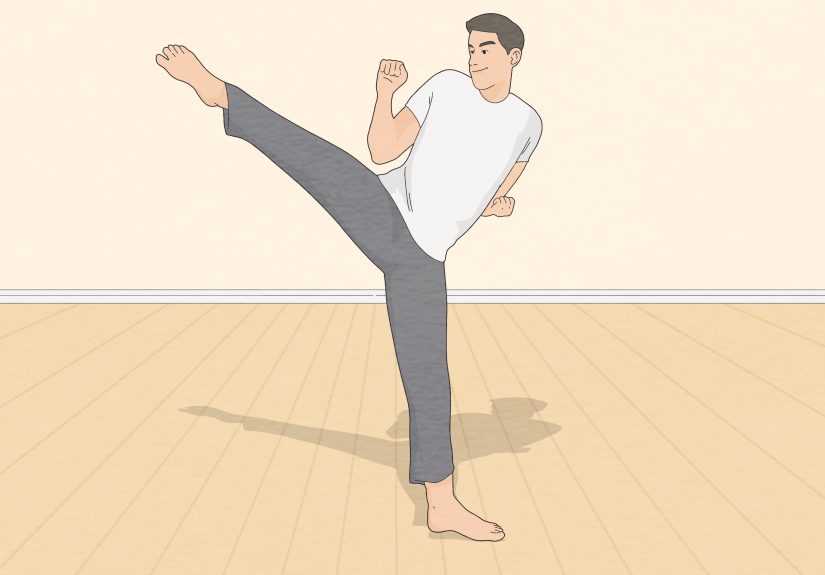
Let’s talk about the dream: head-height kicks that look effortless, land clean, and don’t make your hips file a formal complaint afterward. If your “high kick” currently tops out around “polite knee tap,” you’re not brokenyou’re just missing a few key ingredients. Kicking higher is less about being born bendy and more about building a system: warm muscles, mobile hips, strong positions, sharp mechanics, and recovery that isn’t just “hope and vibes.”
This guide breaks down 11 practical, coach-approved ways to kick higherwithout turning your hamstrings into a haunted house. Expect specific drills, sets and reps, technique cues, and a plan you can actually follow. And yes, we’ll keep it funbecause suffering is easier when you’re laughing.
Before You Start: What “Kick Higher” Really Requires
A higher kick isn’t just flexibility. It’s a group project involving: hip mobility (how well your joint moves), active flexibility (how well you control that range), strength (especially glutes, hip flexors, abductors/adductors), balance (your standing leg is the unsung hero), and technique (pivot, chamber, posture, and timing).
If one part is missing, your body “solves” the problem with ugly compensationsleaning back, collapsing the standing knee, yanking the kick up with your lower back, or twisting your foot like it owes you money. The goal is not just higher kicks. The goal is higher kicks you can repeat safely.
1) Warm Up Like You Mean It (Dynamic First, Static Later)
Cold muscles don’t stretch well. They also don’t negotiate. A proper warm-up raises your body temperature, turns on the nervous system, and makes your hips feel less like rusty door hinges. Save long static holds for after training or separate flexibility sessions.
Do this 6–8 minute “High Kick” warm-up
- Light cardio (jump rope, brisk walk, easy shadowboxing): 2 minutes
- Hip circles (both directions): 10 each way per side
- Leg swings front-to-back: 10–15 per side
- Leg swings side-to-side: 10–15 per side
- Walking knee hugs + tall posture: 8 per side
- Controlled “butt-kicker” quad stretch (walking): 8 per side
Start the swings low and smooth, then gradually increase height. Your warm-up should feel like turning a dimmer switchnot slamming the power button.
2) Build Hip Mobility Daily (Yes, DailyBut Tiny)
If your hip joint can’t rotate and open, your kick will either cap out early or your spine will try to do the job (and your lower back will hate you for it). The good news: mobility gains don’t require hour-long yoga marathons. Consistency beats heroics.
Try this 5-minute hip mobility “snack”
- 90/90 hip switches: 8 slow reps
- Hip CARs (controlled articular rotations): 3 slow circles each direction per leg
- Low lunge hip opener (gentle): 5 breaths per side
- Figure-four stretch (outer hip/glute): 5 breaths per side
Keep it controlled. Mobility is about owning the motion, not flopping into it like a fainting goat.
3) Strengthen the Standing Leg (Your Kick Is Only as Stable as Your Base)
When you kick, one leg becomes the entire foundation. If that standing hip wobbles, your body lowers the kick height for safetybecause surprise falls are not a great brand. Strong hip abductors (outer hip/glute med) and good single-leg balance make high kicks feel dramatically easier.
Do these 2–3x per week
- Single-leg balance (barefoot if safe): 3 x 30–45 seconds per side
- Side-lying hip abductions: 3 x 12–15 per side
- Clamshells (band optional): 3 x 12–15 per side
- Step-downs (small box): 3 x 8–10 per side
Coaching cue: keep your standing knee “soft,” ribs stacked over hips, and pelvis levelno hip hiking like you’re dodging a puddle.
4) Train the Kicking Muscles Through Range (Not Just “Stretchy”)
High kicks demand strength from the hip flexors (lifting the leg), glutes (driving and stabilizing), and adductors/abductors (controlling side angles). If you only stretch, you get range you can’t controllike having a sports car with no brakes.
Pick 3 exercises, 2–3x per week
- Hanging knee raises or captain’s chair: 3 x 8–12
- Standing banded marches (slow): 3 x 10 per side
- Reverse lunges: 3 x 8–10 per side
- Cossack squat (side-to-side): 3 x 6–8 per side
- Hip airplanes (balance + hip control): 2 x 5 slow reps per side
If you feel hip flexors “burning” in a good way, congratulationsyou’ve found the muscles that make high kicks look unfair.
5) Practice Active Flexibility (Lift, Hold, LowerWith Control)
Passive flexibility is how far you can get when gravity or your hands help. Active flexibility is how far you can get under your own power. High kicks are active flexibility in a trench coat pretending to be “talent.”
The “3-second top hold” routine
- Front leg lifts (straight leg, toes up): 3 x 8 per side, hold 3 seconds at top
- Side leg lifts (slight turnout, tall posture): 3 x 8 per side, hold 3 seconds
- Slow lowers: on the last rep, lower for 5 seconds
Start at a height you can control without leaning back. Over a few weeks, height increases naturallylike your confidence when you realize your hips can, in fact, behave.
6) Fix Your Mechanics: Chamber + Pivot = More Height (and Less Hip Drama)
Many “stuck” high kicks aren’t a flexibility issuethey’re a setup issue. Two common culprits: a weak chamber (knee doesn’t lift cleanly) and a lazy pivot (hips don’t open, so the leg hits a hard stop).
Roundhouse checklist
- Chamber first: knee up and slightly across, posture tall
- Pivot the support foot: rotate on the ball of the foot so hips can open
- Turn the hip over: think “hip through,” not “leg up”
- Return to chamber: don’t let the leg flop down like a broken drawbridge
Quick drill (3 minutes)
- Hold a wall lightly for balance.
- Chamber and pause (2 seconds).
- Slowly extend the kick (2 seconds).
- Re-chamber (2 seconds) and reset.
- 5 reps per side, then repeat once.
Bonus: better mechanics often “unlock” height instantly, because you stop fighting your own skeleton.
7) Use Progressive Targets (Stop Guessing Your Height)
If you always “just kick high,” you’ll always get “kinda high… sometimes… if the moon is right.” Targets create honest feedback and a clear progressionwithout forcing your body into sloppy positions.
How to progress safely
- Set 3 target heights: easy, challenging, ambitious.
- Kick the easy height with clean form for 5 reps.
- Kick the challenging height for 3 reps.
- Attempt the ambitious height for 1–2 reps (only if form stays solid).
Tools: a heavy bag mark, a pad held at specific height, or a piece of tape on the wall (just don’t kick the drywall unless you’re trying to meet your landlord).
8) Add PNF Stretching After Training (The “Contract-Relax” Cheat Code)
PNF (proprioceptive neuromuscular facilitation) stretching uses a gentle contraction followed by a deeper stretch. It’s widely used in sports and rehab settings because it can improve range of motion efficientlyespecially when done consistently.
Simple PNF protocol (hamstrings or hip flexors)
- Move into a mild stretch (no pain), hold 10–15 seconds.
- Contract the target muscle at about 50–70% effort for 6–10 seconds.
- Relax and ease slightly deeper, hold 15–20 seconds.
- Repeat 2–3 rounds.
Do this 2–3x per week after practice or after a workout. If you’re sore, go lighternot harder. Stretching should feel like persuasion, not interrogation.
9) Train Lunges and Split Squats (Kick Height Loves Strong Hips)
You don’t need to be a powerlifter to kick high, but you do need hips that can produce and control force. Lunges and split squats strengthen legs, glutes, and core stabilityplus they build balance in positions that look a lot like real-life kicking stances.
A kick-friendly lower-body mini-session (2x per week)
- Rear-foot elevated split squat: 3 x 6–8 per side
- Lateral lunge: 3 x 8 per side
- Glute bridge (pause at top): 3 x 10–12
- Calf raises (support-foot strength): 2 x 12–15
Keep your torso tall and pelvis stable. If your split squat looks like you’re searching for Wi-Fi on the floor, reduce the load and regain control.
10) Build Core and Anti-Rotation Strength (So You Don’t Fold Like a Lawn Chair)
High kicks often fail because the torso can’t stay organized. Your core isn’t just absit’s the system that keeps ribs stacked over hips while legs do dramatic things. Anti-rotation work helps you stay stable while the hips rotate and the leg whips through.
Do this 2–3x per week (10 minutes)
- Dead bug: 3 x 6 slow reps per side
- Side plank: 2 x 20–40 seconds per side
- Pallof press (band or cable): 3 x 10 per side
- Single-leg RDL (light weight): 2 x 8 per side
Translation: your kick gets higher because your body stops leaking energy everywhere like a shopping cart with one bad wheel.
11) Recover Smarter (Flexibility Improves When You’re Not a Tired Pretzel)
Mobility and flexibility adapt over time. That adaptation happens best when you’re sleeping enough, managing training volume, and not stretching through pain. “No pain, no gain” is great for motivational posters. It’s terrible for hamstrings.
Recovery habits that actually help kick height
- Sleep: aim for consistent nights (your nervous system loves routine).
- Hydration: tissues move better when you’re not dehydrated.
- Post-training cooldown: 5–8 minutes easy movement + light stretching.
- Deload weeks: every 4–6 weeks, reduce volume so your body can catch up.
If a stretch produces sharp pain, numbness, or pinching in the hip, stop and adjust. “Deep stretch” is okay. “Stabbing regret” is not.
A Simple Weekly Plan (So This Doesn’t Live in Your Bookmarks Forever)
Here’s a realistic schedule that combines mobility, strength, technique, and flexibilitywithout turning your life into a full-time kicking documentary.
| Day | Focus | What to do |
|---|---|---|
| Mon | Technique + Active Flex | Warm-up + chamber/pivot drill + leg lifts with holds (20–30 min) |
| Tue | Strength | Split squats, lateral lunges, bridges, core (35–45 min) |
| Wed | Mobility Snack | 5–10 min hips + easy shadow kicks (optional) |
| Thu | Targets + Balance | Progressive height targets + single-leg stability (25–35 min) |
| Fri | Strength + Core | Hip flexor work + anti-rotation + single-leg RDL (30–45 min) |
| Sat | Flexibility Session | Warm-up + PNF + relaxed static stretching (25–35 min) |
| Sun | Recovery | Walk, light mobility, breathe, pretend you’re a responsible adult |
Follow this for 4–6 weeks, track one kick (roundhouse or side kick) with a consistent target, and you’ll usually see noticeable improvementespecially in control and comfort.
Conclusion
To kick higher, stop treating flexibility like a magic spell and start treating it like training. Warm up dynamically, build daily hip mobility, strengthen your standing leg, develop active flexibility, and clean up your technique (chamber and pivot are non-negotiable). Add smart strength work, finish with targeted stretching like PNF, and recover like your progress depends on itbecause it does.
High kicks aren’t reserved for the genetically blessed. They’re built. And the best part? The moment your kick rises smoothly to a new height, your brain will immediately think, “Okay… but can we do it again?” Yes. That’s the plan.
Extra: of Real-World Experiences (What People Notice When They Finally Kick Higher)
When athletes start chasing higher kicks, most assume the answer is “stretch harder.” Then reality shows up, wearing sweatpants, holding a clipboard, and saying, “Cool. But can you control that range?” That’s usually the first big lesson: the height you can reach is not the same as the height you can own.
A common experience is the “instant improvement” weeksomeone fixes their pivot and suddenly their roundhouse jumps a few inches. It feels like unlocking a secret level, but it’s really just geometry. When the support foot turns and the hips open, the leg stops fighting the joint. People often describe it as, “My kick didn’t get strongereverything just felt less stuck.”
Then comes the second lesson: the standing leg is the boss. Plenty of kickboxers and Taekwondo students report that their kicking-side flexibility was “fine,” but the kick still wouldn’t go high unless they leaned back dramatically. Once they trained single-leg balance, hip abductor strength, and basic stability, the upper body stopped doing weird things to compensate. The kick gets higher not because the leg got longer, but because the body got steadier.
Another pattern: people who add active flexibility (lift-hold-lower) often feel clumsy for 1–2 weeks… and then suddenly smoother. That awkward phase is your nervous system learning the new map. It’s the same reason you’re wobbly the first time you try a new balance drill your body is negotiating with gravity in real time.
Many athletes also discover that “stretching intensity” is overrated. The folks who improve fastest aren’t the ones grimacing through pain; they’re the ones showing up consistently with medium effort and clean positions. Over time, that steady practice adds up. You’ll hear things like, “It didn’t feel dramatic day-to-day, but after a month my warm-up kicks were suddenly head height.” That’s adaptation doing its quiet, unglamorous job.
One of the funniest (and most motivating) experiences is when someone finally lands a controlled head kick on a pad and immediately becomes a different person. Their posture improves. They smile like they just got promoted. They start saying words like “whip” and “snap” unironically. The confidence boost is realbut the best part is what happens next: better height improves your whole game. Your mid-kicks become faster. Your feints feel sharper. Your balance improves. Even your footwork benefits because your hips are moving better.
The final lesson people report: recovery matters more than they thought. High-kick training can irritate hip flexors, adductors, and hamstrings if you spam volume. Athletes who sleep well, hydrate, and keep mobility gentle on off-days tend to progress without those “mysterious tightness” plateaus. In other words, the secret to kicking higher is sometimes… being boringly consistent and not wrecking yourself. Which is rude, but true.