Table of Contents >> Show >> Hide
- 1. A Massive Intelligence Failure That Feels Hard to Accept
- 4. Confusing Early Media Reports and Changing Narratives
- 5. Longstanding Distrust of Government and Institutions
- 6. Classified Documents, Redactions, and the “Missing Pieces” Effect
- 7. The Iraq War, WMD Claims, and Guilt by Association
- 8. Emotional Trauma and the Human Need for Larger Explanations
- 9. The Online Echo Chamber and the 9/11 “Truth” Movement
- 10. Real Unanswered Questions vs. Total Rejection of the Official Account
- What All This Suspicion Means Going Forward
- Experiences and Reflections Around 9/11 Skepticism
- Conclusion
More than two decades after the September 11, 2001 attacks, the official 9/11 account has been documented in thousands of pages of reports, hearings, and technical studies.
The U.S. government has released the 9/11 Commission Report, detailed investigations from the National Institute of Standards and Technology (NIST), and mountains of declassified documents.
And yet, a noticeable slice of the public still looks at all of that and says, “Hmm… I’m not totally convinced.”
Polls over the years have consistently shown that a significant minority of Americans believes there was some kind of cover-up, withheld information, or at least major unanswered questions about what happened that day and how it was allowed to occur.
That doesn’t mean every suspicion is grounded in solid evidencefar from it. But if you want to understand why skepticism persists, you have to look at the mix of history, psychology, and communication failures that keep these doubts alive.
This article does not endorse conspiracy theories or claim that the official 9/11 story is false.
Instead, it explains why some people remain suspicious, what they point to, and how those concerns interact with real documented failures, messy human behavior, and the emotional weight of a national trauma.
1. A Massive Intelligence Failure That Feels Hard to Accept
The 9/11 Commission itself concluded that the attacks were made possible by a “failure of imagination” and serious shortcomings in intelligence sharing, coordination, and follow-through.
Agencies had pieces of informationabout al-Qaeda, about specific individuals, about possible hijacking plotsbut they didn’t connect the dots in time to stop the attacks. For skeptics, “unprecedented” sounds like “unlikely,” and “unlikely” sounds like “suspicious.”
They ask why the building seemed to fall so symmetrically, why the 9/11 Commission originally said very little about WTC 7, and why the technical explanation relies on complex modeling not easily understood by the public.
Engineers and professional societies largely accept the NIST findings, but the visual impression of the collapseand the early lack of public explanationcontinues to fuel doubts among those already inclined to suspect foul play.
4. Confusing Early Media Reports and Changing Narratives
In the chaotic hours and days after 9/11, news outlets were flooded with incomplete, contradictory, and sometimes flat-out wrong information.
Early reports mentioned car bombs, additional planes, explosions in various places, and all kinds of details that were later corrected or discarded.
That’s normal in a disaster: reporters work with whatever they can get, official sources are overwhelmed, and rumors spread faster than facts.
But for some people, those early contradictions take on a different meaning. If one early report mentioned explosions and later reports downplayed them, skeptics might say, “See? They changed the story.”
Human memory adds another layer. Many people vividly recall what they heard on TV that day, but memories are not video recordingsthey’re reconstructive.
Over time, they can be influenced by subsequent coverage, internet videos, and conversations, making it easier to feel like “they must be hiding something” when stories don’t line up perfectly.
5. Longstanding Distrust of Government and Institutions
Public skepticism doesn’t exist in a vacuum. It lives in a political culture shaped by scandals like Watergate, the Iran–Contra affair, misleading claims about weapons of mass destruction in Iraq, and revelations about mass surveillance programs.
When people have seen real cover-ups and lies in other contexts, they’re more inclined to suspect them againespecially around something as consequential as 9/11.
Opinion surveys over the past two decades have repeatedly found that a nontrivial share of Americans believes that officials either knew more about the attacks than they admitted or failed to investigate properly.
That’s partly because trust in government overall has been trending downward for years, and 9/11 gets pulled into that broader story of institutional disappointment.
In other words, some people are not suspicious just about 9/11. They’re suspicious about everythingand 9/11 is simply the biggest, most emotionally charged stage on which that distrust plays out.
6. Classified Documents, Redactions, and the “Missing Pieces” Effect
Any major national security event involves classified information. That’s inevitable: intelligence sources and methods, foreign partnerships, and ongoing operations all affect what can be made public.
Over the years, some previously secret 9/11–related materials have been declassified, including controversial sections about potential connections to individuals linked with foreign governments.
But secrecy has a side effect. When the public sees redacted pages, sealed court documents, or heavily censored briefings, it’s easy to imagine that those black boxes contain explosive revelations.
Even when later releases provide more context, the initial impression of “they’re hiding something” can linger.
This “missing pieces” effect fuels suspicion. The less people know, the easier it is to imagine worst-case scenarios, up to and including elaborate inside jobs.
The official explanation may be largely correct, but the patches of secrecy create space for more exotic theories to flourish.
7. The Iraq War, WMD Claims, and Guilt by Association
One of the biggest hits to government credibility in the 2000s came after 9/11: the justification for the 2003 invasion of Iraq.
Many Americans were initially led to believe that there were strong links between Saddam Hussein and the 9/11 attacks or al-Qaeda in generallinks that were later debunked or sharply downplayed by U.S. leaders themselves.
When the widely touted weapons of mass destruction in Iraq failed to materialize, trust took another major blow.
For some people, the logic goes like this: “They were wrong or misleading about Iraq and WMDswhat else might they be hiding or spinning about 9/11 itself?”
Even though the official 9/11 account doesn’t claim Saddam orchestrated the attacks, the political use of 9/11 imagery and fear in selling the Iraq War has blurred lines in the public mind.
That blur makes it easier for skeptics to assume manipulation from the very beginning.
8. Emotional Trauma and the Human Need for Larger Explanations
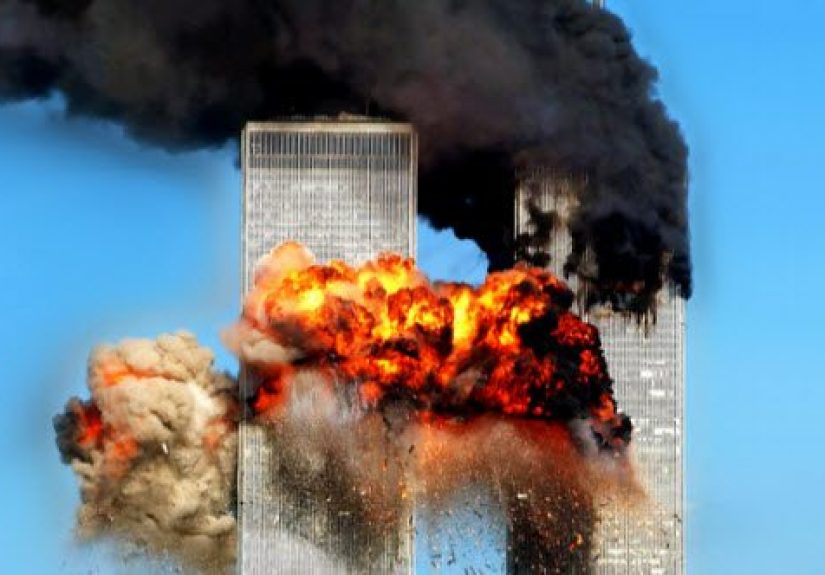
9/11 wasn’t just an eventit was a collective trauma. Images of planes hitting buildings, people fleeing through dust-filled streets, and the collapse of skyscrapers are burned into memory.
Psychologically, events that are massive and horrifying often feel like they demand equally massive and intentional causes.
It’s actually harder, emotionally, to accept that a small group of extremists could inflict so much damage using relatively simple tactics, and that a chain of human errors allowed it to happen.
Randomness, incompetence, and bad luck don’t feel like satisfying explanations when thousands of lives are lost.
Conspiracy narratives, by contrast, offer something more coherent: a story in which every detail fits into a grand plan, every coincidence has meaning, and nothing happens “for no reason.”
That sense of narrative closure can be psychologically comforting, even if the evidence is weak or distorted.
9. The Online Echo Chamber and the 9/11 “Truth” Movement
The rise of the internet supercharged alternative explanations for 9/11.
Within a few years, there were thousands of websites, message boards, and video channels dedicated to questioning or outright rejecting the official account.
Some raise legitimate questions about policy and intelligence; others promote elaborate claims about controlled demolitions, fake phone calls, or swapped aircraft.
In online spaces, people who already have doubts can easily find others who feel the same way, along with carefully edited videos, selective quotes from experts, and long lists of “unanswered questions.”
These communities sometimes use scientific-sounding language and diagrams to give their claims an air of professional credibility.
Algorithms that surface “related” content can deepen the rabbit hole.
Once someone clicks on one skeptical video, they may be recommended more and more extreme content, making it seem like there’s overwhelming evidence against the official storyeven when mainstream engineering, intelligence, and investigative communities strongly disagree.
10. Real Unanswered Questions vs. Total Rejection of the Official Account
Finally, there’s a spectrum of skepticism that often gets flattened in public debate.
Not everyone who has questions about 9/11 believes in an inside job or a grand cover-up.
Some simply think certain aspectslike specific foreign contacts, intelligence sharing with allies, or the handling of pre-attack warningsstill haven’t been fully explored.
Others, however, go much further and reject almost every official conclusion, sometimes replacing them with highly speculative or internally contradictory theories.
Those extreme views understandably get the most attention, but they’re not the whole story.
The existence of some genuine questions does not automatically validate every theory floated online, but those unanswered details keep the door open for people who are already inclined to disbelieve the government.
As long as there are open investigations, new document releases, or policy reviews, that sense of “maybe this isn’t the full truth” will likely persist for some.
What All This Suspicion Means Going Forward
While the predominant view among investigators, engineers, and historians is that the broad outline of the official 9/11 account is accurateterrorists linked to al-Qaeda exploited systemic vulnerabilitiessuspicion isn’t going away anytime soon.
It’s woven into a broader crisis of trust in institutions, fueled by real past deceptions in other areas and amplified by online echo chambers.
Understanding why some people remain suspicious doesn’t require you to agree with them.
It just means recognizing that traumatic events, incomplete information, and political context all shape how people interpret “official” narratives.
The more transparent, consistent, and evidence-based governments and media can be, the less room there is for wild speculationbut that’s an ongoing challenge, not a one-time fix.
Experiences and Reflections Around 9/11 Skepticism
Beyond polls and reports, the story of 9/11 skepticism is also deeply personal.
For many people, their lingering doubts aren’t just about physics models or redacted documents.
They’re about how that day felt, what they saw, and how the aftermath changed their lives.
If you talk to first responders and survivors, you’ll hear a range of reactions.
Some say the official investigations gave them a framework to understand what happened, even if it was painful.
Others feel that the bureaucratic language of commissions and agencies doesn’t quite match their memories of chaos, confusion, and heroism on the ground.
For them, questions about why radios failed, why some orders didn’t reach the right people, or why certain warnings weren’t shared are not abstractthey’re tied to colleagues and loved ones who never came home.
Families of victims have also played a complicated role.
Many pushed for the 9/11 Commission in the first place because they wanted answers and accountability.
Some felt the final report gave them a measure of clarity and a record of failures that needed to be fixed.
Others still advocate for more transparency, more document releases, and more scrutiny of particular leads or foreign connections.
Their skepticism is often less about dramatic inside-job theories and more about wanting to be absolutely sure that no stone was left unturned.
Then there are those who came of age after 9/11.
For them, the event is history, not personal memory, and they often encounter it first through social media documentaries, YouTube edits, or classroom discussions that might briefly touch on “controversies.”
In that environment, it’s easy to see the official story as just one version among many, especially when conspiracy-themed content is packaged to be entertaining, dramatic, and emotionally gripping.
People who have worked in government, engineering, or the military often have a different perspective.
Many will tell you that the most “mysterious” aspects of large events usually have mundane explanations: miscommunications, bad incentives, outdated systems, or sheer human error.
They’ve seen how unglamorous the machine really is.
When they hear elaborate theories that require perfect coordination among hundreds of people, they’re more likely to laugh and say, “We’re barely able to coordinate a staff meeting, let alone a global conspiracy.”
At the same time, some former insiders do become outspoken critics, arguing that certain intelligence decisions or foreign contacts still haven’t been fully addressed.
Their testimony is often cited by skeptics, sometimes selectively, as proof that “we’re not being told everything.”
In reality, their concerns may be narrower and more technical than sweeping internet narratives suggest, but in an era of viral clips, nuance often gets lost.
If there’s one shared experience across all these groups, it’s the sense that 9/11 never fully “ended.”
Airport security is different. Foreign policy shifted. Surveillance laws changed.
Entire careers and lives have been shaped by what happened that day and how governments responded.
The stakes feel enormous, so it’s not surprising that people want absolute certainty about the story they’re being asked to accept.
In everyday life, that can show up in small, unexpected ways.
An office conversation that starts with, “Where were you on 9/11?” can quickly turn into, “Do you think we know the whole truth?”
A documentary night with friends might end with people trading links to videos that all claim to reveal “what really happened.”
Some shrug and move on; others file their doubts away, quietly unresolved.
The most constructive path, for many, lies somewhere between blind faith and total cynicism.
It means acknowledging that governments can make terrible mistakesand sometimes liewithout assuming that every tragic event is secretly scripted.
It means respecting the grief and questions of families and survivors, while also giving real weight to rigorous investigations and expert analysis.
Ultimately, the persistence of suspicion about the official 9/11 account says as much about our relationship to power and truth as it does about the attacks themselves.
Healing that mistrust is a long-term project, one that goes far beyond a single report or anniversary speechand it starts with being honest about both the limits of institutions and the limits of our own need for perfectly tidy explanations.
Conclusion
The ten reasons people remain suspicious of the official 9/11 account are a blend of practical concerns (intelligence failures, omissions, redactions), political context (Iraq, WMDs, declining trust), emotional realities (trauma, grief, and the need for meaning), and digital-age dynamics (online echo chambers and viral “truth” videos).
You don’t have to buy into conspiracy theories to recognize why, for many, the story still doesn’t feel completely closed.
In a perfect world, official investigations would be fully transparent, flawlessly communicated, and universally trusted.
In the real world, they’re constrained, human, and inevitably questioned.
Whether you lean toward accepting the official narrative, doubting parts of it, or simply trying to understand why others feel the way they do, one thing is clear: 9/11 is not just a date on the calendar.
It’s an ongoing conversation about truth, power, and how societies make sense of tragedy.