Table of Contents >> Show >> Hide
- What French Interior Design Really Means
- The Core Rules Designers Swear By
- The Signature Ingredients of a French-Inspired Room
- How to Use French Design in Every Room
- Common Mistakes to Avoid
- How to Get the Look Without a Château Budget
- Experiences That Make French Interior Design So Easy to Love
- Final Thoughts
French interior design has a magical little habit of looking expensive, relaxed, historic, modern, and mildly flirtatious all at once. It is the design equivalent of wearing a linen shirt with heirloom jewelry and somehow pulling it off before coffee. That balance is exactly why the style keeps showing up in American homes, mood boards, and renovation wish lists.
But here is the thing: true French style is not about turning your house into a fake château or covering every surface in gold until your living room starts looking like it might demand a monarchy. According to designers, the real charm comes from tension. French interiors blend old and new, elegance and ease, polish and patina, beauty and practicality. They feel collected, not staged. Lived-in, not lacquered within an inch of their lives.
If you want to bring French interior design into your own home, the smartest move is not copying one room photo exactly. It is learning the principles designers return to again and again. Once you understand those, you can create a space that feels French-inspired without looking like a theme restaurant with very strong opinions about croissants.
What French Interior Design Really Means
French interior design is not just one look. It is a family of looks that share a common attitude. Parisian style tends to lean architectural, layered, and quietly dramatic. French country style brings in rustic comfort, natural materials, and softer charm. Modern French interiors often keep classic bones but edit the fuss, pairing ornate details with cleaner lines and brighter palettes.
What ties these versions together is a sense of history, personality, and restraint. The rooms usually feel as though they evolved over time. You might see original molding, a vintage mirror, a contemporary lamp, worn oak floors, a marble mantel, and a modern sofa all in the same space. In less confident hands, that mix could turn into chaos. In French interiors, it looks effortless.
That “effortless” part is important. Designers repeatedly describe French rooms as natural rather than overly arranged. The goal is not perfection. It is character. A room should look like someone interesting lives there, not like it was assembled in one heroic weekend fueled by espresso and regret.
The Core Rules Designers Swear By
1. Respect the architecture
French style begins with the room itself. If your home has molding, paneling, beams, arched doorways, French doors, old stone, or even just good proportions, play them up. French interiors tend to let architectural details do a lot of the heavy lifting. That means you do not always need louder furniture or flashier decor. Sometimes the smartest design move is to stop decorating and let the room speak.
If your home is newer, you can still borrow the feeling. Add picture-frame molding, a ceiling medallion, wainscoting, a faux mantel, or tall drapery that emphasizes height. The French look loves a bit of inherited-looking structure, even when the inheritance is actually from your contractor.
2. Mix old and new
This may be the most important rule of all. French spaces rarely look locked into one era. A carved antique table might sit under a modern pendant. A contemporary sofa can live happily near a gilt mirror. Vintage chairs, art, ceramics, and flea-market finds add soul, while newer pieces prevent the room from feeling dusty or costume-like.
The trick is balance. Let one or two older pieces anchor the room, then use simpler modern shapes around them. If every item is antique, the space can feel formal and fragile. If everything is brand new, it loses the layered warmth that makes French interior design so appealing in the first place.
3. Choose warm neutrals over flat, cold minimalism
French interiors love neutrals, but not the kind that feel like an apology. Think creamy white, putty, mushroom, taupe, soft blush, muted blue, dusty green, warm gray, and sun-washed ocher. These colors are gentle and elegant, yet they still leave room for wood tones, textiles, art, and patina to stand out.
If you want the Parisian look, start with walls in a creamy off-white rather than a stark gallery white. If you want French country style, lean into softened, nature-inspired shades. Either way, skip anything that feels too cold, too bright, or too trend-hungry. French color is usually subtle, but it is not boring.
4. Make room for patina
French rooms are comfortable with age. Worn wood, antique brass, stone, linen, faded paint, and lightly distressed finishes all add depth. Perfection is not the goal. In fact, a little imperfection often makes the room better.
This is why materials matter so much. Solid wood furniture with visible grain, marble with movement, handmade tile, unlacquered brass, antique mirrors, and natural textiles like linen and cotton all help create that relaxed, established feeling. When possible, choose materials that improve with time instead of ones that panic the moment life happens.
5. Keep it elegant, but comfortable
There is a reason French seating has such a loyal fan club. The look may be polished, but it is meant to be lived in. Upholstered dining chairs, soft-lined sofas, layered bedding, and inviting lounge areas matter. French interiors are not museum displays. They are meant for conversation, reading, meals, entertaining, and the occasional dramatic stare out the window.
If a room looks gorgeous but does not invite you to sit down, it is missing something. French design is beauty with a pulse.
The Signature Ingredients of a French-Inspired Room
Architectural details
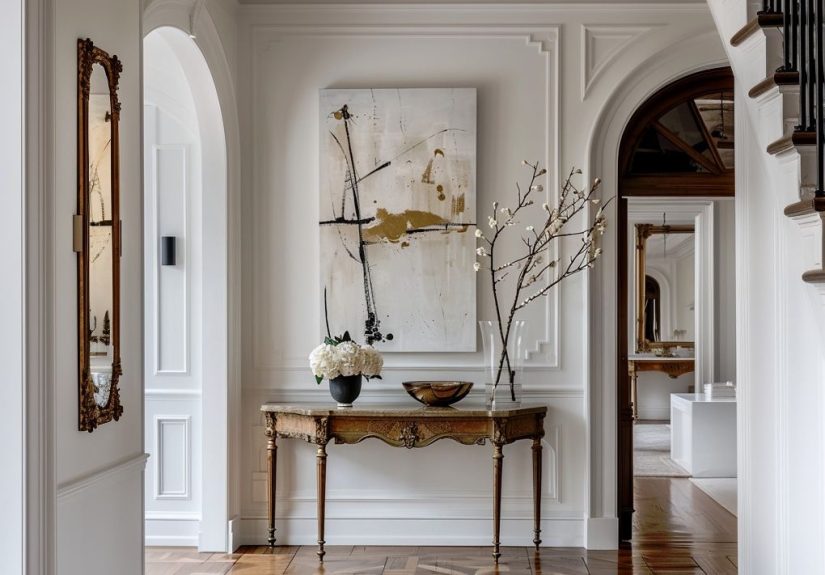
Moldings, ceiling medallions, herringbone or parquet floors, wall paneling, tall windows, marble mantels, and French doors instantly push a room in the right direction. Even one of these elements can help create a strong foundation.
Statement mirrors
A gilded mirror is practically French interior design’s celebrity cameo. It reflects light, adds age, and brings a touch of ornament without overwhelming the room. Over a mantel is classic, but an entry, bedroom, or dining area works too.
Natural fabrics and storied materials
Linen curtains, velvet pillows, cotton upholstery, wool rugs, oak, stone, marble, wrought iron, and aged metals all feel right at home. Texture matters more than shine. Richness comes from depth, not gloss.
Patterns with restraint
Toile, gingham, stripes, botanicals, damask, and painterly plaids can all work beautifully in French interiors. The trick is using them in ways that feel collected rather than chaotic. A striped pillow, toile drapery, botanical print, or patterned tile backsplash can be enough to add romance without making the room feel like it swallowed an entire fabric archive.
Art and objects with personality
French style does not rely on generic filler decor. Books, vintage ceramics, framed sketches, oil paintings, flea-market finds, baskets, candlesticks, fresh flowers, and personal collections all help create authenticity. The best French-inspired rooms look edited, but they still reveal the homeowner’s life.
How to Use French Design in Every Room
Living room
Start with one strong anchor piece: a vintage coffee table, an antique mirror, a marble fireplace, or a beautifully shaped sofa. Then layer in texture. Add linen or velvet cushions, a rug with faded character, a sculptural lamp, and perhaps one slightly quirky object that keeps the room from becoming too serious.
Furniture does not need to be perfectly matched. In fact, a slightly offbeat mix feels more believable. A Louis-style chair can sit beside a modern side table. A streamlined sofa can live under ornate molding. That contrast is where the charm lives.
Kitchen
French-inspired kitchens often feel both hardworking and romantic. Think warm neutrals, open shelving, antique or vintage-style lighting, copper cookware, natural stone, aged brass, farmhouse sinks, wood stools, and hand-finished tile. If you want an easy shortcut, display beautiful everyday objects instead of hiding everything away. French kitchens tend to celebrate utility when it is lovely enough to earn the spotlight.
You do not need a Provençal villa to make this work. Even a simple kitchen can feel more French with a softer palette, better hardware, one vintage piece, and a little less obsession with everything matching exactly.
Bedroom
A French bedroom should feel romantic, but calm. Upholstered headboards, washed linen bedding, layered quilts, soft light, antique nightstands, a bench at the foot of the bed, and flowing curtains all work well. Keep the palette light and muted, then add warmth through wood, brass, and texture.
If you want more Parisian flair, add a gilt mirror, vintage art, or a dramatic chandelier. If you lean more French country, bring in florals, painted wood, and relaxed bedding. Either way, the room should whisper rather than shout.
Bathroom
This is where French elegance can really shine. Marble surfaces, vintage-inspired sconces, paneled walls, warm paint colors, framed mirrors, and polished but not flashy fixtures work beautifully. A skirted sink, small stool, or pretty tray can go a long way. If the room feels charming enough that you suddenly want better hand soap, you are probably on the right track.
Entryway and dining room
French design thrives in transitional spaces and entertaining areas. In an entryway, use a console table, mirror, lamp, and one floral arrangement to set the tone immediately. In a dining room, choose chairs with presence, a table with age or character, layered textiles, and lighting that feels warm rather than harsh. The point is not to impress guests into silence. It is to make them want to linger.
Common Mistakes to Avoid
Going too literal
If every item screams “French!” the room stops feeling French and starts feeling like it bought a costume online. Avoid loading the space with clichés. You need suggestion, not impersonation.
Buying everything at once
French interiors feel collected over time. When everything arrives on the same delivery truck, the room can look flat. Blend new buys with vintage finds, inherited pieces, and objects that actually mean something to you.
Making it too perfect
Symmetry is fine, but over-styling is not. A French room should feel relaxed and real. Leave some breathing room. Let books stack casually. Let art lean. Let one chair be slightly unexpected. A little looseness adds life.
Ignoring function
Designers often point out that good French interiors are built around how people actually live. Beauty matters, but so does flow, comfort, and daily use. A gorgeous room that cannot handle dinner, conversation, kids, pets, or a Saturday afternoon nap is missing the point.
How to Get the Look Without a Château Budget
You do not need a Paris address, antique dealer connections, or an alarming curtain budget to create a French-inspired home. Start with paint. Warm up the walls. Then upgrade one or two visible details: hardware, light fixtures, drapery, a mirror, or a vintage side table. Shop flea markets, estate sales, and secondhand stores for pieces with age and personality. Look for curves, patina, craftsmanship, and materials with texture.
If your architecture is plain, fake some history with trim, panel molding, a mantel surround, or tall curtains hung close to the ceiling. If your furniture feels too modern, soften it with a linen throw, a traditional rug, and a few older accessories. If your room feels too formal, loosen it with books, plants, baskets, and something unexpected. French design lives in the balance.
Experiences That Make French Interior Design So Easy to Love
One of the best things about French interior design is not how it photographs. It is how it feels when you actually live with it. A lot of styles look amazing in a magazine spread and then become slightly less charming when real humans bring in laundry baskets, coffee mugs, backpacks, and a general refusal to live like a catalog. French-inspired spaces tend to survive real life better because they are already built around personality, comfort, and a little bit of visual looseness.
Picture walking into a room with creamy walls, tall curtains, old wood underfoot, and a chair that looks like it has heard excellent gossip since 1963. The room does not feel stiff. It feels settled. The light hits an antique mirror and bounces around just enough to make the whole space glow. A small stack of books on a side table looks intentional without looking staged. There is a softness to the room, but also structure. You get the sense that someone with very good taste lives here, but also someone who would absolutely let you put your drink down without handing you a coaster lecture.
That emotional experience matters. French interiors often feel calm without being bland. They feel elegant without being cold. That is a tricky balance, and it is one reason the style translates so well. If your day is noisy, a French-inspired room can feel like a deep exhale. Warm neutrals soften the edges. Natural materials ground the space. Vintage pieces make it feel human. Even a tiny apartment can feel richer and more layered when it has one beautiful mirror, one great lamp, good curtains, and furniture that does not all look like it came from the same aisle.
Another great experience tied to French design is how it changes your relationship with objects. In many homes, decor is either purely practical or purely decorative. French interiors often make room for both at the same time. A copper pot can be useful and lovely. A tray on a bathroom counter can make daily routines feel a little more luxurious. A flea-market chair can be where you actually sit to read in the evening. There is less pressure for things to be perfect and more pressure for them to have charm, usefulness, or a story. Honestly, that is a healthier way to live than constantly chasing spotless sameness.
French-inspired spaces also tend to make entertaining feel easier. The rooms are usually arranged for conversation, not just television. Dining areas feel inviting. Living rooms often include mixed seating, layered lighting, and enough softness to keep people lingering. There is a hospitality built into the design. Not the fussy kind where no one can touch anything. The good kind, where candles are lit, chairs are comfortable, and dinner somehow stretches into dessert because no one wants to leave.
And maybe that is the real reason people keep returning to French interior design. It does not just promise beauty. It promises atmosphere. The best French-inspired homes feel storied, relaxed, and quietly confident. They suggest that life can be a little slower, a little prettier, and a lot more personal. Which, frankly, is not a bad design goal. If your home can make ordinary mornings feel more graceful and ordinary evenings feel more intimate, that is not just good decorating. That is excellent living.
Final Thoughts
If you want your home to feel French, resist the urge to overdo it. Focus on warm color, layered texture, vintage character, comfortable furniture, and architectural interest. Mix time periods. Leave room for imperfection. Choose beauty that still works on a Tuesday. Above all, make the space personal. French interior design is not about copying a formula. It is about creating a home that feels cultivated, comfortable, and unmistakably alive.
In other words, aim for elegance with a pulse. If the room looks like it could host a dinner party, a long nap, and a mildly philosophical conversation about butter, you nailed it.